Discussion keeps the world turning.
This is Roundtable.
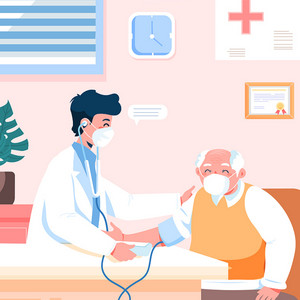
Rural clinics could beat the lifeline for millions of villagers in China, but their numbers are steadily falling.
What's driving this decline?
And how do we secure the last mile of medical service reaches those who need it most?
And we're on a mission of starting your week with a motivational kick.
Our Motivational Monday offerings will get you ready to tackle the week.
Coming to you live from Beijing, this is Roundtable.
I'm He Young. For today's program, I'm joined by Steve Hatherly and Yu Shan in the studio.
First on today's show.
Grassroot healthcare institutions are primary healthcare facilities that provide essential medical care services at the local level, often serving as the first point of contact for patients.
These institutions include community health service centers, township hospitals, outpatient departments, and rural clinics.
They play a critical role in offering basic medical care, preventative services, and health education, particularly in underserved areas such as rural communities.
And China has over one million grassroots -level medical institutions last year, 36 ,000 more than the year before.
However, the nation also saw a drop of 5 ,000 village clinics during the same period.
While grassroots healthcare institutions are generally on the rise, rural clinics are facing a decline.
What difficulties are these village clinics encountering, and how can they survive?
Yu Shan, please break down the numbers for us and get to the heart of what's affecting the survival of these rural clinics.
Yes, He Young. As you mentioned earlier, the official data from the statistical bulletin on China's national economic and social development in 2023 revealed that there were around 1 million grassroots -level healthcare institutions in the year 2023.
And among them, there were 34 ,000 township health hospitals and also 36 ,000 community health service centers or stations, plus a 321 ,000 outpatient departments or outpatient offices.
That's showing that there's such a great number of such health facilities out there.
And while the numbers of grassroots medical institutions have, well, increased, as we mentioned earlier, the number of village -level clinics, however, has decreased as data show that there were 588 ,000 village clinics, which is a decrease of 5 ,000 compared to that of 2022.
So we see that more than half of China's grassroots -level healthcare institutions are actually formed by these village clinics, but now the overall number is dropping.
So when we talk about grassroots -level institutions versus village -level clinics, I'm just wondering about the difference in size of institution.
For example, what does the grassroots -level institution look like and what does the village -level look like?
Okay. More clarification of terms.
Grassroot healthcare institutions are an umbrella term.
It includes all these different things.
And rural clinics is like the smallest unit.
The individual buildings.
Uh, yes. Often it could just be a room or two in the village.
And this is really the first contact point for the villagers when they're looking for medical care service.
Okay. So overall, we're seeing an increase in the number of grassroots -level institutions, all the things that you mentioned, but the individual clinics that we're talking about in rural areas, that's where we saw the decrease of 5 ,000.
Yes, that is indeed the case.
And also, to better understand what it's like to work in these places and also the patient experience, could we go a little bit deeper into the anecdotes reported by the Economic Observer, a well -known news outlet here in China?
Oh, yeah. And according to the article from Economic Observer, there is one village doctor in Beijing who called himself Yang Hongwei.
So let's just refer him as Yang.
So he has been working in the grassroots -level healthcare clinic or, say, village clinic for over 30 years.
So the village where he stays has about 1 ,500 residents.
And when he first started working in the village clinic back in the 1990s, there were over 20 patients in the village that's attending to him for help on a daily basis.
And that was quite enough for keeping the whole clinic running nonstop and in a very busy mode.
But however, nowadays, he has much fewer patients.
And he spent most of his time prescribing medicine or doing just daily basic tasks, such as management of patients with chronic disease, rather than the urgent cases, and also some random tasks such as household services or household surveys and newborn registration or the paperwork.
So these days, he's spending more time on treating patients than before, obviously.
So Yang's experience is just one example of the whole trend of many village clinics are facing right now.
Not that those tasks that you mentioned are not important.
Those are important things to do for doctors as well.
It's just a decrease in the number of patients.
And I can relate to this because you're talking about villages that have around 1 ,500 residents, or at least in Yang's example.
That's very similar to the size of my hometown.
My hometown has one main street in Nova Scotia, in Canada, where I was born.
And there's a fire station and a high school, middle school combined together, and there's a grocery store and all your basic necessities that you'd find in a community.
When I was growing up, there was one doctor's office there, and it was a very small building, and it had a waiting room, and then the doctor's office.
So it was basically like a two -room office, and that was it.
And that doctor, we only have one doctor in the community, and he took care of everyone.
So everybody knew him, and he knew everybody.
So I think I can relate to this type of story.
The sad news here is that Dr.
Yang doesn't have enough patients anymore by the sounds of things.
Yes, and I wonder how much of this fact is due to that there's a decline in the population, or is it that because patients can't or they don't feel like they could receive the adequate care from Dr.
Yang, and therefore they go elsewhere to maybe bigger hospitals in bigger places?
Because when you are in need of medical care, especially if it's an ailment, it's not just getting the regular meds, then you want to go to somewhere that you know the doctor knows what he or she's doing, and you can receive hopefully swift treatment.
So rural clinics aren't as popular as they used to be, and why is it?
What explains Dr. Yang's situation?
Well, there is one expert's opinion that should answer your question, Huoyang, which is the director Liu Guo -en's response towards this trend.
And Director Liu is from the Institute for Global Health and Development from Peking University, and according to him, the main reasons lie in a shortage in medicines and medical resources that's, you know, being applied in these rural clinics.
And these villagers, they think that the village -level clinics cannot meet their needs for medical assistance and services.
So like you said, they turn to major hospitals who are bigger medical service providers in the townships or in nearby districts for help.
It's also pointed out by Director Liu that it will be kind of difficult to solve the grassroots health care problems in the short term, because now it's already been practiced in such a way for a relatively long period of time as well.
So it's not that there's a population decrease.
It's not that the people aren't there.
It seems like the people are choosing an alternative when they're looking for their Medicare, whereas in the past, they would go to doctors like Dr.
Yang, but now for various reasons, they're seeking what they think is better care for themselves.
And also, this is just from a very amateur kind of observation, but I'd like to raise this point that the common knowledge these days in China is that in these rural areas, maybe the resident's age are a bit older than younger, as it used to be, since a lot of residents or the younger workforce are working
outside of the village or maybe in big cities.
Then I would think that if this were true, then the older population will probably suffer more from chronic diseases and maybe need regular meds, refills as such.
I would think that for your very, very local doctor, there's a lot of work to do.
But I guess this is maybe a bit too much to ask, just given the fact that look at the facilities and also the services available in these villages, and it's kind of tough.
Yeah. I mean, for example, again, to talk about my hometown, that was a small family medicine office.
And if you had a serious problem like a broken bone or something like that, we couldn't stay in our hometown.
We didn't have an option.
We had to go to a bigger town or a city to seek medical care for something serious like that.
So in our hometown in Tatumogoshinova, same type of thing.
We had a small clinic with one doctor and it was for very, I don't want to say minor things because the doctor was doing a great service to the community, but anything that was considered really serious, we had to go elsewhere.
And it sounds like that's what's happening here, too.
Yeah. So this falls to the point where I think it's really important that the village doctors receive better trainings because now, as we hear from Dr.
Young and other village doctors, they receive one or two unified training provided by district hospital doctors, including a lot of different aspects like theoretical learning, practical training, trainings that involves common disease management, infectious disease prevention, and et cetera.
But the problem with that is these training is mainly practiced online with very limited application scenarios given to these rural clinic doctors on their day -to -day work base.
So they have the knowledge, but they don't really have enough, say, opportunities for them to practice in.
Yeah. And what they're learning, they're learning online, and I'm sure for doctors, it's really important that they get to roll up their sleeves and learn with their hands the new things that they're learning.
We have a similar situation in Canada, and I think if you look around the world and you look at rural medical care, you'll find issues in a lot of different countries.
And we have it in Canada, too, not talking about my hometown, just talking about the country in general.
In Canada, the federal government, this is from Global News from this year, so this is recent, the federal government, they're trying to get more doctors and more nurses to come and work in rural and remote communities.
Those communities in Canada, they don't have medical access to the residents there, and it's really dire, the situation in Canada.
So what the government is doing is they're saying that they will forgive up to $60 ,000 of Canada student loans for family doctors and $30 ,000 for nurses as an incentive to go and work in those rural communities.
Now, there are big critics of this system because those student loans that I just mentioned, those are only for federal loans.
If you don't have a federal student loan and you have a provincial student loan, it doesn't help you at all.
So critics say this is not going to help out the situation in Canada, but the government thinks that it's going to attract about 1 ,200 more doctors and about 4 ,000 more nurses for this incentivization program.
Maybe something like that could be applied to rural communities in China to get more doctors to these communities as well.
That's a really interesting point, and I just learned something from what you just said, Steve.
It sounds like in Canada, first of all, medical school is hugely expensive and also the devil's in the details.
If you are a medical student or one to be, then it's kind of also important to see you're applying for, is it the federal level loans or is that the provincial?
And then that makes a major difference if a young person trying to start to practice is such.
It's a big deal in Canada too because 20 % of our population, 20 % of Canadians live in rural or remote communities.
We have our indigenous communities, we have coastal areas that are not easily accessible, but the problem is only 8 % of physicians practice in non -city locations.
20 % of Canadians live in rural areas, only 8 % of doctors practice outside of cities in Canada.
I think this can also be applied to the scenarios here in China as well because every year we're sending our newly graduate university students into say rural areas, clinics or local medical facilities for internship as well.
And in a lot of the cases, these interns after their internship, they don't choose to stay in those local facilities, but prefer to go back to say places closer to where their schools located at or bigger cities.
And there's some examples here.
So this is according to another village doctor named Liang.
There are over 10 university students coming to their local village clinics every year, but so far no one chooses to stay in the end.
And two of the interns that Liang personally trained told her that they just came here for the necessary credits.
That's kind of required by the school, but they didn't want to become village doctors after the training.
And actually they're now working as interns in district hospitals.
And more reasons for that lies in the fact that comparing with large hospitals in bigger cities, village doctors are in lack of promotion opportunities and also it will put limits to their career development in the long term.
And also just look at how much they're making every month.
And we've talked so many times on this show that a cultivating doctors is a time, well, we need them obviously, and then it takes a very long time to churn out talent as such.
And that means that the investment of time, of money, of resources into churning out a doctor, a qualified one, is a great investment, not only for the individual, but also for society as well.
And if you look at Dr.
Yang's village, the monthly income of the village doctor is 5 ,500 yuan, which is about 780 US dollars.
And that sounds like not that low an income for maybe the Chinese village, but this is paid by the local financial department and not all villages have this kind of financial remuneration for their doctors.
And also their pension is pretty low.
It's like more than 1 ,000 yuan.
And then of course people are going to be thinking about this.
If you've been investing a lot of time and your intelligence into becoming a doctor, and this is not attracting the talent there.
Again, to use the word incentives, that's not a great incentive to use the young doctors as an example who travel to these rural villages to do their internships there, which is a great thing.
But it's very difficult to expect them, not just to ask them, but it's difficult to expect them to want to stay in those rural communities when they have invested in their education and they've invested their time.
And of course, everybody has a big dream.
And probably for a lot of doctors, the dream is to work in a big hospital in the city.
So it sounds like there's not much incentive to get the younger doctors there to stay.
And this becomes a big issue, but also things are changing.
And a lot of this change, in a way, I suppose it has to come from top down that the government needs to do something to sort of start the snowball rolling.
And one thing that has been rolled out a policy here is that in the past, medical insurance didn't use to cover a lot of these medical expenses at the clinics, but now the coverage is being expanded.
And what is the information on that?
Well, speaking of the latest good news on that realm, which is a newly released figure.
So as of April, 2024, 100 ,000 village clinics were then all included by the national medical insurance policy.
So on top of that, patients of 320 ,000 more village clinics clinics can eventually receive medical insurance reimbursement.
So in that way, they can get the cost they're paying to have the treatment prescribed to them back into their pockets, but with an extra bureaucratic step of township health centers.
So all in all, more than more than 72 % of village clinics nationwide have been included in the national medical insurance system.
And that hasn't always been the case, I think, as the village Dr.
Young used to mention that the town that he works at has about 28 villages where five clinics among the 28 villages was not really covered by the medical insurance, but they are now, if not, they will be in the near future.
So on the one hand, you've got expansion of coverage, which is great by the medical insurance, but also now there seems to be the mismatch or we need to see if this gap can be overcome that people actually want to go to these places and can enjoy the services that they need.
I mean, it's a big step though, isn't it?
And think about it for you, Huyang, if you lived in a small village and you could go to that village clinic, but you'd have to pay out of your own pocket in the past, right?
You'd have to pay for the expenses yourself.
Whereas if you went to a larger community, I guess that would be covered by the insurance.
That's why this is such a big, that's why maybe this is such a big step for the rural communities.
So it makes sense. Yeah, we talked about incentivizing the young doctors to go to these communities.
We have to incentivize the patients to go to these clinics as well.
And you talked about the training for doctors before.
I'm not sure that we can look at young doctors and expect any changes there.
I think it's kind of inevitable that when young people come to a rural community for their internship, that they're going to go.
I think that's to be expected.
Well, in the past, incentives have been sort of generated in the sense of, well, not necessarily in the medical world.
Let me just give you an example of, let's say, for civil servants.
In China, it's been decades since there's a policy of encouraging young talent to go to rural areas to pursue a career in civil service.
That is, you go there for a couple of years or whatnot and maybe become the village head and do your work there.
And then in a few years time, you can come back maybe to the county level or city level of offices and then you get a promotion or this becomes sort of a boost in your career on your resume.
And it's worked. So I wonder, I don't know if this is a fantastic idea or not, but offering maybe some of these sort of career boosters for young people who might work in these rural medical institutions.
And a lot of times it's not really just applied to the young doctors, especially to those who has years of experience working in bigger hospitals in major cities.
They are also encouraged to step out of their big city comfort zone and enter rural hospital systems and provide their help in turn.
And this is kind of like a mechanism that has been practiced in leading Chinese hospitals in major cities for years.
As I was just speaking to my mom who's working in such a hospital, who's seen how the personnel in her department has been shifting over the years.
So one example that she gave me is that one physician in her department was exchanged to the Xinjiang Uyghur autonomous region and had been working there for as a just a comprehensive doctor for all subjects, not only focusing on what her department covers, but just on all subjects as a physician locally
for over a year. And after she got back, there's like bonuses were like a better opportunity for promotion and career shifting as well.
So that is encouraged among all the surgeons and physicians in her department, as well as the entire hospital system as well.
And these sophisticated, well -trained doctors, they're all taking these opportunities in turn.
So maybe this person goes for one year and then the next year is changed to another person.
Like a rotating system.
Yeah, from a different department or something.
And upon that, there are also weekly exchanges to destinations closer to Beijing, such as in Inner Mongolia or the Inner Mongolia autonomous regions, and also in the Hebei province as well.
So these doctors are sent there once per week and they can come back right after their service in the local hospitals or medical service branches and then come back on the very day.
Yes. And the challenge of sustaining rural clinics is more than just a numbers game.
It's about ensuring every person, no matter where you live, has access to essential healthcare.
Investing in these vital institutions not only preserves a lifeline for millions, but also upholds the promise of equitable care for all.
And this path requires innovation, commitment, and a collective effort to bridge the healthcare divide.
And even till today, if you look at Chinese cities, if you go into the communities, some people might argue we fall short in providing this last mile of medical services as well.
And there's a lot of changes and discussions and investment kind of needs to happen to make it better.