This message comes from NPR sponsor, Sierra.
Business connections start with a conversation.
Sierra is the AI platform for building better, more human customer experiences.
Fast answers with no canned responses, hold music or frustration.
Visit sierra .ai to learn more.
You're listening to Short Wave from NPR.
This week at NPR we're covering climate solutions.
And today we're starting with a solution that at first glance seems pretty basic, it's a roof.
A roof that doesn't really look any different from any other one you'd see on a standard house.
And here today to explain why it's special is Lauren Sommer from NPR's Climate Desk and Stephen Bissaha from the Gulf States Newsroom.
Hey! Hi. Hey, good to be with you.
Okay, so Stephen tell me like what can this roof do?
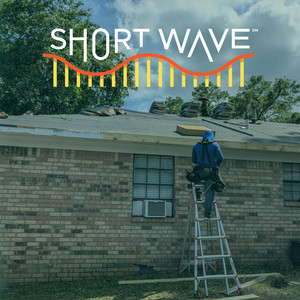
So the example roof we're gonna use is just a short drive from the Gulf Coast in Alabama.
I met the owner of the house, Ron Watson, and he was pretty psyched about replacing his old roof.
Yeah, I've been up there with a bucket of tar covering large patches where leaks had popped up.
Beyond just being more functional, this roof is also saving Ron money.
It reduces the cost of his insurance premium.
And premiums are going up around the country.
That's a big incentive.
I mean, homeowners insurance now has been through the roof because of the storms we've through here yeah I've heard homeowners insurance is getting like more expensive it's also harder to get across the country so how will this roof save him on his insurance so you know the Gulf gets a lot of hurricanes we're heading into hurricane season right now those hurricanes are getting more intense as the climate gets hotter yeah and in those powerful winds you know roofs get torn right off of houses so Watson recently got a new strengthened roof specifically designed with those home -wrecking storms in mind.
Watching them do it, I realized, man, all the ones I had done before wasn't near as good as this one is.
And since it's less likely to be damaged, his insurance company gives him a discount.
Got it, so it's like a less risky route.
Yeah. And that means the insurance company doesn't have to like charge as much for his insurance.
Yeah, exactly. This is a program that Alabama pioneered and it's starting to spread, because there are millions of homes that are at risk from wildfires and storms, and states want to incentivize people to make their communities safer.
But in some states, it's not going quite as well.
And there are even bigger problems with insurance that these programs don't address.
So today on the show, the insurance problem, how climate change is driving a crisis in home insurance, and how states are experimenting to find better solutions.
I'm Regina Barber, and you're listening to Shortwave, the science podcast from NPR.
Support for NPR's Climate Solutions Week – Rethinking Home comes from The Nature Conservancy.
People from all walks of life depend on nature – for the food they eat, the water they drink, and the air they breathe – for strengthening their communities, powering their livelihoods, and safeguarding their health.
nature is common ground for everyone, and uniting to protect nature can help solve today's challenges and create a thriving tomorrow for future generations.
Discover why at nature .org slash npr.
This comes from NPR sponsor Sierra.
No matter the industry, how businesses connect with customers defines their brand.
And today connection starts with a conversation.
Sierra is the AI platform for businesses that want to provide better, more human customer experiences.
With Sierra, your AI agent solves problems fast. No canned responses, no endless hold music, no frustration.
Just better customer experiences built on Sierra.
Visit sierra .ai to learn more.
So Lauren, Steven, you've reported on how states are trying to deal with two problems, home insurance and natural disasters.
And these aren't just casual rainstorms. With With climate change, storms are getting more extreme.
Yeah, exactly. And the problem with these storms is they're basically a one -two punch for a house.
Yeah, I talked to Kendall Duke about that.
She's a contractor with fortified exteriors, which installed Ron's roof.
And I learned that that first punch comes from high winds.
If your roof starts going, even just a couple shingles, it's just kind of a ripple effect from there.
You can hear all that rain, right?
Yeah. Wow. Yeah, that's punch number two.
You know once that roof gets damaged the rain can get inside You know and that starts to rot things from the drywall to the family photos So what makes these roofs like so much better at dealing with this one -two punch than a regular one It's like sitting on top of like most American houses right now.
Yeah Well, the idea was to counter that one -two punch Alabama adopted this like one -two defense It is called a fortified roof.
Basically, it's this construction benchmark for making roofs storm ready.
Yeah, so first there's this waterproof stick -on layer.
If for some reason a shingle does blow off, you're still not gonna get water into your house because the roof underneath is fully sealed on the decking.
So it's a really expensive waterproof sticker at the end of the day.
Pretty much, yeah. And then there are these special nails with these ridges running down the side and it makes them much more resistant to wind.
And that's what Fortified Exteriors is installing on a home in Mobile.
Yeah, I love a little home improvement, especially if I'm not doing it myself.
Is there any evidence these extra protections actually work though?
Yeah, Alabama's Insurance Department, they just released a study that looked into Hurricane Sally and Sally made landfall along the Alabama coast as a level two hurricane in 2020.
And so compared to, you know, those standard roofs, the ones that were fortified did a lot better.
Homeowners with those special roofs filed fewer claims and the claims they did file were for less damage.
The exception to this was damage from fallen trees.
I mean, installing a new roof is already pretty expensive, like even before adding the waterproof layer, these special nails.
Like, how does Alabama get people to actually switch to this, like, fortified version?
Well, a big one for homeowners are these grants that they could get from the state.
they cover up to $10 ,000 for the cost of a fortified roof.
These grants get handed out every three months, and I've heard lots of stories from homeowners like sitting at their computer, hitting refresh until the application opens, like kinda like a Taylor Swift ticket drop.
Wow. I mean, $10 ,000, you're gonna wait for it.
And you know, the other big incentive is that discount we talked about on your insurance.
So in Alabama, if you have a fortified roof, you get a discount of 20 to 35 % off the wind portion of your premium, which for many people, is kind of the bulk of your insurance premium.
And that could be hundreds of dollars a year.
And Alabama pioneered this program after state law makers, they passed this law to create it in 2012.
It did take a few years to roll out all those perks and, you know, work out the kinks.
But today, state officials say more than 50 ,000 roofs in the state are now fortified.
Wow. Yeah. In other states, they are copying it.
Louisiana and Mississippi have started their own insurance discount programs. and it spread to states with different kinds of disasters, too.
And Lauren, you've reported like from one of those other states, right?
Yeah, I talked to homeowners in California where the discount program is really only a couple of years old.
And there, of course, wildfires are on people's minds, especially one homeowner I met in Oakland, her name's Elizabeth Stage, and she doesn't have to wonder what wildfire might do to her neighborhood because she's seen it firsthand.
The 91 fire got within two houses of mine.
The house next door was unscathed, and the one past that was completely charred on one side.
She's talking about the Oakland Hills fire.
And that fire burned more than 3 ,000 houses in 1991.
Wow, okay, but her house was okay, but how did that change how she felt about living there?
Yeah, so Elizabeth volunteers her time in local groups that work on wildfire safety.
But it was really only a few years ago she started thinking about her own home because she had maintenance projects that needed doing and with each of them there were ways she could make better choices for wildfire risk.
The deck used to be made out of redwood.
It was really pretty high maintenance but pretty.
So that wood deck is now made of treks it's a composite material that's less likely to ignite.
If you look here the siding isn't wood anymore the roof is fire resistant the windows have been replaced.
It's some kind of tempered glass.
Tempered glass is actually less likely to shatter in heat from a wildfire, which is what lets the flames right into your house.
And then the vegetation is cut away within 5 feet of the house because that can spread fire as well.
All of this helps because in a wildfire houses are hit with this kind of like shower of embers and that's blown far ahead of the fire itself.
And that's how many homes ignite.
That's a of projects like so what does California offer in terms of insurance discounts to like offset that cost. Yeah so the discounts in California are lower than in Alabama.
Elizabeth Insurance Company could only knock off up to 15 % and that's at the upper end of what's offered in California.
Some companies only offer 8 % and homeowners still have to pay for the inspection.
California's insurance regulators say those discounts could go up as the program develops but I talked to other homeowners who said, right now, it's just not enough to motivate them to do some of these expensive home projects.
Okay, so would it make sense for California to just like copy Alabama to do higher discounts than they offer?
Well, there are some key differences between the states in different kinds of disasters.
Michael Wara studies climate risk at Stanford University, and he says, it's just simpler to change out a roof.
The benefits of a super roof are fully captured by the person that makes the investment.
One of the challenges with fire hardening is that it matters what your neighbors do too.
Even if a homeowner does, you know, everything right, their house can still be at risk if their neighbors don't.
If they have a lot of flammable vegetation and their house catches fire, it could spread from house to house because it's so hot.
Wow. Yeah. It sounds like there's a lot that depends on your neighbors and what they do.
It's not all within your control.
Yeah, exactly. So for wildfire risk, insurance companies may not see a reason to give a big discount unless entire neighborhoods work together to be safer.
But you know, for homeowners like Elizabeth, the biggest motivation actually isn't a discount.
It would be frosting on the cake.
Before I worry about my premiums, I need to worry about my non -renewal notice.
Non -renewal notice?
What's that? Well, basically we're talking about homeowners in California being dropped by their insurance companies nationwide.
Almost 2 million people lost home insurance from 2018 to 2023, according to a report from the Senate Budget Committee.
And you know, it could be hard to find affordable insurance once you lose it.
Wow. So if homeowners prepare for hurricanes and wildfires, does that mean it might help them keep their insurance?
No, not necessarily.
I mean, it could, but insurance companies actually aren't required to consider those things when they're deciding who to insure.
I talked to one of California's former insurance commissioners, Dave Jones, and he says that's a problem.
Getting a discount is nice, but the discount doesn't matter a darn if the insurer won't renew or write your insurance.
So I think that while focus on the discount is important, there needs to be even greater focus on getting the insurers models that they use to decide whether to write and renew the insurance.
So that's the bigger problem.
He's talking about the complex computer models that insurance companies use to figure out how risky a home is and whether to insure it.
Right now, state regulators do not have the power to make insurers consider those disaster preparations when deciding who to insure.
It would take state lawmakers to do that.
California lawmakers did introduce a bill to do that in 2020, but it didn't go anywhere.
And it means that these discount programs don't really tap into one of the biggest motivations, which is simply keeping your insurance.
And Dave says that's a missed opportunity because there are so many homes at risk from disasters and insurance should be sending the right signals about what to do.
totally, I can see how this could affect so many people and I didn't know any of this before.
Lauren, Steven, thank you so much for bringing us this story.
Yeah, thanks for having us.
Yeah, thanks. That's fantastic.
Before we head out, a reminder that this story is part of a whole week of stories NPR is reporting out about climate change solutions for living and building on a hotter planet.
Check out the link to the series in our show notes.
Also, if you liked this episode, follow us on the NPR app or wherever else you get your podcasts.
This episode was produced by Hannah Chin and edited by our showrunner Rebecca Ramirez.
Tyler Jones checked the facts.
Quasi Lee was the audio engineer.
I'm Regina Barber. Thank you for listening to Short Wave from NPR.
This message comes from Lisa.
Lisa meticulously designs their mattresses for exceptional comfort and support.
Visit lisa .com for 30 % off mattresses and a free sleep bundle, plus get an extra $50 off with promo code NPR.
This message comes from Capital One.
The Capital One Venture X Business Card earns unlimited double miles on every purchase.
Capital One. What's in your wallet?
Terms and conditions apply.
Find out more at CapitalOne .com slash VentureXBusiness.
This message comes from Lisa.
Lisa meticulously designs their mattresses for exceptional comfort and support.
Visit Lisa .com for 30 % off mattresses and a free sleep bundle.
Plus, get an extra $50 off with promo code NPR.