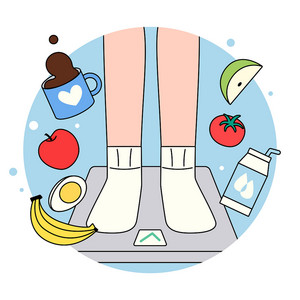
Obesity is no longer just an issue among urban children.
As China has seen rising overweight and obesity rates among school-aged children in recent years, researchers predict that the rates of rural kids will be higher than those of their urban peers in 2025 and 2030.
Why is rural childhood obesity in China rising so rapidly?
We're live from Beijing.
This is Roundtable.
I'm Steve.
And for today's show, I'm joined by Niu Honglin and Yu Shen.
First on the program.
The child obesity epidemic in China is undergoing a significant demographic shift, with rates now rising faster in rural areas than in cities.
As a result, researchers predict the obesity rate among rural children will surpass that of their urban counterparts by the end of 2025.
And this reversal highlights how economic and nutritional changes are creating a new public health challenge in the countryside.
And it's a problem that needs addressing sooner rather than later.
Niu Honglin and Yusheng, good afternoon to you both.
Yusheng, let's dive right in.
What's going on?
There was a recent report with information on this, yes?
Yes.
So experts named Song Yi, who is the director of the Institute for of child and adolescent health at the School of Public Health in Peking University, said the overweight and obesity rate, among rural girls specifically, will surpass that of urban girls in 2025, while rural boys will also complete this reversal by 2027.
And a 2024 report published by Southern Metropolis Daily.
Two scholars from the School of Public Health at Peking University also published a paper on trends in thinness, obesity and also health inequalities among Chinese children and adolescents.
The study used data from seven rounds of the Chinese National Survey on Students' Physical Conditions and Health.
The year can range from 1985, 2000, and 2005, 2010, 2014, and then 2019, and then last year.
Constant studies.
Yeah, so they've been doing this.
They've been keeping their eye on this since 1985.
So, going back to 1985 and then going forward to, maybe after the 2010s, what did they find at that time?
Yeah, the results showed that from 1985 to 2014, the average obesity rate among urban children was consistently higher, higher than that among rural children.
And over time, the urban-rural gap in both obesity and thinness first widened and then narrowed.
And then in 2019, a study found that, at the national level, the obesity rate among urban girls surpassed that of rural girls.
However, at the provincial level, in nearly half of the provinces, rural girls had higher obesity rates, especially in provinces with higher socioeconomic status.
And then among boys, the earlier trend persisted.
Urban boys had higher obesity rate.
Yeah.
So for a long time they've been looking at this, but they only kind of recently found a reversal in trends.
And not only did they find the reversal in trends, they predict that over the next five years or so, these trends will continue.
Yes, the idea is that, though Yusheng has already given a very vivid and very clear status about the past situation as well as the future situation, the general idea is that, with the development of the society, we see children, boys or girls in urban areas started to meet the threshold of I have a lot, I have abundant food and I have all different types of snacks, and if i want to get fat which i don't really want to, but i kind of can, and then now we're seeing that happening with rural children as well we should define it, I guess, shouldn't we?
What do they do when they talk about or how do they say it, when they define overweight, being overweight and being obese?
That is a really good question.
Because when we talk about chubby, when we talk about obesity, when we talk about one person's weight is high to the point that it affects the person's well-being, it's definitely a person-to-person standard.
Yet, in general, when we talk about obesity, it is commonly determined using the body mass index, BMI.
We've mentioned this several times on Roundtable.
It is calculated as a person's weight divided by the square of their height.
And in China, BMI over 24 is classified as overweight.
Obesity is defined as a BMI exceeding 28.
So based on that standard, for example, if you had a person who's about 175 centimeters tall, they would be considered overweight if their weight exceeded 73.5 kilograms and they would be considered obese at 86 kilograms.
I have to say that's quite a relatively strict standard because to me, I don't look fat.
No.
But my BMI, I checked it before the show.
I am overweight.
I've surpassed 24.
According to that scale.
Yeah.
I mean, we should mention this as well.
The BMI, and this is from the American Medical Association.
BMI, it's not a perfect measure of obesity.
It's a tool, right?
And the reason it's not a perfect measure is because it doesn't directly measure body fat and it also can't distinguish between fat mass and lean mass.
So it is it's a useful screening tool and it can be linked to increased health risks for many.
But it can also miss classify people quite easily.
You think about a professional athlete or someone who happens to be very muscular right, if you take their weight in kilograms, if they're about a hundred kilograms, but they're only say, a hundred and sixty, five hundred and seventy centimeters tall, they're just a bodybuilder.
Well, probably by I haven't done that math but probably by the BMI definition, they might be considered overweight.
It doesn't take your body fat percentage into account.
For kids.
When we talk specifically about kids, there was an article from 2022 published by the Beijing Municipal Health Commission.
What did that talk about?
Yeah.
So BMI is used to define obesity for children of two years old and above.
And overweight is defined as having a body mass index between 85th and 95th percentile for age and sex.
And obesity is defined as having a body mass index at or above 85th, the 95th percentile for age and sex.
Yes, kids are compared among their peers instead of basically using the index itself.
And they call that BMI for age, and that can be plotted on sex-specific growth charts.
So those curves, those percentile curves, they indicate the relative position of the young person's BMI to kids, their age, and then they just compare it.
And they compare it to populations as well.
All right.
So let's get to the specifics then.
What's the overall child overweight and obesity rate from around the world?
According to a recent report published by China Women's Daily, data released by The Lancet shows that in 2021, a total of 493 million children and adolescents worldwide were affected by the issue of overweight or obesity.
And an earlier report is also showing that more than half of adults and nearly one third of children and adolescents worldwide will be affected by obesity by 2050, which is Quite vast, I would say.
This means that over 38 billion adults, and also 746 million children and adolescents, could be obese or overweight by that year.
I was curious to know about the Canadian trends, and this is what I found.
We'll just talk about adults for a sec.
Canadian adult obesity rates, they've been steadily increasing.
About 30 of adults being obese in the country in 2022, and that trend suggests continued increases in Canada over the next few decades.
I don't know why.
I felt two things.
I was a little bit surprised by that statistic.
30% is quite high, and I was a little bit alarmed by that as well.
This is from the National Library of Canada.
Now this goes back to 2015, but at that time about one in seven Canadian children and adolescents were considered obese in the country.
And those rates in Canadian kids and adolescents, they have not changed significantly.
If you go back maybe almost 8, 10 years before that, they find similar statistics.
And they suggested at that time that the rates would remain stable over the next couple of decades.
And that's what they project.
They project the numbers to at least remain stable or to increase.
So this isn't just a China thing.
It's not just a Canadian thing.
It seems to be a worldwide thing.
But let's get back to the kids here in China.
So we're seeing rising numbers now.
We are definitely looking at numbers that are much higher compared to previous times.
Between 1991 and 1995, the overall rate of Chinese children was only 5%.
And that figure has risen to 11.7% from 2011 to 2015.
And, according to a report, the overweight and obesity rate among children aged 6 to 17 in China reached 19 in 2020.
And another report suggests that if efficient prevention and control measures are not taken, it is expected that by 2030, the overweight and obesity rate among adults in China will rise to 70.
70%?
Really?
And 31% among school-age children, which would be a huge problem.
And I think those results of different types of reports are the reasons that in recent years we are looking at more and more measures policies, advocates in the Chinese society, asking people to live a happier, healthier life.
70% by which year?
What year did you say?
2030.
Within the next five years.
We still have five good years.
Huh.
It will not happen, though.
If we look at those child rates right, 5 between 1991 and 1995, and then that figure rose to almost 12 from 2011 to 2015.
So I guess what I'm thinking is we could also look at that There's a silver lining to that.
Right.
Like you said before, it meant that kids had access to more snacks, more food, more meals throughout the day.
So you're going to see those rates increase.
Right.
When something like that happens.
So that would be the silver lining.
But now we've gotten to a point where something needs to be done to reverse that trend a little bit.
Yes um, not only are we talking about what when we talk about the trend, even the trend is happening in different periods, periods of time.
I think the trend in the urban um, urban schools and urban children it happened several years ago, but still, i think it has a lot to do with the situation, the overall situation.
For example i think we've talked about this on roundtable in a lot of primary school and middle schools, not only in urban area, but also, if not majorly, in rural area, they provide meals for children.
And they talk about providing children with one share of milk and at least one egg for breakfast.
They talk about the nutrient, of having a balanced diet, diet for children during for their lunch, and these kind of conversation, these kind of policies continue constantly happening and the standards of a good meal delicious and sufficient and good enough meal also is improving with over the course of time.
So i think previously the standard was my school is able to provide good meals for all of the children attending, and now we're looking at the specific requirements of the good meals and also the standard.
I would like to talk about it as just i mentioned.
I personally am uh considered as overweight if we're seeing or using this kind of standard and when we uh looking at that percentage of 70 for adults right and, as steve said, we have different when, when people have like enough muscle to in in the whole body weight right, the standard could be like we should consider it differently when, when we are using that like only one standard, it's true.
Yeah, so it is something that we need to consider that of course there is a range and we need to see this as something that you have to pay attention to constantly and as long as you are feeling healthy and it is not obese, of course that's another range when we're getting too obese.
You're not wrong.
But for adults, of course.
You have better understanding about your health situation, better understanding of what kind of figure fits you the best, that helps you to live happily.
What decisions you need to make if changes need to be made.
Yes, relatively speaking.
But for kids, it's a different story.
We need the parents, the school teachers to look out, watch out for them.
Sometimes they do not know that much better.
Yeah, not just the schools or the school teachers, but also the parents or the caretakers, too.
I would agree with that.
I think you're both right.
Yuxin, you're right.
It is just a tool.
It's a scale.
And it could be a little bit misleading if you only follow that scale.
But at the same time I think Yonglin's correct as well.
Kids aren't aware of this type of thing, right?
Kids like snacks.
Kids like snacks.
Kids like to eat.
And I've also heard about stories of young kids.
They live in, well, I think they're rural kids.
They live in the schools most of the times from Monday to Friday and they will have a certain amount of money like weekly allowance, so that they can purchase and they can eat and they can put it in their card that they use in the contain and a specific story talks about how More and more rural kids having enough money to spend for the week choosing to buy snack instead of a healthy meal Yeah, who's buying a carrot?
With their extra pocket money.
No kid around the world is doing that.
Exactly.
So that's why we say kids may not be able to make the best decisions.
And not only kids, I think, at least for the elder generations.
Again, not only in rural areas but also in urban areas, they still hold the idea of children, especially if we're talking about someone who's four five, seven years old.
Yeah.
Like a chubby kid.
Yeah.
I mean, I think those, those perhaps are the more worrying statistics.
If you look at the report on the nutrition and chronic disease status of Chinese residents from 2020, the overweight and obesity rate among kids age six to 17 is in the country was 19 in that year 2020, and the rate among children under six years old was over 10.
Now, that's a little concerning, under six years old, right?
And it's a very similar situation in Canada.
About 25 of four to 11-year-olds and 33 of 12 to 17-year-olds have an elevated BMI and that might indicate being overweight or being obese.
It's interesting here that the two countries overlap in terms of these statistics and these trends.
So let's talk about why, the why then.
Why are the obesity rates in China rising when we're talking about the rural children population?
Through a meta-analysis of data from over 30 million Chinese children, experts are like concluded some three major risk factors for childhood obesity one sugary beverage consumption.
Another one maternal pre-pregnancy overweight and parental overweight or obesity.
So this means that, of course, first of all sugary.
That's understandable, right and not.
And then If the mother is already obese before pregnancy, her child is likely to face a higher risk as well.
Yeah.
Now, this is a learning point for me.
Did anyone here know about this?
Yeah, I didn't know about this.
So we had to have a look at that to figure out exactly what it talks about.
So overweight and obese mothers are more likely to have higher blood sugar levels and insulin resistance, even if they don't have any type of diabetes.
And so this is what happens.
The developing fetus is exposed to this high glucose environment.
And then in response to that, the fetal pancreas, it produces extra insulin.
And insulin is a growth hormone.
And because of that, it can lead to excessive fetal growth particularly the growth of fat cells.
So the child is essentially born with a predisposition to store fat.
There's more.
The mother's metabolic state can affect the development of the fetus's hypothalamus.
That's the part of your brain that regulates appetite and energy balance.
So this can set the child's appetite thermostat that's the way that they put it to be higher than normal.
All of this happens to the child before they are born.
I had no idea about that.
And on top of that, after they're born, your body, anybody's body, would remember your fattest stats a bit easier than about your thinnest stats.
It means that it has a tendency of growing yourself a bit fatter and fatter.
So it stores more energy, more fat.
It can better face a famine time that is no longer happening that often comparing to ancient days.
And Let's do not forget that, if we're talking about 2025 and forward, but China has just to shake off extreme poverty around five years ago.
So a lot of elder generation grandpas and grandmas.
They still remember the days that they cannot have a sufficient meal, which is why they prefer a chubby kid.
And when the kid is a chubby kid even, for example, in the age of three or four, your body would still remember.
The tablism at that stage, will still have a tendency of making you to that shape again and again when there is a chance.
It's not a kind of problem that we only need to deal with when we start to be someone who is at least older than 10.
It's supposed to be being considered as early as possible.
But that's also why we can't just look at this in a vacuum, right?
We can't look at BMI statistics from around the world and say that they are all equal.
You said that China got out of extreme poverty within the last five years.
And grandparents the way that they grew up, and they have their grandkid now.
What do they want to do?
Because they have the means.
Because they have the means, they want to fill that kid with as much food as they possibly can, because it makes them happy.
It's love and it's life and it makes them happy to do so.
That's why, in a vacuum maybe, we can look at these statistics, but we can't actually look at this in a vacuum, can we?
But it is still interesting to learn about what goes into these types of measurements.
You said sugary beverage consumption, maternal pre-pregnancy being overweight during that period.
Also parental overweight being overweight and obese.
Also, sleep and exercise are related, although this one's a little bit counterintuitive.
I would have thought they were the other way around.
Yeah.
As we mentioned, there are so many factors in this case, and no matter it's the genetic ones, the cultural ones and also, in some lifestyle ones.
Insufficient sleep was found to have a greater impact on obesity than lack of exercise.
We would think about if you are being a little bit overweight or obese.
Maybe you are not having enough exercise.
And then this stat is showing that the negative impact of academic pressure under the current education system on children health is also very important.
Sleep deprivation not only disrupts rest, but also affects hormonal mechanisms, such as lowering leptin and also increasing ghrelin, which interfere with appetite regulation and metabolic rhythms, and this in turn leads to greater energy intake or heightened fatigue and reduced motivation for physical activities.
And, that being said, the diet as well as exercise are still very, very important, which is why, in especially rural areas, there has been a nutrient improvement plan for rural compulsory education phase in China.
It has started in 2011 to today, and 2021 to 2025 would be the stage where it's being further improved.
They would have allowance for each and every kid in these schools for their meals and they want to improve the nutrient balance.
At the beginning, it's more like having, for example, five to six yuan per meal per kid.
And later they want to also make sure that in that meal you would have meat, you have protein, you have enough protein vegetables and, all that being said, all that kind of measures being taken, according to a I think it's a 2021 research over 60 or 2025 research over 60, of rural primary school students do not know how many types of different vegetables they should take every day.
Sure.
I don't know.
That's the thing.
So we have the kind of measures happening in schools, but also the education for how to live a healthier life.
Maybe is neat to catch up.
Yeah.
That's why, um critic critics or people who are giving advice, advisors would say that there are fragmented policies.
And if there are policies, maybe they're implemented in a, in a weak way.
Um, There could be some outdated cultural beliefs that are contributing to this.
But I want to go back to the sugary beverages point.
That's one of the ones you mentioned a few minutes ago.
What's the statistic?
Why is it that they blame sugary beverages in the countryside?
So the studies are showing that sugary beverages were the single largest modifiable factor, which is 164.
And internationally, soda taxes have reduced consumption.
But in China such policies face challenges like weak public awareness, industry resistance and complex product regulation.
People may just have that idea of, okay, just one bottle of soda or Coca-Cola, it's just fine.
And when you are having that kind of idea more often, then you are just silently taking into more sugar.
I have that problem.
A lot of people have that problem.
But the sugar tax is something that may want to be looked at here in China.
My personal opinion is that it would be a really positive move because, if you look at the success from other countries, there are over 130 jurisdictions, around 120 different countries, that have implemented taxes on sugar-sweetened beverages.
They're called SSBs.
And Mexico, I looked at one example.
They introduced a tax back in 2014 at a rate of one peso per liter.
Peso is the unit of currency, right?
Mm-hmm.
The tax has led to a price rise of about 11 for soft drinks and a slightly smaller increase for other sweetened beverages.
And in turn the price increase reduced both purchases and consumption of those SSBs of the sugar-sweetened beverages.
And then studies on the effects of the tax on obesity, they're continuing to do them now.
But by 2016 there was a 37 reduction in the total volume of those sugary drinks purchased compared to the year before the tax was introduced.
And also, following the next 10 years, the tax is predicted to prevent 239,900 cases of obesity.
Well, I don't know.
I don't think we have that just yet here in China, but we are seeing a lot more cities introducing the labeling system on beverage as well as snacks.
On the back you would see whether or not it's relatively healthier to you or relatively really not healthy to you, considering the sugar level contained in the bag or one share of the drink.
In the meantime, if we again concentrate a bit more on kids, different measures also happen, are being taken in rural areas as well.
For example, in 2025 we see 200 counties across the country are welcoming a not permanent nutritionist going from one school to another to give advices.
That might also help a little.
Yeah.
I mean, it's tough to make changes.
I remember watching a documentary series about Jamie Oliver.
He's a British chef and he was considered to be one of the more famous chefs worldwide, I guess.
And and he's from the UK and he did this series about wanting to go into UK schools changed their lunch programs there because the lunch programs in the school in the UK were so terribly unhealthy for the children.
And he went into the school and he was kind of fighting with them, even with the lunch people, the people who were in charge of the lunch programs.
They were saying look, we're working with a limited budget here.
We don't have all the money in the world and to be making these lunch programs.
So that was one issue.
Then talk to the kids.
Hey, if there were healthier options here at the lunch, you know, at the cafeteria would you eat these?
Would you be interested?
All the kids said no, not at all.
It's a serious, serious challenge when it comes to changing diets, particularly of young kids, who have become accustomed to things that taste great.
But that being said, these issues do need to be addressed.
So what kind of health risks are we talking about if they aren't addressed?
Yes.
Doctors are saying that.
One of the doctors in Beijing's children's hospital saying that they see thousands of children every year at their obesity clinic.
And what's really alarming is the rise in extreme cases, some of them teenagers weighing over 100 kilograms.
And many of these kids are already showing multiple metabolic problems like high blood sugar, high blood pressure, high uric acid prediabetes, fatty liver, etc.
And on top of that, some struggle with anxiety and also depression, because the result of being or having obesity is something that may not only I mean physically, but also psychologically affected by that.
Emotionally, there's no question about that.
The trend doesn't stop there.
There was a study that was led by another professor by the name of Song Yi that projects, by 2030, medium and severe obesity among Chinese adolescents 7 to 18 could increase by 430.
Cases of obesity with high blood pressure could rise by 131 plus percent, and we could see almost 39 million more children classified as overweight or obese.
As we said, when we started the discussion, this is something that needs to be addressed.
So the question is, how does it get addressed?
Well, to start with, we've already mentioned several examples of different policies and measures being rolled out in different stages in different areas in the country.
We would want to see those measures and strategies being taken or being implemented even better case by case, depending on the situation of different schools and different counties, and especially in rural areas where a lot of kids would stay in the school all while all the working days.
It would take a lot of effort for the school teachers to definitely do the work, and also when they go back home, even in the situation where their parents are not with them and their caretaker are their grandparents, grandparents would need to know better, so perhaps more education can happen in the rural area for their grandparents to know better.
So change with the schools and with the families.
Yes, Education is also absolutely very important to children.
Yeah, and also early intervention could help as well.
Risk screening during pregnancy and early childhood.
It's the most cost-effective, I would think, as well, right?
Because this is before the problems come.
You can consider that an investment to break that intergenerational cycle of obesity, should that exist.
As we said, the statistics are a little bit alarming, but the good news is that now it's on our radar.
We know it's happening and steps are being taken to try to fix it.