
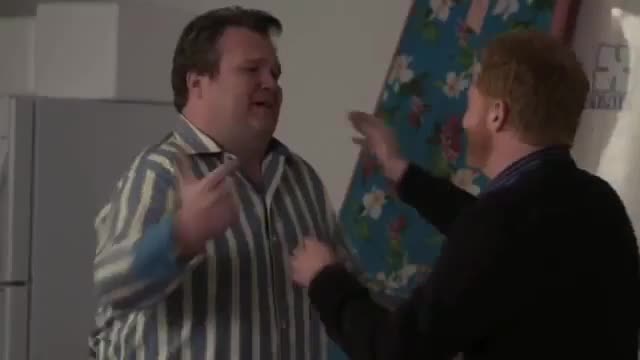
[The Chaos and Complexity of Modern Fatherhood: A Reflection]-[The Rules of Parenting (Modern Family)]
📋 Summary
The Unpredictable Nature of Parenting
Being a "great dad" is a profoundly challenging endeavor, a question posed at the very beginning of this dialogue that highlights the ambiguity surrounding paternal roles. The conversation suggests that fatherhood is not a static set of rules but a series of chaotic, often humorous, and overwhelming experiences. The speaker acknowledges that the role is "a tough one," pointing to the difficulty of balancing authority, guidance, and personal sanity.
The Intrusion of Childhood Chaos
One of the central themes is the constant presence of children and the subsequent loss of personal space. The dialogue captures a moment of domestic absurdity where the boundary between adult life and childhood whims is blurred. The speaker mentions that their "school is full of them," referring to the relentless energy of youth that permeates every aspect of a parent's environment. This leads to a desperate, almost comedic desire to "fix that stuff," a phrase repeated like a mantra to signify the father’s attempt to restore order to an inherently disorderly environment.
The Struggle for Connection and Understanding
There is a poignant realization within the text: "Sometimes it's hard to remember when we're ten years old and three quarters." This reflects the disconnect that often occurs between generations. As fathers, we struggle to empathize with the specific, fleeting mindset of our children. The physical comedy described—breaking a window, the chaos of sports, and the overwhelming sensory input—serves as a metaphor for how parenting often feels like a series of accidental collisions rather than a structured educational process.
Seeking Refuge and Perspective
The dialogue culminates in a desperate search for relief. The exclamation, "It is a park! Away from the kids! Away from the lake!" underscores the universal parental need for a momentary reprieve. The chaos of the domestic sphere, described as "two things flaming at once," forces the father to pause and engage in deep reflection. Even in the midst of total disorder, the father remains "still thinking," suggesting that despite the lack of a clear manual for being a "great dad," the commitment to processing these experiences is what defines the role.
Ultimately, the text paints fatherhood as a high-stakes, high-energy environment where the goal is not necessarily perfection, but rather the ability to endure the "hugging," the broken windows, and the constant noise, while still finding the capacity to observe and reflect on the journey.
Deep Learning with ListenLeap


