You're listening to Roundtable, I'm Yeo Hong -lin joined by Steve and Ding Hong.
Coming up soon. When parks start looking like fashion runways and town dynasties princesses outnumber tourists, is it time for a reality check?
Are we capturing the perfect shot against the best background or is it a selfish deed at the cost of everyone else's experience?
And 3 million bottles produced a day, exported to 160 countries and praised for pairing with everything from rice to desserts.
Lao Gan Ma is redefining what a chili sauce can achieve.
Today, we'll discuss what put it on top chefs and food riders Christmas wishlist.
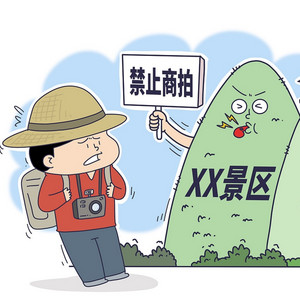
But first, in the age of social media -worthy moments and travel influencers, commercial photography has become a booming industry, turning tourist spots into runway sets.
But not everyone is thrilled with this trend, especially when it means blocking pathways, setting up bulky equipment or crowding out regular visitors.
Recently, Beijing's iconic parks, including Beihai and Temple of Heaven, have taken a stand, saying no more to these disruptive photo shoots.
While some support this move, others argue for a more balanced approach.
So are these bands the end of artistic travel photo frenzy, or just the beginning of a new chapter in park management?
First of all, let me ask, have you ever seen some of these full -on artistic commercial photography in public places?
Well, I have from time to time indeed witnessed this kind of behavior, or let's put it this way, they're commercial activities, right?
I guess the background information is that we are really seeing this increasing popularity of guo chao, or Chinese -style fashion, as well as this booming tourism industry.
And against this backdrop, many visitors to China's historical or cultural sites, and some of them are actually public parks.
These visitors have turned to professional photographers to capture personal, sometimes elaborate photo shoots, and I guess iconic outfits like traditional Chinese hanfu, or themes like town princess or dong huan, flying aprosaras have really become very, very popular, extreme popular among tourists
hoping to enhance their travel experiences through these photo sessions.
That's why commercial photographer industry is gaining traction.
How about you, Steve?
Have you ever seen any of those?
Well, when you say travel and then commercial photography, I'm confused.
So are we talking about elaborate setups with lighting?
You see those big white screens that they set up sometimes, and then you've got the hair and makeup people, then you've got the photographer him or herself.
Is this what we're talking about?
Or are we talking about just people traveling, renting a local costume, and dressing up and then going around town taking pictures with themselves?
We're actually, well, actually, I think we're talking about a little bit of both and also something else.
So when it comes to commercial, well, to start with, for your second option or the second scenario you just described, someone going to, for example, an ancient water town in China and you can experience or you can visit a lot of architectures with historic styles and you want to dress like people from that specific
period. For example, we know the Tang dynasty in China is quite praised and very much liked.
And if you want to dress up like a Tang dynasty princess and you go to visit places like Hunan or Hunan province, you can also visit, for example, Kaifeng or Luoyang or Shenzhen.
You want to visit Xi 'an for sure.
Yeah, everybody is doing this.
Then that is OK, because you're only experiencing, you're giving yourself an immersive experience and you're not bothering anybody in that specific area.
That's fine. What we are talking about here are essentially, I think, two types of activity.
First is that you go to a certain place and hire professional photographers.
You've got the full on everything, equipment, dress up, make up and everything.
And in order for you to take the perfect shot, you need to take up the space much longer than the average space, an average visitor or tourist would take up and also longer time.
That's one type. And another type is you travel to a tourist destination and we've got these people who are taking shots paid, let's say, photography photos.
So, for example, they charge you 21, which is approximately three to four US dollars for one shot.
But because they're relatively professional, you feel like you can get a better picture from them.
So these two types are qualified or are defined as commercial photography.
So then in those cases, the things that people would be complaining about is the disruption to the public space because these are public spaces where these shoots are happening.
You've got overcrowding.
Then you've got congestion if these photographers or the setup is in a place where there's a lot of foot traffic, then you're going to have a problem there, which is going to affect the visitor experience, all be the visitor from somewhere in China or from overseas somewhere.
Doesn't matter, right?
And then from that, then you've got the loss of the cultural experience.
And so all of these things put together is what's creating this big problem.
Yes. And this is not even the first time that these actions or these, let's say, different public spaces start to ban these actions.
But for this bunch, we are looking at several specific examples, are we?
Yeah, exactly. Here in Beijing, we are talking about examples like Beihai Park and this temple.
Heavenly temple, I guess.
That's another example.
And in particular, these parks have banned activities, including, say, bringing large photographic equipment like lighting and vehicles like prolys or it can't vanish into the value.
It can't vanish? Yeah, it makes a lot of sense.
It's a lot of stuff.
Of course you can't bring a van in there.
Also, you cannot set up photo stations or areas that can disrupt the normal flow of visitors and wearing commercial branding like those information, including the contact information, et cetera, or using costumes that advertise businesses.
This kind of activity also prohibits company logos.
So using the backdrop of a famous location that tourists typically enjoy to help promote your product, yeah, OK, I get that.
And in addition, commercial shoots that can cause long time blockage or crowding in smaller, more sensitive areas like those historical building or contested pathways are also very much restricted.
So is this a Beijing problem or is this happening in other parts of the country?
Yeah, this is we are talking about Beijing case, but Beijing is not the only city trying to address this issue like in November, the Orange Island scenic spot in Changsha, the capital city.
Yeah, the Zhu Zizhou area.
That's very famous because of the poetry by Chairman Mao Zedong.
Where's Changsha? In central Chinese city, the provincial capital of Hunan Province.
They that's a location basically face the issues of some unauthorized commercial shoots.
So as a result, cameras used to force such kind of activities were banned and in some cases they were confiscated by local authorities when they investigated.
Yes, this is this case I explained as the second category, because if you're in a historic setting, then you want to the full dress up and everything to take, quote unquote, professional artistic shots yet in these places, for those of you who are not familiar with the Zhu Zizhou area or tourist destination,
you can understand it as you can understand it as the Chinese version of the Mount Rushmore National Memorial, the Chinese version.
You've got the Chairman Mao's capture, well, the Chairman Mao sculpture and everything.
So these places you don't normally want to dress up too much for this background.
Yet you've got to, we get to see that people who are running commercial shooting business go about and ask visitors, do you like to have a photo shot taken?
So they can also just disturb the experience of people.
Makes sense. That's one of the examples.
And another example here is in Xi 'an city, in northwestern China's Xi 'an that Ding Heung has mentioned, in May, Xi 'an implemented rules around the bell tower area restricting commercial shoots after five p .m.
So that people in that area, if you are a visitor and you want to visit that place, it can give you a better experience.
And the reason I mentioned that was because actually my wedding photo was taken.
Oh, get out. Get out.
I was there a couple of months ago.
See? And I was one of the people it wasn't a commercial photo shoot, but I was one of the people taking pictures in front of the bell tower.
And I was the commercial shoot.
You did you. Yes. I've got the traditional costume.
I've got a really large red dress.
It was my wedding photo.
And it was several years ago when this kind of activity was not that rampant.
And I have to say, although on my defense, I didn't interrupt visitors, I even attracted several visitors taking photos.
You were the tourist attraction.
That was that was. But definitely because I do remember the equipment and a lot of stuff and have to basically occupy the area for a longer period of time because of the posing, the lighting, the you have to throw your dress in the air and waiting for it to fall down to the perfect position and everything.
And now see, this is why these types of restrictions make sense.
You know, in Xi 'an it's after five p .m.
I've been to that Bell Tower area.
It's absolutely gorgeous.
My goodness, it's such a beautiful piece of architecture.
And right behind there is a major alley where people do a lot of food shopping and trinket, trinket shopping souvenir shopping.
And you had your wonderful, beautiful wedding photos taken there.
But if 10 other people, 20 other people are doing that at the same time, that's a really highly congested area.
There's so many people there for the night market.
So that's why they have to put these types of rules in place.
And the only reason that we chose, well, not the only reason, one of the reasons we chose Xi 'an was because in Beijing, even at that time, it was hard to find a background like that that allows these commercial photography.
That's why I said this is not the first time we do this.
And the one funny thing is I suddenly realize people have different needs.
You have people with the need to experience the area wearing traditional costume.
You have people with the need to, for example, take a picture that can help them remember the beautiful moments years later.
You also have people with the need to wear a gorgeous costume and go take a photo in that area.
Are those needs less important or do we not have to?
Or do we not? Are we not respecting those needs just because other people?
Well, I think you make a good point.
And this is what you mentioned in the beginning, is that this isn't something that's wholly supported, right?
There are people out there who argue that the bands might not be the best approach.
Yeah, because, you know, from a little bit of a philosophical sense, I guess public management or public policy is essentially about striking a balance.
Park management or management of those historical tourism spots is no exception in this regard.
So there really needs to be a balance between catering to the commercial needs and taking care of the the public needs to.
So to entirely kill the commercial photography industry is definitely not the answer because those activities, to say the least, they bring traffic, they bring revenues to those sites and historical sites as well.
So I guess some despite the efforts to regulate those commercial photography, some people argue that the entire bands may not be the best answer.
They say they need to be more nuanced, flexible system to regulate everything.
Which I think is a pretty easy fix, right?
An appointment based system where you let the park know or the attraction know that you're coming on that particular day so that you can arrange things properly.
You're not going to get security coming over to you.
So it's better for the you know, having that type of system is better for everyone.
It's better for the parks.
It's better for the tourists who are there.
And it's better for the people who are conducting the shoots because they know that they can do it without bothering anybody.
You know, there's another fun solution that I personally experienced for the same photo shooting of my wedding photo day.
Actually, I experienced four different costumes and one of those costumes were were especially designed and paired up in a park area, outdoor park.
And I realized that park was the designated places for these kind of photo shoots.
You don't really see a lot of visitors.
You only see people like I think dozens of pairs of new young couples going to have their wedding photo shot there.
So it's kind of like a photo, a commercial photography designated park.
That can also be a solution.
But are we only looking out?
Well, I think what I'm trying to ask here is that is commercial photo shooting the only thing that disturbs others while you are enjoying it?
Are we looking at some other activity that are basically created and generated in these day and age yet getting a lot of frond upon because they are disturbing other people?
I'm laughing right now because I'm immediately thinking of the selfie stick.
Was that a thing in China?
It's a thing, it's a thing!
Is it still a thing?
Because back in 2014, Time magazine named the selfie stick one of the best inventions of the year.
And shortly after, it started to get on everyone's nerves.
Everybody had a selfie stick.
When I asked if it was a thing in China, I mean, like, were they everywhere to the point where it was almost annoying?
Not so much? Yeah, personally, I'm OK with it.
You know, I don't understand why it can be annoying.
Maybe I have because you're a tall man, tall, strong, young man.
Who can elbow out everybody for me?
I'm not that tall and I cannot see a lot of things already.
And with a lot of selfies stick waving in front of me, I just couldn't see anything.
It got so bad that it got...
That's why. Oh, I see.
It got... Thanks for the reminder, you know...
It got banned in various locations around the world.
The Colosseum in Rome and Italy, you can't bring a selfie stick in there.
I don't know if that rule still applies today, but it did for a period of time, Disneyland globally, they banned the selfie stick, which was a big decision for that because everybody was taking a selfie stick to Disneyland.
Of course they were.
That's the perfect location to take it.
Versailles in France, the running of the bulls in Spain.
You can't have a selfie stick there.
That's not safe. Yeah.
Well, that's for safety reasons, right?
But then selfies, too, just selfies.
Self...well... Just stretching out your arms and taking a selfie is bad.
I don't understand.
That's banned in some places, too.
The Tower of London, you can't take a selfie there, apparently, because that's where the precious crown jewels are kept under high security.
So I guess that's done to prevent potential criminals from making a plan, maybe.
There's other places, too.
There's a beach in France, Garoupe Beach, if I'm saying that properly, where apparently you can't take a selfie there.
And that's not about safety.
That's because authorities want you to enjoy the haven, to enjoy the moment, rather than showing off on social media.
Apparently, in Saudi Arabia, for those on the pilgrimage to Mecca, you can't take a selfie there either.
So selfie sticks banned in some places and then just the selfie in general is banned in some places, too.
Well, I think at the end of the day, of course, different parks or city managers can decide whether or not or where to strike a balance between respecting everybody's wishes and having more people enjoying the public spaces.
After all, public is one of the key words here.
Yet as individuals, we can also make a choice.
We can choose not to disrupt others.
We can choose not to talk so loud in libraries or in museums.
And we can choose not to stick our selfie stick into short, yet independent, strong women's face so that they can enjoy the world as well.
So after today's discussion, let me know, what do you think?
Should public spaces serve as platforms for creativity and commerce or should they remain sanctuaries for shared uninterrupted experiences?
Because at the end of the day, I think it's a reflection of societal priorities.
So let us know, what do you think in the common area?
You're listening to Roundtable.
Who would have guessed a chili sauce made it onto Britain's Christmas wish list?
Lao -ga -mak isn't just that spice.
She is irresistible.
Stay tuned. Looking for passion?
How about fiery debate?
Want to hear about current events in China from different perspectives?
Then tune in to Roundtable, where East meets West and understanding is the goal.
It's Roundtable with myself, Neil Honglin, Steve Hatherly and Ding Hong.
Move over. Christmas Turkey.
Lao -ga -mak, China's national chili goddess, is stealing the spotlight.
Her charm isn't just fiery it's global.
You heard me right.
These days Lao -ga -mak is getting attraction from around the world.
People are enjoying it, loving it, and even top chefs and food writers are putting it on their Christmas wish list.
I cannot say I am that surprised as a fan of Lao -ga -mak, but I have to ask both of you, have you tried it?
For sure. Lao -ga -mak, crispy chili in oil is one of my favorite condiments or Chinese condiments, Chinese style.
It is basically good just with everything ranging from rice, steamed bread, meat, fish.
Pizza, pizza, pizza.
Have you tried also?
Vegetable. That is very interesting, because I want to ask you if you claim as a Lao -ga -mak fan, do you know, actually, there are different flavors of the Lao -ga -mak chili sauce?
Yeah, exactly. They have the bean themed flavor.
They have the chicken themed flavor, the beef themed flavor.
Different flavors. Yes, for the chicken and beef flavor, you can actually get chicken and beef in the sauce.
Small pieces, right?
Small pieces. And there are ones with peanuts in it.
I love the peanut ones.
Oh, yeah, that was great.
And there's also very chewy and spicy and crunchy even.
Yeah, dried tofu. Yes.
So a lot of different types.
Do you want to hear a little cute story I found on the Internet about the peanut version?
So in 2003, there was an American couple from North Carolina on vacation in China, and they discovered at a local grocery store Lao -ga -mak sauce, chili sauce for the first time.
And Mike Fisher, that was the husband's name.
This is what he said.
I saw it and I thought it looked unusual, because in America, all the faces on product labels have big smiles.
Not Lao -ga -mak. That woman has a very serious face.
So they were curious.
So they bought a bottle of it and they had it with some pot stickers and they immediately fell in love with the flavor.
And he said, best of all were the little crunchy bits of peanuts, which are like bullet shrapnel somehow.
And he said that he's the gentleman and he picks his wife loves the little peanut parts.
So he picks out the peanut parts when he comes back to China every once in a while and he always picks up about 10 bottles of the stuff.
And he says he picks out the little peanut parts and gives them to his wife.
And he said, that's when she knows I love her, because that's her favorite part.
Oh, Merry Christmas.
So one thing I can share or some of my personal observations have about Lao -ga -mak is that the hometown of Lao -ga -mak is of course the western or the southwestern Chinese province of Guizhou where the local food is known to be very spicy.
However, when I checked with some of my local friends over there, they would tell me that they rarely eat Lao -ga -mak over there because in their eyes, Lao -ga -mak is not spicy enough.
So they would prefer spicier choices, similar choices that are available locally.
But going beyond Guizhou, Lao -ga -mak has been such a amazing, wonderful success story.
Maybe partly because of its degraded spicy level, because not everybody else is capable of eating spicy food as Guizhou people do.
But really putting away this debate regarding whether Lao -ga -mak is spicy enough, its flavor, its taste is really representing a kind of typical, authentic Guizhou style that somehow is almost universally appealing.
Yes, I can give you 10 reasons why Lao -ga -mak is a standout in cross -cultural culinary adoption.
Yet I'm not the perfect speaker for this because, Steve, you've tried it and you're supposed to be having a Western taste.
So for those who have never tried Lao -ga -mak, tell them why should they try?
Well, you've got the oil flavor, right?
The spicy chili oil, then you've got the spicy crunchy chili flakes.
And then depending on what variation of the sauce you get, I've only had the one.
I think the one with the peanuts in it, the little crunchy peanuts in there.
So it's just a unique flavor that you never find, you don't find in America or in Canada or probably other Western countries, the UK.
I don't think they're known for spicy food, right?
So even though in Canada and America we have hot sauce, you know, hot chicken wing sauce and things like that.
It's a different flavor.
It's a different kind of spice.
It's very unique and it is delicious.
And from a marketing point of view, I've never met her.
I don't know if she's angry all the time, but having her face look like that on the label is absolute genius because look at that American couple.
The label alone made them stop and pick up a bottle and try it.
And that's such a unique and fun idea, too.
Talking about fun, actually, if you think about a chili sauce, of course.
Pizza, noodle, dumpling, shirshir, but apparently because of the popularity of this chili sauce, people started doing experiment and try new, let's say, combo of foods to just put them together.
For example? Yes. Are we looking at some fun examples?
I actually have mine in mind, but Dinghong, you share first.
Well, I have seen some Westerners try Lao Gan Ma with dessert or ice cream.
Ice cream. That's really creative or innovative.
But to me, I feel like I need more courage to try the same.
When I was a college student, I once tried Lao Gan Ma with the toasted bread in my dorm.
It was good in general.
But compared to the Chinese mando, steamed bread, I would have preferred Lao Gan Ma with steamed bread.
You're very conventional when it comes to this chili sauce.
I have tried ice cream.
It was good. It's just a different type of feeling.
And unlike other chili sauce that are relatively smooth, I think Lao Gan Ma is more crunchy and chewy so that you can have something to chew on and add a little bit of flavor to ice cream.
Did you know there's a Facebook appreciation group for Lao Gan Ma?
Seriously, it was started by Simon Stolle.
He's a Swiss photographer.
I'm a member of the group now.
I joined this morning.
There's over 4 ,500 members on there, I think.
Clearly, whether in a London kitchen or a small alley in Guizhou, the aroma of Lao Gan Ma tells the story of its own, a tale of culture, spice and connection.
That brings us to the end of today's Roundtable.
We'd love to hear your thoughts on today's topics.
Leave us a comment wherever you listen to your podcast.
Just send or you can send us an email to RoundtablePodcast at QQ .com.
I'm Yuho Lin with Steve and Ding Hung.
Thank you for listening.
Bye bye.