This is an iHeart Podcast.
Guaranteed human.
This is Matt Rogers from Las Culturistas with Matt Rogers and Bowen Yang.
It's always exciting when someone new moves into the neighborhood, especially when they bring reliable, intelligent Wi-Fi.
Xfinity is now available in your area, so you can get the five-year price guarantee.
Five years of Wi-Fi that finds and fixes issues before you even notice them.
It helps keep you protected from online threats.
Plus, you get incredible gaming speeds on multiple devices with no one battling for bandwidth.
With no annual contracts, no hidden fees, and their best equipment included.
All with the Xfinity 5-year price guarantee.
Xfinity.
Imagine that.
Restrictions apply.
Select plans only.
On this week's episode of The Next Chapter, I, D.D.
Jakes, get to sit down with Oprah Winfrey, a media mogul, philanthropist, and global trailblazer.
I could feel inside myself at four or five years old, looking through the screen on the back porch, that this is not going to be my life.
Listen to The Next Chapter on the iHeartRadio app, Apple Podcasts or wherever you get your podcasts.
Episodes drop weekly.
Hey there, dr jesse mills here.
I'm the director of the men's clinic at ucla and i want to tell you about my new podcast called the mailroom, and i'm jordan, the show's producer and, like most guys, i haven't been to the doctor in way too long.
I'll be asking the questions we probably should be asking but aren't.
Every week we're breaking down the world of men's health, from testosterone and fitness to diets and fertility.
We'll talk science without the jargon and get your real answers to the stuff you actually wonder about.
So check out The Mailroom on the iHeartRadio app, Apple Podcasts or wherever you get your favorite shows.
Confidence is about being able to walk into any room unapologetically yourself and walk out of it not worrying what everyone else thought of you.
Hey everyone, welcome back to On Purpose, the place you come to become happier, healthier and more healed.
I am committed to making a healing world, not one that is finished, complete or perfect, but one where we're all a work in progress.
And today to help us do that to heal from the inside out, to work on some of the biggest challenges that we all struggle with, whether it's insecurities, whether it's self-doubt, whether it's a lack of self-trust, whether it's feeling like we're not enough.
Maybe you felt not smart enough, not beautiful enough, not thoughtful enough, not tall enough, whatever it may be.
And it all affects a part of our life that we call confidence.
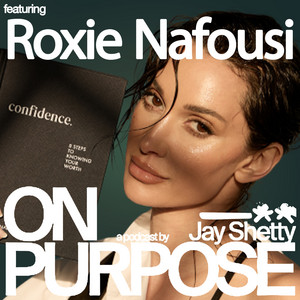
And today's guest is none other than my dear friend, Roxy Nafusi.
Her new book is called Confidence, Eight Steps to Knowing Your Worth.
She's the bestselling author of Manifest.
She's been on the show before.
You loved our episode together, and I'm so excited to welcome back Roxy Nafusi.
Roxy, it's great to have you back.
Oh, thank you so much for having me.
I mean, I couldn't believe I got to sit in this chair once.
So to be here twice, what is this life?
Honestly, like since the moment we met, we hit it off.
And I shared last time just how many people in my life read Manifest.
I've gifted it to so many people as well.
And I, anyone that's read it, anyone that connects with your work and knows we know each other will message me and just say this book was awesome.
Like I love her work.
And to see you continue to rise and soar and now create this book as well, again in your signature style of being poignant effective relatable, simple.
It's so powerful.
And I'm so glad you dedicated time to confidence.
Thank you.
No, I'm so, so honored.
Thank you so much.
Okay.
So let's dive in, Roxy.
Confidence is such a big thing.
I wanted to ask you, how do you define the word confidence?
So I think there's so many different ways to define confidence.
And I think for me, confidence is ultimately about self-worth.
It's about knowing that you are enough exactly as you are.
And I think what confidence isn't And the way I don't define it is as being an extrovert.
So a lot of people think that if you are confident it must mean that you're comfortable being loud or you're charismatic, and you kind of think that that's what it's about.
But for me, that's not it at all.
You know, I think confidence is grounding.
It's quiet.
It's stable.
And one of my favorite definitions of confidence is that confidence is about being able to walk into any room unapologetically yourself and walk out of it not worrying what everyone else thought of you.
And I think when you can get to that place, that's when you know you've reached it.
I like that definition.
That's such a brilliant way of putting it, because I think we are all overthinking.
Before we walk into a room, what's everyone going to think of me?
And then we walk out, we're all thinking, what did they think of me?
The whole car journey home wondering everything you did and whether someone saw you drop your spoon or spill a bit of wine or drop some food or whatever.
It may be right.
You're overanalyzing every moment and you're wondering, well, does that, do they think I'm smart?
Do they think I'm clever?
Do they think I'm interesting?
Do they think I'm boring?
One thing you said.
What's really interesting to me, and I want to kind of go down that road, is how do introverts and extroverts demonstrate confidence differently?
Or does it even look different?
I think that I suppose I mean I've never considered that before, but I think that extroverts, probably they feel most comfortable when they can be social, when they can, you know, make people feel comfortable in their space, make them feel seen, heard.
They're good at conversation, you know, getting a group together and you know, and they just feel good in that environment.
I think for an introvert it doesn't mean that it's really about having a like I said those words before that quiet, grounded confidence.
So you don't need to be the loudest in the room because you don't need.
You're not trying to prove yourself.
And that's the really, confidence isn't about proving yourself.
It's about knowing you're enough and not needing anyone else to kind of validate that for you.
Yeah.
Why is it that we it feels so obvious like is there a healthy pursuit of validation or is validation all bad?
Yeah.
I think that it's impossible to really think that we're not going to want any validation at all.
Like, of course we do.
And I think that we should need some, because we need to be like upstanding members of society and respect other people and also helps to encourage us to strive to be better, to be better in life as people, as individuals, in our careers, in our relationships.
So it is important to motivate us to be the best that we can be, which is great.
But I think the problem is is where validation?
Well look, let's say that.
Let's start with this.
Evolutionary, we needed to belong, to survive in a tribe, right?
And so it was really important for us to be liked by other people or to be part of something.
What's happened in the modern day is we've taken that kind of evolutionary need to belong, but instead of it being kind of important for our survival, it's now how we determine how enough we are, or the measuring stick of which we kind of measure our worth.
And so I think that you know yes, we do need some validation to keep us growing, but we've just taken it so far that now other people's opinions matter more to us than our own.
Yeah.
And I think you're so right that that switch has gone from being does my class think my trainers or my sneakers are cool?
To now everything's broadcast to the whole world and it's measured, and So you got 10 likes on a post and someone got 20, and someone got 20 million and someone got 20000.
And so you're so right that now that validation has become a matter of worth net worth as well and indicative of how much attention you get.
Whereas before you're in your classroom or even your tribe and you're like yeah, if I've got 20 people that are generally okay with me, I'm fine.
The problem with it as well is it changes our self-perception.
So let's say that and I know you love that quote, because I love it too that I am not who I think I am.
I'm not who you think I am.
I'm who I think you think I am.
And I kind of explained it like this.
So I was still sat next to someone at a dinner once and she was an influencer and she said you know, sometimes I'll post something that I really love on Instagram and it doesn't get any likes, and And then I think that that post is terrible.
So you start with, let's say, you have a picture that you love of your family and you think this is such a beautiful picture.
I love it.
And then you post it and it doesn't get that measure of like that you are expecting.
So it gets 10 likes, let's say, and that for you doesn't feel enough.
And then instead of you thinking, okay, that just Maybe not many people saw it today.
Maybe it was the algorithm.
You actually start to question your own decision.
Why did I post that?
Was it even a good photo?
And so actually, instead of thinking that it's about anything else or there's any other reason for it, you change your own perception of yourself, or your own opinion of yourself.
And so I think that's where it's really damaging is that yeah, we don't just look for external validation to guide us.
We look for it to tell us what we should think about ourselves.
Yeah, that's so good.
And you made me think about how we all post that caption of felt cute, might delete later.
And it's like that idea of like, I felt I looked cute.
So I posted this.
And now I'm going to see if everyone else felt I looked cute.
And if they don't, I might delete it later.
And that's that mindset that you're saying, where it's like oh no, but I thought I looked really good here.
And I wanted to share that.
And now you're so right.
Now you're making me feel like I don't look good in a picture.
I thought I looked good in, which makes me feel even worse.
What are some of the other ways, where does this show up?
I love that example that you just brought it to of posting a picture of your family or this felt cute, might delete later.
What are other things that you hear from people of where we're seeing a lack of confidence show up?
What are people worried about?
What are people scared about?
What are you hearing from people that you work with and meet and when you're traveling touring speaking, what are you hearing?
Oh gosh, I mean, I think that lack of confidence shows up in every single area of our lives and I think that you know the Obviously.
My first book was Manifest, which was seven steps to living your best life.
And it was that seven-step guide.
And step two is remove fear and doubt.
And people would often say to me Roxy, the step I struggle with the most when it comes to manifesting, and to manifest, we can only manifest what we subconsciously believe we are worthy of receiving.
So it's all rooted in self-worth, which is why confidence is such a great extension to my work.
And people would always say the hardest step is step two, remove fear and doubt.
Because this insecurity, these low self-worth, this feeling of lack of confidence is so embedded into us and into our kind of belief system that really it's the hardest thing to work on.
It's the hardest thing to undo.
And so, whether people are looking for love, whether they're trying to grow within their careers, whether they're trying to build on their own, you know they're starting their own business.
Whatever area of their life, it is usually the reason they're not fulfilling their potential or growing in the way that they want to is is because of a lack of confidence.
And what I always think is really interesting with confidence is that we always assume if we were sat in a group of people, we would always assume that the person sat next to us was free of it, that they are so confident.
We don't see their self-doubt.
We don't see their insecurity.
But actually when I do my live shows and I say, to an audience of thousands of people, and I'll say, who here can honestly say they are completely free from self-doubt, insecurity, or feelings of low self-worth?
Not one person will raise their hand.
And so you really start to understand that this lack of confidence is a universal experience.
It's something that actually binds us all.
And I think there's so much vulnerability and connection to be found in kind of sharing it a bit more with each other and being more open about it.
And it's also so comforting because we remember that we are not seeing what other people are going through mentally.
Do you feel that there's a difference between men and women and how they experience confidence?
Do you know?
I think that women have more pressures, and And so I think that we can assume that it's much harder for women to feel confident.
But I think it's harder for men to express it.
And so I also really feel for men, because I think as a group of women it's much easier for us to go to each other and say, oh God, I feel so gross today.
Or, oh, God, you know, I really fucked up in that meeting or whatever.
And I think we give each other more like therapy, whereas I think I assume and I'm generalizing here, but men aren't as good as opening up to each other about their insecurities, is my opinion.
Yeah.
No, it's a really interesting thing to think about.
And I think that's a really interesting observation because I wouldn't say you're wrong.
I think when my male friends and obviously because of my work and who I am, I guess more men and me do have those types of conversations.
But in general, even when I have my male friends being really open about something, it's hard.
Like it comes with a very light, this is a big thing.
Whereas I assume, as you're saying, like when you're talking, it's just chitchat and it's how you feel.
Whereas this is like, hey, I've got something to tell you.
And then it's a moment of, this is what I've been struggling with.
And yeah, it feels a lot heavier and therefore it feels a lot heavier to that person in one sense as well.
Your first chapter is called Master Your Thoughts.
You write, your mind can be your home or your prison.
You get to choose which.
Talk to me about how your mind can be a home or a prison.
When we really think about what are the barriers to confidence.
Our inner critic I think everyone would agree is the biggest one.
And I think that what I really to understand is how powerful our thoughts are, and that our thoughts really do shape our reality.
And the reason for this is because thoughts become beliefs when they're repeated so many times.
And what we believe about ourselves determines our whole experience of the world, because it becomes the filter through which you view everything, every interaction, every experience.
And everything is filtered through what you believe about yourself and the world, and then interpreted.
And so, for a really clear example of this would be, let's say, that you were to hold a belief that you are naturally not good with people.
You have a belief that you're boring.
Perhaps you had a belief that you were bad at making friends.
You then go to a dinner party and and you meet someone new for the first time.
And because you hold this belief, the way that you interpret this person's social cues, whether they you might really focus on the fact that they look over your shoulder.
You may notice the fact that they didn't ask you a question, but you really focus on the fact that they just talked about themselves.
And then you might really make the fact that they walked away to talk to someone else feel like this really big deal.
And as a result of the fact that you're viewing it through this lens of I know I'm not good with people or I'm not good at making new friends what happens is you're focusing on the wrong cues and then you likely become a bit defensive.
And then you create a self-fulfilling prophecy, whereas if somebody had a belief like oh, I'm really good with people, I'm great, I'm charismatic, people generally tend to like me you're going to have the exact same interaction.
You won't notice any of those cues.
You won't misinterpret maybe a neutral expression as disinterest.
And so you're probably going to respond in a more positive way to that person and be more open.
And then you'll create reinforce that belief in yourself.
And so this is happening all the time in our lives.
And it's a lot easier for our brains to actually just find evidence to support what we already believe, rather than kind of find conflicting evidence and then have a new way of thinking.
And so our minds really are keeping us stuck in these patterns.
And I describe it like this in the book.
Imagine you're a comedian on stage and you're on stage and you're giving your set and the audience are booing you.
They're like, get off the stage.
And essentially they're heckling you.
Now that comedian on stage, um, is never going to be able to give their best performance, right?
Because they're going to feel self-conscious.
They're going to feel nervous.
They're going to be overthinking everything that's coming out of their mouth.
And so it's not going to be as relaxed.
They If they were to go out and give the same set and the audience was there cheering them like laughing.
They are going to be so much more likely to deliver their best.
Their jokes are going to be funnier.
They're going to remember things.
It's going to be a fantastic show.
Now, in our lives day to day, we are heckling ourselves.
And so how do we expect ourselves to be able to put our best foot forward?
And so it's really about understanding that our thoughts, which are then forming our beliefs, are having so much influence over not only how we feel, but who we become and our whole lives.
And so being able to master your thoughts really is the kind of like first of these eight steps to knowing your worth.
That heckle.
Yeah.
It's so real.
And it happens from the moment you wake up.
Like you wake up and you look in the mirror and you go, I look so tired.
Oh, I've put on a bit of weight.
Oh, whatever it is, right?
We all have our own version.
Oh, I've got gray hairs.
Oh, whatever it is.
And then after that, you're like, oh God, I'm late for work.
And again, it's like everything.
And we do it to ourselves every day, all day.
Oh, I shouldn't have spoken up in that meeting.
Oh, I should have spoken up in that meeting.
Oh, I... said something stupid in that meeting.
Oh, I should have said more.
Oh my, I'm not going to get a promotion.
Oh, I don't deserve, you know, whatever it is.
It's just, it's crazy how incessant it is.
And it's like every tiny move.
It almost feels like you think someone's watching you on the big screen and analyzing every move.
And I wanted to ask you though, what's the difference between self-awareness and self-criticism?
It's the intention behind it.
I think that Self-awareness is about being able to say let's say, you've gone into a meeting and you've given a presentation.
And during the presentation, maybe you do mess up.
Maybe you don't say the right thing.
Maybe it's not your best performance.
And afterwards, if you were to come out, self-criticism would sound like, oh, you're such an idiot.
Why did you do that?
Typical that you would.
You're never going to get it.
You've messed up.
Self-awareness is, you know what?
That wasn't your best, but... how can we improve for the next time?
There's a different way of approaching it, because confidence is also not about ignoring all your flaws.
It's not about just saying, oh my God, I'm just perfect how I am.
I have a quote in the book where I say confidence is knowing that you're a masterpiece and a work in progress at the same time.
And so self-awareness is important.
As humans we need to be growing and evolving.
But it's, how can you actually notice perhaps your flaws, perhaps areas where you could be better and do better, but approach it in a way that feels really compassionate, that feels because you know, in that compassion you're actually giving yourself the best opportunity.
Think about a child, right?
If you want a child to learn a new skill, you're not going to go and just berate them.
You know, when I'm teaching wolf maths, if I'm like, oh, you idiot, how didn't you get that?
He's going to be like, Forget it.
I'm like, he would be traumatized.
And he'd hate maths for the rest of his life.
And yet that's how we talk to ourselves all the time.
We're just telling ourselves, we're just mean.
We're mean to ourselves.
And it is so exhausting.
And I know that so many people listening are just tired.
They're just tired of constantly being in this battle with themselves.
And you just get to a point and you're like I just don't want to live like this anymore.
Yeah yeah yeah no, it's so right.
And it's interesting because we always say like you should talk to yourself as you talk to a friend, but it's almost like talk to yourself like you talk to a child.
Yeah, because from what you just said yeah, like teaching in maths, it's like there's an inner child inside every single one of us that is lacking in confidence and that was criticized and was heckled while they were growing up.
It's not even talking to a friend.
It's talking to this younger person inside of yourself and your younger self and saying yeah, it's okay that you're not good at maths right now.
Like, you know, you wouldn't, you would, that's what you'd say to a wolf and you wouldn't tell him to get his act together or grow up or you should get it by now.
Yeah.
And it's, it's hard.
It's, really difficult when you are familiar with the inner critic.
It is really challenging at first to be able to actually pause on the kind of like spiraling thoughts and speak to yourself kindly.
If I ask people, like, I want you to just repeat inside your head, like, I love who I am.
I am so thoughtful.
I'm such a good friend, right?
I'm so proud of everything I've achieved.
A lot of people will not even say it inside their heads, even though no one else can hear them, because they feel cringe.
They feel like it's embarrassing.
And that's how uncomfortable it is for most people.
So I really don't want people to think that I assume it's really easy to change from having this inner critic to this kind inner cheerleader.
But It is absolutely possible.
And with practice, it becomes more comfortable and it becomes easier.
And so actually, there's a journaling prompt I'd love people to try.
I used it in my Manifest Daily journal, and it's my favorite journal prompt.
And it's a motivational message from my higher self.
And every morning, I just would love people to try this.
Just write down a kind message to yourself, because what it's going to do is it's going to help you really get to know that kind of voice and really give it more power, give it a character, give it space in your mind.
And so when I started doing this practice myself, I would write something really generic like you got this right.
And then as I started getting more used to it, I would write things.
Let's say I was nervous for something that day.
I'd write something like, today's going to be great.
You've worked really hard for this.
Do your best.
Or if there was something I was really excited for that day, I'd say, go and enjoy every second.
You deserve to be there.
This is part of your journey or whatever it was.
And so...
I think that this can be a really powerful prompt for those people who think that I just don't even know where to start with talking to myself like my inner child or like a friend.
This can just help you get to know that voice.
Yeah, I really like that.
This is Matt Rogers from Las Culturistas, with Matt Rogers and Bowen Yang, with no one battling for bandwidth.
With no annual contracts, no hidden fees, and their best equipment included.
All with the Xfinity 5-year price guarantee.
Xfinity.
Imagine that.
Restrictions apply.
Select plans only.
We played mother and son on the show, but in real life...
We're best friends and I'm all grown up now.
Welcome to our new podcast.
Can you believe it has been almost 20 years?
That's not even possible.
You're the only one that looks that much different.
I look exactly the same.
We're rewatching the series from start to finish and getting into all the fashions, the drama and the behind the scenes moments that you've never heard before.
You're going to hear from guests like America Ferreira, Vanessa Williams, Michael Urie, Becky Newton, Tony Plana and so many more.
Icons, each and every one.
All of a sudden, like, someone, like, comes running up to me, and it's Salma Hayek.
And she's like, you are my ugly Betsy.
And I was like, what is she even talking about?
Listen to Viva Betty as part of the My Cultura podcast network, available on the iHeartRadio app, Apple Podcasts or wherever you get your podcasts.
And some of you may know me as Laura Winslow.
And I'm Thelma, also known as Aunt Rachel.
If those names ring a bell, then you probably are familiar with the show that we were both on back in the 90s called Family Matters.
Kelly and I have done a lot of things and played a lot of roles over the years.
But both of us are just so proud to have been part of Family Matters.
Did you know that we're one of the longest running sitcoms with a black cast?
When we were making the show, there were so many moments filled with joy and laughter and cut up that I will never forget.
Oh, girl, you got that right.
The look that you all give me is so black.
All black people know about the look.
On each episode of Welcome to the Family, we'll share personal reflections about making the show.
Yeah, we'll even bring in part of the cast and some other special guests to join in the fun and spill some tea.
Listen to Welcome to the Family with Thelma and Kelly on the iHeartRadio app, Apple Podcasts or wherever you get your podcasts.
And I think that's what we have to understand is that even that inner critic is not us.
It's just a rehearsed habituated, conditioned voice that you've just practiced.
So you've practiced that voice your whole life that says you're a loser, you're not great, you're not enough, you're not good whatever it is.
And if you start practicing another voice, that will change.
And that, for me, was always massively helpful in recognizing that you could change pretty much anything and everything if you wanted to and if you chose to, because all you were living out was a habit and you weren't living out your destiny.
And that's what we believe.
We kind of believe like well, I'm born like this and this is what I have, and this is what I'm living with.
And really what you're saying is no, if you master your thoughts, you can change your beliefs and therefore you can change your reality.
I love the idea of a motivational message from your highest self, because that's even beyond being kinder to yourself.
That's really saying well, let's live your life from this point of view, and how that changes everything.
And it's almost like even if you went one day living like that, like even if you could just do 24 hours of talking to yourself and looking at your life through your motivational message, through your higher self, I feel wow, I could accomplish so much if I just lived up there.
Oh God.
Yeah.
So I have this great, great tool actually.
So If we think about our higher self, like what really is that?
A higher self, for me, it's your most empowered self.
It's the best you.
And if you're struggling to kind of think about that version, what I would say is close your eyes.
And I want you to really think about you one year from now.
And I want you to allow all your fears and doubts to just sit by the side.
Like you don't need them now.
Set them aside for now.
And I want you to imagine one year from now, who is the best me that I could be?
Who would I love to become?
And really get to know that version of you.
How would they walk into a room?
How would they walk out of it?
How do they feel about themselves?
How do they interact with the people in their lives?
How do they feel when they're at work?
And you really start to get this really clear idea of who is the best you.
And that is your higher self.
And then how do you start to bring that version of you to life day to day?
Well, you can do it in every decision that you make.
Because, from the minute we wake up to the minute we go to bed, we make hundreds, thousands of decisions.
And really our life is just a culmination of all the decisions that we make, right?
The choices that we make.
And before every decision, before every choice, I want everybody listening to just ask themselves one question.
What would my higher self do?
And I want you to, like you said, try one day living like this.
Would they snooze their alarm?
What would they eat for breakfast?
Do they reply to this person?
Do they say yes to this thing they don't want to do?
How do they go into work?
What's their body language like today?
And I think, when you start to realize that actually your higher self already exists, you just need to bring that version of you to life.
I think it can be so empowering.
Yeah.
I love that advice.
It's simple.
We can all do it.
And it is just practicing.
It's rehearsing.
I think we don't realize that we've all been acting just with really negative lines and we've learned them and rehearse them for so long.
And we've got to start acting like that higher self to access it.
And that's what's so interesting.
I love what you said, that it's already there, but in order to access it, you have to act it, you have to be it, you have to live it, you have to practice it.
And then you go, oh, wow, I do have that ability.
It's what you were saying earlier, that if you went in and gave your presentation as if someone who was really comfortable, all of a sudden you might actually notice you have other skills that you didn't even know you had.
And when you're being scared about, oh, am I funny enough or am I clever enough?
That just boils up everything else inside of you and dissipates.
I wanted to skip to step three because I want people to read the book.
The book's called Confidence, Eight Steps to Knowing Your Worth.
I'm picking my favorite steps and I want you to get the book to read the steps in between.
I love this step stop trying to be liked by everybody.
My favorite step.
Yeah, this is my favorite step too, because it's such an addiction and I had it for such a long time.
And of course, we all still deal with it.
So it's not like I'm beyond it at all.
But I remember it having such a hold of my life that I couldn't be authentic.
And that's what's so interesting is that we think that the people that are liked by everyone are authentic.
Yeah, sometimes the people who are liked by everyone are the people who tell you that they've just been wearing a mask and hiding their boundaries and ignoring their feelings about how they feel around people, and actually the person who says no, or the person who says i'm really sorry, i love you, but i can't make it.
Or the person who says hey, i wish i could be there for you, but it's not possible.
They're actually being honest and authentic because they're not bending and molding themselves to get you to like them.
So when you say stop trying to be liked by everybody, you said, stop trying to be like everyone.
You don't even like everyone.
And I love that.
I'm like, that's so good.
Yeah.
It was a quote I found on Instagram.
I don't know who said it.
Yeah.
Stop trying to be liked by everyone.
You don't even like everyone.
It's so good.
It's how the step starts.
And look, this for me, it's I just love this step.
It was the most liberating step in my own journey.
And I think will also be for most people listening.
Because again, we talk about the barriers to confidence.
So one is, of course, the inner critic, right?
That loud voice that is just telling you you're not good enough, that's stopping you from putting your best foot forward.
But the other is this constant concern of What will someone else think?
And this is holding us back in so many ways.
Whether it's creating people-pleasing behavior, it's stopping us putting ourselves out there, taking risks, because we have fear of judgment and shame.
There's so many things that it's ruining for us, really.
And so I've come up in the book with these four essential truths, and I really love them.
So should we just go through?
Yeah, let's do it.
Okay.
So the first essential truth is nobody is really thinking about us as much as we think they are.
So there's this thing called the spotlight effect, where we assume that people are perceiving our flaws as much as we are, but they're not.
So let's say you have a spot on your face and you are convinced everybody's staring at it, and they're probably just not.
Or maybe you're in the gym and you do your workout wrong or you drop your weight and you think, oh my God, everyone has seen it.
Again, they just don't.
People don't perceive what you perceive.
And I think that also, when we're really honest with ourselves, nobody is tuning in to the next episode of your life.
They just don't care.
They really don't.
And be comforted in that.
Sometimes I see people on...
I don't mean this in like a mean way, but people will say on Instagram and I'll see them apologizing like oh, I'm so sorry guys.
And it's a genuine apology.
You know, I haven't shown up online and I'm like, you do not need to apologize.
I'm certain no one noticed.
And I don't mean that in a mean way.
I mean it in like, give yourself a break.
If you want to be offline, be offline.
Like you don't need to feel bad about it.
Like Do that for yourself.
So no one's really thinking about you as much as we think they are.
The second is you never really know what people are actually thinking of you.
So I want to give you a quick story of this.
This is when I first really realized this myself.
So you're a public speaker.
So you know that when you give performances on stage and people are listening to you, when people are listening and they're concentrating, they look like they are intensely bored or they hate you.
People's resting expressions are not warm in general.
And when I first went on stage, it was my first ever workshop, I didn't know this.
And so I went on stage and I was really nervous anyway, because I'd never done it before.
I was really stepping outside my comfort zone.
And I remember this particular woman and she was wearing this pink tracksuit.
And she honestly looked like I had just insulted her children.
Like she clearly couldn't stand me.
And, you know, we have a negative bias and I was focusing my attention on this woman.
And after the interval, I honestly couldn't believe that she'd come back.
And anyway, I managed to get through the rest of the show.
And that was on a Saturday.
And on the Monday, I got an email saying, And it said, hi, Roxy, I came to your show.
I absolutely loved it.
And I was wondering if you did one-to-one coaching.
I don't know if you remember me, but I was wearing the pink tracksuit.
And I was like, ah, yes, you know, you really never know what somebody is thinking.
And I think that we can take someone's let's say, they're direct in an email or they don't reply to a WhatsApp.
I mean, how many people listening have had their friends not message them back and they're convinced they hate them, or what have I done wrong?
And then only for them to be like, oh God, sorry, I was so busy or sorry this happened.
You know, we just really never know.
And so let's just stop putting narratives that put ourselves in this kind of disadvantage.
Yeah.
It's fascinating to hear that the first step is no one's really thinking about you.
And the second is you have no idea what they are thinking about you.
Brilliant.
And it reminded me I remember when I was at university, we were learning a case study about the acrobatics and performance company Cirque du Soleil.
Oh yeah.
God, I love it.
Yeah.
Yeah.
So for anyone who's seen Cirque, it's this crazy jumping through fire hoops, dancing acrobatics, spinning around on something suspended from the air.
It's unbelievable.
And they would go and travel across the world and they'd have acrobats from all over the world.
Whenever they'd perform in America, when they'd do a triple flip and fall through a hoop of fire and land on their feet, the audience would go ballistic.
They would be like... cheering and just like full on just like pandemonium, right?
The audience would go crazy.
And then when they'd go to Asia, the audience would just do a small tap in their hands.
And so this person just like literally jumped through three hoops of fire, triple backflip, like done the most crazy thing.
And they get this small tap.
And they found that their acrobats would get really like you were saying in your own they would get really self-conscious and think they did a bad job.
So they'd go to Cirque and be like, I think I did really bad today.
Like, I don't think we did a good job today.
They'd get really disheartened.
Their performance would lack the next day.
So Cirque started engaging.
I don't know if they still do this, but at the time they started engaging companies to train them in how different cultures show praise.
Wow.
Because all cultures show praise differently.
So some parts of Asia, they loved it, but the way they showed praise was more muted.
Whereas in America, the way they showed praise was really big and bold.
And obviously the UK would show praise differently and Europe would.
And so this idea also of just like this woman in this pink sweatsuit.
But it's also exactly what we were saying before about how encouragement helps you perform better.
Yes.
So the fact that they, their acrobatics, was kind of deteriorating slightly because they weren't getting the encouragement that they needed.
And I think we naturally need encouragement and that needs to start with ourselves.
Yes, yes, exactly.
And I think we all know that, we all know the days also, just to show how external validation also doesn't carry us.
And what you're saying about the voice in your head.
We all know days where everyone keeps telling you you're amazing. and you don't feel it.
It doesn't matter how many people tell you you look amazing, you feel amazing, you're doing amazing when you don't feel it.
Because when you don't feel it, all of that just doesn't matter.
But then, when you feel it inside, even if someone said you didn't do amazing, you can still feel confident in yourself.
So the third truth is you can't please all the people all the time.
My mom used to say that to me growing up.
And When I first started getting into this work, I remember thinking you know, I was a self-confessed addict a year ago.
And now I'm trying to speak about self-development.
Like, what are people going to think?
They're going to think I'm a joke.
Like, they're not going to take me seriously.
They're going to think I'm too young.
They're going to think this or that.
And I remember finding it really challenging because, you know, was stopping me doing what I really wanted to pursue.
And then I thought about the people that inspired me, whether that was, you know, Brené Brown, Tony Robbins you uh, you know all these amazing celebrities I followed, whatever.
And I thought you know what, of all those people, there are loads of people who also share my admiration and, um you know, love and all of that.
But equally, there are also people that don't.
And then I thought, well, wait, that's true for everyone I know, whether famous or not famous.
There are people that like them and people that just don't.
They just don't get them.
And for me, I suddenly realized nobody on earth is universally liked.
Nobody.
And that was so freeing because I was like, oh, okay.
I don't need to keep trying.
I don't need to be in pursuit of this thing, which is that everybody will like me.
And I hear that a lot from people.
I just want everyone to like me.
Really?
Yeah.
And I think it's something that I hear people say time and time again.
It's like, The sooner you realize that that's never going to happen, the better.
And so really, I think the best thing you can do is just be who you like, whilst respecting and being a kind human, but know that there's never going to be an opportunity for you to be everybody's cup of tea, right?
Yeah, yeah, yeah.
And then that kind of brings me to the fourth truth, which is it's not personal.
And the way I think of it is like this.
Everything in the universe is energy, right?
And we are all energy too.
And we have all met thousands of people in our lifetime.
And aren't there just a few that you just clicked with instantly?
Like you couldn't say why.
You just felt this instant bond, this connection.
And probably most people listening, will have someone in their life that they can say I have no idea why we're friends.
I have no idea why we're together.
We just click, but we're so different in every way.
And For me, I'm like, yeah, it's energy.
And just in the way that there are people that you absolutely just click with and you can't say why there are people that you just don't.
Energetically, you just don't vibe.
And you might have a friend that has another friend and you meet them for the first time and you're like what are they so obsessed with this person for right?
And when you see things as energy... you are so much more able to stop taking it personally.
It's not, if you don't get on with someone, it's not about you and it's not about them.
You're just not the right match.
And this is so helpful in all situations in our life, whether it's at work, because there will be some colleagues you get on with, some you don't, you just rub each other the wrong way.
But it's also so good with dating.
So for people who are dating, who you know When you go into dating I mean dating is so triggering anyway on our confidence and self-worth but when we go into dates we always go in with this mindset of I really hope they like me.
And I always think you should actually be going in and saying, I really hope I like them.
But if it doesn't work out, if there isn't a second date, it's so easy for us to just go.
What was wrong with me?
And instead, I just want people to adopt this mentality of, it just wasn't an energetic fit.
It's just not personal.
And I think it's just so helpful to adopt that mindset.
What's the difference between people pleasing and making people happy?
Wanting to make people happy and to bring happiness into people's lives is full of, I think it comes from, it can come from, a confident place.
A place of, I have so much love that I want to share it with the people around me.
So it comes from a place of worth.
Whereas people pleasing actually comes from a place of low self-worth.
People pleasing is, I have to please others because I'm not worthy of putting myself first.
I have to please others because I need them to like me.
I have to please others because I need to...
I need to be enough.
And so I think yeah, I think making people happy comes from a place of worth and people pleasing comes from a lack of self-worth.
That's so good.
That's such a great answer because I think sometimes we think oh, I'm just not going to care what anyone thinks.
And I always hear both, right?
You hear one end of the spectrum, which is like, I wish everyone liked me.
The other end is, well, I don't care what anyone thinks.
I'm like, well, neither of those are real or true because... you can't just not care.
If everyone just didn't care what anyone thought, by the way, there'd be no need for art or music or philosophy or anything, because we wouldn't care what anyone thought.
So no one would listen to this podcast and no one would read a book ever.
No one would watch a movie because we don't care what anyone thinks.
And no one would ever do that for us.
So we'd lose so much connection.
So caring is important.
But I love what you said about how, when it's really about making people happy, it's actually about them.
And when it's about people pleasing, it's all about you.
And it was never about them.
You're doing that so that they think you're a nice person.
Whereas when you're just trying to make someone happy, it's because you're nice, and that's who you are, or you're kind, and that's who you are.
And it says so much more about who you are and how you want to live.
And when I think about this idea of being liked by everybody, there's also a part of us Roxy, that doesn't want that friction.
A lot of it's just conflict avoidance.
Yeah.
Where we want people to like us, not because we so need them to like us, but because we just don't want to have friction with anyone.
Right.
And what you said, which I appreciate is actually it's about energy.
And there's so much.
If you, If everyone liked you and you liked everyone, there would not be that special friend.
Yes.
There would not be that loving partner.
There wouldn't be that memory that you have with a sibling or someone.
Because if you liked everyone and everyone liked you, you wouldn't get that magic.
Yeah, that's so true.
I love that.
You said it.
Did I?
It was your energy point.
What you said about energy made me think of it.
You said there were certain people you just click with.
No, it's true.
That's what makes that person so special.
If everyone liked you and you liked everyone, then who's that person?
They're just another person.
I love the way you've just phrased it.
Because everything you need... duality in life.
We need challenges and dark days so we appreciate the good days.
We were talking earlier about habituation, right?
How we become desensitized to things.
And if we just got on with everyone in our life, we would be desensitized to the feeling of getting on with people.
So it's like you need to have people that you maybe don't vibe the most with, exactly as you say, to really appreciate the ones you do.
Yeah, to really experience the magic of connection and go, oh, yeah, we have something special.
Like you would never say that.
Yes.
If everyone liked you and you liked everyone, you can never say we have something special.
Yes.
It's like okay, if you date someone – i was just thinking an aquarius specifically but no, there are some people okay, forget the date thing, but there are some people who are just friends with everyone.
You know, and i know people like this who are such social butterflies, but they don't have those one or two really special and deep connections and i wonder if that's kind of part of the same thing.
Yeah,
Yeah.
Because they get along with everyone and you have a lot of shallow relationships.
Yeah.
And it doesn't, it doesn't fuel you.
It doesn't fuel you.
I was going to ask you about that though.
For those of us who just don't want conflict and who just don't want to get into it, someone like oh, why can't we just have peace?
And like everyone,
How do you deal with that rejection, that conflict, that feeling of that person doesn't like me?
What do you do with that?
Because of course there is a feeling of I feel rejected, I feel outed, they didn't invite me.
What do you do with that?
I think it just comes down to acceptance, like that kind of idea of radical acceptance, right?
Because I think that, yes, rejection is hard, right?
And it's challenging and it tests the foundation of our confidence, right?
Because it's really, you know, it's a horrible thing to experience and everybody's gone through it.
But I truly believe that you can learn to deal with rejection in a way that doesn't lead to this like great discomfort.
And I think you can deal with somebody just not really liking you without it becoming something that you constantly overthink or ruminate on.
And that just comes from this mindset of it doesn't make it about me.
I can't really know what really is going on for them.
And there's that, I can't remember what the quote is.
You might remember about how our perceptions, what people think of us is not really to do with us.
It's to do with them.
It's their own experiences, their own wounds, their own, you know, all their past things.
And, you know, perhaps you remind them of someone in their life that hurt them in the past.
Like there's just so many different factors to us.
Like I said earlier, they have nothing to do with us.
And so it's just, it's acceptance.
It's also not making it.
Things can, you cannot get on with someone, and it not need to be an argument, and it not need to be a big thing and it not need to mean anything.
And I think sometimes we just try too hard to attach meaning to everything.
This is Matt Rogers from Las Culturistas with Matt Rogers and Bowen Yang.
It's always exciting when someone new moves into the neighborhood, especially when they bring reliable, intelligent Wi-Fi.
Xfinity is now available in your area so you can get the five-year price guarantee.
Five years of Wi-Fi that finds and fixes issues before you even notice them.
It helps keep you protected from online threats.
Plus, you get incredible gaming speeds on multiple devices with no one battling for bandwidth.
With no annual contracts, no hidden fees, and their best equipment included.
All with the Xfinity 5-year price guarantee.
Xfinity.
Imagine that.
Restrictions apply.
Select plans only.
On this week's episode of The Next Chapter, I, T.D.
Jakes, get to sit down with Oprah Winfrey, a media mogul, philanthropist, and global trailblazer.
My life.
Although it may look like an anomaly, it has only been possible because I was obedient to the calls.
This episode dives deep into how Oprah turned pain into purpose and what it really means to evolve with everybody watching.
Every decision I have ever made has come from sitting with the Spirit and asking God what would you have me do first,
Whether you're rebuilding, reimagining or just trying to hold it together, this one will speak directly to Listen to next chapter on the iHeartRadio app, Apple Podcasts or wherever you get your podcasts.
Episodes drop weekly.
Hi, I'm Dani Shapiro, host of the hit podcast Family Secrets.
We were in the car like a rolling stone came on and he said there's a line in there about your mother.
And I said, what?
What I would do if I didn't feel like I was being accepted is choose an identity that other people can't have.
I knew something had happened to me in the middle of the night, but I couldn't hold on to what had happened.
These are just a few of the moving and important stories I'll be holding space for on my upcoming 13th season of Family Secrets.
Whether you've been on this journey with me from season one or just joining the Family Secrets family, we're so happy to have you with us.
I'll dive deep into the incredible power of secrets, the ones that shape our identities, test our relationships and ultimately, reveal who we truly are.
Listen to Family Secrets on the iHeart Radio app, Apple Podcasts or wherever you get your podcasts.
You reminded me of that principle from the Buddha.
That's the second arrow.
Which is the first arrow is the rejection or the conflict.
That hurts.
But the second arrow is the one you shoot at yourself, because you're adding meaning to that first arrow.
So you got rejected, but your takeaway of the second arrow is because I'm not good enough.
When really the reason was they were projecting...
They're passed on to you.
They were projecting a wound onto you.
They were just busy.
They were tired.
They were exhausted.
There's a million reasons.
And like you said, you're never going to figure it out.
And so you can play Sherlock Holmes and play investigator and try and figure out the detective version, but you still will never be satisfied with the answer.
Yeah.
The Buddha says don't fire that second arrow, because the first arrow you weren't in charge of, but the second arrow you were.
And that second arrow is just your story, your meaning, which you're just making up.
And we've become the best fiction writers, when it's writing the nightmare version of why this happened.
Totally.
We're constantly filling in the blanks of stories that don't exist.
I said recently on my... By the way, that was such a beautiful story.
I mean... that I illustrated it so well.
But I was saying, I did a post on Instagram the other day.
It's like you know when you're walking behind someone and your mind has created a picture of what they look like.
And when they turn around, you're like, oh my God, they look so different to what I thought.
But it's just a really clear reminder that our minds are just constantly creating these stories and these narratives and these images that aren't based on reality.
They are based on so many other things that are not real. that stop us from being truly objective.
And so really understanding that you cannot trust your stories, your thoughts, you know is, I think, really powerful.
I've been asking you these questions and you've been nailing the answers.
I'm asking you more of these.
Honestly, you ask me such different questions.
It's so great.
You really push me to think about confidence differently.
I really, yeah, it's really great.
Thank you.
No, but you've done the work and that's why we can go everywhere.
Like it's exciting for me because I want people to read the book and they're going to find the great eight steps in the book and the advice is so and you've got you know the affirmations, you've got journaling prompts, like you're giving so many practical tips.
But I think this conversation is like really trying to figure out like, what are we struggling with?
And I wanted to ask you what's the?
How do we stop thinking that everything's our fault and still take responsibility to make changes?
Because I think where we get caught is we.
When someone breaks up with you, you think I was all my fault.
If I did this, they would have stayed.
If I changed, they would still be here.
Oh, if I planned that birthday, they'd still be in my life.
And we make it all our fault, which isn't the case, because it's always a two way thing.
Yeah.
But sometimes if we don't think anything's our fault, then we don't take responsibility.
So how do you stop thinking everything's your fault, but still take responsibility?
I think this comes down to like, there's, I think there's so many things involved in this.
I think one actually doesn't come from anything personal, but it's more about this trust, being able to have a full trust in divine timing and a full trust that your life is unfolding the way that it's supposed to.
Because, in that sense, when something like this happens, when someone breaks up with you, when you lose the job when, whatever it is actually, if you have a deep connection to a greater power, whatever that is, it might be God.
For me, it's just the universe and the energy and power of the universe.
It might be a spiritual realm, whatever it is.
When you have a deep connection to that, you are able to surrender to things with such greater ease and resilience.
And step four of my manifest book is overcome tests from the universe.
And that really is all about being able to persist through challenges.
Um, And it's done with a knowing that there is always reward on the other side.
And so, with that overall mindset, you are able, I think, to attach less meaning, like we spoke about before, to these things that happen to us.
But I think that equally, when it comes to being able to, how do we take responsibility for the things that we need to?
I think that comes from getting to know ourselves.
It comes from self-awareness.
I think it comes from a genuine desire to be the best version of ourselves that we can be.
And I think that it comes from you know when we talk about confidence and why confidence impacts every area of our lives.
It's a kind of
I feel like confidence plays into everything.
So actually, the more confident we are, the less that we're going to blame ourselves for things and the more willing we're going to be to be able to actually say hey, you know, in a compassionate way hey, you know what?
Let me see what are the things that I could have changed here?
What can I take responsibility for?
And I'm going to let go of the things that I can't.
How can I be better?
But how can I also accept the situation as it is?
And so I think there's this like fine balance between it.
And I think that God, I just I'm so passionate about talking to people, whether it's about manifesting, but especially about confidence, because I just know how many people listening are are having those thoughts that you've just mentioned where they think if I had done things differently?
And they live in that regret, in that shame, in that guilt.
And I think those are such overpowering emotions that really infiltrate every part of our lives.
They're like silently there, just bringing us down.
And like we said earlier, it's exhausting.
So yeah.
Yeah.
So you've laid out these eight steps really simply for people to follow.
And as I was reading them, I was thinking, but that's not what we do to become more confident.
So I think a lot of people think when I become rich, I'll be confident.
But what's interesting is you can be rich and insecure.
People think when I become famous, I'll be confident, but you can be famous and insecure.
People think, when I become a successful entrepreneur, when I get this promotion, when I get married, when I get through this, then I'll be confident.
But you can be all of those things and still insecure, because those things don't take away insecurity.
These things do.
Yeah.
I mean, spoiler alert, my eight steps is not get married, get rich, get famous.
Yeah.
But I think our brain makes us believe those are the things.
Yes, absolutely.
And I think I'm so glad you brought this up, because the work in manifestation right, I think, is all about goals.
It's about getting to a place.
And I actually had to put a disclaimer on this, because I realized that What people were doing is they were expecting that happiness confidence, joy would be found at the end of this goal, right.
So, exactly as you say, I will be happy when I get this promotion, when I have this many followers, when I'm in a relationship.
And what I started to really realize that I needed to share with people is that reaching those goals is never going to make you happy.
And we know this because we know how many... successful, famous people are deeply unhappy.
And what I realized was okay.
How can I try and explain to people that?
How can I get people to have a goal, to stay motivated, because we need something to work towards for our mental health.
We need to be moving forward.
How can I get people to find this balance between moving towards something but not expecting happiness at the goal?
And I realized that it all came down to an emotional attachment.
People think I will be enough when, I will be valued when, I will be loved when.
And that's why the work of confidence is so important, because actually what you realize is you need to feel loved now.
You need to feel valued now.
You need to feel worthy now so that when you get the goal, when you get the thing, you can enjoy it forever.
Because if you don't, you'll still be miserable.
Yeah.
Yeah.
It's so well said.
Roxy, did you ever feel you did something that you think would make you confident, but then didn't make you feel confident in your own journey?
Yes.
Yes.
Many, many times.
So I have been on a very real and profound journey of my own confidence.
And I don't even know where to start with it, really.
I remember the first time I looked in the mirror when I was seven years old and I remember it so distinctly and looking and just thinking, I am so ugly like, really ugly like, monstrous.
And throughout my childhood, I really held onto this belief that I was just hideous.
And at this time, when you're a young child and you're kind of learning your place in the world and forming the beliefs about who you are, what I was seeing was that I was rejected by my peers.
I was I felt very alone all the time.
And the people that were popular and loved were people that were beautiful and the girls that had blonde hair and blue eyes, and not the girls that looked like me.
And I don't even know where to begin with this whole journey.
I... never felt worthy and I never felt enough.
And I think my self-loathing was so, so extreme.
And I learned to cope with the extremity of my inner critic and my feelings of low self-worth with coping mechanisms like controlling my eating, which then turned to alcohol, which then became drugs.
And I was an addict and went to my first NA, Narcotics Anonymous meeting when I was 21.
I continued through my addiction until I was 28.
And a big part of what I was so addicted to was this false feeling of confidence, something I had never had.
But obviously, when I'd come down from that, the self-loathing would come to the surface again.
And I always felt sort of quite disgusted by myself and But I would say it was like a bubbling thing because I had the drugs to constantly offset it.
But when I fell pregnant, when I was 28, I had to stop all the drugs very suddenly.
And so I was dealing with kind of all the pain that I was running from.
And what really came to light in this time and I didn't know what it was then, but I do know now was a very, very severe body dysmorphia disorder.
So at this time, through my pregnancy, I gained sort of five stone.
I was binge eating.
But from almost within like a week of finding out I was pregnant and giving everything up, I became very, very fixated on how disgusting my face was.
And it's really hard to describe how loud and how revolted I felt by myself.
It's a revulsion.
Imagine something that you see.
Maybe you're squeamish when it comes to surgery and you see something come up on Instagram and you just get that feeling of disgust.
That was how I felt when I looked in the mirror.
And I eventually got to a point where I stopped leaving the house.
I wouldn't see anybody because I thought I was too grotesque to be looked at.
While you were pregnant?
Yes, while I was pregnant.
And this was like a really dark time of my life anyway.
And then after I was pregnant, let's fast forward, the self-loathing is just there.
It's a constant thing, this lack of self-worth.
And then we come into COVID and And suddenly you're interacting with people on camera a lot.
And this kind of, my BDD, which I didn't know what it was at the time, became uncontrollable.
As in every, I'm at this point working through my career.
So I had started doing workshops and then at the beginning of COVID, I started doing webinars.
For two years, I did webinars every month And I did them all with my camera off.
So I don't know if anybody ever knew that that was why.
I think I used to say that it was because I thought it would be a better experience to listen which, in part, is true.
I feel like when you're listening to a podcast, you concentrate.
But really it was because I thought that if I had my camera on, people would be too revolted by my face and that it would disgust them the way that it disgusted me.
And I would never, ever show my face online unless I had a filter on it.
And I thought this was normal.
I thought I was just really self-conscious and that I just didn't have good self-esteem.
And I thought it's just because I need to change my face.
I just need to do something.
And if I just looked different, then I wouldn't feel this way.
It felt kind of almost simple to me.
It's like, yeah, I hate myself, but this is why.
And so in 2021, I had had chronic sinusitis for years because of the drug use.
And I had to have an operation on my sinuses.
And I was like, great. this is my opportunity.
And actually I'd never considered having a rhinoplasty before before.
But as soon as I knew I had to have an operation in my nose, I was like yes, I can change the shape of my nose.
And then finally I won't have this like voice in my head.
So I had a rhinoplasty thinking this is going to be the thing that changes me.
And I think a lot of people will relate to this or who have had surgery thinking it's going to change the way you feel about yourself.
And after the surgery, I realized I felt exactly the same and if not worse.
And at this time, I start going into this work, this line of work.
I start showing up because I want to spread my message.
And I start having to be in front of cameras.
And it was...
I don't even, I'm so sorry.
Cause you know, I've never spoken about this properly and it's like really hard to explain.
I was convinced even after I'd had the rhinoplasty.
I was so convinced that I was just too disgusting to be looked at and that everybody that would meet me would just be thinking about how ugly I was.
So then 2022 Manifest, my first book comes out and I'm obviously so passionate.
This is my purpose.
My purpose is to use all the pain that I've been through in my life to try and inspire others and hopefully help other people.
And so I have this real desire to help and share my message and to talk about it.
And that means going on, if I get the opportunity to go on TV, go on podcast.
And I was so determined that I was not going to let this horrible monster in my mind stopped me from doing the things that I wanted to do to fulfill my purpose.
But it was excruciating.
So every single time I would go on camera of any sort, I would have a panic attack before, then I'd be fine during, and then I'd have a panic attack after.
I mean, the first time I sat in this chair just before coming, I had a full-blown panic attack.
I
It was just... And it all came from this.
And I feel so much.
The reason I've never spoken about this is because there is so much shame around what I'm about to talk about.
I think for loads of people who have experienced it.
But I had this real obsession of thinking that I was just too disgusting to be seen.
And it just came out all the time.
And my team around me could see how real this was.
It wasn't just a, oh, I'm feeling... oh, I don't look so good today.
And then you just kind of get on with your day.
It was more than that.
It was this all-consuming, ruminating thought of disgust revulsion ugly horrible, nobody should look at me.
And eventually somebody said to me, I think you have BDD, body dysmorphia disorder.
Now, I didn't know what it was.
And I thought that if I did, surely that must be about your body.
Well, it doesn't.
Body dysmorphia disorder and BDD can be about your face.
It can be about your body.
And what it is, is a form of OCD.
It's an anxiety disorder, which is a form of OCD.
So it's like an obsessive compulsion thinking that is kind of comes with a checking behavior or some behavior of sorts.
So for some people it might be mirror checking, it might be comparing photos, it might be asking for reassurance.
And it is no different to somebody having an obsessive thought about have they turned the light switches off or something bad's going to happen if I don't do the switches three times.
So it's the same pattern of behavior in your mind, but it's to do with the way that you look.
So becoming obsessed with a perceived flaw and thinking that it's really noticeable to other people.
And it's so incredibly damaging to one's way of life.
And something that's really hard with BDD is nobody wants to talk about it because it seems vain.
And I have been so afraid to talk about it.
And even now I'm thinking like, should I be talking about this?
Because there is...
It feels like it's just about vanity.
And I see why it seems like that, but it's so much more.
It is this deep belief that you are so unworthy and unlovable because of your appearance.
And a lot of people that have BDD will do everything on the outside to fix it in the way that I did have a rhinoplasty, have Botox, have filler, whatever it is.
But when you realize that you're left with the same thought patterns, you realize that it's not about what's on the outside.
You can try and change something, but unless you do the work within, nothing is going to help you.
And realizing that I had an anxiety disorder was very helpful for me.
I realized that it wasn't that I was just I realized then that there was something I could do.
I could find methods to help, whether that was CBT and actually and I've never shared this and didn't think I ever would but I actually went on medication on anti-anxiety medication.
It's medication that's used often for lots of different things, depression, OCD, and severe anxiety.
But because I that with all this work, it was absolutely life-changing for me.
And the way I can describe the two years when I started being on camera to getting to a point where I finally felt more comfortable I could manage it better is like every time I It's like asking somebody with an eating disorder to sit down and eat this cake.
That is the only way I can describe it to somebody is it's, it's such an overwhelming experience.
And it you know it influences every area of your life your friendships, your socializing, your dating life, everything.
And now I've found so and I only the only reason I'm sharing this really like.
Why am I sharing this now?
Firstly, I think probably just because it's still a part of my life.
And so I think that, like I had a, really I still get a lot of flare ups when I'm tired, when I'm stressed, it will come up.
So yesterday, for example, I was doing all these amazing things here in LA, but in my head I was like I just completely reverted back to my old thought patterns.
I'm revolting, I'm disgusting.
And it's weird because I'd never have these thoughts about anyone else.
I don't care about how anyone looks.
I've never thought if only they looked better.
Oh God, I feel really nervous about talking about this.
I just don't know if it sounds, oh, it's really hard.
It is hard.
Can I jump in?
Yes, please.
When anyone shares something that they've been struggling with.
To me, it shows one of the greatest expressions of confidence, because it's so hard to talk about it, because you know that people are going to have their opinions.
You have your own judgments of it. you're still naturally dealing with it as we all are.
So I firstly just want to thank you for being so confident in actually sharing it, because I don't think you could do that if you weren't working on your inner self.
Yeah.
Because that's the hardest part really is admitting out loud to yourself that this is what I'm going through and this is where I'm at.
So just thank you for your vulnerability and confidence.
Thank you.
I really appreciate that.
Because that's the hardest thing.
I remember... coaching a leader and they'd been going through a lot of anxiety.
This is a CEO of a company with half a million employees and they were going through so much anxiety and stress in their personal life and everything was falling apart.
At the same time.
This company's doing exceptionally well.
And while they were going through it, at one point, when they were better versed in being able to explain it like I think you explained BDD so well as to someone who doesn't know much about it I encouraged them.
I said, maybe you should tell your team, your exec team, your leaders, so that they're aware.
And they said to me, they said, how can I tell them?
I said, what do you mean?
They said, well, if I tell them, they're going to think I'm weak.
And I said no, I think when you tell them, they're going to realize you're strong because they're all dealing with similar things.
And they're scared of telling you because they don't think you know what they're going through.
And so I think there are going to be so many people listening right now who go.
Roxy, thank you for saying that, because I just assumed you have it perfect and your life's perfect and you're so confident.
And actually you're showing me that what you said earlier that you can be a masterpiece and a work in progress all at the same time is actually what we're all dealing with.
And as soon as we believe someone is fully confident, that doesn't fully help us, because then we're always measuring ourselves, thinking why am I not there?
And when we realize, oh, everyone's healing, There's no one who's healed.
Then as long as I'm healing, I'm on the right path.
So I just think, hopefully I think people will listen and feel that way.
The second thing I'll say is to me, there's, I think we know very little about the human mind and brain, especially when it comes to a lot of these anxiety disorders.
I have friends, my wife has friends who have severe cases of OCD.
And it's so easy when you hear about the problem to just be like, how does that make any sense?
It doesn't make any sense.
Just do it anyway.
And we can kind of throw these band-aid answers onto severe issues that we actually don't understand.
And the more I've done the work I've been doing in coaching and my friends who are therapists that I learn from, and when we're working on clients together and I'm learning about what clients are going through, the more compassion and empathy I've gained for things that I don't understand.
And because it's so easy to be like.
Well, my brain doesn't work that way and I can't compute it and comprehend it.
So that just sounds really ridiculous.
But the reality is that when you go through something yourself, you then go, oh crap.
Like I remember me and my friends didn't believe when you were in your teens.
You didn't believe depression was real.
I was just going to say that.
I used to think the same thing.
When we were young, like you didn't believe depression was real.
And then you go through, I've been through depressive episodes in my life.
You go through it and you go, God, I didn't even think my brain could go there.
And anyone who has a friend who's gone through depression, who's potentially even had suicidal thoughts, like anyone who's had anyone in their life who's gone, that you've seen how quickly someone that you thought was happy, confident and well became all of the opposite things.
And so regardless of whether... we immediately understand what you're saying.
I just hope we use it as an opportunity to expand our compassion and empathy for each other, because I think we know so little about the human mind and human brain and all of these things.
And, oh, sorry, Gwen, you were going to say something.
No, yeah.
I mean, the mind is just an extremely powerful place.
And I think that it's true.
I mean that often.
I say that for somebody.
If if, if you find a couple and one person has depression and one has never experienced it and it's come on, it can be very hard for that person to understand.
They'll just snap out of it.
And what I do hope that happens in sharing this is firstly, I think BDD is undiagnosed.
So I hope that perhaps there are people listening that actually do have BDD but didn't know will feel so much relief to understand that it's not just them being super vain or this or that.
If it is impacting your life to a way that is like truly negatively impacting your life, then there is help to be found through different therapies.
You know, medication is out there.
You know, there are things that can help.
But I also...
Yeah, I mean.
The reason that I am so in love with this book is because I am somebody who literally has lived with this, what I now recognize as an anxiety disorder that is rooted in me telling myself how awful I am.
And I have had that in a voice since I was seven. telling me I am disgusting.
I am unlovable.
I am not enough.
Whether that I thought that because of the way I look, or whatever at the root of it was, I am not enough as I am.
That is what I have believed my whole life.
I am now sat in this chair and I truly believe I am enough.
Like I actually do love who I am.
And it's not that I don't feel it.
Like I told you yesterday was a tough day for me, but I knew how to manage it.
I
But 90% of the time, I feel amazing.
Not in the way I look.
I just feel amazing as a human.
I feel proud of who I am and what I can offer the world.
So if I can go through that level of extreme self-hate and get to a point where I actually can sit on a podcast and say I like who I am Truly, I think anyone can.
And these are the steps that helped me get there.
And I love them so much.
And I just so, I just can't wait for people to feel this level of freedom, because it really is quite an extraordinary experience.
And knowing how hard it can be on the other side.
Oh my God, it's just such a relief to like not hate yourself all the time.
This is Matt Rogers from Las Culturistas with Matt Rogers and Bowen Yang.
It's always exciting when someone new moves into the neighborhood, especially when they bring reliable, intelligent Wi-Fi.
Xfinity is now available in your area so you can get the five-year price guarantee.
Five years of Wi-Fi that finds and fixes issues before you even notice them.
It helps keep you protected from online threats.
Plus, you get incredible gaming speeds on multiple devices with no one battling for bandwidth, with no annual contracts, no hidden fees and their best equipment included, all with the Xfinity five-year price guarantee.
Xfinity, imagine that.
Restrictions apply.
Select plans only.
No one is harmed, no death, no trauma, just a few cells grown in a dish.
This is David Eagleman from the Inner Cosmos podcast.
And this week, we're tackling a tough question where brain science meets the future.
Lab-grown meat is going to force us to confront the boundaries of our ethics and our imagination.
It invites us to question why we draw lines exactly where we do, and whether those lines are drawn in ink or in pencil.
And what does this have to do with sanctity, brain plasticity, social belonging, messed up boundaries between mental categories, flesh copyrights, and the future of personhood?
What is the table we're going to set for ourselves?
What does this question uncover about brain science and our calculations of morality?
Listen to Inner Cosmos on the iHeartRadio app, Apple Podcasts, or wherever you get your podcasts.
On the podcast Health Stuff, we are tackling all the health questions that keep you up at night.
Yes, I'm Dr. Priyanka Wally, a double board certified physician.
And I'm Hari Kundabolu, a comedian and someone who once Googled, do I have scurvy at 3 a.m.?
On Health Stuff, we're talking about health in a different way.
It's not only about what we can do to improve our health.
But also what our health says about us and the way we're living.
Like our episode where we look at diabetes.
In the United States, I mean, 50% of Americans are pre-diabetic.
How preventable is type 2?
Extremely.
Or our in-depth analysis of how incredible mangoes are.
Oh, it's hard to explain to the rest of the world.
Your mangoes are fine because mangoes are incredible, but you don't even know.
You don't know.
You don't know.
It's going to be a fun ride, so tune in.
Listen to Health Stuff on the iHeartRadio app, Apple Podcasts, or wherever you get your podcasts.
I think it's also really from what I see, from what you're saying is, because it's been a journey while you're writing, while you're speaking is that you can have these thoughts and You can mask them, work on them and still do things.
And I think a lot of us feel like until I figure everything out, I can't do anything.
And what I think you're saying and showing is, no, I've been feeling all of this.
Here are the management methods that I've come up with and the steps that actually I'm gonna deal with it.
And then I can still do these things.
And partly what you're saying though Roxy, I think is part of you being a public figure too, because and this applies to everyone now
It's not just a public figure, it truly applies to everyone. all of us see our reflection too much.
Yes, we really do.
We all look at our faces more times every day than we ever would have in the past.
When you grew up in that tribe or that village, when would you ever see your reflection?
You were looking at straw huts and wooden... spoons, just whatever.
You're never seeing your reflection.
And now you're on a Zoom call and you're staring at your reflection.
You're on a FaceTime call and you're looking at your own reflection.
You go past a shop window, you look at your reflection.
We're on our phones all day.
We're so overexposed that I think all of us, if we're honest with ourselves, overanalyze ourselves physically and our face, because we see our face more than ever.
I just don't think we were ever meant to see our face this much.
So true.
So for someone who has an anxiety disorder that's connected to that, I can only imagine how that's amplified, because it's amplified even for people who don't have that anxiety disorder and I'm overexposed to my face.
And so-
I think it's also just, we're just looking at our faces more than we ever meant to.
And that's hard.
It's so true.
And I think everyone can relate to that, whether they have an anxiety disorder or not, whether they struggle with something else or not.
I think everyone knows that we're all looking at our face all day.
It's so true.
I never considered that.
We do look at it way too much.
Wade, my co-parent, he's just got a house and he's got no mirrors in it.
And he's like, I've never felt better.
And he doesn't use his phone that much either.
And he's like, it's amazing.
Yeah.
In the monastery in India, they didn't have any mirrors.
And that was the first time I had experienced what that felt like.
And forgetting how you look physically, which I don't anymore.
I'm always on camera, Instagram and my videos.
So I don't know what that feels like anymore as well.
But I remember at that time, forgetting how I looked, allowed me to go inward in a way that I can never imagine doing, because I forgot my physical self.
And then you can deal with your mental and emotional self.
But if you're always overexposed to your physical self, you actually don't think of yourself as anything more.
So when you're saying I'm amazing as a human, that's going beyond your physical self.
But because we deal with everyone just by our physical selves, we think this is all we are.
Exactly.
There's a great.
You know, I used to say to people a lot and it's something I would tell myself in all the times.
I would go on, you know, to do an interview and really just be thinking, oh my God, the person interviewing me is just thinking about how disgusting I am, or everyone online is going to just be talking about how ugly I am.
And those were thoughts.
And then I would come back to one thing.
People do not care how you look.
They care how you make them feel.
And And that was what kept me showing up.
And I still remind myself of it all the time.
And it's true.
I think about, and I would always think about, all the people I love admire, enjoy being around, enjoy hearing, watching.
None of them are because, oh, they look a certain way.
All of it is because they make me feel a certain way.
They make me feel inspired.
They make me feel empowered.
But this is the thing with anxiety disorders.
It makes no sense, right?
So I can rationally think that.
It doesn't mean the thoughts don't come sometimes anyway.
But I think this ability, when you can rationalize it and remind yourself of these things, it can be so powerful.
For us to gain a bit more... understanding of it.
So what happens when someone says, well, Roxy, you look amazing.
Like, I think you look great.
Like when someone says that, what does the disorder do internally?
Like, how do you feel when you receive that?
So, on a day that you're not feeling your best physically and your face, as we talked about, it's not your body, it's your face.
And someone's like, oh, but you look great.
Like what's your thought process?
What happens?
Well nothing because, like we said earlier, when you don't think about it about yourself, it's for me.
If I'm having like now, if I'm having a bad, before it was just every day, it was just constant.
For now, let's say I'm having a bad BDD day yesterday, right?
That was a bad day.
It's a physical anxiety.
So you just feel off and then you just have ruminating thoughts.
And so you might.
It's just a ruminating inner critic and it's just a feeling of anxiousness that's really like physical in the body.
And it's annoying.
I'm just like, oh, not again, not today.
Because you want to enjoy the things.
But, like I said, I noticed when it happens, when I'm stressed, when I'm on hormonal, when I'm tired, but I also know now that it will pass.
I woke up this morning and I was free from it.
And I was like, okay, we're back.
We're fine.
You know, it was just, I was also jet lag yesterday.
So I was probably that as well.
So, you know, it's something that's, that you can, you can learn to manage.
I also think I'll just say one more thing on it that I think it's important is that there are more and more people having surgery now.
And I think that a lot of it will be coming from undiagnosed BDD.
And so I just think, if people can, just if they are thinking about surgery and there's so much we're seeing on social media, just really ask yourself is there something bigger, more healing, that needs to be done?
I am all for people doing whatever they want to do.
I mean, I don't regret my rhinoplasty.
I do do Botox.
I do do things like that.
I like to feel good.
But is it coming from?
Is it coming from a place of?
Can you make sure that the healing is really happening alongside it?
Yeah, I think that's a great note.
And that applies to pretty much everything in life.
It's like no one's saying you don't want to go out and become successful and don't want to have big dreams.
It's just making sure you're doing the inner healing at the same time so that, like you said, when you get there you can actually experience it and feel it.
And, to be honest, one of the biggest things that all of this reminds me of, because of so many of anxiety disorders today and the challenges we have, is that there's this beautiful line from CS.
Lewis, that I love, and he said that you don't have a soul.
You are the soul and you have a body.
And I love that because I think we live in such a physical world where the body is all we are.
And the more spiritual work I've done and leaned into over the last two decades, the more I've realized that the more I think I'm the body, the less enough I feel.
But the more I believe that I'm spirit and consciousness and soul and energy, the more abundant I feel, because that's what the spirit is.
The body is limited.
The body will wither.
The body will die.
The body will destruct. and the body will get ill.
That's why the body doesn't feel enough because it doesn't have the longevity that the soul does.
But there's a part of us, inside of us, that believes we are eternal and blissful and full of knowledge and have the ability to outlast.
It's the reason why we want to live forever.
And we're trying to stretch the body to live forever, but the body doesn't really have that ability.
Maybe we'll get to 150 years, but it doesn't have eternality attached to it.
It's just not meant to be so.
To me it's always been like again, i'm not saying i work out, i take supplements, i take care of my health, i do all the things.
I'm not saying to ignore your body.
I'm saying that there is a part of you that has been left alone for too long.
Yeah, and reconnecting with that through these eight steps yeah, it engages you back into.
And one of my favorite ones that i wanted to talk about was step five celebrate yourself.
And And I wanted to kind of get to this one because to me, I think the biggest difficulty like when you were saying, when you ask audiences like hey, is anyone here free of self-doubt, and no one puts up their hand
I often ask when I'm in an audience when was the last time you noticed and celebrated something good you did, and no one will put their hand up?
Interesting.
Because we have such a discomfort.
Think about people dealing with compliments.
If someone compliments you, like most of us don't know what to do with it.
And we shrink and we just go away and we kind of hide.
Obviously there's some narcissists who love being complimented, you know like kind of like the opposite, where it's like their ego gets full.
But I think most of us just go, oh, thanks.
Like, yeah, cool.
Like, oh, really?
Like, do you feel that way?
Like we almost question it.
Talk to me about why celebrating yourself is so important.
Learning to celebrate who we are and all that we have to offer is such an important step of this confidence journey.
And I think that to be able to do it, we first need to understand why so many of us struggle with it.
One of the reasons is that we've really glorified humility.
So humility has become this thing.
That is a very desirable trait that, across cultures, being humble is something that we really regard highly.
But most of us have just taken it way too far.
So we become self-deprecating.
We don't want to accept compliments.
We don't want to accept that perhaps it was our hard work that led to this result.
In fact, we'll kind of bat it off as a team effort or say that it was just luck.
And I know that you know for me definitely, and I know lots of people listening will have grown up with the evil eye in their culture.
And the evil eye really kind of like hammered in this point.
So the evil eye really for me.
My mom would always say that you know, don't appear too happy, too successful, too good.
Be humble always, because if you're not humble, you will attract negativity.
You will attract jealousy and bad things will happen to you.
And it would be to the point where when I got a new house, she'd put a dirty shoe in the hallway.
Or she'd say to me, when I had my son, Wolf, she'd say, don't let anyone look at him.
Don't let anyone look at his face.
It was a genuine fear of anything good and not having this negative impact on your life.
And so subconsciously, I think, we start forming these beliefs that like, oh God, if I'm seem happy, if I seem successful, if I celebrate myself in any way, something bad's going to happen.
Or people are going to be jealous, or people just aren't going to like me.
And so we start to really like stop celebrating ourselves because of that.
But another big reason is because we have confused confidence with arrogance, and they are not the same thing.
Tell me the difference between confidence and arrogance.
So Arrogance says, I am the best.
And confidence says, I'm working to be the best that I can be.
And I think that we all know what it's like to be around somebody who is truly arrogant.
They can be demeaning.
They undermine you.
They make you feel small.
It's not nice.
And so, of course, you can understand why we don't want to come across that way.
But what people don't understand is that you can be confident in who you are without being arrogant.
And in fact, if you're worried about being arrogant, you're not.
Because arrogant people aren't that self-aware.
And I think that we have like a collective responsibility to encourage each other to step into our most confident selves.
And we can do that by giving each other permission to celebrate ourselves.
I think that culturally, there is nothing more triggering to people than confidence.
A confident person can really rub someone up the wrong way.
For sure.
And we start saying, they're so up themselves.
They think...
Who do they think they are?
We talk about each other in this way.
And so imagine you're hearing this in conversation.
Then you're thinking, God, I don't want people to say that about me.
So I better not seem too confident.
I might better not accept praise.
I better not celebrate or say this good thing that happened to me.
So interesting.
I think, you know, we're doing a disservice to each other.
And so I really want to encourage people to celebrate themselves, to be able to accept praise, to be able to say thank you and someone compliments you, to be able to like say on if something good happened to your business or you got the promotion, or tell your friends and let's celebrate each other with that and be like yes.
Because I personally feel so empowered when I see a confident person.
I love being around confident people because I feel like it gives me permission to be that way too.
And so I think...
It's something that is both a solo thing that we need to do ourselves, but also something that collectively, we can help each other with.
Yeah, it's almost giving each other permission.
Like, I think we all know the friend that you call when you're having a bad day, but who's the friend that you can call when you're having a great day?
Very different.
Yeah, very different.
And talk about your biggest win.
Yes.
And a lot of us feel uncomfortable saying to someone hey, I think I'm going to go chase this new business.
I want to start because we're scared.
Our friend's going to say why are you doing that?
Like, what's wrong with you?
Like, just be happy with what you have.
Or your friend says to you like, oh, you know what?
Like, I just got promoted at work.
I want to throw a party and whatever.
And then you're scared to say that, because you're scared that someone else is going to feel that they're inferior, their life's not good.
And there is that in friendship.
Like in friendship, you do care.
You don't want to make people feel inferior.
You don't want to make people feel upset.
And at the same time, you've got to hold space for your celebration.
And I think if people could acknowledge every day something they got right, That would help with that heckler and that inner critic inside, because you're already doing the opposite anyway.
You're already coming up with a long list of everything you got wrong.
I know when your head hits the pillow every night, you're thinking, I should have done that at work.
Should have done that with my kid.
And I shouldn't have said that to my partner.
So you've already got a list of things you're not doing.
So you already are self-aware and that's good because you won't be arrogant.
But there's a need to be like, you know what?
I nailed that presentation at work today.
You know what?
I actually... was great in that meeting today.
You know I was really happy how I held my own in that difficult conversation with my friend partner.
Whatever,
Like.
What would you consider people?
What can people do practically every day or week or month?
Talk to me about celebrating yourself as a habit.
Yes.
Because I think we also wait for, like the promotion, the wedding and Okay.
So there's two things that I really love that are in this step.
So one of them is just about celebrating the small wins.
So, like you said, it's like really noticing what are the small things that you did today, that you can be proud of yourself for.
When you're struggling to think one of the things that I think people can always on finding somewhere.
Where in your day did you react better than you would have five years ago?
That's a great question.
You know, and I think sometimes I just think that is such a win.
Like, do you know what?
Like a year ago, that would have really stressed me out.
I can sit here now and say two years ago, I would have felt so nervous.
And my win today is that I'm here and I'm enjoying it rather than being nervous.
So that might be your win, your small win.
Another thing that I love is celebrating your everyday qualities.
So often, when we think about what can we celebrate about ourselves, we think about the things that we would put on a CV.
But I want you to not think about those things.
I want you to think about.
What are the things that make you so unique to you and the close people around you?
So is it that you're able to make light of situations on a hard day?
Is it that you are always the one that's arranging everyone's meetup?
Is it that you're the one that gets everyone out the house on time?
Is it that you're the one that always has a handbag filled with things, so that when someone needs it, it's there?
Are you the one that always brings the snacks?
Are you the one that you know always gives really good advice to a friend and offers them a new perspective?
What are your everyday qualities?
And really I want you to literally write down a list of them and think of it like your own personal CV and recognize that all these amazing little things, these nuances, these quirks, all these things that you have to offer are what make you this multifaceted magnificent unique, wonderful human.
Yeah, I love that.
I love that as a practice.
It's so needed.
I feel like if we all noticed, if we all spent time noticing more good within ourselves, we'd notice more good within other people.
Yes.
And we'd see more good happen in our work life, family home, because we're just training ourselves to see the good.
The challenge is when we've trained ourselves to only see the bad.
We see the bad in ourselves, we see the bad in everyone else.
Someone the other day said this quote to me that I loved.
And they said, catch people doing things right.
Catch people doing things right.
Because we always feel like, oh, I got you.
I saw you stealing.
I saw you lying.
I saw you... but we don't catch people doing things right.
And he said, when you catch people doing things right, they'll do them again.
They'll do them more.
And so we've got to learn to catch people doing things right, because they are there's.
We're doing things right all the time.
Our friends are doing things right.
Our partners are doing things right.
Our kids are doing things right, but we never catch them doing something right.
We only catch people doing things wrong.
Yeah.
You know, it's really funny because there's a I can't remember the phenomenon that it is, but I write about it in the book which is basically that our brains assume that other people think the way that we do.
And so one thing that I encourage people to do is really watch when you're judging other people and try to really change that judgment to compassion.
Because if we do it less about other people, we will assume people are doing it less about us, and then we'll give ourselves more freedom to be who we want to be.
Yeah, so well said.
Everyone, the book is called Confidence...
Eight Steps to Knowing Your Worth.
We only touched on a couple of steps today, but I want you to read the book.
Master your thoughts.
Act with intention.
Stop trying to be liked by everybody.
Break free from comparison.
Celebrate yourself.
Do hard things.
Be of service to others.
Show up as your best self.
Roxy, as I've got to know you over the years and just I remember when I got that DM from you in 2022 and we connected and you came on to write Manifest, which I know has helped so many people you know, millions of people around the world.
And then to see you write confidence.
But even just the way you showed up today in your vulnerability and in your confidence, to me that's a sign that you're someone who's doing the work and doing the hardest of it.
And a reminder to everyone who's listening and watching that you know you're all on your own journey and the judgment that we are scared of facing from everyone else is really really tough.
And because of that we don't often express who we truly are.
And who we truly are is this paradoxical multifaceted, multilayered person.
And when we allow people to be all of themselves and all of their experiences, we allow ourselves to be all of ourselves and all of our experiences, rather than thinking we just have to be one thing.
And to me, I'm happy that you've shown us the real view of what confidence looks like, which is?
It's hard, it's messy, it's complicated, it's layered.
And at the same time, it's something that we can all have while we experience all those emotions.
So thank you, Roxy.
Thank you so much.
And thank you.
Really excited for people to read the book and connect with you.
If you don't already follow roxy on social media, please follow her.
But roxy, anything i didn't ask you that you really want to talk about anything that's on your heart or a message that.
No honestly, i'm just firstly so grateful to you always for just being so kind and genuine and giving me this space to talk about and asking me such different questions, and you know i think it's uh, you've pushed me to practice what i preach in that you know i've was afraid to talk about the BDD stuff in case I was judged misunderstood, not liked.
And really what I tell people is, you know, you've got to do what, be authentically you.
And you've kind of pushed me out of my comfort zone today in a good way.
Not you didn't, I mean, you didn't force me to do it, but you've given me the space to do it.
And I'm really grateful for that.
And I just hope that anyone...
For anyone listening.
I absolutely know that everybody listening.
When they were born into this world, they were born full of self-worth, full of confidence.
But somewhere along the way, they learned one thing, that they were not enough as they were.
And I am on a mission to undo that damage so that they can come back to that knowing.
And the last line of my book is this true confidence is knowing that your worth was never up for discussion.
And I really hope that every single one of you listening watching, comes to that realization, so that you can truly unlock your fullest potential.
Life is really good on the other side.
Thank you, Roxy.
Thank you.
If you love this episode, you'll enjoy my interview with Dr Daniel Amen on how to change your life by changing your brain.
If we want a healthy mind, it actually starts with a healthy brain.
You know I've had the blessing or the curse to scan over a thousand convicted felons and over a hundred murderers, and their brains are very damaged.
Hi, I'm Dani Shapiro.
We were in the car like a rolling stone came on and he said there's a line in there about your mother.
And I said, what?
What I would do if I didn't feel like I was being accepted is choose an identity that other people can't have.
I knew something had happened to me in the middle of the night, but I couldn't hold on to what had happened.
These are just a few of the moving and important stories on my 13th season of Family Secrets.
Listen to Family Secrets on the iHeart Radio app, Apple Podcasts, or wherever you get your podcasts.
What do you get when you mix 1950s Hollywood, a Cuban musician with a dream and one of the most iconic sitcoms of all time?
You get Desi Arnaz on the podcast starring Desi Arnaz and Wilmer Valderrama.
I'll take you on a journey through Desi's life how he redefined American television and what that meant for all of us watching from the sidelines waiting for a face like ours on screen.
Listen to starring Desi Arnaz and Wilmer Valderrama on the iHeartRadio app, Apple Podcasts or wherever you get your podcasts.
The show was ahead of its time to represent a Black family in ways the television hadn't shown before.
Exactly.
It's Telma Hopkins, also known as Aunt Rachel.
And I'm Kelly Williams, or Laura Winslow.
On our podcast Welcome to the Family with Telma and Kelly, we're re-watching every episode of Family Matters.
We'll share behind-the-scenes stories about making the show.
Yeah, we'll even bring in some special guests to spill some tea.
Listen to Welcome to the Family with Telma and Kelly on the iHeartRadio app, Apple Podcasts or wherever you get your podcasts.
This is an iHeart Podcast.
Guaranteed human.