Lastyear, over 20,000 people joined the Body Electric Study to change their sedentary screen-filledlives.
And guesswhat? We saw amazingeffects.
Now you can try NBR's Body Electric Challengeyourself.
Listen to updated and new episodes wherever you get yourpodcasts.
Thank you for listening to PlanetMoney.
We wanted to check in withyou, our dearlisteners, to see what we are doing well and how we canimprove.
So if youcan, please take a short anonymous survey at npr.orickslashpmsurvey, that's all oneword.
It takes less than 10 minutes and you do all of us at Planet Money a huge favor by filling itout.
We especially want to hear from people who have not taken a survey before or newlisteners.
You know who youare. That is npr.orickslashpmsurvey.
Thanks. This is Planet Money fromNPR.
In2012, Christine and John Scalera moved from New Jersey to Florida because of John'sjob.
That move is still a little bit of a sore subject forthem.
I came now kicking inscreaming.
Did anyone behere? Andyeah,so.
Best decision I evermade.
I haven't shoveled snow in 12years.
Nope. I mightdisagree.
Florida, ofcourse, a very sunnyplace, which at least partly explains how Christine and John came to sit down one day with this young salesman namedJustin.
This is about three yearsago.
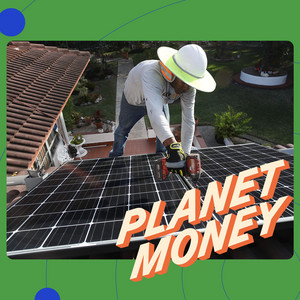
Justin told Christine and John that what they needed more than anything in this world were solar panels on top of their cute little ranchhouse.
Sales pitch was verysimple.
Electricity is only going to get moreexpensive.
So your 300 bills are going to become 400 and 500 with no end insight.
But you'll be able to get rid of your electric bill and become energyindependent.
And they'll payyou.Yeah, not onlythat, but anyexcess, they'll be payingyou.
Imean, it's a great salespitch.
Youknow, it's a great salespitch.
Justin walks them through how it will allwork.
No moneydown, just a monthly loan payment ofaround $200.
The solar panels will replace about75% of the energy they've been getting from their powercompany.
If the panels happen to make more than what theyuse, the power company will pay them for that extraenergy.
Christine, she worked as a high school guidancecounselor.
John had just gotten laid off and cutting down their bills that much was prettyattractive.
Evenbetter, after 20years, they would own the panelsoutright.
How great would it be to start a retirement in a house where you're not paying an electricbill?
They sign up thatday. About a monthlater, they've got solarpanels.
It was great for a couple ofmonths.
We weren't covering all of our electricusage, but the bill was only like 60bucks.
It went from $400 to $60 amonth, which wasgreat.
And that lasted for a couple ofmonths.
And then we got a bill that was like 120 and then200.
And then we were back to paying $307 amonth.
The panels ended up not generating anything close to75% of the energy theyused.
Andnow, on top of their electricbills, they had to pay for their solar panels every monthtoo.
Also the company that had installed Christine and John'spanels, they were not great at customerservice.
Like, it was hard for them to even get anyone on thephone.
We'll get back toyou. And then no one gets back toyou.
And it's the same little dance you do over and over again withthem.
So they sendemails, they file a complaint with the state ofFlorida.
At onepoint, Christine even tracks down the address where the company isregistered, gets in the car and drivesthere.
I guess I wanted tomake,like, is it really aplace?
Like I didn't seeit. It was actually a physicalplace.
Like, I don'tunderstand.
It was it wasmaddening.
It reallywas. It wascrazy.
Turns out it was just some anonymousbuilding.
Nosigns, nonothing. That company ends up going out ofbusiness.
New company takes over their service contract and soon there's a new shiny young salesman offering to make thingsright.
This one's namedEvan. And Evan'slike, those panels you've got on yourroof, they were actually outdated when you put them up and they were never going to give you as much power as that first guy said theywould.
But a set of newer solar panels will more than make up forit.
The ones on yourroof, I can't get ridof.
I keep paying forthem. So I'm already halfwaythere.
It'slike, youknow, go to a bigger go home at thatpoint.
Christine and John sign a 25 year lease for even more solarpanels.
And the same thing happened with the new panels as with the oldones.
Their electricity bills were still reallyhigh.
Like maybe they came down alittle, but nowhere near enough to offset what they were paying for theirpanels.
Now I have $100,000 in debt that I've got to pay off for a house that was paidoff.
And one is at least not even like I'm not even buyinganything.
That's an 80 and $80,000lease.
Like, I don't know what that would have beenthinking.
Because their electric bills stayedhigh, Christine and John started to think maybe their new panels weren't ever even connectedright.
So they refused to make their lease payments until they could get someone from the solar company to confirm that the panels were workingright, which they say the company neverdid.
Christine and John's solar panel experience has not beengreat.
It hasn't provided us any kind of financialrelief.
It's done exactly theopposite.
It's made our finances verydifficult.
Get off my house before I pull them offmyself.
Look, I'm ready to go up there and pull them offmyself.
I'm not evenkidding. Give me ahammer.
I'mdone. I don'tcare.Hello, and welcome to PlanetMoney.
I'm KeithRoamer. And for thisepisode, I will be joined by Time Magazine's Senior EconomicsCorrespondent, AlanaSemuels.
Hi,Alana.Hello.Alana, we brought you in because you have been writing a lot about folks like Christine andJohn.
Ihave. So let's start with the sense ofscale.
4.5 million households in the country have rooftopsolar, and plenty of them are happy withit.
They say their electricity bills have just aboutdisappeared, and that's great for theplanet, whichwill, youknow, burn up and or flood if we don't hurry up and transition off fossilfuels.
But the details of that transition matter and your reporting suggests that at least with solarpanels, we may not be totally nailingit.
Right. There is this corner of the residential solar market where tens or maybe even hundreds of thousands of people are really disappointed by what they've beensold.
It's more expensive than it shouldbe, and customers say they can't get anyone to fix their panels when theybreak.
SoAlana, you are going to help us try to figure out how we gothere, how this series of decisions made by policymakers and residential solar companies over the last 20 years has led to themess, Christine andJohn, and all those other people arein.
So today on theshow, why this seemingly obvious goodidea, putting solar panels on people'shomes, sometimes turns out sobadly.
The Republican National Convention is happening thisweek, and the NPR Politics podcast takes youthere.
We're on the ground in Milwaukee withanalysis,recaps, and coverage of what happens every night of theRNC.
Listen to the NPR Politicspodcast.
This message comes from NPR sponsor Oracle CloudInfrastructure.
AI may be the most important new computer technologyever, but AI needs a lot of processingspeed, and that gets expensivefast.
Upgrade to the next generation of thecloud.
Oracle Cloud Infrastructure orOCI.
OCI is the single platform for yourinfrastructure,database, applicationdevelopment, and AIneeds.
Do more and spend less likeUber,8x8, and DatabricksMosaic.
Take a free test drive of OCI at Oracle.com slashplanet.
Okay, so it is easy to look at what happened to Christine and John and Florida andsay, youknow, they just got a baddeal.
Ithappens. ButAlana, your reporting suggests it didn't just happen byaccident.
No,exactly. Kind of everything about how it went down forthem, the way they financed and leased their solarpanels, the aggressiveness of the salesmen who signed themup, even how bad their customer service experience hasbeen.
All of that actually ties back to how the residential solar business was built in the firstplace.
One of the big companies that helped shape the industry in those early days was calledSunrun.
We got in touch with one of itsfounders.
My name is NatKramer. I've been a clean energy entrepreneur for nearly twodecades.
Nat, we shouldsay, does not work at Sunruntoday.
But let's just start with how customers tend to pay for rooftopsolar.
Nat says the model for that was developed in the early 2000s when people in the business were trying to solve this pretty fundamentalproblem.
So people get excited about the idea ofsolar.
They get excited about the idea of cleanenergy, early adopters that was definitelytrue.
But you then say tothem, you've got to go invest50,40, whatever number of thousands ofdollars.
In otherwords, pay cash for a solarsystem.
It's like saying pay cash for acar.
There just weren't that many customers ready to pay that kind of money forsolar.
Right. You see this with a lot of newtechnologies.
You have your early adopters and then you have to figure out how to pull in everyoneelse.
Natsolution, instead of asking homeowners to pay 50,000dollars, his company would come to your house and put panels on yourroof.
You never had to buyanything.
Nat's company would own thepanels.
All you had to do was agree to buy the electricity those panels generated at some agreed uponprice, which was likely to be lower than what you're paying yourutility.
This is called aPPA, a power purchaseagreement.
Sunrun signed its first PPA in California in2007.
And actually that got featured in a story inUSATA.
It has the picture of the homeowners standing in the roof and there are these redwood trees around and you're up by Skyline Drive andCalifornia.
So as Sunrun was sellingPPAs, anothercompany, SolarCity, which was founded by Elon Musk'scousins, by theway, they were selling solar panelleases.
The idea here was similar toNat's.
Consumers would get solar panels on their homes without paying all this money upfront.
Both PPAs and leases made it possible for a lot more people to make theswitch.
And as solar panels got cheaper and moreefficient, a lot of people signed on to use solar to try to lower their electricitybills.
We end up in the next 10 years with over a million homes going solar versus 40,000 in the previous 40years.
We changed the solarindustry.
Christina and John andFlorida, they financed their first set of panels and they got their second set with a 25 yearlease.
But while residential solar companies had solved oneproblem, how to grow their customerbase, they had also kind of created the secondone.
All these people putting $50,000 solar systems on theirroofs, they weren't showing out a lot of cash upfront, which meant that the sun runs and solar cities of the world needed a lot of capital to pay for allthis.
And so the industry made a bigpivot.
The companies started treating solar panels less like a consumer product and more like a financialone.
We innovated a bunch around financing and this may all sound reallyesoteric, but why were we doing it is because we wanted to make solar the cheapest form ofenergy.
And there were a couple other ways solar companies like Nats could make moneybesides, youknow, just installing solarpanels.
The first one was taxcredits.
Right. For almost two decadesnow, the US government has offered a30% investment tax credit for some clean energyprojects.
So say a homeowner puts a $50,000 system on theirroof.
They could deduct $15,000 from theirtaxes.
Butremember, Nats company sunrun, they were the ones who owned the solarpanels.
Not thehomeowner. So Nats waslike, can we get that taxcredit?
We spent a half million dollars or more with tax lawyers and accountants effectively figuring itout.
The answer it turned out wasyes, sun run could claim thatcredit.
But these solar tax credits only really helped if you had taxableincome.
And sun run was not turning aprofit.
But what Nats figured out from all those lawyers is that you were allowed to partner with another company that did have a big tax bill to pay and could use those taxcredits.
Like sayGoogle, who was making a lot of money and wanted to do something good for theenvironment.
And so that's what Nats companydid.
Google we should say is a sponsor ofNPR.
But this is kind of wild tome.
How these tax incentives that were initially designed to get regular homeowners to put solar panels on their houses ended up lowering tax bills forGoogle.
Yeah, welcome to Americakey.
Thankyou.OK, so taxcredits.
That's one additional way for these solar companies to makemoney.
Another one is asset backsecurities.
Good old asset backsecurities.
Yeah, we all learned about those during the financialcrisis.
And the way they worked is that banks bundled together the income streams from lots of mortgages and then sold them assecurities.
So now solar companies did a version of the samething.
They bundled up the income streams from these solar panelleases, PPAs andloans.
And they sold them to investors assecurities.
And that helped the big solar companies get some of the cash they needed upfront.
Instead of having to watch it dribble in over 20 or 30years.
Now we have no way of knowing whether the companies that Christine and John from Florida worked with passed along the tax credits that would have come with their panel installation to another company or bundled their payments into an asset backsecurity.
But when you look at how little help they've gotten in terms of customer service over years oftrying, it's not hard to get the sense that they are being treated less like valued customers and more like an income stream on some giant spreadsheetsomewhere.
And this is something I've heard from customers across thecountry.
Big solar companies pay them a lot of attention until they sign on the dottedline.
And then they don't do a great job with customer service afterthat.
Now there's another piece to this puzzle because all the tax credits and asset backsecurities, they didn't get these solar companies all the money they needed to stayafloat.
This whole time they've also been trying to raise money in more traditionalways.
They issuedstock, they took ondebt.
And to be attractive toinvestors, they had to make themselves into these fast growingcompanies.
And that says this growth imperative might have led some folks in the industry to cut a fewcorners.
And that has some corporate leaders who wanted to look the otherway.
And it was all about volume forthem.
Volume. As in doing everything theycould, you convince as many people as possible to buysolar, which meant deployingsalespeople, lots and lots ofsalespeople.
Yeah. My name is WalidHalti.
Walid was not one of the salesmen who came to Christine and John'shouse.
But his story really captures how the sales part of all this contributes to the problems some people arehaving.
So Walid gets into solar about a decadeago.
Back then he's going to college inMassachusetts.
He has a minimumwage,job, bussingtables.
And he hears about one of his friends who is making way more money than heis.
Someone I knew was making like $20,000, $30,000 a month sellingsolar.
And I'm like if this dude can make that muchmoney, sellingsolar, there's no way I can't also do that if not double triplethat.
So Walid signs up and he goes to this boot camp where all the secrets of solar sales are revealed tohim.
When you go knock adoor, there's a certain distance you want to stay away so you don't come off as invasive to thehomeowner.
You want to stay insideways.
It's lessconfrontational.
You want to ask questions that are going to be sort of yes answers to the more like they sayyes, the more likely they are to keep sayingit.
These little tactical things that do trulywork.
And then the office culture features a lot of youngdudes, a lot of bigtalk.
Everyone's going to be amillionaire.
Everyone's going to make sixfigures.
We're saving the world at the sametime.
This isit. This is what I've been waiting my whole lifefor.
Do you know how well other people aredoing?
Yeah, there's a public leaderboard.
You're almost like an athlete that's competing againstothers.
Walid, it turnsout, is good at thatcompetition.
Like reallygood. So good that he dropped out of school and according tohim, he makes a lot of moneyfast.
Third monthin, they got like 14 installations and it was like 20 to 25,000 dollars in onemonth.
Yeah, in onemonth. I'mlike,oh, hesmokes.
There's noway. And it's not just one Walid out there knocking on doors and using thesetactics.
It's thousands of Walids because these solar companies need to grow and grow andgrow.
They are willing to do whatever it takes to keep their best salespeoplecranking.
I remember a leadership conference that Solar City hosted and they sent us all toVegas.
All expenses included and youknow, you are with other top performers that werelike,yeah, like we're crushingit, making all thismoney.
Youknow, picture some motivational speaker stalking back andforth, firing everyoneup, getting them to chant inunison.
So you doeveryone's, I'm alive and alert and I feelgreat.
I'm alive and alert and everyone would scream and chant that and can we all do the I'malive.
I'm alert and I feelgreat,chant.
Yeah, make sure you feelit.
Make sure you don't just say it to sayit.
Get yourbody. Get your body init.
Let'sgo.One,two,three.
I'malive. I'malert. I feelgreat.
I'malive. I'malert. I feelgreat.
I'malert. I'malert. I'malert.
I'malert. I'malert. I'malert.
I'malert. I'malert. I'malert.
I'malert. I'malert. I'malert.
I'malert. I'malert. I'malert.
I'malert. I'malert. I'malert.
I'malert. I'malert. I'malert.
I'malert. I'malert. I'malert.
I'malert. I'malert. I'malert.
I'malert. I'malert. I'malert.
I'malert. I'malert. I'malert.
I'malert. I'malert. I'malert.
I'malert. I'malert. I'malert.
I'malert. I'malert. I'malert.
I'malert. I'malert. I'malert.
I'malert. I'malert. I'malert.
I'malert. I'malert. I'malert.
I'malert. I'malert. I'malert.
I'malert. I'malert. I'malert.
I'malert. I'malert. I'malert.
I'malert. I'malert. I'malert.
I'malert. I'malert. I'malert.
I'malert. I'malert. I'malert.
I'malert. I'malert. I'malert.
I'malert. I'malert. I'malert.
I'malert. I'malert. I'malert.
I'malert. I'malert. I'malert.
I'malert. I'malert. I'malert.
I'malert. I'malert. I'malert.
I'malert. I'malert. I'malert.
I'malert. I'malert. I'malert.
I'malert. I'malert. I'malert.
I'malert. I'malert. I'malert.
I'malert. I'malert. I'malert.
I'malert. I'malert. I'malert.
I'malert. I'malert. I'malert.
I'malert. I'malert. I'malert.
I'malert. I'malert. I'malert.
I'malert. I'malert. I'malert.
I'malert. I'malert. I'malert.
I'malert. I'malert. I'malert.
I'malert. I'malert. I'malert.
I'malert. I'malert. I'malert.
I'malert. I'malert. I'malert.
I'malert. I'malert. I'malert.
I'malert. I'malert. I'malert.
I'malert. I'malert. I'malert.
I'malert. I'malert. I'malert.
I'malert. I'malert. I'malert.
I'malert. I'malert. I'malert.
I'malert. I'malert. I'malert.
I'malert. I'malert. I'malert.
I'malert. I'malert. I'malert.
I'malert. I'malert. I'malert.
I'malert. I'malert. I'malert.
I'malert. I'malert. I'malert.
I'malert. I'malert. I'malert.
I'malert. I'malert. I'malert.
I'malert. I'malert. I'malert.
I'malert. I'malert. I'malert.
I'malert. I'malert. I'malert.
I'malert. I'malert. I'malert.
I'malert. I'malert. I'malert.
I'malert. I'malert. I'malert.
I'malert. I'malert. I'malert.
I'malert. I'malert. I'malert.
I'malert. I'malert. I'malert.
I'malert. I'malert. I'malert.
I'malert. I'malert. I'malert.
I'malert. I'malert. I'malert.
I'malert. I'malert. I'malert.
I'malert. I'malert. I'malert.
I'malert. I'malert. I'malert.
I'malert. I'malert. I'malert.
I'malert. I'malert. I'malert.
I'malert. I'malert. I'malert.
I'malert. I'malert. I'malert.
I'malert. I'malert. I'malert.
I'malert. I'malert. I'malert.
I'malert. I'malert. I'malert.
I'malert. I'malert. I'malert.
I'malert. I'malert. I'malert.
I'malert. I'malert. I'malert.
I'malert. I'malert. I'malert.
I'malert. I'malert. I'malert.
I'malert. I'malert. I'malert.
I'malert. I'malert. I'malert.
I'malert. I'malert. I'malert.
I'malert. I'malert. I'malert.
I'malert. I'malert. PaulLithgano.
I'm a senior analyst at Bloomberg andYeth.
I'm a senior analyst at Bloomberg andYeth.
I'm a senior analyst at Bloomberg andYeth.
I'm a senior analyst at Bloomberg andYeth.
I'm a senior analyst at Bloomberg andYeth.
I'm a senior analyst at Bloomberg andYeth.
I'm a senior analyst at Bloomberg andYeth.
I'm a senior analyst at Bloomberg andYeth.
I'm a senior analyst at Bloomberg andYeth.
I'm a senior analyst at Bloomberg andYeth.
I'm a senior analyst at Bloomberg andYeth.
I'm a senior analyst at Bloomberg andYeth.
I'm a senior analyst at Bloomberg andYeth.
I'm a senior analyst at Bloomberg andYeth.
I'm a senior analyst at Bloomberg andYeth.
I'm a senior analyst at Bloomberg andYeth.
Paul says the basic problem is that imperative to grow we talked aboutbefore, that is not goingaway.
Running a national solar business still requires bringing a lot of capital in thedoor.
And to keep attracting investormoney, the solar companies have to keep expanding their customerbase.
As you scale thatbusiness, as you try to get the additionalcustomer, you're essentially spending more money in getting that newcustomer, then the profits that you're making overall as acompany.
And Paul says these companies have entered up really far away from the nuts and bolts of installing solarsystems.
Your company is not a solarcompany.
Your company is essentially excels in a financial engineering company that just happens to install solarcompanies.
And like we mentionedbefore, that can have a huge impact on how much customers end uppaying.
So am I correct in understanding if there wasn't so much sales and marketing solar could be a lot less expensive in theUS?
That's exactlyright. In a country like Germany where energy costs are really high and people are motivated to get solar panels without being pastored bysalespeople, customers pay half or a third of what they dohere.
Another thing aboutGermany, most of the installers arelocal.
They don't spend a lot onmarketing.
Instead, they get customers based on theirreputations.
So better customerservice.
And because a fewermiddlemen, betterprices.
We should say that the same thing is true in theUS.
There are plenty of successful smaller local companies who haven't run into these problems of trying toscale.
And Paul looks at the landscape for big national residential solar companies in theUS.
He's not superoptimistic.
So what happens to the big companies that have scaled like Sunrun andSonova?
Where do you see themgoing?
Well,I. I got to be careful with how I answer that question because as ananalyst, I can not say anything that makes any inferencein.
Publicly and whether I think a company is going to fail ornot.
What I can say is that the big national listed solar installers have barely made any profit ifany, ifanything, or since theirexistence.
Blink twice if you think Sunova is going to gobankrupt.
You don't have to sayanything.
I have never seen someone go so still as when I asked Paul thatquestion, not a muscle on his facemoved, which to be clear means officially nocomment.
But we can say this the share prices of Sonova and Sunrun to of the biggest residential solar companies in theUS.
They are down about85% from their peak and a lot of other solar companies have gonebankrupt.
Paul says all this dysfunction kind of can't help trickling down thecustomers.
The way residential solar systems are being sold in the US today is fundamentally broken and is really easy for many of those sales to resultin.
Let's not call it ascam, but not meetingexpectations.
Paul estimates that5% of customers could be getting a baddeal.
That's more than 200,000 households who are either not saving as much money as they were promised or who are stuck with systems that don'twork.
And lots of other folks are paying more than they would have if the industry was set upbetter.
Two of those unhappy customers are Christine andJohn, the couple fromFlorida.
They are still paying off their first set of pretty worth of solarpanels, but they are taking a different approach withSonova, the company that leased them the secondset.
I pay the firstpeople, because youknow,whatever, that's 200 and something dollars amonth, but I haven't paid Sonova adime.
I think the last I was trying to find the last invoice was like $1,800 and I've given themnothing.
A spokesman from Sonova told me this morning that actually the panels were turned on for four months and then Sonova switched them off because Christine and John were not making theirpayments, which came as a surprise to Christine and John who say they had known whether the panels were ever switched on in the firstplace.
And when I looked over their old electricbills, you could see thatyes, for the four months the panels wereon, they had used about half as much electricity from their power company as the previousyear.
But they had been promised these new panels would replace all of theirpower.
And if nothingelse, not sharing this information about turning themon, turning them off until some reporter from MPR asks you is probably not a sign of great customerservice.
In a written statement Sonova told usquote, our current customer complaint rate stands at just2% and that they have made many customer service investments to better serve our growing customerbase.
Christine is clearly done with allthis, butJohn, there's still this part of him that can imagine this all working out the panels getting fixed their electricity bills dropping to basicallyzero.
Look, the idea is stillsound.
I believe in renewableenergy.
I think that at some point every house is going to have solarpanels.
They're going to haveto.
They're all bunch ofcrugs.
So muchcrugs. According to the lease agreement they signed withSonova, their only recourse is to file for arbitration and hope they get a ruling that goes theirway.
Christina, John just got their latest bill from the powercompany.
It wasfor $382. Pretty much the exact same thing they were paying before they ever got solar panels in the firstplace.
Onceagain, if you are willing to take oursurvey, we would really appreciateit.
It isshort,anonymous.
You can find it at npr.org slash pm survey all oneword.
They'll take you less than 10 minutes and you'll be doing all of us at Planet Money a huge favor by filling itout.
Again, if you are somebody who has not taken one of our surveys before or you are a newlistener, we especially want to hear fromyou.
That is npr.org slash pmsurvey.
Thanks. If you want to hear more about all of this residential solarstuff, check out Alana's series on residential solar in TimeMagazine.
Today's episode was produced by EmmaPeasley.
It was edited by JennyLawton, who was fact-checked by Sierra Juarez and engineered by Valentino RodriguezSanchez.
Alex Goldmark is our executiveproducer.
I'm KeithRomer. I'm AlanaSemials.
This isnpr. Thanks forlistening.
From Cowboy Carter to Old Town Road toYellowstone, the symbol of the Cowboy has been riding high for a few yearsnow.
But my big question is why are we turning to theCowboy?
What's actually holding the reins on America'simagination?
And what does it reflect about ourpsyche?
Listen to its bit-a-minute fromNPR.
On this week's episode of WildCard, actor Ted Danson says it's possible to embrace yourregrets.
I wish I hadn't become a liar in an early inlife, but even your wounds you kind of have fondness for if you've lived through it and made amends and all of thatstuff.