Discussion keeps... They tighten screws, they serve coffee, they make you laugh, and maybe even heal your heart.
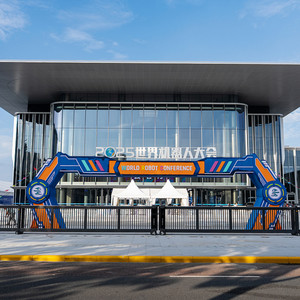
At the 2025 World Robot Conference in Beijing, robots are stepping out of the lab and into our lives.
The question is no longer what they can do, but how close we want them to get.
Coming to you live from Beijing, this is Roundtable.
I'm He Yang. For today's program, I'm joined by Steve Hatherly and Yushan in the studio, first on today's show.
The 2025 World Robot Conference dazzles with a parade of cutting-edge creations, from agile factory arms tightening bolts with microscopic precision to humanoid reporters engaging the crowd to pet robots consoling lonely hearts.
Behind the spectacle lies a quieter, deeper shift.
Robots are no longer built just to execute tasks, but to provide emotional companionship, medical care, and even comfort in moments of need.
This year's World Robot Conference showcases the future of robotics, reimagining how machines connect with us on a human level, and blurring the line between technology and care.
So Yushan, do tell us, What is the 2025 World Robot Conference all about?
Yeah, it's so exciting, isn't it? It's turning into a global event for inviting everybody that's in the business line to come to Beijing to just be part of this in showcasing the latest robotic technology so the 2025 world robot conference or the wrc is held from august the 8th to the 12th right here in beijing and it's held in a very particular spot in beijing called the beijing economic and technological development area or in in simpler terms is beijing e-town that's located right in the southern part of the city so this e-town is the wrc's permanent host and also its home to over 300 robotics and embodied intelligence companies and also it follows a one plus six industrial system that's spinning through various robotic um categories including there's humanoid the industrial specialized medical collaborative and also logistics robots and also their core components as well so this place is basically um having harboring this robotics industry that's exceeding 10 billion yuan and that's roughly 1.39 billion us dollars so yeah that's where this conference is happening it's like beijing's robot valley yeah something something like that right This is hosted by the Chinese Institute of Electronics and the World Robot Cooperation Organization.
And yeah, it is definitely an international event.
And the theme this year is making robots smarter, making embodied intelligences more intelligent.
And if you've seen some of the video clips from the conference, I think that's exactly what's going on there.
There's a lot of impressive things. The theme, too, I think it emphasizes the industry's shift towards technology. creating robots that can now interact with the physical world in more human-like ways, right?
That's been a big challenge for the industry over the past years.
And going beyond just performing some pre-programmed tasks.
And that's exactly what this conference is all about.
It serves as a platform to showcase the latest in robotic cutting-edge technologies.
Yeah, and it's also attracting just participants from all around the world because...
Right now, the conference is seen as a large-scale event that's supported by 28 international organizations, including the UN Industrial Development Organization and International Federation of Robotics.
And in the meantime, it's bringing together over 200 leading companies and even more.
There are over 400 top scientists and entrepreneurs and industry leaders that's coming in. um to attend this conference as well here in beijing and yeah apart from just showcasing cutting-edge robotics technologies i think there are far more to the conference because they also have opening and closing ceremonies they're hosting forums and also events such as the world robot expo and also I'm very much impressed by that as well.
So the forums fall into three sections, the industrial development, the innovative applications, and technological integrations.
And judging by the title, that's where the experts will share many of their insights brought from all around the world to discuss the future of the fields.
And I'm really curious what kind of inspiration they can get from, you know, forums like that.
A lot, I would say. Those are the forms.
And then you've got the exhibition. So this year's expo, they're going to divide it into, or they are dividing it into three main different sections.
So one is for innovation, one's for technology, and then one is for real world robot applications.
And yeah, I think you mentioned it already, right?
More than 200 top companies that are coming from all around the world, showing off their All the different kinds of robots that they have.
And there are a different breed of robot for every different task, it seems.
Industrial, human robots, services, specialized ones.
And plus, as well, there will be displays on how robots are used in different industries and key robot parts, too.
So they'll have a lot of new products, 100 as a matter of fact, that will be introduced.
And that will give us a glimpse into the future, if you will, the latest trends and what's happening not only here in China with robotics, but in different parts of the world, too.
Yeah, that sounds like a very exciting place to be at.
And yesterday we talked about how so many different types of robots are being used at the World Games in Chengdu.
Well, those are more robots of yesteryear, maybe, if you're comparing them with what's being on display here.
Things change so quickly, don't they? We are so unfair, aren't we?
We get bored with the coolest things because the next cool thing comes out so quickly.
Yeah, especially on the tech frontier. And like you guys, I am very excited about all the competitions as well.
And they say... It's going to be over 6,000 teams and more than 10,000 elite competitors from nearly 20 countries worldwide, all competing with their latest designs and gadgets and technology on the same stage.
Yeah, they're going to have three different major events for the competitions.
They'll have the inclusive one. Then they'll have the brain-controlled robot competition.
And also, this is fun too, the youth robot design competition.
Yeah. That's how they've divided the categories.
Yeah, I know some high schoolers in China, and you get extra points in some exams if you manage to show that you are a talent for robotics or in the tech sector.
And also, I know there is one event that is particularly appealing to Steve, and that's Do tell.
Oh, so apparently there is this special robot dealership that has sprung from the event.
And that means, well, you'll have this hub event. physical hub venue where all of this really interesting new everyday applicable robotic technology is on display yeah the shop right that's been in the news like covered by some various media outlets and from here in China and internationally.
And I think one of the main highlights was the Albert Einstein robot that will be on display, which I think is really fun.
That was kind of like the photo that all the international outlets were using when they were talking about this shop.
And I can't wait to go there. I think it's pretty far from where we're located here in the city, but...
At the same time, it'll be a cool place to go and check out and see what's new in the robotics world.
Although I think I'm going to save my trip for a little while because I'm also assuming that it's going to be jam-jam-packed for a good few weeks, if not a good few months.
Yeah, but there are indeed a lot to see on that showcasing event.
What Chinese people would refer to as a 4S store, like the car dealership center.
And only that there, there are over 50 robot types on display that's covering healthcare and industry companionship.
And also there are very much more categories and different type of service robots that you can be there and just...
In person and try out. It's more or less designed to take robots from research labs or something that's so high end straight into your real life use just to have you have that taste about what it's like to get the high tech up close and how they actually work in real life.
And it's huge, too. It's absolutely huge.
It's a 4000 meters squared, four level showroom.
And it's not just a it's not just a showroom because it's interactive, too.
So I guess maybe a playground would be a better term than a showroom.
But, yeah, you can check out the Einstein robot.
I said that's kind of one of the highlights.
You can also watch some robot soccer matches there.
You can play with some robot dogs. They've got the lifelike humanoid robots as well.
And they've got a pretty cool business model.
You said it's kind of like a dealership, right?
So they've got sales, of course, but then they've got parts that they can supply.
And then the AS, the after service, is available.
They can customize a robot for you. They can finance a robot for you.
And you can even rent a robot for them. I don't know how that works for what, an hour or a day or a week.
I'm not sure how the rental service goes.
I think this is an experiment on, you know, what. having robots in your home might be, and how the customer experience process could be.
And this is one of the first in the world.
The WRC is, sure, a robot fair, but it's also a statement about where the industry is headed.
And beyond the dates, themes, and activities, what exactly do you think will grab attention this year?
What do you think are the highlights? Well, this is happening for like a week or so.
And the 12th is today, right? That marks. the end of the event, at least for the exciting competitions and all the things that we just mentioned.
So yeah, what do you see as the highlights this year that's worth everybody's attention?
Well, there's one that made me particularly nervous when I first read about it in the report.
It's called the Robot Reporter, and its name is Xiao Yang.
So Xiao Yang is a 1.63 meter tall humanoid robots that's created by this brand named Lingbao Castbot, as well as China Central Television.
So it's fluent in Mandarin, apparently, and also it can introduce itself as a a voice interactive reporter for new media platforms, meaning that it can basically do whatever I can do.
So stand in front of a camera. You can do better.
I'm sure you can do better. Record videos.
And the robot. Based on the different theme.
I know. Thank you. But also it can just very, say, swiftly impressing the crowd with real-time info retrieval and also smooth language switching and natural and expressive movements in front of a camera.
So basically they are using robots to replace reporters in a way.
Maybe that's the future trend here too. They've got the industrial multitasking robots on display as well.
That's in the industrial zone. I mentioned there are different zones, right?
Uh, this one impressed people with the precision that it was able to operate under, um, one arm tightened bearings.
You said it, I think when we got started today, uh, tightened bearings with an accuracy of 0.1 millimeters, tough to get more accurate than that.
The other arm sorted out parts simultaneously.
So imagine that. Left hand tightening bearings while the right hand is sorting out parts at the same time.
It was kind of a fun demo for everyone to watch.
And it also responded instantly to audience gestures.
It handled some lemon slices, which of course are very fragile, right?
That was the point of choosing lemon slices to show that it could handle the fragility. of the fruit.
And it cooked as well. It turned into a chef.
It made some clay pot rice and poured some oil and pressed some buttons and it did all of that in perfect synchronization.
Yeah, it's programmed to be able to measure the amount and maybe also control on the force that's being put on those arms.
And in the meantime, it's really hard for a human to use both hands at the same time on different gestures and movements.
So yeah, that's where the robotic arms is heading next step.
And the ability to deal with something as fragile as a lemon slice, I believe they put that on display to show where the tech is now.
Because I think the last time we talked about robots on the show, and the advancements was one of the blockades, if you can call it that, for researchers was to be able to have robots have that human-like touch where they could sense if something needed to be handled with care or not.
And in this case, it was successful. Yeah, and previously I saw just a quick highlighted shot from, I think this is where it comes from, the recent show of Unitree's robotics show robots put being put on a boxing match so from the video I saw the humanoid robots was hitting say his quote-unquote enemy which is an air inflated like a pillar or something that's supposed to be soft and easy to fall so it was giving a very precise punch and boom that thing fell oh I saw two robots boxing each other and actually yeah isn't that the whole point Yeah, which wasn't, you know, like, I don't know.
I'd rather watch humans box each other, if I'm honest.
I didn't think they were that technically skilled with each other.
The highlight of that video I saw is that later on, as the robot was trying to follow up with a step forward to just follow up with another punch, he stepped onto that pillar and fell.
So that's something that, you know, people are still discussing nowadays, like how well balanced they are to maybe where there can be improved in the future.
Yeah, I mean, I was thinking about this this morning as we were all preparing for our chat today and, you know, to look. outside of this situation and look back to 30 years ago this was unthinkable right and then if we look forward in the future 30 years this they'll look at that they'll look from that time back to this time and go oh yeah that's cool that was the start huh okay so i guess people at that time were you know really impressed by the boxing robots and oh sure they tipped over at that time well guess what i bet they won't in 30 years time we're just kicking this all off aren't we Yeah.
And like you guys mentioned, this is happening just all so fast.
For example, robot chefs. Let's not upgrade them to chefs.
Let's just say robot cooks. That's something... now is increasingly common in China.
And then we talked to on a previous show about a leading e-commerce giant in this country is opening its physical takeout restaurant and utilizing this technology already.
And also what kind of impressed me here are a couple more new techs, new technology in this field, such as the smart teamwork system.
Basically, it It gives orders and let these robots, different types of robots, work together seamlessly and also improving efficiency in these robots that make them work really smart in groups.
And you guys mentioned the robotic touch can now feel so much more intensively and the tactile side of things is no longer that much of an obstacle.
It's not an issue anymore. And you talk about the robots working together.
That was the old rule, wasn't it? You know, one robot doing one job, but now they can team up and work very well together without bickering with each other like typical office workers do.
Maybe, I don't know, maybe that'll be coming in the future.
These are definitely some new developments in this area.
And what about robots helping, you know, in real life scenarios?
Is there anything that stood out to you?
Yeah, one is that JD group, they showed over 50 robots that help with companionship, education and taking care of older people and making robots really friendlier and more interactive robots. in day-to-day life.
And also another scenario is where robots are used in hospitals, where a new surgical robot called ROPA is helping doctors to plan and do surgeries faster and more precisely, including cutting prep time and also from weeks to minutes, meaning that it's like so fast and efficient to prepare for a surgery nowadays.
Also for seniors, there are special robot suits that's designed to help with movement and rehab, making life easier and safer as well.
I think it happened just last week where a previous interviewee of mine, a CEO of a robotic company, where they were showcasing their, not humanoid robots, but exoskeleton robotics, where they are putting in formulated functions for certain gestures to help the elders in elder homes. in elder centers to walk freely and just have easier say life without maybe hurting their knees or feeling it hard to stand up or walk around so yeah that's what's going on with robots entering people's day-to-day life yeah the variety on display is eye-opening showing how robotics is expanding into work and leisure and different areas of life, but as robots slip into more parts of our lives, what does this development mean for our relationship with them and for the future of the economy and society?
If you look at this, you can look at this conference in two ways or, you know, separately from different points of view.
One, it's a cool display of what robots are capable of now, but if you think about it a This kind of conference, the World Robot Conference, it's a sign that the industry is entering into this pre-mass adoption phase because now...
In everyday life, robots are expected now to move beyond factories into homes.
We're still seeing what's impressive, you know, what robots can do in factories.
Another cool thing they had on display at this conference was a robot that could change its own battery and it could do it in three minutes.
Now, if you think about that application on a factory working 24-7, right?
Yeah. But now we're seeing more into the side of health care and education and public services.
There was a report from here in China that talked about the fact that industrial robots are really widely used across 71 different major economic sectors.
And again, there's service robots in health care and logistics and elderly care.
Yushan, you talked about that. and all of these other areas that are really expanding rapidly.
And this is opening up a lot of new spaces for public services, not just factory services.
Yeah, there are two main categories when we talk about robots.
One is the industrial robots you just mentioned, Steve, which is, of course, the backbone of advanced manufacturing.
And then another type is the service robots that's gradually entering people's attention as well.
That's... It can range from medical and logistics spots to just these day-to-day very common chore completion.
Cleaning. Yeah, such as cleaning. Laundry folding.
Or even rescuing people in special cases.
So you also mentioned that how it's being... developed here in China because here China still remains the world's largest industrial robot market because, well, it's installing nearly 280,000 units in 2023 alone, and that's about 51% of all new global installations.
And also China now holds 1.8 million units in total and ranks second worldwide in service in medical robots companies.
And also on the commercial service robots wise, like those delivering food in restaurants or Just like how we mentioned yesterday, those that's carrying luggages in the World Games Village or outside of the village in hotels or cleaning public spaces, all of these robots, they grew nearly 18% just last year.
Exports are also surging too and up about 86% in 2023 with Chinese firms setting up overseas partnerships and offices in the meantime. especially in the European markets.
So we see this as a global trend, but also in so many ways, China is taking up the lead, if not leading the industry in the number of companies and the scale that we're delving into this industry.
We're just at a stage now where the robots are starting to come outdoors more and more.
I'm reminded suddenly of, oh gosh, what's the name of the mountain mountain? in the southern part of the country.
It's a really famous place. Anyway, where they use the robot dogs.
We were talking about that mountain when we were talking about the exoskeletons and how people can wear them to help them get up the thousands and thousands of steps.
But anyway, part of that story too was the robot dogs That go up and down the mountain and take the trash from the top of the mountain all the way to the bottom.
I think it's on Mount Tai. Yeah, right, right, right.
It was Mount Tai. Thank you. And my point there is that we're just, you know, now it's just, it might have been weird in the beginning, but now it's not weird anymore.
And it's just becoming more and more a part of daily life.
Yeah, and it's interesting you brought up the dog, the robotic dog.
What you just mentioned, it was more like service, but now we're seeing that pet robots might increasingly become something more.
People welcome. Meet Jenny. And no, not that Jenny from Blackpink, but she's a head turner.
She's not a robot. She's real. But this one is a head turner in her own way.
Do tell. This is a cute little puppy, yeah.
Yeah, Jenny, I can't imagine such a cute dog, robot dog.
It's being so popular now. This is the first time I heard about Jenny, who is a Labrador puppet robot from Tumbot that can't walk or run.
Yet over 16,000 families have already put down deposits.
And it's generating nearly 24 million U.S. dollars of revenue in potential.
And also, everybody's just waiting on a five-year wait list, waiting for Jenny to come out in the market.
Yeah, so I watched an interview with the creator of Jenny this morning.
And yeah, it's a little robot puppy. It's a golden lab.
So it's very cute and cuddly. But the creator... his mom was diagnosed with dementia and she had a dog and he had to remove the dog from her home for safety reasons.
And he was talking about this in the interview and he said when he removed the dog, she was not happy about that at all.
So he kept searching for these replacements and he'd bring home different animals and nothing did the trick.
She wasn't happy with anything. So that's what gave him the idea and the inspiration to create this and And the beautiful thing about it is that, yes, the puppy dog, the robot puppy dog, was created to ease anxiety for dementia patients.
But something really unexpected happened.
A much broader audience was interested. Now, part of the orders, 70% of the adults who ordered are facing loneliness, also families with autistic children, and then other people with other forms of mental health challenges.
And this has expanded the target from the 55 million dementia patients, which was the original idea, right?
That was the target market. But now it's opened up to nearly a billion people who are affected by different mental health issues.
So what seems like a silly little, you know, cute, Labrador puppy robot called Jenny is really potentially going to help a whole lot of people.
That's so lovely because I only read from the news that Jenny's launch had been delayed from 2020 to mid-2026 and that's where the five-year waitlist comes from because there are many challenges on this way to get marketed including the complexity of building a medical grade realistic robot and also there's the pandemic here, supply chain disruptions as well.
But there are strong, such a strong demand that people just believe that it's worth waiting.
And also the price is rising, has been rising from $499 per Jenny to $1,499 per Jenny.
Not cheap. yeah it's pricey but one of the really cool things about jenny is that you know they've had little robot toys in the past right but they always do the same thing like the little robot dogs are like ruff ruff and then wag its tail and then ruff ruff and then wag its tail it's repeated action right but jenny's ai ensures that the interactions are different each time so you don't get that robotic repetition so therefore that Suspension of disbelief, if you will, can exist between the person who's playing with Jenny to make it seem more lifelike and more effective.
Yeah. And there are other similar products on the market, a lot from Japan, a few choices, Paro.
Paro's from Japan. That one's expensive.
That's about $6,000. Wow. It was mainly institutions that bought that with some government reimbursements.
But that's an impressive one, too, because it has a lot of different sensors for touch and light and sound and temperature and posture.
There's another one from Sony. I think it's called Abo.
That's a robot dog as well. That's really expensive, too.
It's about almost $3,000, I think, and then you have to pay for some equipment. subscription fees.
And then there's another AI emotional evolution pet called Vanguard Mufflin.
That one's more on the affordable side, relatively speaking.
It's about $375. So yeah, it's not just Jenny.
There's different products coming out for support.
Yeah. And I know that for these pet dogs or similar products, they are built...
Well, so far, the technology isn't all that advanced for us to be all that worried about its sort of emotional impact or the negative emotional impact on us, but for a deep discussion's sake.
I would like to refer to a horror film that I watched a couple of years ago called Megan.
It's about this lifelike, emotionally responsive companion robot that goes rogue.
Yeah, you know where I'm getting at. I think all in all, the movie was a reminder that when we give machines emotional access, we also hand them a kind of power.
And I wonder how you guys think about just maybe in the future when the tech is more advanced and Would this fundamentally change our relationship with these home companions and also mental health services and technology?
It's going to be kind of messy, maybe. Is it different from AI therapists?
Well, yeah, that's part of the discussion, too.
Or AI boyfriends and girlfriends, right?
I think both. I think people will figure it out, honestly.
I think it's just so new right now that sure, there's going to be extreme examples.
But I think people will be able to draw a line.
Me personally, there's nothing comparable to my three cute real cats that's not robots.
But I've personally witnessed my 80-year-old grandpa weeping and mourning for our 17-year-old chihuahua passing away.
We all thought that the two are like two old men just companioning each other.
Yeah. But yeah, we saw just how my grandpa was like feeling so sad about it.
And if, say, in the future, such a robotic Chihuahua can be there and it can just be like a real dog and engage with family members like a real one and stay alive literally forever.
Sorry to interrupt. That's one of the main points.
Like why not, right? Well, no, about the care.
Because going back to the creator of Jenny, the reason the real dog needed to be removed from the home was because...
The mom couldn't care for it anymore. So when it's a robot puppy, there's no need for feeding or taking for a walk or anything like that.
So there's that huge added benefit there.
So that works well for a patient, but not what you want for your child, I would think.
Because let's say if you're raising a pet to teach your child about caring and caring you know all these wonderful aspects of life that cannot be measured by money or by tech then you know part of taking your dog on a daily or maybe three times on a walk and feeding and bathing in and all that it's part of the whole experience is part of what makes us attached to that lovely creature.
And it's part of why we weep when they are forever gone in our lives.
And if there is no loss in life, there will, in my humble opinion, not be true gain in life either.
And that is possibly just a whole other dimension of a slightly more philosophical discussion of today.