Discussion keeps the world turning.
This is Roundtable.
Perched high above the power lines, is it a bird, an owl?
Nope, it is a robot.
Guardian of the grid, protector of the wild.
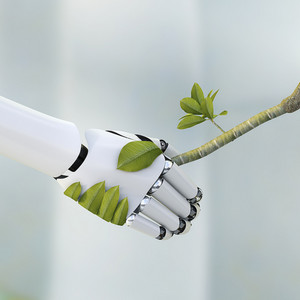
When tech meets nature, sparks fly in all the right ways we discuss.
Coming to you live from Beijing, this is Roundtable.
I'm He Young. For today's program, I'm joined by Steve Hatherly and Yu Shen in the studio first on today's show.
Over the power grid and parts of China, something curious is keeping watch. It looks like an owl, but don't be fooled.
This isn't a bird of prey.
It's a smart robot perched high and alert.
It stands guard over the grid, rain or shine, keeping both the power line safe and wildlife out of harm's way.
and the owl robot isn't the only tech marvel stepping up for the planet.
Today we're taking you on a tour of other wild and wonderful machines lending their digital smarts to help monitor and protect our ecosystems. First of all guys please introduce these owl robots.
They look rather cute to me I say yeah I would totally agree on that the so this is really happening in Shuyen which is the city in central China's Hubei province.
And they're trying this innovative approach that has been introduced to protect the power grid, like you mentioned He Yang, and also to maintain ecological balance as well.
So the local power company, they deploy smart robots that's designed to look like owls installing them just onto transmission towers.
And of course the real owls, they're raptors.
They can scare away say a lot of birds to nest and rest on the power transmission towers.
So these is what these robots are for, they're there, they are able to turn their heads.
That's some sort of a system designed for these out -looking robots.
And their main function is just to scare away birds, preventing them from resting on the electrical facilities and in the risk of harming themselves and also inserting them to reduce the power grid failures.
and you know just to protect birds.
It kind of functions like a scarecrow does in a farmer's field right so the scarecrow looks like an actual person to the birds the owl looks like an actual owl to the birds so they stay away.
And I have this slightly unrelated but I think pretty wonderful idea.
You know in like major cities or a lot of places there's the CCTV camera right and also like off you know just major streets, there are CCTV cameras capturing video footage of you know who's run a red light or anything like that.
I mean maybe you can just stall these OWL robots up there too just so that yes you do the monitoring catching people who are speeding or you know who deserve a ticket as such but also you know keeping clear of all the birds or whatever creatures that are not supposed to land on the power line?
I think maybe... Do you not see what I mean?
You see those cameras turning heads.
Anyway, this morning when I was driving was like, did I just run the red light, no I didn't run the red light but it turned yellow it was a little bit risky.
But your your logic has a fallacy, we are getting way off topic already.
I think so, but can we go there a little bit?
Sure. Your logic has a fallacy though, because in the beginning, okay, if people don't realize that the speeding cameras or the stoplight cameras are disguised as owls then it would be effective, but the minute it catches on, the internet knows, then nobody's gonna be fooled by these robot owls on the.
It's not to fool the people.
It's to fool the other birds or whatever it is.
Okay. In the world of birds, the raptors such as an owl as a robot might to work and then in a real say human society on the traffic basis I've actually seen not robots I think just human shaped figures maybe plastic figures wearing police officer uniform being inserted somewhere in the certain say risky parts of the highway.
To just remind you that slow down there's no over speeding here is very dangerous it sometimes it has like a very sharp turn I've seen that very often and most, say, nighttime set out of 10, you can actually mistake that figure as a real police officer, from afar.
Yeah, in Canada for highway construction, instead of just putting signage there that says you know, move to the other lane or something like that.
From afar it looks like a real person, but as you get closer you realize it's just this kind of robotic looking and this is super old school.
It's not like high tech and it's like an arm moving up and down.
They've been using that for for a long time.
This is a little bit more intricate, though.
The owl design. I know right, because, well, in recent years we have to admit that the ecological environment, it has been steadily improved here in China.
So bird activity, it has increased in many areas.
So while that's of course great for nature, It also poses new challenges to, for example, great grid safety here.
So using robotic owls as a way of scaring away the birds in the purpose of preventing any harm done to them is just one of the solutions aiming to achieve a win -win for both the environmental protection and also the power grid security.
Well, ecological protection has been a national focus in China in recent years and technologies such as robotics, and now even artificial intelligence or AI, are playing an increasingly important role in supporting this effort in a number of ways.
So what are some of the other examples that stood out to you?
The Ministry of Ecology and Environment they're actively promoting the use of AI and also other new technologies where and when they can find it in environmental monitoring.
And it's also supporting the development of environmental robots and remote equipment.
And this isn't really new either.
Back in February of 2022, that's when the ministry released a pilot plan to explore smart environmental monitoring using AI, and there are a few different examples we can look at.
Unmanned drones collecting samples and fully automated analyzing them without any human intervention.
That saves time, it saves labor, it saves transportation costs.
Another, that's a sampling example, another one would be smart biodiversity tracking.
So technologies like real -time infrared cameras or bird call recorders or reptile radars, butterfly sensors, they're now being used to automatically track wildlife and those tools can identify species with over 85 % accuracy And that supports conservation work, so there's a couple of examples for you of how implementation can really help make a difference using AI, using robotics.
And also, we hear a lot of these robots, they have this function of just inspecting the environment or the biodiversity in the place of human labors in so many ways.
For example, on the Three Gorges Dam, the Sen Sa, it is one of the world's largest hydroelectric power station.
And so the Three Gorges Dam on the Yangtze River, it has developed a range of robots including inspection and maintenance robots, operational robots for water areas, and also intelligent warehouse robots to improve efficiency and safety in managing this critical infrastructure.
For instance, there are smart cleaning robots, that's my favorite, that are being used to collect floating debris in the water near the dam.
And I heard there are a lot of such robots or robotic infrastructures in general worldwide that's, you know, collecting plastic waste from the rivers, stopping them from floating into the oceans and even there are more deep ocean robotics that's actually collecting plastic waste from the from the ocean just to prevent harming on the ocean you like the ocean creatures in general so that's something that's really doing good in conserving, protecting the animals inside the water bodies so that's nice.
Also used in pipeline repair, pipeline inspection.
There's an area in southwestern China where these robots they're used to enter into narrow pipelines and then send real -time data and the data can be different right it might be on blockages it could be on damage or anything that happens to be wrong with the pipelines and then of course this helps the maintenance teams carry out their their repairs they know exactly where their repairs need to take place because with underground pipelines you know it's hard to find exactly what's wrong and also it prevents sewage from overflowing and polluting the river ecosystem.
We are very thankful for that.
That's not only done here in China, actually, in Japan and in January of this year, they announced the development of a new inspection robot where it's doing pretty much the same thing.
It goes through the pipes, and it's been developed to help provide pipeline inspection and repair work, same that's happening here in China.
Yeah, and I'm not sure if you guys and our listeners have the experience of climbing onto say the scenic mountain?
Mountaineers, scenic spots here in China or just worldwide in general.
Because when you're climbing up a mountain or going hiking it's really hard to purchase bottles of water, right?
A lot of the time the bottled water just sold by individual vendors who actually had to carry all the water themselves at say certain spots of the mountain.
They sell at very high price because of the human labor.
And now here in Mount Tai, I think in East China's Shandong Province, there are robotic docks that are doing this labor for you.
It says it's a silver robotic docks, I'm not sure if it's the color or the material that's being made.
Here as we talk about the docks, that's silver.
But apparently here are these robotic docks that are used to transport garbage and also carry heavy loads, maintain good balance in the meantime and move across rough terrain over the mountains and making them very useful for keeping scenic areas clean.
Yeah, that's a situation where you want the robot to look like a robot kind of and not look like some mountainous cat or something something like that that might scare people a little bit.
Yeah. I would think it's probably made from stainless steel and it's in the color of silver because if it's a real silver robotic dog, excuse me, I'm taking him home with me.
Yeah, yeah, that's true too.
That's probably a criminal offense.
Also in the Yellow Mountain Scenic Area, Huang Shan, right?
Drones. The Darren's there are used to transport goods and remove waste, same as what the dogs are doing on Mount Tai.
And they follow these fixed routes between key points and they deliver supplies on the way and they bring down trash and used items on the return trip.
And then that boosts efficiency too.
And I saw this on CNN just a few days ago on Mount Everest. They started using drones for delivery.
I'm not sure if you saw this story or not.
So the base camp on Mount Everest is located at about 5 ,300 meters or so or about almost 17 ,500 feet.
And then camp one is at 19 ,000 almost 20 ,000 feet.
So the aerial space between those two points is about 2 point something kilometers, and it takes Sherpas about six or seven hours to make that journey, but it takes a drone six to seven minutes.
So delivering things like ropes and ladders and oxygen cylinders and things like that, I mean that that potentially saves lives doesn't it?
Yeah it really does, and just by the examples you guys have given, they show I can at least I think come up with two points that are the advantages of using robots.
One is it lends us the eyes where humans find it difficult to travel to.
And well, guys, you know, spill it out.
What do you think are the main advantages of using these robots?
I mean, they are robots.
They run on battery or sensors connections, which make them 24 7 operational.
Right. When people when when when the staff are resting, as they usually do, So you can send robots out there, drones out there to do the inspection for you, and for example the robotic dogs, that's in Mount Tai as we mentioned, they have greatly improved the efficiency of garbage removal especially in areas with complex terrain or during peak tourism times where just human workers face limitations.
So when human labor or power feels complicated or unreachable in some areas or regions that's when a good replacement on the robotic assistance can be of good use.
Yeah, there is a long list of advantages.
Replacing people for safety is one.
Replacing people for efficiency is another.
The amount of labor that a robot can do versus a person is another.
And then just things that, For example data analysis, right?
You remove the human error a lot of the time from the calculations because they can be a lot more efficient and a lot more exact with their measurements.
So that is a big advantage as well.
The equipment can go to places that we can't go and that means that there's less of an impact on the environment too often times.
I mean sometimes they can go where we can't go like inside pipes and things like that, but also places where the terrain is just inaccessible for human beings, and if human beings were to try to go there, that could have an impact on the environment, but if you can use drones or robots in that way, it's less of an impact.
Yeah, the toxic polluted zones, or a deep ocean, or the natural disaster hit areas.
Those, I think I watched the news, I'm not sure if it's in Canada, but actually there are drones out there inspecting potential risks for wildfire.
And that's something that's of highly importance in areas such as in North America, where wildfire occurs quite often in recent years.
So yeah, in many ways they are doing what we cannot do.
Absolutely and if I may just circle back or just to echo one of the things that I think it was Steve who mentioned, you talked about, well actually you both Talked about the you know, we'll go back to the example of this the dogs on tai shen Mount tai, I mean yes, and you guys make the brilliant point that it really does You know enhance efficiency pick up garbage when you don't need to employ so many people but also I've been to tai shen and I remember also going to other mountains here in China and those who go do take up the laborious work of actually carrying the bottled water on their backs
up the mountain, often it's those who are in a pretty economically vulnerable place who take up these kind of jobs.
And yeah, like these robotics, some technology can replace, you know, and then yes, I understand on the one hand, efficiency, you know, also even saving the environment, making life easier for people, those are some great things.
But during the transition period, if this is really the direction we're going, but you're also talking about the jobs disappearing for those who are in the least economically capable position to find a replacement for that amount of salary.
No, you bring up an absolutely fair point because sometimes these robots are replacing people and sometimes there aren't.
For example, Liquid Robotics, that's a subsidiary of the company Boeing.
They developed an energy harvesting ocean robot that uses the energy generated by wave motion as a form of propulsion.
And what that can do is they can use that to monitor the oceans for signs of tsunamis and and send signals to a mainland base.
Now in that case that robot is not replacing a human.
There's no human floating out in the middle of the ocean looking for signs of a tsunami, right?
But in the case that you talked about, the mountain dogs that are delivering water, that is replacing the job of a human.
So I think you bring up a fair point when you say we keep going and keep pushing with these technological advances in these robots and the things that they can do and oftentimes they are wonderful.
But oftentimes, too, we have to remember that there are people that need certain jobs, they rely on certain jobs, and it may be, I think we can argue, sometimes it goes too far.
There's a price of efficiency, and sometimes that price is somebody else doesn't get to do that job anymore.
Yeah, that brings up the disadvantages or the downsides of overly relying on these robotics or high technologies in the replacement of a lot of human labors, right?
Because that's just the ultimate, the million dollar question that everyone is asking in today's society, where AI and high tech are just growing and booming up in such a fast speed.
But we mentioned how the sensors in the robots, the thermal multi -spectral detecting functions they are so good at but in the meantime the such overly reliance on connectivity and power could also be their downside too because many times it put limitations on these robotics as well in doing remote were extreme tasks such as you know carrying a lot of weight we mentioned yeah of course it's helping but back to that mountain mount and tide robotic dog topic they are still running tests based on how they're performing nowadays and some outcomes are not all showing positivity because the robotic dogs
they still struggle on steep slopes highlighting the need for say a further technical optimization and well this certainly suggests that the robots still face limitations at least in the current stage to very complex and extreme environment and I'll say this process will take a long time.
Well for things like that when you're talking about terrain and it's very specific to the location, right?
You can't just design one robot dog and drop them on any mountain anywhere, probably, right?
Because the terrain would be different, so they'd have to be designed perhaps for specific types of terrain or maybe you program robots in the future that can handle various types of terrain.
Yeah, what you guys describe sort of puts down a signpost of where we at right now.
That is, a lot of these technologies sound really grand, very futuristic sometimes, and supposedly has this efficiency promise.
But we're not quite there yet.
And if you listen to the show, then you know I'm kind of like a Luddite when it comes to such things.
And so, I'm kind of, on the one hand, kind of happy, like, woof, I'm glad we're still useful.
And on the other hand it's like, yeah, you know, there's still so much more innovation that needs to go into these areas to make sure that these technologies actually deliver on what they say they can do and if I may be just a little bit more critical about these owl robots I think they're better for show than better for substance to a certain extent.
I mean I'd be happier to see that if they could do more.
Like what? No traffic lights in the wild.
Like rolling or making actual sounds, I think that's something that they can further invest in those kind of owls.
When I first saw that product that they're making, I would first imagine, first of all, please make it fly.
Where's it going? Also it can be a drone and a digital scarecrow scare owl all in one.
I was overestimating on the owl robotics I thought it can do more than just turning its head maybe it can make sounds to scare birds away and even fly away to chase the birds away.
Stay away. What do you want it to say?
I think it's doing its job.
I for one am not ready for or robotic owls flying overhead in Beijing, downtown.
No, thank you. I was thinking that maybe it could inspect or monitor.
So if it can turn its head, then it should be able to see.
Then, that's the pair of eyes for maybe you.
These days whenever you see a camera, if I don't know if you guys are like me, I'm always thinking there's at least a pair of eyes behind that watching me.
Oh, yeah. So with these owls, I thought, OK, maybe it could collect data from what it can inspect off the power grid as well as, I don't know, what the vegetation area is like around.
They do have drones that can do that.
They have drones that can be equipped with specialized devices.
They can be equipped with different monitors or robotic arms. They do this to collect eDNA or environmental DNA on things like the surfaces of tree branches or water bodies.
And then that helps the researchers to understand things like species distribution.
They can monitor ecological change, too.
So they capture high -resolution imagery and video of the habitats and ecosystems of some places.
And then, yeah, they use that video and those images to help to kind of map out where the animals are living in the area.
So they do have it for certain types of things.
One family found in here, a small community found in there.
That's fun for the eyes behind the camera I'll say.
Well, as we build smarter, more intuitive machines, we're not just shaping a future where technology serves us but it serves the planet.
But also, you guys make a really good point about electricity.
It just seems like with more technology we need more power and where does the power come from and can we use energy in a more efficient way?
These are some really important and urgent questions that need some answers, and more innovation for sure.
But these robotic guardians are proof that progress doesn't have to come at the expense of nature with more thought, more research, more innovation.
It can help us protect the planet in ways that possibly we have never imagined.