
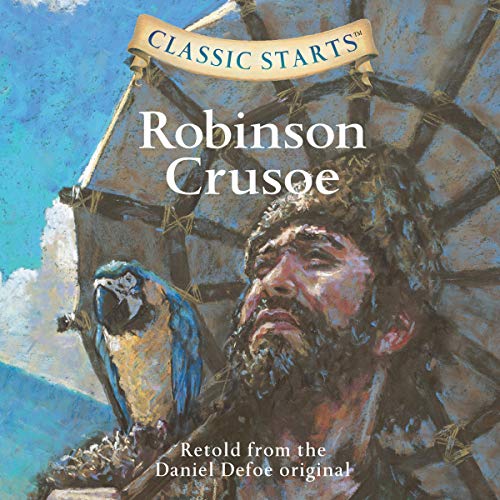
[Robinson Crusoe: The Perils of the Open Sea]-[Robinson Crusoe - Part 21]
📋 Summary
The Five-Year Prosperity and the Call of Adventure
For five years, Robinson Crusoe enjoyed a period of relative peace and stability on his island. He describes this time as one where he "prospered," benefiting from successful harvests, abundant fruit trees, and reliable hunting. During this era, his companionship with his pets, "Shippy and Paul," provided comfort. However, the urge for exploration remained a defining trait of his character. Reflecting on his past failures, Crusoe decided to construct a new boat, applying lessons learned from previous mistakes by choosing a tree "closer to the beach" and meticulously carving the canoe over many months. This vessel transformed his life on the island, allowing him to travel with ease rather than "walking for miles and miles."
The Misadventure at Sea
Driven by a heart that "still craved adventure," Crusoe embarked on a voyage around the island equipped with supplies, his hat, and his umbrella. While the outward journey was successful, his decision to return by going "the other way around" led to a harrowing experience. The "currents picked up," and despite his best efforts to row, he found himself being "transported even farther away" from his island. The situation quickly turned dire as his home "disappeared in the distance," leaving him in a state of panic. Crusoe’s internal monologue captures the desperation of the moment: "'Why me? Why again? What can I do? Where am I going?'" His pet, Shippy, sensing the danger, "barked and barked," mirroring the protagonist's anxiety as he realized his "camp was heaven compared to being shipwrecked or lost at sea."
The Struggle for Survival
Facing the vast ocean, Crusoe was forced to wait for the elements to change. He observed the sun's route, feeling helpless until the afternoon when the wind finally "started to blow north." This shift provided a sliver of "hope." He engaged in what he described as the hardest sailing of his life, combining the use of the mast and sail with intense rowing. The boat "swayed a bit, back and forth," symbolizing the precariousness of his position. Through sheer "hard work," he managed to break free from the current and turn the boat back toward the island. As the sun set, he reached a "little cove," where he was forced to spend a restless night sleeping in a tree, lamenting the absence of his "hammock."
A Sobering Return
Upon returning to his camp the following morning, the contrast between the terrifying open sea and his established home became stark. He described his dwelling with relief: "Oh, precious walls. Oh, wonderful fence." His exhaustion was total; his "arms and legs ached," and his "mind was completely exhausted." A moment of confusion occurred when he heard a voice calling his name, "Robinson Crusoe," only to realize it was his parrot, Paul. This final realization served as a grounding moment for him. The trauma of the near-fatal voyage left a lasting impression, leading Crusoe to a definitive conclusion: "No more sailing. It's not worth the risk." This experience marked a turning point in his island life, shifting his perspective from a desire for exploration to a profound appreciation for the security of his home.
Deep Learning with ListenLeap


