
[Mastering the Island: Agricultural Trials, Craftsmanship, and New Perspectives]-[Robinson Crusoe - Part 18]
📋 Summary
Mastering the Island: Agricultural Trials, Craftsmanship, and New Perspectives
Understanding the Island's Rhythms
As the narrator enters his second year of isolation, he gains a crucial understanding of his environment. Unlike the four seasons of England, the island operates on a distinct cycle of "two seasons, one rainy and one dry." By recognizing that these seasons occur in three-month intervals, the narrator shifts from reactive survival to proactive planning, allowing him to prepare for the rainy months and schedule his agricultural endeavors effectively.
Agricultural Failures and Successes
The narrator’s initial attempts at farming were a "complete disaster." Driven by ignorance of the island's climate, he planted his first seeds "right after a rainy season," failing to account for how "arid the dry season would actually be." This mistake served as a vital lesson in patience and observation. By saving a portion of his seeds, he was able to attempt a second planting during the appropriate rainy cycle. Furthermore, he moved his cultivation efforts to the "valley" where the soil proved more fertile, eventually resulting in crops that grew "healthy and strong." This success provided him with the confidence that he could rely on "two different harvests" each year.
The Art of Craftsmanship
During the rainy seasons, the narrator sought to remain productive indoors. He turned his attention to basket weaving, a skill he had only "vaguely" observed as a boy. Using "wood from the palm trees" that had been "drying for months" near his fire, he began his experimentation. Although his early creations were "lopsided with uneven weaving," he persisted, eventually finding that these baskets were essential for his survival, as they allowed him to "carry seeds, to store my goods, and to move supplies." This progression illustrates his growing mastery over the island's natural resources.
Geographic Discovery and Anxiety
With the return of sunny weather, the narrator embarked on an exploration to the other side of the island. Upon climbing a high hill, he made a startling discovery: there was "land about twenty leagues out to sea." This revelation sparked deep existential anxiety. He feared he might be near the "Spanish part of the Americas," a region known for "unfriendly" inhabitants who "didn't like strangers." Despite these "chilling thoughts," he reconciled himself to his relative safety, noting that he had "never seen another person on my island."
A Shift in Mindset
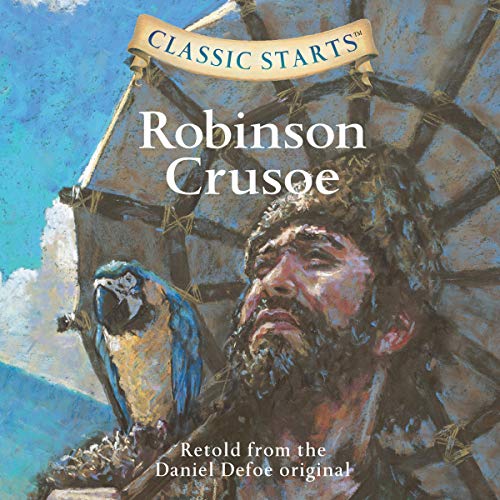
Accompanied by his loyal companion, Shippy, and a newly adopted parrot named Paul, the narrator explored the island’s diverse ecosystem. This journey served as a turning point in his psychological state. Upon returning to his shelter, he experienced a profound moment of reflection. While lying in his hammock, he consciously chose to stop "feeling sorry for myself." He acknowledged the reality of being "stuck on this island" and the inherent hardships of his solitary life, yet he concluded that it was an "interesting" existence. This realization marks a transition from viewing the island as a prison to appreciating the opportunity to be "thankful to be alive" after surviving the shipwreck.
Deep Learning with ListenLeap


