
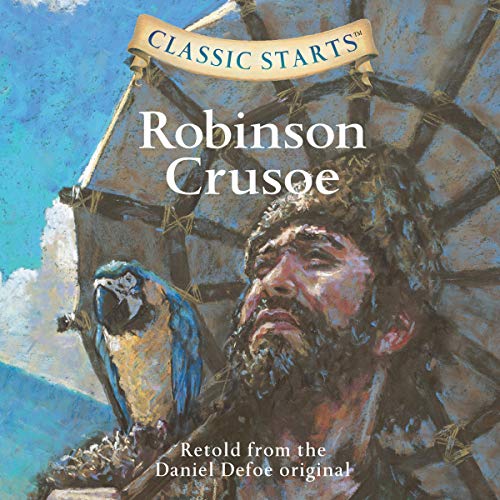
[Survival and Solitude: Mastering Life on a Deserted Island]-[Robinson Crusoe - Part 16]
📋 Summary
Survival and Solitude: Mastering Life on a Deserted Island
In this chapter of his survival journey, the narrator reflects on the transformative power of necessity and the relentless challenges of living in isolation. Through hard work, adaptation, and an eventual physical breakdown, he learns that survival on a deserted island is as much a mental struggle as it is a physical one.
The Art of Self-Reliance and Routine
After several weeks on the island, the narrator realizes that his survival depends on his ability to adapt. He notes, "Time and effort taught me that I could build, carve, or make anything, as long as I set my mind to it." Despite his lack of experience as a carpenter, he successfully constructs a table and chair, proving that rough but functional objects were far more valuable than perfection.
His daily routine becomes a cornerstone of his sanity. Mornings are dedicated to exercise and hunting, with a strict rule of sustainability: "I never killed for sport." He meticulously uses every part of the animals—coats for warmth and meat for sustenance—while conserving his "precious" gunpowder. Evenings are reserved for domestic projects, such as making candles, carving bowls, and writing in his diary, which serve as essential tools to "pass the time."
Mastering the Environment: From Ironwood to Agriculture
Nature provides both obstacles and opportunities. The narrator discovers an ironwood tree, describing it as "such a strong wood," which he utilizes to fashion indispensable tools like a spade and a grindstone. As the rainy season approaches, his focus shifts to fortifying his shelter. He transforms his tent into a "proper building" with a solid roof, carved shingles, and palm leaf insulation, ensuring he remains dry while his fence provides a sense of security.
Perhaps the most miraculous turn of events occurs in April, when discarded chicken feed sprouts into healthy stalks of barley and rice. Reflecting on this, he realizes, "Nature is certainly amazing." This accidental harvest provides a vital food source he never anticipated, highlighting the unpredictable bounty of his environment.
The Trials of Nature: Earthquakes and Shipwrecks
Life on the island is not without its terrors. The narrator experiences his first earthquake, an event that leaves him "terrified" as rocks fall around his storage cave. Shortly after, a violent storm brings remnants of a ship to the beach. He spends nearly a month dismantling the vessel, hoping the materials might "come in handy," yet the labor-intensive process underscores the constant, back-breaking work required for his survival.
The Breaking Point: Illness and Despair
By mid-June, the narrator’s physical and mental resilience is tested by a severe illness. After eating a turtle—a meal he initially saw as a "nice change" from goat and pigeon—he falls "deathly ill" with a fever and stomach cramps. During this period of delirium, his mental state collapses. He is "haunted by terrible dreams" and overwhelmed by regret, cursing his choices to go to sea and leaving his life behind.
He finds himself trapped in an "island of despair," questioning his future and the possibility of rescue. This illness leaves him "unsettled and upset," marking a significant shift in his narrative. While he eventually recovers, the experience leaves him physically weak and serves as a sobering reminder of how precarious life is when one is completely alone, stripped of all comforts, and at the mercy of the natural world.

Deep Learning with ListenLeap


