
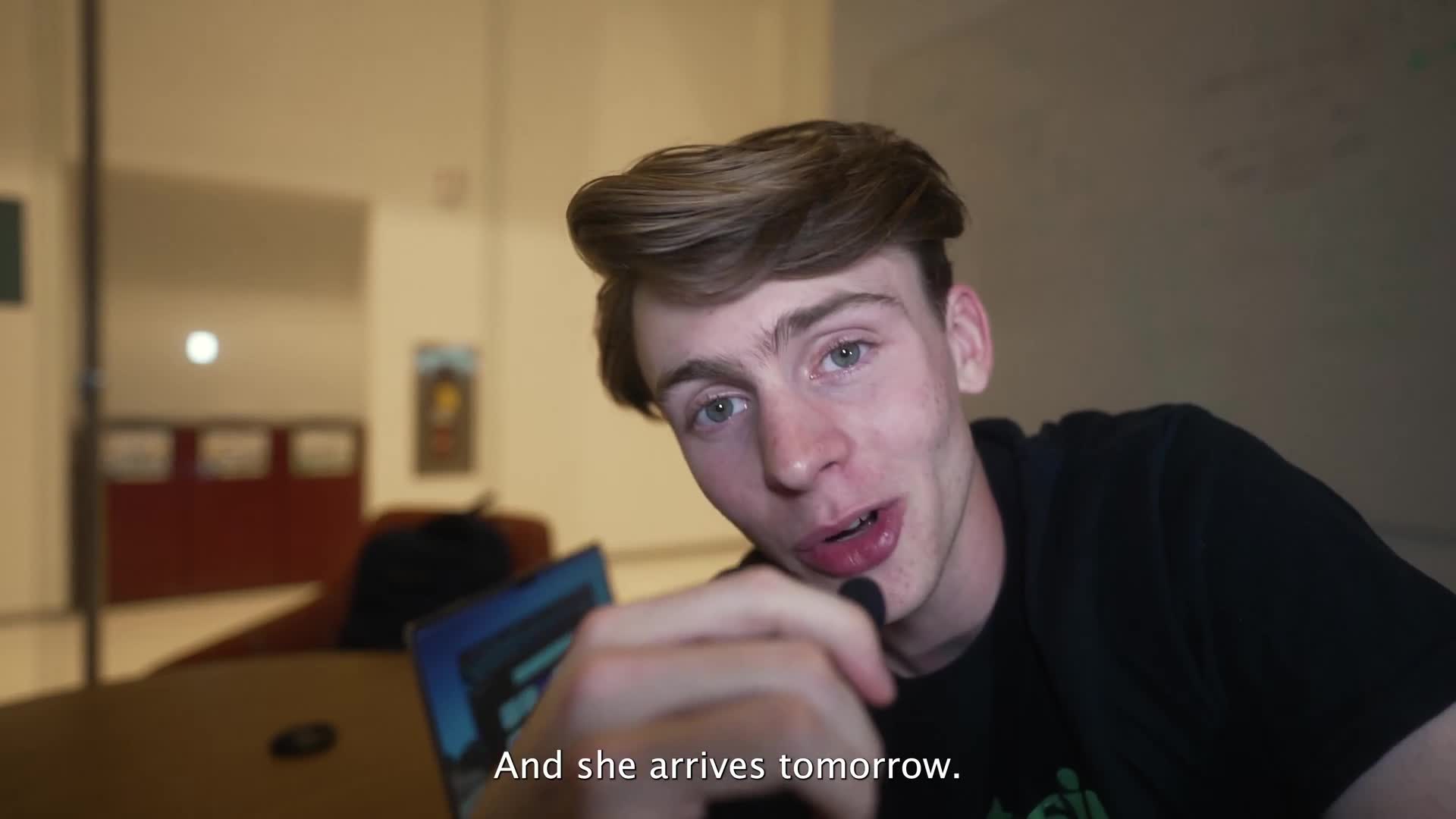
[The Journey West: A Cross-Country Road Trip Adventure with a Stranger]-[I went on a road trip with a girl I just met]
📋 Summary
Embarking on the Unknown: A Cross-Country Transition
The Spontaneous Planning Phase
The narrator finds themselves in a whirlwind of preparation, admitting that they have been "so busy packing" that documenting the process was neglected. With only a short window before departing on a two-week cross-country drive to school in California, the creator realizes that without context, the journey will "not make a whole lot of sense" to their audience. Partnering with a "complete stranger named Isabel"—who took a leap of faith by buying a one-way ticket from Maine to North Carolina—the narrator utilizes the Opera browser’s "pin board" feature to organize the chaotic logistics. This digital workflow allows for a seamless "flow state," enabling the integration of links, photos, and notes without leaving the tab, ultimately creating a shared roadmap for their impending adventure.
Facing Fears and Final Farewells
The departure is marked by a blend of raw human emotion and unexpected challenges. As the narrator prepares to leave, they express feeling "very nervous, but excited as well," acknowledging that "everything changes tomorrow." The transition is punctuated by a comical yet intense encounter with a spider, which the narrator describes as their "worst nightmare." Despite the fear, they manage to handle the situation, jokingly debating whether killing the creature brings "bad luck" or "good luck." This moment serves as a grounding reality check before the long journey begins, highlighting the vulnerability of stepping into the unknown.
The Art of Filming and Living in the Moment
As the trip progresses, the narrator reflects on the challenges of balancing content creation with authentic experience. After six days of driving, they note that the audience has "no idea what happened in those six days," because the priority was simply "trying to survive" the monotony of stretches like Kansas. The narrator candidly discusses the tension between filming and social connection, noting that "getting to know someone and having a camera on" can often "kill the vibe." By choosing not to film the "uglier parts" or the early, formative stages of their friendship with Isabel, the narrator prioritized the natural "growth" of their relationship over the pressure of constant documentation.
Embracing the Mountain Spirit
Amidst the vast landscapes, the narrator contemplates their affinity for the mountains, wondering if personality traits influence one's preference for terrain. They muse that while some might argue "introverts like the mountains more," for them, the experience simply "feels right in my heart." Reconnecting with a handheld, vlogger-style filming technique, the narrator commits to capturing the remainder of the trip now that they have settled into a rhythm. They express a clear intention: "I don't want this trip to go by and to not have anything to look back upon." The journey concludes with a sense of wonder, capturing spontaneous wildlife sightings and the realization that, after weeks of uncertainty, they have finally arrived at their destination, fully present and ready to document the chapter ahead.
Deep Learning with ListenLeap


