Discussion keeps the worldturning.
This isRoundtable.Hello, welcome toRoundtable, where we serve a piping hot debate on the issues that Sizzle in China andBeyond.
I'm yourhon. Have you ever wondered how services likeNanny, Outerly Care and Housekeeping are evolving with theTimes?
The sector is notall-expending, but also innovating in incredibleways.
One notable trend is that more young people are entering this business and we're seeing a shift in perception andopportunities.
For today'sshow, I'm joined byyou, Shun in the studio and SteveHathorly.
Finally in thestudio, welcome to the teamteam.
Thank you somuch. How many times did you say Steve Hathorly on theline?
So many times too many timesactually.
Well, you won't have to do thatanymore.
And I'm excited to be here in the building and in thestudio.
Thank you for having metoday.
Great to haveyou. And we know that you're preparing to serve a series of videos talking aboutexperience.
Fresh off the boat here inChina.
What it's like to arrive in China for the very firsttime, seeing China through the eyes of someone who's just gotten off the plane typething.
So I've alreadystarted,well, when wearrived, I got off the plane and started filming at theairport, so that'll be one of theepisodes.
And then I'll just be traveling around trying out different things and reporting back on what it's like to kind of try to use apps and live in the city and all that type ofstuff.
So we'll have the audio and then we'll have the video aswell.
Yes. And in thefuture, I'm pretty sure that it will be very important and also helpful for those of you who are listening who wanted to visitChina, maybe troublehere, maybe find a jobhere, sitdown, start a lovely family sort ofthings.
But to actually learn from these series of videos that Steve is preparingnow.
Just to give a little teaser about what's comingup, I've forgotten about what it feels like to experience acity, experience a country for the first time because I lived in Korea for solong, which was a wonderfulexperience, but at the sametime, I got used to everything because speak the language a littlebit.
I know where the department storeis.
I can drive my car without the use of aGPS.
Buthere, moving toBeijing, moving to China for the firsttime, everything is absolutely brandnew, which is fun andexciting.
So through the experience that I had and making those videos and we'll have the audio aswell, hopefully that can help some people out in the future and inspire a little bit of curiosity about where we are here in theworld.
It's so good to hear that you're feelingall, everything's so exciting because my first time arriving inBeijing, I feel a little bit frustrated because this is a bigcity.
And I'm from a relatively small city in China and it's a totally whole new experience and you can see so many different aspects or places compared to a smaller city inChina.
Soyeah, I'm really looking forward to your perspective on the live in Beijinganyway.
And also good timing because I'm pretty sure that nowadays with the development of technology of different ways to make things easier for especially foreign folks outthere, the settling down process is going to be much smooth comparing to thesituation, let'ssay, 20 yearsago.
So looking forward toit.
Imean, even just coming through theairport, just the use of technologythere.
I won't tell you what impressedme, but I was like almost immediately off theplane.
I was impressed by the use of AI to simplify and streamline the process of getting through theairport.
So check it out when it comesout.
Coolstuff. Check itout.
And for today'sdiscussion,actually, it is time to grab your virtual compass and follow us to the heart of today's roundtable.
To somepeople, this might be a surprisingtrend.
More and more young people are joining the domestic service industry inChina.
If you've ever wondered why many are choosing this path despite the hardwork, actually this for myselfis, Ithink, in recent two or threeyears.
I started to notice more and more young people doing first of all menu laborwork, those who are doing householdappliances, maintenance stuff in myhouse, as well as those who are in charge of repairing and amending the elevator system in this building we're workingin.
I see gradually more and more young people and apparently that trend is happening in the domestic service sector aswell.
So we can see the scope of household services or domestic services has beenextended.
The industry extends beyond housekeeping to include services for various family members even such as care for theelderly, infants and patients for their personal care or cleaning or cooking andetc.
And these jobs can be done veryprofessionally,actually.
Key trends among the industry we can see there is a noticeable generational shift in China's household services workforcewith, Ithink, mostly the post 1990sgeneration, or mostly we call them Gen Z and they are becoming prominent in thisfield.
Socialmedia, topics or hashtags related to this topic are verytrending, gaining millions of times of read and comments and most of them are shockedby, Imean, comments are shocked by the youngergeneration, especially those born after 2000 are joining the domestic service industry and their highsalaries.
I think it's astereotype, isn'tit?
But maybe a stereotype that was a little bittrue.
When we think of domestic services like a nanny or a babysitter or something like that or caring for theelderly, house cleaning things likethat, we tendto.
Or at least I tend to get an image ofsomeone, I don'tknow, maybe in their mid 40s or even older thanthat.
This trend is changing now and it's kind of a cool topic for me because my mom and my sisters both worked in exactly what we're talking abouttoday.
My mom postretirement, she spent I think a year taking care of an elderly gentleman and we'll get into the details of what that was a little bit later when that comesout.
But my sisters aswell, when they graduated fromuniversity, they were about 22 yearsold.
They both moved to Florida in the United States and they spent one year as a nanny taking care of the kids of otherfamilies.
So this isn'tnew, but I guess the trend and the age demographics are a little bit new for the people who are doing thework.
Yes, because we're not kiddinganybody.
The stigma was there and it was there for quite a longtime.
So imagine those who are doing these housekeeping work or taking care of the kids are doing this because they do not have other options to do other things to do so called white collar jobs to work in theoffice.
But that's no longer the case for today's youngergeneration.
To startwith, these kind of workstoo.
I would assume that they pay quite well these days because if you take a look at the numbers actually from 2016 to2020, the average salary in China's domestic service industry increased from nearly 5,000yuan.
That is around 780 US dollars to over 9,000yuan.
That is over 1,400 US dollars permonth.
So definitely the pay is not shabby atall.
And young people today started to realize that instead of thinking about the oldstigma, actually every job has its pros andcons.
And one day can actually earn a pretty decent salary in thisregard.
And later we're going to talk about what kind of new initiatives and innovation young people can actually bring to the industry aswell.
They are looking at it in a pretty differentperspective.
Yeah, Imean, it's a growing industrytoo.
You talk about the amount of money they canmake.
I looked it up in Canada and it said that the average salary for a babysitter or a nanny was $18.79 perhour.
So in youon, that's about120,30.
That's pretty decentmoney,right?
Then I saw another statistic that said it was about 14 anhour.
And I think that speaks to the different levels of qualifications in the industry aswell.
If you're a trainedprofessional, you're going to make more moneyobviously, which is the case for any industry that you workin.
But there are other optionstoo.
You can be onthe, how shall Isay, less trained side and still work in the industry aswell.
So my point is there's job opportunities for people who aren't just working professionalstoo, which allows for a biggermarket.
Yes. We mentionedhousekeeping, we mentionednannying, we mentioned someexamples, but exactly what exactly are the professions in the domestic service industry we're talking about and are young people favoring certainones?
Yeah,actually, I think that is also one of the reasons that more and more people are trying to join this industry because it is getting moreprofessional.
And what we call professional is that many new job roles such as home chefs or accompanying caregivers and householdorganizers, they help you to organize everything that you think is a mess or children companion professionals areemerging.
So the entire industry is actually facing sometransformations, Ithink, with more new professions like these and more comprehensive services that customers mayneed, basically in every aspect in their dailylives, Ithink.
It's kind offascinating, isn'tit?
Because when we think about homecare, the home serviceindustry,okay,babysitting, taking care of thekids, either as a live inbabysitter, full-timenanny, something likethat, taking care of theelderly, but professional chef in yourhouse.
We thinkthat- I wantthat.
Yes,please. I wantto. One for eachmeal.
We think of that as something that's reserved for the ultra-rich or something that we see in the moviesonly.
But now home care has become a much more what's the word I'm lookingfor.
I guess there's just other ways that we can find things to do in the house and people to work in the house that maybe we thought was possiblebefore.
Andalso, like yousaid, it's no longer for the ultra-rich forsure.
And a lot of young people are developing such needs in hiring someone professional to make their life better and easier so that they can free up their energy and time to do quote unquote more important or enjoyable or fun stuff inlife.
And these specific requirements from young people are better met by young people according to certain experts in theindustry.
Forexample, if I want my housecleaned, I don't necessarily know how clean it could be until I hire some really professional people cleaning it and tidying it up and putting all my shorts together and long pants together and arrange them based on their color and based on the way I would have them for certainoccasions.
Youknow, forme, I wouldn't even bother with that though because I know as soon as it gotorganized, I would just ruin it and it would go back to the way that itwas.
That is why a lot of young people are actually hiring these kind of house arranging staff every couple of months to keep the house easy on the ice because apparently there are certain research results showcasing that if you live in a really tidy and enjoyableenvironment, your efficiency is going to gethigher, your pressure is going to get lower and you're in a good mood and everything's like bright andshiny, burst chippingthings.
You're overall just general level of happiness is better when you live in a clean and tidy and organizedspace.
Not onlythat, youknow, why they are calledprofessional, not only because they can organize foryou, but they can teach you toorganize.
Yeah.Actually, that is the thing I think they are qualified as professional because they need to have that kind of professional knowledge toactually, ofcourse, they help you to organize things in order of color or in order oflength, but they can teach you to have the mindset or the basic knowledge on how you can organize things or what kind of gadgets they can buy to make for thingsorganized.
So basically that is why they are paid so much or they can become soprofessional.
Do you remember or have you ever heard of MarieKondo?
This was a TV show that took the world bystorm, maybefive, ten yearsago.
Nobody had even considered this concept of having someone come into your home and organizeit.
It was a whole TV show and she became famous for exactly the things that you just talkedabout.
And one of the tips that shegave, I remember watching oneepisode, youknow, she was just going through each thing in the person's home and askingthem, you have to askyourself, does this bring you joy or does itnot?
And if the answer isno, get rid ofit.
Likethat. And this is one of those home organizationthings.
And I was shocked and this is why there's such a big market for this type ofthing.
How many people really want and need this in theirlives?
That is actually a really good point and I should ask myself every day and get rid of the things that I do not reallyneed.
Less ismore. Less ismore.
And that is not the only thing we talkedabout, house organizers as an example of howcalm, more and more young people are bringing new knowledge and expertise in thisprofession.
And actually there are another very prominent example that is the nanny as a profession because previously forgenerations, I think my parents generation and also the generations beforemy, we see people puttingmore, let'ssay, empathize on the trustissue.
They do not really trust some nanny that they do not knowof.
So at least forme, when I was a little baby ortoddler, I was taken care of by this babysitter who's basically a distant relative of my grandmasfamily.
So we do not know each other atall, but my grandma know herfamily.
Hence we trust her in a certainway.
I grew up prettyfine, but for today'sparents, forexample, when I became amom, I started to put more emphasize on the professional level of thenanny, whether or not she understands thekids, let's say growing principle or the logic or whether or not she understands one to give the kid howmuch, forexample,formula, one is the time to cook for thekid.
What are some ingredients that you should have the kideat?
What are the ingredients that should stay awayfrom?
And even the kind of early stageeducation, mynanny, actually I am using an nanny and she's teaching the kid to sing in both English andChinese.
Imean, her English is not thatgood.
And she learned it from reading certain books and listening tocertain, Ithink, English songs andstories.
Butnevertheless, she has the ability to teach a littlebit.
So these kind of knowledge or expertise are also better provided by young peoplenowadays.
Yeah, it's a massive market and it's a growingmarket.
The global babysitting services market was valued at over 21 billion US dollars in2021.
And it's expected to be maybe around 30 billion dollars or more at a growth of almost7% by2030.
This is a bigindustry. And you talk about the fact that you as amom, not only just someone that your parents might have known who lives down thestreet.
No,no,no,no,no,no,no,no,no,no,no,no,no,no,no,no,no,no,no,no,no,no,no,no,no,no,no,no,no,no,no,no,no,no,no,no,no,no,no,no,no,no,no,no,no,no,no,no,no,no,no,no,no,no,no,no,no,no,no,no,no,no, But let me askyou, why is that an important thing to you though as a mom because you talk about knowing when to feed them at the right time and giving them healthy foods just to play devil'sadvocate?
You wouldn't necessarily need a whole lot of training forthat, but the other aspects early child development youwould.
So as amom, where do you kindof, where do you find your own balance of what you expect your nanny tobe?
That is actually a really good question to answer the questiondirectly.
Actually, forme, it's not like I am relying on the nanny to do all thethings, all the arrangement for thekid, want to buy the kidformula, want to buy thekid, baby diapers orsomething.
I do do theresearch, I do do the planningmyself, but with someone with equipped it with the professionalknowledge, they're easy to talkto.
They're easy tocommunicate.
That's very important because if I have a certain distant relative taking care of thekid, the person might not even know what I'm talkingabout.
When I say you should cook for thekid, but do not add anysalt, do not add any sugar because it's bad for thekid, I think the communication cost would be higher if the one is not aprofessional.
But that's what Iwant. It's not the same thing for everymom, which is why the agent is also a very important role in theindustry.
And the agent would figure out what each family would like and they would match the proper nanny with the properfamily.
It's a nanny matchmakingservice.
It isthat. And also the fun thing is the reason that a lot of people are opting for this profession is because they believe that after working in it for severalyears, maybe they do not want to be nannyanymore.
They can be the agent because they have experienced enough families to understand each different moms and understand each differentnanny.
So a growing and evolving industry forsure.
So if that's thecase, youknow, to kind of make ajoke, you could swipe right on the nanny that you like because you seethat.
Yes, youcan. But you see their list ofqualifications,right?
So if we know that nannies can make a lot ofmoney, people in homecare, we're just focusing on the nanny part rightnow.
Sure. We'll just use that as theexample.
If you can be well paid and if you know that there's a market foryou, if you know that it is also competitive because other people in your age group are also aspiring to dothis, then that would inspire young people to try to up theirgame, up their resume and make themselves even morequalified.
So that leads me to believe that the bar overall is being raised because people like yourself now expect more from their nanny than perhaps they did 30 yearsago.
Oh, I am also giving more when it comes tosalary, when it comes to the kind of life standard she enjoys in my home because she's a live innanny.
So I think that is how this industry is evolving and how young people are going with this kind of trend because of course customers want high quality service like this and they can offer more and they are qualified to offer more these kind of services because they need all ofthese, I would say exams or they need to acquire these kind of certificates to know all of this nutrition or know all of these behavior tendency that your baby are going tohave.
So this is basically why they can deliver these kind of high qualityservices, which is attracting more clients and changing this industry's reputation or the whole image of thisindustry, because they can offer more customized service and they really care about clientsatisfaction, ensuring that their services meet and exceed customersexpectations.
And I think that is why this industry is changing rightnow.
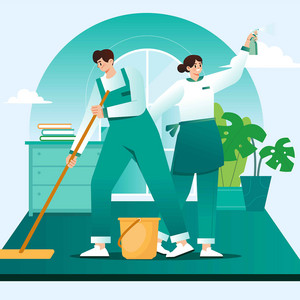
And one thing very interesting I also noticed is thatyes, we've talked about examples about people working in this industry bringing new expertise higher level of services to the clients and making the industry evolve andeverything, but for the you would call them the simplestjobs, like going to yourhouse, spending two hours to cleanit.
Actually, for those young people who are doingit, especially the young people who actually start a business in providing theservice, they are providing the service with aclass.
They no longer wear their daily clothes to your home and useyour, forexample, mob and sweep to clean yourhouse.
They would wear this very clean and even beautifuluniform, they bring their ownequipment, they use these quite professional or at least I don't know what theyare.
Kind ofkids.Yes, they have kids that is so fully prepared that they haveeverything.
Yes, and it looks like Imean,yes, they're only doing the cleaning job andyes, my house is superclean, crystal clean after theirservices, but the whole working process is also veryenjoyable.
It makes you feel that they're very professional and you can trustthem.
And what they sometimes do is that they would ask whether or not they can film everything and then provide the playback at the speed of around 10 times speed and uploaded on social mediaplatforms.
And if you give them the consent and after they dothat, you can actually watch the video while you're in need of certain stress releasemoments, because seeing someonegradually, meticulously clean things up is quitetherapeutic, especially you can see theprocess.
I think that's kind of a decluttering videos that are really famous that you can see how your house or room is getting cleaned so fast with that kind of a 10 timesspeed.
Some kind of enjoyment people get out ofthat.
Talk about all the things that people do with this job thesedays.
It's not to be takenlightly.
There are universities in the United States University of Minnesota University ofWisconsin, Ohio StateUniversity, which offer undergraduate degrees in homeeconomics.
A four year degree from Ohio StateUniversity, itcosts $53,000.
Wow. You're not going to pay $53,000 in study for four years and come away withnothing.
Here's what theylearn.
It's not just cooking andcleaning, it's humannutrition, it'seconomics, it's familydevelopment, it'ssociology, it's childdevelopment, financialmanagement, it'sparenting.
Even if they're not aparent, they still learn parentingskills.
Yeah. Then you can get a master's degree after you've done your undergraduatedegree.
That would carry on with curriculum development and family educationperspectives.
You can get a PhD aswell.
This keeps going andgoing.
If you are going to go this far and study this well or thismuch, then you should expect to be wellpaid.
I think families recognize this that they're not just getting their mom'scousin.
They're getting atrained, qualified professional to come in and really almost be a life coach in a sense aswell.
I'm glad to see that we are gradually shaking off the stigma of these kind of works only are done by those who are not that trained oreducated.
Instead, we started to realize the importance and value in thesector.
Like Steve hassaid, there are universities around theworld.
Ofcourse, you're in China teaching relevant knowledge to the young people outthere.
In thefuture, I can expect better services with more professional people and they are paid quite sowell.
I call it a wing-wing-wingsituation.
We'd love to hear your thoughts on today'stopic.
Join the conversation on our social media channels or leave us a comment in the comment area or send us an email directly with your comment and your ideas about thistopic.