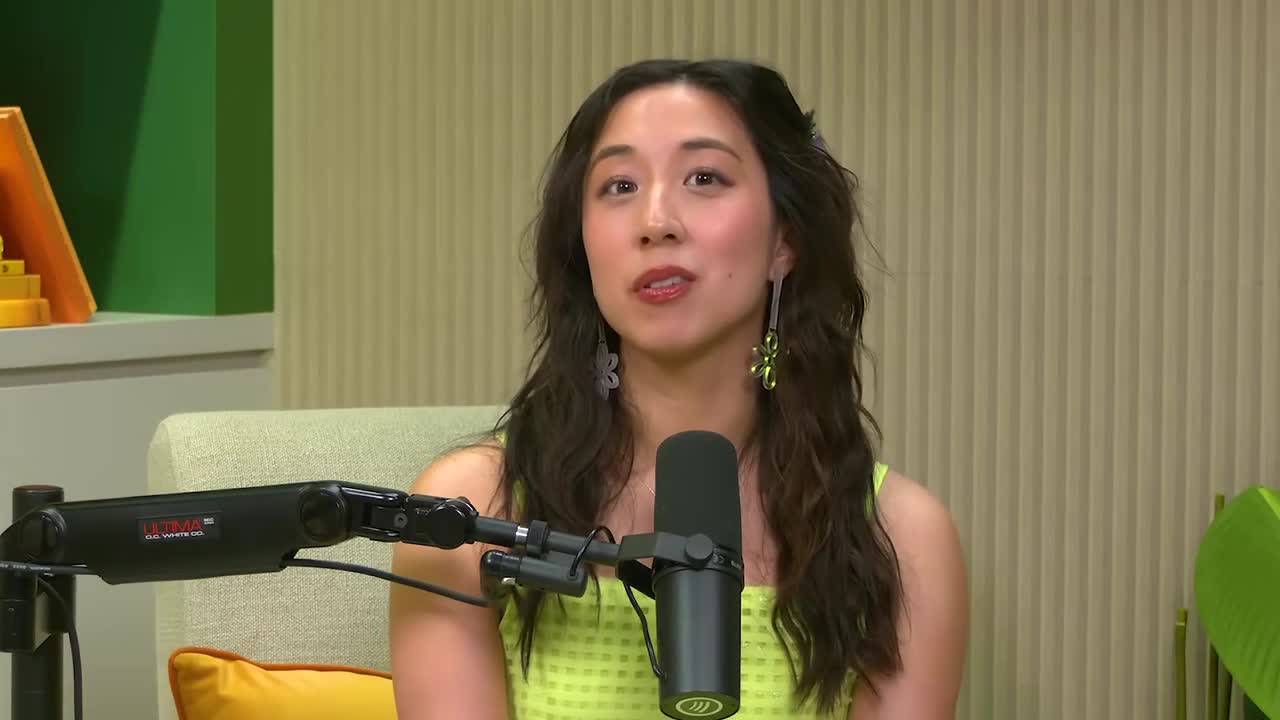
Hello and welcome back to Hot Pursuit, a podcast about creating conversations where nothing is off limits.
This podcast is produced by Asian Boss Girl.
I'm Em, the older sister you've always wanted.
And I'm Jen, the cheese ball in your snack drawer.
And I'm Madeline, your girl who thinks everything really is that deep.
So today we're gonna be talking about the hot topic of money how we feel about money, how our relationships with money formed, how we view it, what it was like growing up with different amounts of money and the realizations that we've made regarding money today.
So how do we feel about money right now?
I love money.
I love spending money.
Oh, important distinction.
Yes.
My sister loves money in the sense that she likes to have it.
For me, I'm like, I like to spend it.
I like to give it away to businesses.
To businesses.
To businesses, big and small.
Establishments.
And or friends.
And or friends, yes.
Wow.
Generous, open-handed with your money.
How about y'all?
How about you, Jay?
Well, one.
I love that we're talking about money because I feel like it's such a sensitive topic.
You know, it's one that everyone kind of strays away from where you kind of start to talk about it, but then everyone's like yeah so uh, what are you doing this weekend, you know?
So it's really like i think valuable to even talk about money.
I would say i spend my money on experiences and i have no assets.
There's a financial literacy that I find is so important.
And especially being an adult, I feel like there's expectations that you know, like what high yield savings accounts are better than the others.
But that is really challenging because there's so much information out there and everyone has so much advice that they want to give you from your parents, from your friends.
So that's always a lot to take in.
I never know what to do.
But I think I'm also I really enjoy scraping. and finding great deals and saving.
I'm like your sister, I think.
I enjoy saving money a lot, and it makes it hard sometimes to spend on things that are like little luxuries or comforts.
It feels morally wrong in my being when I'm like Oh, should I get that like latte with the extra syrup today?
I don't know.
Maybe I don't need the syrup.
You did get a latte with syrup today because it was free.
I did.
You can take the girl out of China, but you can't take China out of the girl.
You get a dopamine hit from saving, from seeing the screen.
I think it's so interesting how you say you like you enjoy scraping yeah yeah yeah, it feels, it feels satisfying, like you cheated the system a little bit right, yeah.
And then also it's like the way that i think about it which is maybe sometimes too much is that every little bit that i can save feels like it's building towards something bigger that you can either give or for the future.
Delayed gratification.
Yeah.
What about you, Mads?
Well, I would say that my relationship with money is a little complicated, just like most of my past relationships.
They...
I think my relationship with money is currently in the process of change.
I can attest.
Yes.
You're doing so good.
Thank you.
It's very difficult.
Yeah, I see.
I see.
Yeah, I think I started from a place of of also scraping, but then scraping to the point that the limit does not exist.
And then I realized it was negatively affecting people and relationships.
And that's when I felt like maybe we should rethink this part of my life.
It's a little complicated.
Yeah, we'll get into it.
Yeah, we're about to get into that.
Exactly that was a good like overview, okay.
So jay, how would you say that your relationship with money has formed?
Where does it come from?
I think this is probably the case for a lot of people, but I think our relationship with money at least my relationship with money is very much inherited from my family and what I grew up with and seeing how our family spent money and where we chose to splurge, where we chose to invest and where know other families did, but maybe we didn't.
So my, my family definitely prioritized experiences, which probably why I do too, like well, we would rather spend on like a really nice trip to make memories together versus, I think in a lot of especially Asian families, prioritizing investing in assets and like tangible goods, resale value.
That's really much more important of a factor, whereas our family jokes that like we just spend it all.
It goes down the toilet because we eat it all and we play it all away.
But I think that's like one of the areas that I inherited a lot from.
But there's also, just like I think, money being tied to like coveting.
That was really helpful.
That was instilled in me from childhood.
So there's a story when I was younger, probably in like maybe late elementary school, like fifth or sixth grade, when your brain is starting to form and you're starting to see and feel like social dynamics and money dynamics.
So it was the era where, like the sidekicks and like the flip phones and like the ones that I think it's called the LG chocolates, that like flipped up and down.
The premium cell phones.
Yeah, the nice ones.
And like I'm here with my like Nokia, you know.
Single screen, single panel.
Yeah.
That I jokingly called my calculator because it just And I would see these swipey ones that do like freaking gymnastics
And I wanted one.
So I went home and I was like, Mom, I want a new phone.
And she specifically asked me, why do you want a new phone?
Do you need it for something else?
Smart lady.
Yeah, at a young age already challenging your desires because everybody else has one, so I want one.
And immediately she said to herself it's not that we can't necessarily afford it right now.
Like, of course, like if I, if you needed it, we would give it to you.
But she was like I clearly made a decision in that moment I'm not gonna give it to you and I'm gonna make you wait.
Oh And so for the next like year or two, I still had my phone.
Cause then she asked me too, so smart.
She goes, do you need it?
What do you need the phone for?
It's to call us or pick us up or contact with your friends.
Can you do that on your phone now?
Yes?
Okay, well, we don't need the new phone, you know?
And so thinking about the functionality and why you're buying and not being tied to wanting what everybody else has.
I feel grateful for it because I feel like it's so easy to get sucked into seeing that everybody else has a new bag and stuff.
It's partially about money management, but I think it's also about desire.
Money is tied to desire, fulfilling desire and how much freedom you give yourself to desire and to satisfy the desire, immediately or not.
How did you feel in that moment?
Do you remember when your mom was asking you?
I remember thinking, well, that does make sense.
Functionally, you needed to call your mom to get picked up after school.
But I remember seeing everybody else's phones and always feeling like oh, I have my little calculator phone and wanting
I want to be cool.
I want to be cool.
So that was the desire.
What was your desire then?
My desire was to be able to walk around with the flippy thing too.
It's about belonging, I think, and being with other people that also have the same things as you, which is a very slippery slope.
Just wanted to fit in.
Just wanted to fit in, because if you were the only person on this earth, would there be a desire for a flip phone, or was the desire?
Yeah, that's what she distilled like.
If i had said like oh, i think the flip thing is really cool, potentially I would have been walking around.
But instead.
It's cool.
My specific reasoning that I guess I could articulate at the time was because everybody else had one.
Yeah.
And that was not the right reason to spend.
Yeah.
So I think thinking about money and desire being so intertwined and your like freedom, that you feel like you have to fulfill the desires versus those limitations that you place because it's not the right reason, is like an important thing to think about with money.
It's, like, not just about the money management.
Desire for belonging.
Yeah, it's not just tactical.
It usually means something else of what you're spending on.
Yeah.
Yeah.
Yeah.
It's so interesting because I think we all come from immigrant parents.
And so we all have the immigrant mindset when it comes to dealing with money.
But even within our three families, we've learned that we all deal with money and our parents deal with money in such drastically different ways.
And it's still like within the box of immigrant mindset.
Yes.
There's so many subsets to it.
Yeah.
And so like a common thread that we have all felt is the jealousy in childhood of like seeing other people have things and just being like why can't I have that too?
Like, I just want, you know, I just want a new box of crayons.
I just want a Barbie or whatever it is.
I'm curious, like what was something that you were jealous of growing up?
Oh my gosh, everything.
Like, similarly to Jae, I remember one of my friends pulled up we, we grew up in a time where there were like no iphones, but everyone had very different, like really cool cell phones.
Yeah, i remember my friend came up to me.
She's like, look at this new phone.
My mom got me yesterday and i was like oh, what was yesterday?
And she was like, what do you mean?
I was like, was it your birthday?
What did you celebrate something?
Like why did she buy you this phone?
And she was like oh, my mom just bought me this phone because, like she thought i would like it.
And i was like, what wild, what do you mean?
Yesterday it was tuesday and i was like, do you know?
Like how expensive cell phones are, just to like buy on a random tuesday.
And she's like, why are you so shocked?
And i'm just like oh oh yeah, because like we are not the same.
Yeah, because like yeah, similarly to jay, again like we, whenever i express a desire for anything, my mom was like okay, we will wait for your birthday or christmas, which was all in the winter.
So all i, i only got stuff in the winter.
Um, The most wonderful time.
And it's just like I observed these moms that were not Asian just buying all of their daughter's things at the same time.
It wasn't unusual for one girl to buy something and then for the next girl to be like oh, I'll ask my mom to buy that for me, so we can match.
And I remember back in middle school, what was so popular was these Victoria's Secret sweat sets.
It was kind of like, The Juicy Couture Velour set, but at the time it was Victoria's Secret pink.
And it was a matching hoodie and sweats.
And all the girls were wearing different variations of them, like blue, green, pink.
They looked so cute.
And I was like, oh my gosh, I want one now because everyone else has one I want to fit in.
So I remember going to the mall with my mom and I was like, can we please go into this bra store?
She's like, you're 12.
Why do you need a bra?
I'm like, I just want to see like the sweat set.
And I remember seeing like each piece being like 48 and just being like baffled that these moms would just purchase these things for their daughters.
And it's not because my parents couldn't afford it.
It's just, they're just like, why do you need this?
Yeah.
And then like, of course, they're just like well, if you just do it to fit in, then we're not gonna get it for you because like, that's not a character trait we want you to have.
Yeah.
And $48 back then was a lot.
It's a lot.
I remember finally getting it at a consignment store.
And after I bought it, my mom bought it for me.
It was used, but she finally bought it.
And I remember putting it on and being like, this doesn't hit.
I was like, even if I got this new, it just like doesn't hit.
So I was grateful that she kind of like made me wait, because I was like it doesn't fit my body really well anyways.
Yeah.
Which is a whole nother discussion.
I know, another episode.
Yeah, so a lot of it was just, I want to fit in.
I really want people to think I'm cool.
I want them to like me because I want to belong and I want to wear this uniform of belonging.
Especially in formative years, like when you're 12, all you want to do is fit in yeah, and be accepted.
Because so much of money is around, like getting to share the joy of the thing together with other people um, and i feel like for a lot of immigrant families, like being able to like indulge in that joy immediately is not, it's not a priority, or like it's it's actually seen or tied to these like value systems that we should not, because we need to like play the longer game or think more long term survive yeah, survival.
And also like building up that like security or that like nest egg, so that there is a sense of something to fall back to, which is something that is very different from maybe some of our peers that we were.
It's very cultural yeah, super cultural too.
Yeah, built in the culture.
And then you add the immigrant experience too.
Mads, I'm curious for you.
There's things that, as a kid, you just get excited about and you see that you want to like experience the joy in too.
But maybe what were some of those things that were harder to be able to experience at the?
Yeah, I remember so distinctly and I always give my parents crap for it now,
So if they're listening, they're going to be like, oh, my God, here she goes again.
I remember so distinctly when I was in kindergarten, my mom took me not grocery shopping, she took me school supply shopping and we got like brand new, like notebooks and folders and crayons and colored pencils and pencils.
And it was so exciting because I was like, wow, I have all these toys to play with.
And so I went to school and it was great.
But then the next year came around, And then I thought we would go school supply shopping and we didn't.
This is not an annual tradition.
Yeah, we just got new paper.
And so then I went to school and then I saw all of my friends had new colored pencils, new crayons, a new box to put all of those in, the new notebooks, new folders.
And I just had ones that I took really good care of, but they were still A little bit, a little tattered and clearly not new.
And then that successively just happened like year after year.
And so by like second, third grade, my crayons were like broken in half and there was no box for them anymore.
And it was just really, oh my God.
It was.
Yeah, it was really hard, I think, because those items not necessarily to fit in, but because I thought like oh, it's like it's literally just harder to color with like stubby crayons, you know, and when you look the bigger picture, and even even when you look at your, your perspectives too, like it's so much deeper than we think as kids, and so it's really interesting to like think about where desires come from and why and and how, like how we are kind of fed for lack of a better term to want things that will make us spend our money.
So for kids it's like if a kid is asking their parents like I want this, like how hard is it for the parent to say no right?
And like if all the kids want the cool item cha-ching for the corporation you know, which is like whole thing, but like if it's not necessary um, it's also important to think about.
So, like as as we've gotten older, we've reflected on these things and we're just kind of like wow, like i'm so glad our parents like taught us these things.
Um, but it was so hard at the time, yeah.
Yeah, i really just don't understand.
Yeah, so resonating with that, and then also just like when you see people today, you can kind of like pick it out, even when they just kind of Their eyes like stay open for a little bit longer.
You know when you're talking about like oh, let's all just go get drinks for the night.
And it's kind of like.
There's a lot of implications of that.
My bank account the next day is going to be... Yeah.
There's like five-year-old brain folds that are like ignited when people just suggest something as simple as like oh, why don't we just like?
Oh, if you don't like your drink, why don't you just get a new one?
Yeah.
Oh my gosh.
Oh, yes.
I never even had a drink, so.
Yeah, she doesn't buy drinks when we go out.
I'm like, I will finish this even if it tastes terrible.
Because in principle, I bought it, and I guess I need to hydrate with this.
So because our parents raised us this way, we developed skill sets that were creative and new.
Would you like to speak to that?
My parents.
We grew up kind of scraping but i never felt very poor because they did invest in things like crafts.
I love crafts, i love crafts, i love.
I don't like art, i like crafts, i like creating things and making 3d things.
I have no sense of like she does or anything.
No, i don't.
Yeah yeah, you do.
And so anything that i wanted that i knew my parents wouldn't buy me, i'd be like okay, i think i can make it.
And i think and i was i was satisfied enough to be like if i make this thing of my own that's similar to my friends, then this will be enough for me and i won't see it as something that's just like a copy of it.
Like i did find value in the things that i made um, not that i could make a cell phone, but Things like a training bra when I was fourth and fifth grade.
That's what all the girls were starting to wear.
Like, oh my gosh, puberty.
Did you wear your deodorant today?
Did you wear your bra?
And, of course, for me with an Asian body type, I won't need a bra until maybe like eighth grade, but it's just like something.
It's like.
It's like even the, the shadow of it through your shirt, like a training bra.
She's like yeah oh, she's a woman, she's growing up, like this is femininity.
This is like because, as a little girl, all you want to be is like a beautiful woman, like a princess, and like this is what princesses wear.
So i remember, like begging my mom, like can i please please, have a training bra?
And she was like you don't need one.
She's like no, you don't need one, and i was like but what she did allow me to have was time with her mother, and her mother taught me how to crochet.
My grandma gave me a whole bunch of yarn, she gave me crochet hooks, and so i remember we were taking a family trip to disney world.
On the plane ride to Disney World, I was nine years old, I crocheted my own training bra.
And I remember my parents were like, what are you making?
I'm like, nothing.
But at the end of it, I was so proud.
I put it on, I was like, oh my gosh, it fits perfectly.
I measured the strap length.
Everything was specific to my measurements because it was mine.
And I was so proud of it.
I was like, I have to show my parents.
And I brought it.
I was like, look, I crocheted my own bra.
And they were so delighted to see that.
They were like, Emily, you did such a good job.
I need to find a picture.
Cause my dad took a picture of me like holding it up.
I was like, this is my bra.
I never wore it though, because it's made out of yarn.
It's very itchy.
It's like itchy and it's hot.
It wasn't even like that I was nipping or anything.
It was just, it was hot and itchy, but like still, I was very proud of myself.
And I think after that that's my my mom was like okay, you've earned it.
So she, we went to limited two.
She bought me one training bra yeah, yeah.
So i think constraints are good um, because that's when your problem solving can emerge.
And um, as difficult as it is to be like oh, i can't, i can't have like a new pencil box every year, i think it helped us learn values early on.
I still have this, it still functions, i can still use it.
It just won't feel as great, but i can manage and i can learn how to adjust around these constraints.
So i think Having obstacles really causes you to grow beyond your limits and get really creative.
Yeah.
It also.
I love the story because it's also just like such a you trait to have too, which is like when there is a constraint, some other kids might've just been like oh okay, well then I can't have one.
And like leaned back from that moment and just been like well, let me sit and wait until my mom will get me home.
But you were like yeah, and that tenacity, that perseverance, that self-initiative, like that is so um too.
So it's just cool to see it like emerging these small ways as a nine-year-old.
Yeah yeah, because other kids really might Lean back like okay.
They said no, but you, you think beyond that and you're like I will find a way, even if I'm gonna do it myself.
Yeah, which tenacity takes you so far does, which she still exercises to this day.
Like we all bought these t-shirts that were we thought would fit and they were so small The shoulder seam was like at my neck, But we loved them so much and Em was determined to wear them, so she sewed it into a really cute tube top.
And it looked so good.
It looked like she purchased it online, but actually it was one of a kind, because she deployed her skills.
Bespoke.
Yes, exactly.
And we couldn't return them.
So it's just like if i'm gonna spend this much money, like i'm gonna use it literally all some way, yet another constraint forcing you.
Yeah, and that's just how life is there's always going to be something that gets in the way, and you have to be creative and you have to like, respect yourself enough to just go for it.
So, now that we've talked about our childhood and our relationship to our parents money, i think we should talk about when we've started making money, like after our first jobs, like once the money was deposited into our accounts, was there any freedoms that we felt or are there any constraints that we put on ourselves?
Like how did your childhood relationship with your parents' money affect your relationship with your own money when you first started making it?
Madeline, why don't you start us off?
She's got a lot of juicy stories to tell us.
Your eyes are shining.
I'm in a hot seat.
I don't know where to begin.
Wow, I feel like there's so many levels of the progression because There's the moment where you first start making money and you're not making a lot, so you're just like grinding.
And then there's, like you make gradually more, but then maybe there's your peers who are making way more.
And then you're like, wait, I gotta get there.
But then you're like why do I gotta get there if I don't care, you know?
And then you actually do make more because you're like better at what you're doing um, and you have more freedom.
But then and then you like spend because you can, but you're like wait, is this, is this morally wrong?
Is the latte morally wrong?
And then, and then you have like even more money and you're like well, this is cool, I guess, but what does this mean?
What am I supposed to do with it?
And then you're sitting over here like, do I put it in assets?
Do I build wealth?
What is the W word?
So when you said you first started making money, your first response was to keep grinding to make more.
Yeah, so when I first, like my first job, I did not make much at all.
What was your first job?
I was in Big Four.
I was living in this old couple's home, renting a room out for like $500.
Great deal.
And I was like, there's no other way I can survive without this. i mean looking back i'm like i probably could have you know spent a little bit more on rent but i was under the impression like i just gotta save wherever i can i still got my car and like all these other payments to make so eating out like traveling and like spending money on taking an uber oh my god never Yeah.
No.
This was early on in our friendship.
I was like, huh?
Like, I'll crab walk my way there.
It'll be a workout, too.
Two in one.
Yeah, you shared at the beginning of our conversation around like realizing that the way that you thought about your money, especially in adulthood, started to have like you saw the benefits of it, but then as that grew, it started to like collide with maybe other other people or kind of started to affect, have more negative effects or um, i'm curious if you want to share more about when you started to realize those things.
So i think, like in our, in our 20s, especially as we start making money, you're just experimenting and trying, like these different value systems and ways to make decisions and stuff and realizing the costs but also the benefits of all of those.
Um, it's a big part of like growing and figuring out your own self.
So Yeah, do you have?
Yeah, definitely.
I think that I realized, like later in my life, that the experimenting that happens with most people right.
Like whether I feel like usually in your early 20s.
It's like personality and, like you know, hobbies and stuff.
Like for me.
I like realized later that oh, people have been like playing with their money and like I haven't been.
And so like kind of realizing people have like a looser grip, even if they came from a similar background as me, like they think about money differently.
But I, I saw my grip on money was like white knuckle and dying.
Oh my God.
And it was so tight.
And then I would look at my friends who like maybe would be making the same, but they're like fine, going out to eat all the time and like going out and traveling or just buying shit, whatever it is, you know.
And I was like, why can't I do that?
Like, it's not that.
And then you know like I would have a celebration moment and I would be like, all right, I'm gonna ball out and like go get a Sprite at the McDonald's drive-thru.
And I felt something, I was like, this is luxury.
One of my birthdays, I went out and I bought organic cilantro.
It was like $1.21, and I was like, yeah, I've made it in life.
Wow, she was splurging.
You were splurging.
Yeah.
But for you, that was.
It felt like a splurge for you.
It did.
I remember it clearly to this day.
You're like, whoa.
Yeah, and then you see your friends who like get like a 121 meal for their birthday and I'm like that's great, you know, but like I could never.
Yeah.
Yeah, so I think it's definitely changed throughout the years, and I would say that...
Being friends with you Jay, has also given me a lot of different perspectives on how I can view money, because your family has highly stressed the importance of experiences, which is the opposite of where I'm coming from.
So I'm like, oh shit, those are really valuable too.
Let me try those.
I agonized over buying a starbucks holiday drink for probably like an entire week.
Every day i thought about it i was like ah, it could be so cute.
I'm gonna walk around in seattle with my cute little like holiday drink, sipping it as the snow gently falls, like it was just like this mo, this like thing that i was like this could be so great.
But then i was like, but that's like seven dollars.
I'm like i don't need one.
I could just put some cinnamon on my latte at home and it's the same thing.
But it feels it's not like just going into the store and looking at the gingerbread latte and all of the different options and then picking the one you want is the luxury too, getting to pick what you want versus having to make the thing you have at home.
But it it really feels like a moral decision.
I'm like why does it have to feel so dramatic?
But i think it's like, When you have these set of principles in place, violating them,
Your parents' principles?
Not even.
I feel like I just set them for myself.
What it feels like is, when I indulge on this one small thing, I will indulge in many other areas and then I'm going to be irresponsible.
So it's about it feeling like an irresponsible decision.
When in reality, it's a mindset shift from allowing permission and space to have little luxuries.
But achieving that balance is really hard.
And I find it's, for myself, it's easier to reel it all the way back in.
And even a little bit of loosening feels dangerous and unsafe.
You don't trust yourself.
And irresponsible.
Yes, exactly.
You don't trust yourself on the other side of a splurge.
I don't think that answers the question of where the root is coming from.
No.
I realize I didn't answer the question.
Maybe because like yeah, but i'm just like whose principle?
Like why did you set that?
Because it sounds like there's there's a value in building something else.
There's a value in kind of skirting the system and achieving the same goal, doing something a little different, maybe like waiting a bit for a sale and like where is that from?
My parents didn't buy me anything outside of necessities growing up.
I remember being six and being at Walmart when we were grocery shopping, asking for a bag of Skittles that was 44 cents and my parents were like you can buy it with your own money.
But like yeah, you know yeah, we can't.
We can't afford that.
Which was like can't afford is not true because it's 44 cents.
Yeah now, i know but um, basically like learning, teaching you if you want something, like you, You have to decide.
If you want something.
Yeah.
And so growing up, like all the money that I had, like I would just watch everything so carefully.
Like, do I really, really want that?
And so now you fast forward and like that's just so deeply instilled in you.
A lot of things you're like.
Would I rather have the singe of the heart and lose the money, or would I rather just kind of like be fine about it?
Another follow-up question like are there ways in which you take care of that inner child right now?
Yes.
Yes, so I think... And you buy the little things.
Yeah, and I think it's been kind of like this flailing.
I feel like a teenager who doesn't really know what to do with their money yet.
Well, I think now I'm a little bit like more comfortable in how i feel, but for a few years when i was like making more money than the beginning and i had enough to actually spend a little bit discretionary money right which, like what a discretionary, what a concept yeah yeah, um i found that like i almost would overspend.
Like I didn't actually like go over budget or anything, but like I would just like buy things to buy them.
Cause I never had that feeling which is the thing that you were talking about at the beginning of like the excitement and joy of spending money and being able to buy the things you want.
Yeah.
Yeah.
And you were starting to feel that.
But then a couple years later, I was like, I have so much shit.
What am I going to do?
And then the hoarder and the immigrant in me is like, but it's all useful.
Get rid of it and so no, i just have like all this stuff right and i'm like i really gotta like in a bin in your closet yeah, and then like i'll find a use for it like five years later.
So i'm like, thank god, thank god, i had that really, really.
And then everything you look at, you're like this might be useful.
We will justify every single purchase yeah, because just i wanted it is never enough.
Or free things i mean jay likes to keep boxes and bags.
Amazon boxes are really useful.
We were.
We literally were overseas in Korea and we were shopping on the streets and we get like free plastic bags to carry our goods in.
And literally the first thing she will say is not joy from from purchasing the item.
It's oh, my God, this is a really good bag.
Oh my goodness.
And she literally has them to her apartment that she has moved.
She's moved apartments and she brought the bag.
You can't take China out of the girl. again yeah well part of that was from an experience where i had to ship something to somebody like a package or something and i didn't have cardboard boxes and i had to pay so much money at fedex for a cardboard box i was like in principle never again you don't yeah yeah it's like pens yeah like why would i ever have to buy a pen they're everywhere yeah But I'm curious for you because your way of spending is so joyful.
Yeah, no, it really is.
It's so joyful.
Joyful and generous.
Yeah.
And so, yeah, can you talk a little bit about like after you started making money?
Yeah.
What was that like?
How did you think about all this money coming in now and what to do with it and where to give it to?
Because you're so generous with it.
Yeah so, like for me, I kind of fall on the other side of that fear and like I will spend and I will be irresponsible with my money.
But it was just because growing up, even though we didn't have a ton of money, my parents were just very generous people.
And I think I learned that from them.
And I saw the joy that came with being generous.
My dad, whenever... he had people over, he would just like give away stuff.
You're like, oh, you like that?
You can have it.
And then he'd just be so happy afterwards to like not have his things anymore.
And I think just naturally in my DNA, I'm a more generous person.
My parents had this family friend and every single time I saw him, he gave me a bag of Skittles.
And my parents would always tell me like you would always open that bag of Skittles and give every single Skittle away.
And he was like, you might have one for yourself, but there was a lot of joy in just giving it away.
And I've always enjoyed giving things away to people.
It's true.
When you get PR now, if I'm there with you, you're literally just like, who can I give this to?
Before even picking the shade for yourself, you're just like, I want to distribute to the village.
But it's interesting because your parents raised you and your sister the same way, but you both came out with totally different mindsets.
It's so interesting.
So my parents are first very generous, but also very careful and frugal with their money too.
So I unfortunately only got the generous part.
So I remember not having... like as a kid you don't have money you only get it from like chinese new year or like birthday or christmas yeah and i just remember like oh my gosh i can't wait to go to the mall so i could spend all of this and i can buy my sister things and it was always just like i there was so much joy in purchasing I don't know there's like that dopamine hit like I give you this and you give me that and it's I don't know it's so exciting and I still to this day feel that way um you literally made a video the other day of you and our friend Callie just play pretending shop like yeah it's the joy of like receiving something by trying something in and the kids are onto something i remember like my parents would be like i'd ask them for like a snack and they're like we can't afford that i'm like well then let's just go to the bank and get some money because like i just equated like you go to the bank and they give you money i didn't know that it came out of like your personal account i was just like this is where you get money so like what's the problem what's the issue here so um yeah there's always been a joy of spending and when i started making money i was like this my first job i got paid 45k um and i just remember thinking like this is so many thousands of dollars and like i had zero concept of yeah like saving savings even though my parents were like you need to put like 20 away into savings like okay but Like what's left, I'm gonna spend it all.
Yeah, so like I loved treating people out.
I loved buying my sister things.
I still love doing that.
And then, of course, at the end of the month when I pay my credit card bill, I'm like there goes all my money.
I have a few hundred dollars in my account.
But that's okay because next week I get more money.
And so it's always like this mindset of abundance.
I don't have assets either.
I don't have a robust savings account either.
It's very scary.
Like living...
My life is very scary because I don't really have much of a cushion or a margin, but I've gotten by.
It's okay.
And you get to experience the joy of giving people things and buying people things.
And if they say they can't, then I'm just like, well, then I'll just buy it for you.
What's the issue?
Money comes and goes, but like, this is the time of our lives and we need to, we need to invest it.
The trouble comes when like, cause my dad's also like this, he just like pays for conveniences.
So stuff like I remember visiting Madeline when we were first becoming friends, like back when we were 24.
And she was like, oh, like, why don't we eat at home?
And I was like, why don't we eat out?
I'm on vacation here.
Like, let's go eat out.
And then she was like, okay, let's, well, the bus leaves at like 3 p.m.
And I was like, why don't we just take a Lyft?
Because in my head I was like, I'm on vacation.
Buses are so gross.
I hate just like sitting with people and I hate just public transportation because it's just like hot and like.
Yeah, I like being picked up.
I love the muni.
And she was so kind about it because she was like okay, we can.
But I really didn't understand how much that probably affected you at the time, because at that time you were still trying to- Exploring, exploring outside of the framework in which you valued money.
It's really funny because it highlights exactly what we're trying to get at, which is that money, when it becomes relational, kind of challenges all of the frameworks and boundaries and values that you have in place.
So that's Emily's story for me, but I have a similar story.
Oh, tell us, tell us.
There's clashing and it's so interesting because you don't realize it growing up, until you start having these conversations with your friends.
So when Emily came to visit me, I had just moved to San Francisco.
I feel so bad.
And she was so excited.
No, no, no, this isn't my bad story.
So she was so excited to come and she was like, oh my god, there's this really cool science museum and there's an albino alligator and it's so cool.
I promise, it's the best time ever.
And so me, I'm like, I just see the dollar sign.
I mean, it's like $50 and like we're going to like spend a mass two hours there.
And like in my mind, that's like you can't even eat out for that much money.
Like, you know, like per hour.
Yeah, you can you can do more than eat out per hour.
You think by per hour?
Yeah, basically.
Yeah.
And so you're like, but the albino.
Yeah.
And so I was just like I mean, if you want to do it like we can, but like I just I'm not really that interested.
And then of course, Emily, in the name of friendship was like, it's okay.
Like we don't have to do it.
And I'm like okay, thank you so much.
You know, she spelled it out for me.
She's like i just don't see the value in this, because it was, it was less, it was less, like if you don't, if you want to, we can't.
It was more, just like yeah, i just don't see the value in it because it's fifty dollars and very, it's just an alligator.
And i was like no, but there's an indoor rainforest too.
Yeah Yes,
There's butterflies.
And she's just like, for $50?
And I'm like, I don't see the point.
Like, writing it out.
Yeah.
Just very direct.
They're like a ledger.
And for her, she's like, I also don't see the point.
So we were missing each other.
Yeah.
Yeah.
So we didn't end up going.
And she was like, fine and gracious.
We had a great time anyways.
We did.
We rode a tandem bike.
And we went to Muir Woods and everything.
It was so fun.
It was so fun.
But so then I ended up going to that science museum with other friends because they had a night at the museum for like 20.
Oh, for $20.
For like months.
It makes me so upset.
It was like months later, right?
And so I went and like experiencing that place, I was like, oh my God.
What?
I'm so wrong.
The whole time I just had like a guilt cloud over me as I was experiencing this beautiful museum.
You saw the alligator.
The aquarium.
Sending you photos of the alligator.
The planetarium was so much.
It was so cool.
And then it was so bad that I bought a membership.
She bought a membership to the museum.
Because you can bring a friend for free every time you go.
The value and it's tax deductible, that's the thing you know.
So I bought that and the irony is like I brought like every single friend that came to visit me except her.
So, like to this day, my name has like an alligator emoji next to it.
Yeah, on my phone, it's Maddie with alligator.
Because I will never let her forget that.
And, like, you know what?
I deserve it.
She was like, I'm so sorry.
It was awesome.
And I was like, I told you, but it's fine.
It's fine.
And we ended up going, like...
Many, many years later.
It was overdue by many years, but still we got to enjoy the experience and it didn't hit our wallets as hard as it would have.
Yeah.
And it was just a great learning experience for me.
For both of us.
It had to happen, unfortunately.
But it really opens your mind in terms of like, how can I view money differently?
And those things only happen when you collide and bump up against each other.
It's true.
Otherwise, if you're not in relationship with people like that, you're just barreling down the path of your own principles and ideas and stuff.
But it's like in the clashing, clashing is when you can grow and absorb parts of each other.
Seeing you talk about being able to give and share, and seeing the way it lights up and the way other people light up that is beautiful.
That should be prioritized and balance everything else, but it's in relationship.
People do take advantage though, so if you're going to be generous, tread lightly.
Be careful.
That's such a good point because you have to be able to vocalize it in order for the conflict or the friction to even arise.
Healthy friction.
Yeah.
There's been so many times where, like I would want to go out and like participate in like a group friend activity, but i just didn't want to go out have drinks and like get dinner.
That's easily like over a bill and at the time when i was deciding i like i didn't want to spend.
That doesn't mean that i don't like the people, doesn't mean that i'm not going to enjoy it, but like that's just too much money for me to like buy in.
And i think the aspect of social life that a lot of people don't talk about is that it's really expensive and so like And so but.
But if you don't vocalize why you're saying no, you know people will assume that like exactly.
And you don't want to hang out with them.
Yeah.
Yeah.
It's, it's giving, it's like vocalizing your need and also like allowing the other people to have the opportunity to be like.
Well, let's be considerate of you.
Because you'd be surprised.
Once you say that, they're just like, oh, we don't have to.
We can make drinks at home.
When I quit my job last year and I started doing social media full time, I took a huge pay cut.
And it was just really cool to see how generous people could be once you state your limitations.
And then you get to see like, the extent of people's love towards you where otherwise you wouldn't have been able to see it because like, if you have enough, then people can't really be generous towards you back.
So um yeah, you're right like, in order to allow people to spend their money on you, i think it's important to like humbly, be like yeah guys, i don't feel like, i don't feel comfortable in like purchasing this thing.
Normalize, like saying no because it's expensive yeah, and it's just really cool to see people like oh, but i still want to do this with you.
I got dinner yeah, and it's so great.
Or like okay, we don't have to go out, we can cook.
You know, we can cook in my place yeah, and it's just as fun.
Yeah, generous and like giving the resource, but also generous and thought and consideration too, like even that, even if someone's like oh, we can do something else or, before you even have to voice it, knowing it in your state and then being able to be like, let's do something.
That's a craft night at home, you know just their consideration of you and anticipating your need is the love that they get to give you.
Yeah, it confirms the fact that they want to hang out with you, like regardless of if you can afford it or not.
Yeah, the real ones will always understand yes oh yeah yes yeah, and go the.
I'll get your seven dollar starbucks drink.
Yeah, ain't no thing.
Money comes back sometimes.
It will, it will.
It's just how life works.
It's cool seeing all of our different stories, because at the heart of every story we're talking about money, but there's like money is in the direction of a desire.
So if money is tied to desire, and desires are emotional.
And a lot of times money is emotional and there's all these like feelings attached to it.
It's never about just the like dollars and bills being spent or left or coming in, but when it especially relationally honoring other people's desires for how they want to spend their money.
And also voicing yours, helps you just like know how each other is wired and then how to like love each other more fully, which is like really neat to see the way that It feels like there's all these other ways that we often talk about in relationships, of their emotional needs and blah blah, blah.
But even their financial makeup and their wirings is a dimension of a person to get to know.
So seeing you two in that story with the alligator and figuring out how to like love each other and see each other but then honor the other person's needs, like you both were doing that together yeah, but that's the beauty, right like that's relationship.
It's like here are my needs, but here are your needs, and then how do we like fulfill those in each other so fully?
Yeah,
Money is emotional.
Money is relational.
Money is spiritual.
Money is a dimension of a person that's part of their being.
Yeah.
That we should recognize.
Yeah.
So we challenge you to have these conversations with your friends, because it is a really cool tool to see how can we deepen our friendship in this way.
It's really uncomfortable yes, but like you might fight a little bit.
You might fight a little bit, but the real ones, they'll stay, and it's a really cool conversation to have.
Yeah, so thank you so much for joining us on this episode of money talks.
We release episodes every week, and so we hope to see you at our next one, yay.