This message comes from Greenlight.
Parents rank financial literacy as the number one most difficult life skill to teach. With Greenlight, the debit card and money app for families, kids learn to earn, save and spend wisely.
Get started risk -free at greenlight .com slash NPR.
You're listening to Shortwave, from NPR.
Hey there, shortwavers.
Regina Barber here, and today I'm joined by NPR's Rob Stein.
Hey Rob. Hey Gina. Rob, you're usually here to talk about stuff related to health, like COVID or CRISPR or organ transplants, but the word on the street is, today is a little different.
Yup, I'm here this time to talk about little fuzzy squeaky animals.
Okay, let me guess, do they like cheese?
How did you know? Yes, indeed.
I'm talking about mice, and these aren't just any mice.
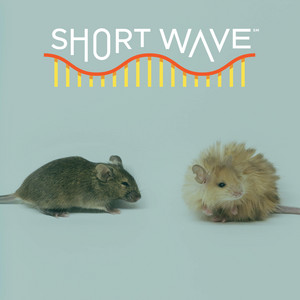
Okay. These are, wait for it, woolly mice.
Okay! Okay, woolly mice.
Rob, what makes them woolly?
Well, Gena, you've heard of the woolly mammoth, right?
Of course. I love those hairy elephants.
They used to roam the tundra, they were actually still around when the pyramids were built.
Exactly, before they went extinct thousands of years ago maybe because of climate change and hunting.
Okay, so these mice are like miniature versions of woolly mammoths?
Bingo! Okay, but why are you bringing them up now?
Well, because someday, some scientists want to bring a mammoth like creature itself back from extinction.
Wow, so they have like Jurassic Park -like intentions?
Yes, exactly. These scientists, they work at a Dallas biotech company called Colossal Biosciences.
And they say these little wooly mice are a key step towards that audacious, and I have to say quite controversial, cold.
Wow, okay. So today on the show, wooly mice.
and what they mean for the elusive goal known as de -extinction.
You're listening to Shortwave, the science podcast from NPR.
This message comes from Charles Schwab.
When it comes to managing your wealth, Schwab gives you more choices, like full -service wealth management and advice when you need it.
You can also invest on your own and trade on thinkorswim.
Visit Schwab .com to learn more.
Support for NPR and the following message come from Edward Jones.
What does it mean to live a rich life?
It means brave first leaps, tearful goodbyes, and everything in between.
With over a hundred years of experience navigating the ups and downs of the market and of life, your Edward Jones financial advisor will be there to help you move ahead with confidence.
Because with all you've done to find your rich, they'll do all they can to help you keep enjoying it.
Edward Jones. Member SIPC.
This message comes from Charles Schwab.
When it comes to managing your wealth, Schwab gives you more choices, like full service wealth management and advice when you need it.
You can also invest on your own and trade on thinkorswim.
Visit Schwab .com to learn more!
Okay, Rob, we're going to go from mice to mammoths.
Let's start with these woolly mice.
Like, how are they different from normal mice, and how were they created exactly.
So to answer that, I have to start with the mammoth.
Colossal Biosciences wants to bring the mammoth back by using the latest genetic engineering techniques to create modern -day elephants with key traits from the mammoth.
Cool. You know, traits like their signature thick coat and their fat metabolism that kept them warm in the Arctic.
And how do they go about doing that?
So, they started by comparing genomes from samples of ancient DNA recovered from mammoth remains with genomes from living African and Asian elephants, the mammoth's closest living relatives.
We ask, where are all of the mammoths the same as each other but different from an elephant?
So this is narrowing down the focus on the genes that make mammoths mammoths instead of elephants.
That's Beth Shapiro, the chief science officer at Colossal.
So in practice, I imagine they're, like, like you know, mammoth traits, like their distinctive coat, and maybe their fat?
Exactly. And they narrowed down that list of candidate genes to 10 genes for the coat and their fat, but they wanted to make sure that the genes they had identified were really responsible for the traits that they wanted.
They couldn't just try to engineer Asian elephants with genes.
They thought might control those traits because it would be unethical given the fact that Asian elephants are endangered.
Here's a difference in a letter in a long string of A's and C's and G's and T's, a genome of a mammoth that we've gotten out of a bone that was preserved in the permafrost in Siberia.
It's hard to test that in an elephant because an elephant is pregnant for 22 months.
And then it takes another decade to 14 years for that elephant to be able to have a baby.
So it takes a lot of time to isolate those genes, insert them into like Asian elephant embryos, wait to see if that like pans out, then like go back to the drawing board with the next one.
But a mouse is a different story.
With a mouse model, we can really rapidly test these hypotheses and learn whether this change might be responsible for making the animal woolly.
And now I can add that to the list of things that I want to change when I'm editing that elephant cell, so that I can have an elephant someday give birth to something that looks more like a mammoth.
Wow. Okay. So that's where the mice come in.
Like they produce so quickly, there's so many generations and they get more data faster.
Yeah, yeah, exactly.
That's exactly how it works.
The mice are great little critters for doing these kinds of experiments, seeing the effects of genetic changes because they reproduce so fast and scientists, they just know how to work with them.
We look in the mouse for those same genes and instances where those genes have been involved with making a woolly coat or longer hair or changing the color of the hair.
And so they can see like did this gene that shows up in the woolly mammoth DNA have like the same effect in mice or giving the animals fat that protects them from the Arctic cold.
Okay And once they did that the researchers used different kinds of genetic manipulation to modify the genes in mouse eggs and mouse embryos and then use those to breed mice they hoped would have those traits and you know what Gina it appears to have worked Wow, that's awesome Yeah.
One change gave the mice hair three times longer than usual.
Another made their coats wavy.
Another turned their coats this kind of golden blonde, you know, color like mammoths et cetera.
Wait, wait, so not dark brown like children's books when I see the mammoths?
Are those mammoths just, like, dirty?
That's the idea. I mean, these these little creatures, you know, they kind of look like… what mammoths would look like if they had a good bath and a blowout.
We ended up with some absolutely adorable mice that have longer, wooly golden -colored coats.
Gina, I'll send you some photos of them right now.
Okay, okay. I'm gonna look.
Oh my gosh, they look like little craft -like things that you could actually make, like little dolls.
I know, don't you just want to cuddle up with them?
Totally. I mean, they must be so excited about this.
Yeah, and that's exactly what Beth told me when I talked to her about this.
For us it's an incredibly big deal.
I mean this is really validation that what we have in mind for our longer -term de -extinction projects is really going to work.
And that will enable them to create mammoth -like Asian elephants by genetically engineering Asian elephant embryos with the traits that made the mammoths mammoths.
Implanting those edited embryos into female Asian elephants, you know surrogates, to hopefully breed these mammoth -like creatures with the ultimate goal of releasing herds of these creatures back into the Arctic someday.
Which on one hand like is a huge deal, right?
But like on the other hand is pretty controversial.
So do you have a sense of like what other scientists think about all this?
Well, you know, some other scientists think it's pretty cool at least on one level.
Like you know, Vincent Lynch. He's a professor of biology at the University of Buffalo.
You know, I'm pretty skeptical about this but that mouse is pretty adorable.
And for people like me who want to understand the genetic basis of traits, this is particularly impressive.
But Vincent and others caution a mouse is not an elephant, so who knows if they could do the same thing with that species?
Right, right. And even if they could, Vincent is among those who don't think bringing back the mammoth is such a great idea.
Okay, why is that? Well, they think, first of all, that the money would be much better spent saving species that are still alive but are on the brink of extinction.
And also, who knows what unintended consequences could result?
I talked about this with Carl Flessa, he's a professor of geosciences at the University of Arizona.
So they sort of want to mess around on a pretty large scale.
I don't know what the downside of having a bunch of hairy Asian elephants stomping around in the tundra might be.
I don't know what would happen.
They don't know what would happen.
They can't really assure me that, oh, everything will be just fine, everything will be just like it was back in the Pleistocene.
I'm not ready to play God like that." Wow, I hadn't thought of that.
So what do some folks at La Clauss say about all these concerns?
Well Beth and her colleagues, they defend their project.
They say reintroducing mammoth -like creatures could actually repair the environment by helping restore the ecosystems where the mammoth once lived.
Our intention is to recreate these extinct species that played really important roles in ecosystems that are missing because they've become extinct.
And that is our goal with our de -extinction projects.
And Ben Lamb, Colossal's founder and CEO, says the tools the companies' creating in this project could help prevent more species from going extinct.
Current conservation models work, they just don't work at the speed at which we are changing the planet and eradicating species.
So we need new tools and technology so that we can engineer life in a better way that's more adaptable to be co -existent with humans.
The researchers say they hope to produce their first mammoth -like Asian elephant embryos next year...
What? That's so stupid.
Yeah, and then they'll implant them into female Asian elephants, which will hopefully give birth to the first mammoth -like Asian elephant calves by 2028.
Wow, I want to mark my calendar.
I'll let you keep doing it.
And you know, Gina, they're also working on bringing back other extinct creatures like the dodo bird and the Tasmanian tiger.
Wow. Okay. Well, Rob, you've given me a lot to think about.
Thank you so much for bringing this story to shortwave. Oh, anytime Gina.
It's been fun. For all you listening, if you liked this episode, make sure you never miss a new one by following us on whatever podcasting platform you're listening from.
And if you have a science question you'd like us to investigate, send us an email at shortwave at NPR .org.
This episode was produced and edited by our showrunner, Rebecca Ramirez.
Tyler Jones checked the facts.
Robert Rodriguez was the audio engineer.
Beth Donovan is our Senior Director and Colin Campbell is our Senior Vice President of Podcasting Strategy.
I'm Regina Barber. Thank you for listening to SUREWave from NPR.
This message comes from Greenlight.
Did you know that parents rank financial literacy as the number one most difficult life skill to teach?
Meet Greenlight, the debit card and money app for families.
With Greenlight, you can send money to kids quickly, set up chores, automate allowance, and keep an eye on your kids' spending with real -time notifications.
Kids learn to earn, save, and spend wisely, and parents can rest easy knowing their kids are learning about money with guard rails in place.
Try Greenlight risk -free today at greenlight .com -slash -npr.
This message is from NPR sponsor Total Wine & More.
This summer season, with so many bottles to choose from, it's easy to find your favorite and more.
Find what you love and love what you find—only at Total Wine & More.
Drink responsibly, B -21.
This message comes from Mint Mobile.
Mint Mobile took what's wrong with wireless and made it right.
They offer premium wireless plans for less, and all plans include high -speed data, unlimited talk and text, and nationwide coverage.
See for yourself at mintmobile .com slash switch.