This is Round Table.
For years, we've buried print media.
Now in 2024, it's rising from the dead.
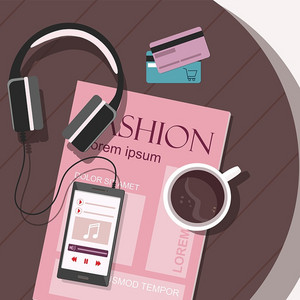
Magazines are apparently luxury goods, coveted by the young.
At least in America.
How did this turn around happen?
The comeback of print starts now.
And stick around for our special segment, Heart to Heart.
Your questions are answers.
Business, tech, culture, or whatever stirs your soul, we're ready to dive in.
Keep sending your questions to roundtablepodcastatqq .com.
Coming to you live from Beijing, this is Round Table.
I'm He Young. For today's program, I'm joined by Steve Hatherly and Ding Hung in the studio, first on today's show.
For years, it seemed like the death knell had sounded for print media.
The rise of digital platforms and social media seemed to have heralded the end of print magazines.
Yet in a surprising turn of events, print magazines are not just surviving.
They're experiencing a remarkable resurgence in the United States.
These publications are now seen as premium products, often targeting high -income individuals.
And some are even successfully attracting Gen Z readers.
And I'm talking about young people who are born between 1997 to 2015, something like that.
So tell us about print medias, or particularly print magazines' comeback.
What's going on? And could you gentlemen start with maybe?
I was waiting for you and you were waiting for me.
I didn't think that's the way it's going.
I'll take the reins on this one if you don't mind.
Yeah, so this is according to a recent Bloomberg report.
And many of the publications that used to crowd newsstands and mailboxes 20 years ago have indeed closed entirely.
I think we remember these places.
Well actually, I'm not sure if they existed in parts of China or not.
But in Canada and America, and I think in other parts of Europe, it would be a thing that you would see a little booth on the side of the street, on the sidewalk, and a lot of people on their way to work in the morning, maybe grabbing a coffee, would also grab a newspaper to read.
That's where they would get their morning paper from.
And then they would have magazines, various types of magazines for sale as well.
And these were called newsstands.
So where these used to be really popular in the past, and you could see them everywhere around different cities, now you have a hard time finding them.
Did they have those places around Beijing as well?
Oh of course. Yeah, they were, at least during my university days, like more than a decade ago, they were very, very popular.
As a college student, I used to grab, for example, a piece of Global Times, China Daily, to help with my English study.
Sometimes Times, Newsweek, those kinds of American magazines were also available at the time.
Would you go to the newsstands to buy them?
Yes, exactly. Yeah, so there was something kind of poetically romantic about these places, right?
You get the paper, you get a little snack there too, sometimes if they sell them.
Anyway, Times had changed, and those places changed their business models because readers and also advertising dollars moved online.
And that usually reduces their publication frequency or after they go fully digital.
You just don't find those prints anymore.
But the situation, and this is what we're talking about today, has gradually changed.
Some publications are going back to print.
Bloomberg Businessweek, for example, they publish every day online, and in this July, they relaunched a monthly print edition after 94 years.
That publication has been around for so long as a weekly.
And several titles across different genres too, Field and Stream, Nylon, Sevoore Sports Illustrated, which I used to read when I was a kid, Vice, I check out their stuff online.
I didn't realize they had even had or have an offline publication.
All those mentioned, they've committed to restarting their previously abandoned physical products, and they've done that this year in 2024.
Oh, yeah, and according to a recent CNN report, the Atlantic, well, I have to admit, I've only read some of the articles online by this publication, but apparently it does, and it used to have these print publications, these printed magazines, and it is doing something, its printed version is enjoying
a resurgence this year and increasing the number of issues that it prints from 10 to 12 a whole year.
So I think with these magazines, we're seeing that, okay, they're seeing a revival in popularity in a way, and just to be clear, we're not really talking about newspapers, right?
So magazines come into print every month or maybe less often than that, but newspapers are for every day.
Let me give you an example.
We'll use Nylon as an example, and according to a UK media outlet, Nylon is not from the UK, they're an American publishing company.
They were founded in 1999, and maybe that's not a household name around the world, but they focus on things like pop culture and fashion and music and beauty, and they were a publication, print publication originally, but they went over to fully digital output in 2017, but in November of 2023, they
announced that they're returning to print, and it released in April of 2024 on a bi -annual basis.
So for these companies that are coming back to print publication, it's not like they are abandoning their online, their digital versions of their media, and going back fully to print publications on a daily or weekly or even monthly basis, but they are returning to it.
And if you're wondering perhaps why, I kind of like this quote from Amanda Mull, she's a reporter at Bloomberg Businessweek.
She said, well, wait a second.
We thought, why don't we just bring back a little bit of print magazine and just see how that goes.
And we're also seeing a rising revenue phenomenon, right?
Because the bottom line for any business and publishing houses are businesses, so they're seeing it makes sense here, right?
Yeah, exactly. I think in my understanding, virtually everything is driven by money and this kind of business trends.
So the bigger picture is that, for example, in a case of 2022, the US magazine industry holding over $28 billion in revenue, that was actually a slight increase from the record's previous years in marking a return to stability in this market, which are sometimes quite notoriously turbulent.
And in last year alone, The Atlantic, this magazine, that's Huoyang you mentioned earlier, it's reported a 13 % increase in terms of its print subscriptions, while other highbrow titles like New Yorker and Hoppers are also seeing similarly positive growth trends.
So the bigger trend is there.
And I guess another part of the story is the new age cohorts, the younger generation, are in many ways the driving force behind this kind of comeback of the print media.
Not print media, but print version of magazines.
Yeah, this is a niche market, right?
And Ding -Heng, you mentioned a couple of media outlets, one of them being the New Yorker.
Now magazines cover a lot of different topics, right?
Just like if you go to a news media outlet, they have lifestyle and the environment and world news and things like that.
These magazines cover all types of topics as well.
And The New Yorker, I've read a little bit of The New Yorker, I don't subscribe to it.
But when you said highbrow, the reason you say highbrow when you talk about outlets like The New Yorker is that these articles and these types of magazines are really, really, really well -written and they cover topics from perhaps a different angle.
So it's not like going to CNN and reading the headline news.
It's not like that.
And the publications tend to look very nice, the graphics are all very nice.
And that's the reason we call these types of magazines highbrow.
And that's why we call them niche as well, because it's not like everybody is rushing to buy these magazines.
But the people who enjoy it, my opinion is the people who enjoy it almost prefer to have the magazine in their hand than reading online.
And also, Dooku mentioned Harper's, I assume that would be fashion -related magazine.
And I still remember, as a kid or teenager growing up, I used to, I'm never a subscriber either because subscriptions can be so expensive.
But I used to go to, when I was living in the UK, go to the newsstand and pick out the Vogue magazine with the cover that I absolutely love with maybe a star or a model that I like.
And yeah, I look at some of the articles too.
But anyway, and bring that back home, rip out a page and stick it on the wall.
And I remember a lot of other teenage girls did the same because we loved the beautiful pictures and photographs often done by world -class photographers for particular designer brands or whatnot.
And then there were kind of modern days of pieces of art in a way.
And I wonder if they could see better days as well because we've all been around for more than a decade and we've witnessed the decline or some people say the death of magazines, newspapers, and other print media formats as such.
You might think that, yeah, I guess it's fair.
When we hear the word magazine or newspaper, like paper newspaper, we might make that association with old people, but it's not the case.
And you mentioned it, it's Gen Z.
Gen Z was raised on the internet and it's ironically perhaps Gen Z that's helping to lead the charge in the comeback of print media.
There was research done by the Association of Magazine Media and this is what they found, this is really interesting.
55 % of Gen Z reports buying or reading a physical magazine in the last year.
Of course, that means 45 % did not, but still I think if we guessed at what that statistic was going to be, I would have guessed, well, 10 % maybe of Gen Z read a magazine, a print magazine, but no, it's 55%.
So why do you think that is?
Were readers clamoring for a print copy to hold in their hands again?
I think it has something to do, sorry to interrupt, I think it has to do with the poetic romance of it, you know, holding a book.
Let me ask you this question first, when you read a novel, do you prefer to do it on an e -reader or do you prefer to hold the book in your hand?
I am currently reading a novel indeed and I am choosing the latter form.
That is. Holding it in your hand?
Yeah, holding a physical book on my hand.
Why do you prefer that?
It's more like a continuation of my, not decades, but more than a decade, long habits.
I hate to change in this regard, you know, sometimes.
You sound a little.
You know. Yeah. So, I mean, philosophically speaking, sometimes you feel like, oh, this old habit, something old, it has gone forever, it is fading away, we have a lot of nostalgia, feeling about this, but sometimes, when circumstances, when things reach a certain point, there is a comeback.
That's a philosophical rule of our universe, I guess.
Do you prefer Hooyang to hold the book in your hand or is an e -reader okay?
E -reader is definitely fine, but I don't have one because I'm a little bit of a cheap skate, especially when it comes to technology so I refuse to invest.
And also, I just have way too many books already at home, accumulated from my parents' generation already, so I have plenty to read in that sense.
But what about the magazines?
Yeah, and if we compare, I was trying to make the point that human beings like books, I think.
Even people who don't love to read, they still like the idea of a book, and a magazine is even prettier than a novel.
It's a kind of ritual to sit down on a sofa or in a chair in a cafe and flip through those beautiful pages.
I mean, even the pages in a magazine are really pretty, they're very glossy, you can kind of stop and spend your own time and go at your own pace when you see an advertisement or see a story that you really like.
And I think people appreciate the tactile experience of the high quality of the paper and the high quality of the printing and the high quality of the production.
And I think this is one of the reasons you asked the question why, I think this is one of the reasons that Gen Z finds these print magazines so attractive.
And I also just add one small thing that I have to say kudos to the publishers or to those who work in this or whatever industry you feel is maybe on the decline thanks to the explosion of technology and AI and everything.
And it's not just print, you know?
But when you're experiencing that decline, you see the revenue down.
But these people apparently still manage to keep the quality up there.
And you know, we've all, a lot of us have been on that slope.
And then when money is not coming in and to still maintain quality and wait until maybe after 10 years that the business is ticking up again, I think that's commitment.
And that's almost like, I'm looking at this in a slightly romantic way, but kudos guys, you know, for doing so.
And you're seeing a revival of print.
Who would have thought of that?
Well, here's another answer to your question about why this is happening.
Yes, it is romantic.
And yes, the books, the magazines are very pretty themselves.
But we're surrounded by news of AI almost every single day.
We're constantly on our screens.
We talked about the fact that Gen Z has grown up on screens.
They say that there might be a bit of digital burnout.
You know, people are tired of looking at their phones all day, every day.
I forget that statistic, but we check our phones once every, you know, however many seconds or however many minutes throughout the day.
So when you have a chance to put your phone down and kind of unplug, if you will, to borrow that term, then that's another thing that makes these physical publications attractive too.
Yeah, I guess, too many people like Steve said, reading a physical magazine has almost become a kind of ritual.
Think about this. You slow down to flip through the glossy pages of a magazine, linger over these beautiful spreads, this experience of high quality paper.
And I guess just like some of those vinyl rackets that have make a - Major comeback?
Yeah, remarkable comeback with the younger generation of music lovers, I think there is a similar trend with regard to magazines and this idea that they can become collectible items.
And also, again, it's niche and indie markets, this idea that these magazines are arguably the most interesting slice of the print Renaissance.
Each focuses a very niche, unique topic or subculture.
So there is a high degree of readership loyalty, I guess.
You mentioned vinyl, and I think that's a really good comparison or analogy.
Yeah, big comeback.
Yeah, but also for music lovers, for average music lovers, you just stream the music, right?
But if you really like an album and even told today you might get a vinyl, you might.
Oh yeah, I had, well, after when I moved to Beijing, I sold it, but I'll start my collection again.
I had a record player and there are some great shops where I could go and pick out the either new or secondhand vinyl.
And there's, again, to use that word romantic, you put the record on, you get the scratch of the needle on the vinyl, right?
So it's kind of the same thing.
And yeah, I mentioned there was a big comeback in vinyl.
Last year, Sales of Vinyl Records, they had their highest level since 1990.
Highest since 1990, they had a huge growth, almost 12%.
Yes, and so for music lovers, getting the vinyl record is actually kind of a little bit of a luxury thing to do.
So are we seeing a similar kind of thing with the magazines in America that apparently getting a magazine seems to be a little bit more of a luxury thing to do in the sense that according to the same Bloomberg article that Steve just mentioned.
Yeah, they talked about who's buying these articles.
And we mentioned that it's Gen Z maybe because of digital burnout and things like this, maybe because of the pretty aspect of holding a magazine in your hand, but they mentioned this as well, and I thought this was quite interesting.
A lot of the publications, they look at the market towards higher end subscribers.
Someone who might pay a hundred or $120 for an annual subscription.
So when you're making these really beautiful pieces of art, like you said, then they're targeting someone with a higher disposable income.
And that is connected to advertising dollars, right?
Because if I'm an advertiser and I sell expensive goods, I want to locate my customers who are able to spend that much.
And if I know magazine readers have the money, then I guess I know where I'm going to place my ads.
Well, think about what we just said.
So if someone's paying a hundred or $120 for a yearly subscription for these high end magazines, where you have these top end fashion models and their pictures are being taken by the best photographers in the world, well, that is a great opportunity for high end brands to advertise their products.
Luxury handbags, perfumes, things like that.
And I guess a relevant issue is, of course, the evolution of our reading habits.
I think going forward to reading physical materials will not disappear totally at a time when many people are troubled by certain sense of anxiety and this kind of digital burnout, this very important issue raised by Steve earlier.
We need an escape, even if sometimes this escape can be temporary.
We still need this kind of escape from the digital world.
For me, I'm already doing this, usually for all these work related reading.
I have to do that on a digital platform, laptop, smartphone, whatever.
It gets tiresome, isn't it?
Yeah, but for any non -work related to reading, I continue or stick to my old habit of holding a physical reading material.
So going forward, I think a combination of these two forms of reading habits will coexist and hopefully we human being can find the right kind of balance.
I think it's really very much relevant.
You say that two formats coexist because if you don't have the digital existence for these publications, then is it almost like you don't exist, but you can still have the print if you want to, but no digital, that just sounds like, are you stuck in the last century?
Yeah, I think that's a really fair point.
And that's what I said in the beginning.
They're not going to abandon their online publications.
They're doing this maybe even only on an annual basis.
But yeah, to go fully back to just print would be a mistake.
And that ain't happening.
And when you look at here in China, I've really tried hard to see if there's a similar news story, but I haven't found one.
And I hope also our peers, other fellow reporters out there could be doing some more checking out in this aspect.
But what we've seen here in China, I think in many ways it's similar to how print media has experienced it in North America in the last decade.
Last time I checked, it was 2013 when print publication in this country enjoyed its hating when the print numbers and revenue were at its prime.
And ever since, it seems to be like a bit of a decline.
But in recent years, maybe the decline has sort of gone steady as well.
So you see that there are still so many renowned magazines, publications, Salyan and Zhongboshi Munjokan and a lot of these very reputable outlets, they still have print magazines, but they also have a vibrant digital existence.
And that is sort of the way we consume quality information now.
Yeah, I think going forward, quality will continue to be the king.
According to a 2022 report by this Europe based print company called a pics art printing, the new range of magazines printed on paper shares certain qualities in like quality visuals and text, enough space to look at topics in depth and catering for a clearly defined niche interest.
So now, but in the meantime, I have also heard about some people talking about say, Oh, no one expects to find high quality content on digital platforms like TikTok, Instagram.
I think those kind of ideas probably a little far fetched.
Quality can exist anywhere.
Yeah, but again, if you go back to a publication like the New Yorker, for example, well, TikTok doesn't seem like the obvious place to advertise for them because it doesn't necessarily match their overall image.
But just as a final point that I could make here, going back to Amanda Moll, she said that when we go back to 2017 or 2018 when publication started to go fully digital, the outlets are now realizing, Oh, maybe we went too far in completely cutting off our physical publications.
And now they're willing to go back to it a little bit.
Yeah, and in an age defined by digital overload, print's revival speaks to a deeper craving for tangibility, exclusivity and focus, far from being a mere nostalgic trip.
As a luxury good, perhaps print offers something that digital media can't, a sense of rarity and connection, reminding of us that sometimes slowing down can be the ultimate luxury.