Hey, Proof listeners.
I want to tell you about Ooni's Outdoor Pizza Ovens.
I'm absolutely obsessed.
I bought one last year and have been making restaurant -quality pizza in my backyard ever since.
And now I'm jealous because Ooni has introduced two bigger, better, and smarter pizza ovens.
The portable 14 -inch Coda 2 range from Ooni is the next generation of outdoor gas -powered home pizza ovens.
The other new arrival is the made -for -entertaining 18 -inch Koda 2 Pro.
They're both powered by innovative G2 gas technology for improved heat distribution and a consistently epic pizza every time.
There's nothing like baking in a 950 -degree Fahrenheit oven.
This temperature range lets you cook everything from burgers to a whole roast chicken, not just pizzas.
You can even get real -time temperature readings direct to your phone from the Bluetooth -enabled UniConnect Digital Temperature Hub, which is is sold separately.
The Coda 2 ranges really are bigger, better, and smarter.
Learn more at Ooni .com.
That's O -O -N -I dot com.
Sharing a fermented alcoholic beverage has been a defining characteristic of society for at least 13 ,000 years.
That's the earliest date archaeologists have been able to establish for brewing beer, likely humankind's first alcoholic beverage.
Evidence suggests that the Natufian people, hunter -gatherers who lived on the shores of the eastern Mediterranean in modern -day Israel, brewed beer for ritual feasts that venerated the dead.
Now, it's probably safe to say that this ancient beer tasted nothing like the IPAs or stouts we drink today.
But there are a handful of very old alcoholic beverages still being consumed.
A few of these storied elixirs are even experiencing a resurgence in popularity.
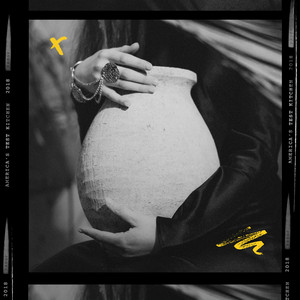
Today on Proof from America's Test Kitchen, we're diving into three ancient brews from Ireland, Peru, and Uganda.
They have endured for many centuries through cultural upheavals, including colonization.
And each one tells us something about the power and potency of sharing Thank you for pairing a drink.
I'm Jack Bishop. Sláinte.
Salud. And dónye kiwi.
Stay tuned. At Capella University, learning online doesn't mean learning alone.
You'll get support from people who care about your success, like your enrollment counselor who gets to know you and the goals you'd like to achieve.
You'll also get a designated academic coach who's with you throughout your entire program.
Plus, career coaches are available to help you navigate your professional goals.
A different future is closer than you think with Capella University.
Learn more at capella .edu.
First to Ireland. It's a country known for whiskey and beer, but a lesser -known traditional liquor called Pochin is having quite a revival.
It's been popping up on cocktail menus in Ireland and perhaps even soon at a bar near you.
Producer Avery Thompson has the story of Ireland's oldest spirit and why you might not have heard much about it till now.
While my Irish friends and I are often separated by continents, we make a point to reunite as frequently as we can.
And as often happens, wherever we link up in the world, our first night tends to revolve around a bottle of some sorts.
And for our recent reunion at my house in Central Texas, they brought along a bottle of Irish Puccine.
All right, so how are we going to do this?
On the rocks? Straight up?
They wouldn't have had ice back in the olden days.
Straight up is the way to go.
But it would have been cold.
Oh, should I state at the outset that despite my accent, I'm an Irish citizen?
Well, I just did. Anyway, back to pachine.
Sláinte. Cheers. If you've never heard of Irish pachine before, and I'm guessing there are more than a few of you that haven't, it's a strong, clear spirit that really packs a wallop.
got some shivers Sinead's got a smile on her face I like it oh it's like fire water but after that initial brain rattle it quickly mellows out into something quite enjoyable with hints of malted grain and a pleasing sweetness it's not just baritone it's got a very strong after taste of plums or something and there's this do you get salty off it But maybe it's just, yeah, yeah, yeah.
But I definitely get, like, fishermen coming in, like, cold in the evening.
This will warm me up.
Poutine will also cool you down if you put it on ice with a splash of grapefruit juice and a sprig of rosemary, which is how I enjoyed it for the remainder of that evening.
Heck, I'd say you could use it in lieu of vodka or even tequila to lend an Irish flair to your favorite cocktail.
tale. It truly is a lovely, versatile, and completely underutilized spirit.
But there's a reason you might not have heard of Pachin.
And that's because up until not that long ago, you couldn't buy the stuff, even in Ireland.
Well, not legally at least. But before we get into why Pachin was outlawed in its homeland, we should probably start by understanding what it is and the unique connection it has to Irish history and culture.
And to do that, we need to go back in time.
Way back. Hang on, let me find some good time travel sound effects.
Ooh, how about this Celtic harp?
There we go. Long before there was Guinness or Murphy's, before Ireland had its Jameson or its Tullamore Dew, its bush mills or its bailies.
There was Puchine. So Irish Puchine is the oldest known spirit that was created on the island of Ireland.
That's Judith Boyle, lecturer of beverages at Technical University Dublin.
And she says that as far as we know, Puchine was first distilled in Ireland in the 6th century by some very well -travelled monks.
We know that monks had definitely gone to the Middle East where they were using distilling to make perfumes and also for medicine.
And we know that these monks brought that back to Ireland.
Those monks then got busy making a potent elixir using whatever they had at hand.
In Ireland, we had grain and we had oats.
So we would have used barley and malted barley at the time and oats.
Then when the potato came into Ireland in the 16th century, it was a case then that we started using potato in it.
anything that was a starch substance that wasn't taxed and that was cheap would have been used in it.
The monks were also known to throw in local herbs, especially ones with medicinal qualities, because they weren't distilling Puccin to get rip -roaringly drunk.
At least not yet. So it was used mostly for aches and pains.
So it was rubbed into bones and places that hurt.
It was a very good disinfectant, so they used to use it as a disinfectant.
If people got cut, but they used to use it in wounds, aid digestion.
Basically, if you complained of any sort of ailment in Ireland back in the day, chances are you were getting poutine.
And that practice has carried down through the ages.
My friend Sinead remembers her grandma using it to ease her back pain.
My grandfather would rub it into her.
So, you know, it was the, you know, the West Donegal aphrodisiac.
Did you feed her oysters after?
Pete recalled poutine from his days of playing youth sports but he and his teammates weren't celebrating victories with it yeah I remember getting rubbed on my legs at playing sports when in the freezing cold and just when just to warm up your hands and legs you like you vigorously rub it into you just to get like get you going again and again it was really cold and you come you go back on stinking of booze Irish farmers were known to use poutine on their livestock particularly during during the birthing process.
And typically being very high in alcohol, a sip of poutine could really knock the chill off you after a long day working the fields or fishing those dark blustery seas off Galway Bay.
And because the monks were making such a good product, it actually tasted very well as well.
So while poutine might have begun as a medicinal cure -all, it certainly didn't stay that way.
As the demand for poutine increased, East, distilling was passed on to farmers and a few proper distillers who set up operations all over the island.
So it was part of the Irish life.
It was an everyday substance.
It was used constantly.
You know, if you were a monk, you'd be very strict on when you were giving it out and why you were giving it to people.
But obviously, when it moved into a more kind of a social aspect of it or a house aspect of it, that social element became more prominent.
And that's about how the story of Parcine would have gone, gaining in popularity through the years until it became the ubiquitous drink of Ireland, as synonymous with the country as Russian vodka or Cuban rum.
But in this story, and what actually happened, was the British arrived.
Beginning with the Norman invasion in 1169, the British took control of Ireland for what what would end up being a grueling, or quite frankly horrific, 700 -year occupation.
And one of the Brits' many offences was a heavy tax they placed on Irish distillers in 1661.
When the English government came over to Ireland to see how we were doing, they realised that actually we were getting very drunk.
And they needed to look at where they could stop this plight of drunkenness and how to make the labor force more productive.
With that, they found taxation to be the way of doing it.
Being that Pateen was typically brewed in small quantities, for most distillers, that tax was insurmountable.
And the steep levy was more than just a way for the British to skim off the top.
Because, as Judith Boyle said, Pitchine had become a pillar of Irish life, and with the arrival of the British, a growing emblem of Irish resistance.
When you get a group of people together and they're drinking and they get a little bit inebriated, they start to plan things and start rebellions and start wars.
So if you stop people creating their indigenous spirit, then you will also break their spirit and kind of make them more in line in general.
So in 1731, the British outlawed the production of puccine entirely.
And once that happened, all the puccine distillers put away their copper pots, everybody sobered up, and pledged their allegiance to the British crown.
Just kidding. Instead, the puccine distillers went underground, or more accurately, up to the mountains.
In order to tax somebody, you had to be able to find them and see them.
So it was a case that if you moved into the mountains or if you went towards Connacht, so over to the far side, away from the nearest ports to England, it was a case that it was easier to hide your distilling.
And because poutine was typically made in small pots, distillers could move their operations out to the most remote of places.
As long as they had a heat source, they could start up distilling.
So this is where they kind of moved into the mountains and Puccine started getting the name as Mountain Dew.
Some illicit distillers even took to making their Puccine at night or in horrible weather when winds dispersed the smoke of the stills and heavy rains kept the police at bay.
Because of this, Puccine is also often referred to as Irish moonshine.
Once distilled, that illicit pachine was dispersed through a clandestine distribution network that relied on local connections and Irish solidarity.
Lips had to remain tight because raids were frequent, as this 1985 report from Ireland's RTE tells us.
This morning there are to be raids on three uninhabited islands, Inish Urk just behind us here, Dynish and Frehalon, Islands which in the past have provided huge hauls of pachin in the pre -Christmas raids.
So for hundreds of years, procuring a bottle of pachin usually meant you had to talk to a fellow up the road who knew a farmer over in Connemara that might know where some bottles could be found.
But along the way, pachin started to gain a bit of a reputation.
There was something threatening about this mighty strong spirit made in the mountains by the light of the moon.
Not only could the stuff get you thrown in jail, according to wives' tales, it could make you go mad or blind or just straight up kill you.
If it wasn't distilled properly, there's methanol in it rather than ethanol, this will make you go blind.
It was also a case that the alcohol strength was very high in it, so people never knew how much they were actually drinking.
So a lot of people did die from drinking poaching.
Proof that Pitchin had developed a bad reputation in Ireland can be seen in the fact that even after the Irish gained independence in 1921, Pitchin remained illegal for more than half a century.
But in 1997, with the help of distillers, Pitchin enthusiasts, and cultural preservationists, Pitchin was once again legal in Ireland, No longer relegated to fog -shrouded mountains and secretive backrooms, the Irish people could once again enjoy their oldest spirit out in the open.
Only, most of them didn't.
For many, the legalization felt less like a victory and more like a sellout.
It felt wrong to see their fiercely independent, anti -establishment spirit on the shelves next to Seagram's and Bacardi.
The party, those used to procuring their pachine through secret local connections, questioned if it was even pachine, if you could buy it in a shop.
Yeah, so back in the day, they wouldn't have a proper label like the one we have here.
It might be in a clear glass or something recycled.
Water bottle, whatever, Coca -Cola bottle, milk bottle.
A milk bottle was the way we had it.
It was always in a milk bottle with my grandparents.
parents. My friends in their 30s and 40s are prime examples of a generation that had mostly lost touch with their poutine.
We didn't grow up drinking it.
You didn't? No, no. Someone would have it like every now and then from someone's house, stolen.
I mean, as I said, when my grandfather would only give it to, you know, for special occasions.
But I don't think women were very often invited to join.
Yeah. Well, because it's considered to be like tough stuff for lads.
As for the younger generation of Irish drinkers, they barely knew about the stuff.
I recently did poutine tasting in the university and a lot of our students were still going, oh, is this not illegal?
How can you do a tasting of it?
But to be fair to poutine, the reasons it fell out of favour go beyond its reputation.
Because just as this nearly ancient Irish spirit was being legalised, Ireland was undergoing a radical transformation.
The late 90s and early 2000s were heady times in Ireland.
Since joining the European community in 1973, Ireland has been transformed from one of Europe's poorest countries to one of the world's richest countries today, the Celtic Tiger.
These were the Celtic Tiger years, when foreign money poured into the country and the Irish people were suddenly flushed with cash.
Instead of being forced to leave their homeland for better lives, as so many generations before them, the Irish now took round -trip holiday flights, and frequently they returned with bottles of foreign liquor and an acquired taste for cocktails.
tales our drinking culture has really changed we were a very much a country that was beer loving and we still love beer and now it is a case that we've got bars that are dedicated to cocktails and we've also got bars that are dedicated to poutine as well yeah we got a great cocktail scene here like it's small you know um but we got some of the best bars Dave Mulligan is the owner owner of Bar 1661, the preeminent Parcheen bar, not just in Dublin, but the whole world.
Dublin has a few. Belfast has a few.
Cork has a few. And even places like Killarney, you know, which would be down the Ring of Kerry, the last place you'd expect to see a world -class cocktail bar, there's one down there now.
So I think the level that exists in Ireland is way higher than it's ever been, yeah.
And at Dave's Bar, named after the year Puccine was first taxed by the British, you can enjoy all sorts of Puccine.
Whether on its own.
You're talking like burnt butter and nice toasted brown bread notes and a little bit of soda bread, wheat and bread.
And you would also have the high grain agricultural notes and also a little bit of like salty islands, you know, where the sea has been slapping the barley in the field.
Or you could add in cocktails, cocktails, like the Belfast coffee.
We swapped out that whiskey for Pottcheen, and then we swapped out that hot coffee for a cold brew, layered it in a Georgian Irish coffee glass with double cream, fresh nutmeg.
So it looks, aesthetically, exactly like the Irish coffee, but obviously it's ice cold.
For me, it's a richer, rounder drink, and we've seen that recipe pop up all over the world, and we see that drink as real Pottcheen's margarita moment.
We repackaged Pottcheen.
We sell this stuff to be really, really proud of.
We put it into contemporary modern cocktail culture.
And we're at a place that I couldn't have dreamed of in 2012 where, you know, people see it on a cocktail menu.
It's on most bars, cocktail menus.
If you don't have Parchene, you're behind.
Whereas a decade ago, you didn't see it anywhere, you know.
In 2008, Irish Parchene received a geographic indication, ensuring that it could only be made in Ireland using only Irish ingredients.
greetings. So it truly is Ireland in a bottle.
And though its legal return was quiet, these days Pacine is riding a wave of popularity as the Irish turn inward, embracing their roots.
It's as if, having gone out and experienced the world, the Irish have returned home with a desire to protect the things that make them who they are.
As an Irish person, we should, like, share this with with our kids, it's not the actual alcohol.
The product and like the history of it.
Because it is something you want to keep this alive because it is part of our culture.
I guess it's the one drink even before Guinness that was synonymous with our word. So it is a big part of our heritage.
And yeah, for keeping the language alive and our culture alive, I think the drinks are a part of it.
Like what else that's been an evil path long, you know, but it was a real no, no, this is our culture, this is who we are, and we're going to make this stuff anyway.
way and so yeah a little bit of our rebellious spirit definitely anti -establishment nature screw the big guy kind of thing Ireland politically has gone through a lot with that that spirit kind of highlights what we went through and now where we are today so we have to just kind of learn to love it a little bit more and be proud of it In Ireland, poccine is being rediscovered by a new generation and imbued with new meaning.
But in South America, an ancient brew called chicha has already been reinterpreted many times over.
Producer Julie Carley tells us about the potent political power of this fermented corn drink.
We all have that one friend who lives for their city.
Like the moment you meet them, you're in full Wikipedia mode, learning about Chicago architecture or Dallas barbecue or famous crimes that happened in New York.
For my friend Felipe Vela Moscoso, it's all about his hometown in the south of Peru.
I am very proud of Arequipa.
See, for Felipe, Arequipa, or La Ciudad Blanca, just has so much going for it.
It's a city of something around one million people.
We have beaches, we have the mountains.
When I first met Felipe in grad school, he'd go on and on about how Arequipa has the best food, Arequipa has the best cocktails, Arequipa has the coolest volcanoes.
Felipe even had these little flags for Arequipa in his dorm room.
The seal on it looks exactly like the one from Genovia, except the flag is red instead of blue, white, and green, Which somehow makes it even more regal than the one made up for the princess diaries.
So when grad school was over, it seemed necessary to visit.
And of course, the best time to do that was for the city's anniversary.
Arequipa Day. We have like celebrations the entire August. Because one day in August really isn't enough to celebrate everything glorious in Arequipa.
So, in 2018, I took Felipe up on his offer to visit.
Smack dab in the middle of the city's holy month.
It was a whirlwind tour.
We saw the famous Colca Canyon condors.
We did a driving tour of a local quarry.
We went to a rave -like party on the outskirts of Arequipa.
There was dancing and music and fireworks.
And after a day and night of partying on Arequipa's anniversary, we went to a hole in the wall right before sunrise to eat the city's famous pork soup, which Arquipeno is called adobo.
It's spicy and stick -to -your -bones good.
But Felipe saved one of the best Arquipeno things for last. He took me to a traditional restaurant called a pecanteria.
And right when we sit at the long table, dressed in red gingham, Felipe orders.
Chicha. This family flavor that you have was something that was always on your table.
You know, we go to a restaurant, we order a chicha before even order the meal.
Chicha is a beloved beverage all over Central and South America.
But Peruvians and Arquipeños are particularly proud of it.
The traditional brew is historically made from fermented corn and comes in all different flavors and colors, depending on the region.
The drink has fallen in and out of favor during its long history, but over the last two decades, there's been a sort of chicha renaissance.
For Felipe, like many arquipeños, chicha is now a daily ritual.
Usually, his restaurant go -to is chicha de guñapo.
That one has a little bit of alcohol in it and is slightly sour, kind of like kombucha.
He also ordered a chicha morada.
That one is non -alcoholic, and when it arrived at our table, I immediately got the hype.
Chicha Marada is absolutely stunning.
Served in a glass jug, it's this deep royal purple, the color of the corn they use in our equipa, with bits of maroon foam on top.
And it tastes even more gorgeous than it looks.
Chicha Marada is juicy, cinnamony, and has a pop of pineapple.
It is the most refreshing drink I've had in my life.
There's a good reason why these contemporary varieties of chicha are perfection in a glass.
They come from a very very old drink honed by millennia of trial and error.
That's Alonso Ruiz Rosas.
He's a poet and author of the book, La Gran Cochina Mestiza de Arequipa, which is a 520 page study of Arequipeno cuisine.
Rosas can't say exactly how long chicha has been around or where it specifically originated, but there is archaeological evidence suggesting that chicha production stretches back 7 ,000 years, which is almost as long as corn has reigned supreme in the Andes region.
Rosas calls it a very ancient corn culture.
Rosas believes the drink was created in response to the vastness of the region.
Peru is nestled in the Andes, the longest mountain range in the world.
And Rosas says the original peoples of this land dried a lot of their goods in order for them to be transported.
Corn, also known as maize or choclo in Peru, was no exception.
So once the corn reached its destination, it needed to be rehydrated.
And if it wasn't consumed right away, it would have fermented.
And that's how chicha was born.
Rosa says this touch of alcohol from the fermentation process made the chicha slightly sour.
Eventually, spices like cinnamon and sugar were added to balance out the flavor.
Chicha kept things spirited for the ancient Andean people.
They drank it to celebrate the dead.
They drank it with their daily meals.
It was pretty much the go -to beverage.
And when the Incan Empire came on the scene about 600 years ago, Chicha took on a kind of political superpower.
For instance, lords of the Incan Empire would go around to vassal states and use Chicha as a bargaining chip to build roads and canals.
It was used to solidify treaties.
In fact, Chicha was so important that there were special virgins who tended to the corn and managed the breweries for imperial use.
Chicha was so widespread that the Spanish even wrote about it when they arrived in the region in the 16th century.
Rosa says the Spanish were aware that the Incans were drinking great quantities of chicha throughout their empire, but they really didn't understand what chicha meant for the Andean people.
In the mid -1500s, the Spanish colonial government banned chicha.
It was part of a larger plan to gain control over indigenous peoples, just like banning their native language, Quechua, or other traditions.
Except it just didn't really work.
People kept on brewing their fave drink underground and speaking their language and practicing their traditions.
And that led to a very particular phenomenon in South America.
but began to create a new society.
Rosa says this relationship between the European colonizers and the Andean people was in many ways violent and terrible.
There was a lot of death and destruction, but over time, a new society emerged.
People held on to their Indigenous roots in secret and adapted the traditions from Europe.
This new culture became a part of what is known as mestizaje and chicha was very much included.
Literally, the word mestizo means mixed and comes from a legal term from the Spanish colonial system.
A mestizo was the child of an indigenous person and a European.
They had fewer rights than a white colonizer while also having more rights than an indigenous person.
It created an intricate caste system within the Spanish colonies.
colonies. But informally, mestizaje became a political concept as well.
In the 18th century, the descendants of the original mestizos led revolution after revolution, until all of Latin America became independent nation states, free from Spanish and Portuguese rule.
Now, that doesn't mean everyone celebrated with a glass of chicha.
One of the side effects of colonization, even in mestizaje culture, was that some indigenous traditions took on an element of shame.
Chicha was even associated with crime and laziness.
But that has changed.
Over the past few decades, many people in Latin America have embraced their mestizo ancestry and tradition.
Today, over 60 % of modern Peruvians identify as mestizo, including my friend Felipe and Rosas, the poet.
The term mestizo can be prickly depending on the context, because some people believe it still places a higher value on European heritage.
But for Rosas, mestizaje is a philosophy that goes far beyond demographics.
El mestizaje es esencialmente el encuentro, la sumatoria, la combinación, la mezcla de culturas y de expresiones culturales diferentes.
Rosas essentially sees mestizaje as the summation, the combination, the mixture of different cultures.
And in many ways, the modern practice of drinking chicha, especially in Arequipa, embodies this change.
It is basically a contribution of the indigenous culture to the gastronomic tradition of Peru and, in particular, of Arequipa.
Rosa says, yes, chicha is a key contribution from the original people of Peru to a world -renowned gastronomy.
It's delicious and beautiful, but it's also a living cultural centerpiece.
In pecan terrias, like the one I visited with Felipe back in 2018, people gather daily to drink their favorite kind of chicha with each other.
It's a democratic space where people from all backgrounds congregate.
People socialize over chicha, as well as their favorite local dishes.
Some of these were brought by the Spanish, like pork and garlic and onions, and others have mixed Andean and Spanish traditions over the years.
This includes Arequipa favorites like the stuffed pepper dish, rocoto relleno, or chupa de camarones, a local shrimp soup.
But all of these dishes and drinks are completely unique culinary experiences.
They represent centuries of change, fusion, pain, and joy, giving Arequipenos something priceless with every sip.
And the important part is that we keep the tradition.
So it's a tradition that goes from generation to generation, and I would like that it never stops.
Felipe says he plans to give his own son a first taste of chicha very soon.
It's outlasted empires.
Why not keep it going?
Coming up after the break, what does it look like when the consumption of an ancient brew runs up against modern life?
In case you haven't heard, It's officially in Abercrombie Summer.
The A &F Vacation Shop has everything on your packing mood board. I desperately need their new one -piece, the A &F Marina.
It's strapless, so flattering, and paired with denim shorts will be my go -to beach outfit this summer.
Finally, your suitcase isn't complete without finding that dress.
You know, the one for the photo shoot.
Abercrombie's boho dresses have that perfect beachy romantic look.
Make it in Abercrombie Summer.
Shop their newest arrivals in -store, online, and in the app.
Hey, business owners.
We know you know the importance of maximizing every dollar.
With the Delta SkyMiles Reserve Business American Express card, you can make your expenses work just as hard as you.
From afternoon coffee runs to stocking office supplies and even team dinners, you can earn miles on all your business expenses.
Plus, you can earn 110 ,000 bonus miles for a limited time through July 16th.
The Delta SkyMiles Reserve Business card. If you travel, you know.
Minimum spending requirements and terms apply.
Offer ends 7 -16 -25.
This episode is brought to you by LifeLock.
Between two -factor authentication, strong passwords, and a VPN, you try to be in control of how your info is protected.
But many other places also have it, and they might not be as careful.
That's why LifeLock monitors hundreds of millions of data points a second for threats.
If your identity is stolen, they'll fix it, guaranteed, or your money back.
Save up to 40 % your first year.
Visit lifelock .com slash podcast for 40 % off.
Terms apply. And now, back to our story.
We've learned about the resurgence of Ireland's oldest spirit, Pochin, and the resilience of Chicha culture in Arequipa, Peru.
Now we head to Uganda and a millet -based drink called Malwa.
As producer Anne Curia explains, Malwa is meant to be drunk in a very specific way that sometimes puts it at odds with modern city life.
So how do you hold on to this kind of traditional and beloved brew?
Imagine if you were trying to trace your roots and you had a feeling that you couldn't really place because you never really have been, but you kind of have that tagging.
It tastes like a home I've never been to.
It is a sensation I cannot describe.
It's sweet and it has a great mouthfeel, no aftertaste.
It tastes like millet porridge, something like that.
Does it make people drunk?
Yeah, it makes people drunk.
Uganda is a land of many tribes, and a lot of them have a healthy respect for local brew.
The Baganda from the central region brew a banana wine called tonto.
From the west, there's the fermented sorghum and honey drink called enturire.
And from the eastern parts of the north comes malua.
Maluaa, also known as Ajanu and Kongoting, is a light brown alcoholic beverage made from fermented millet.
it. Like the people I interviewed, I also find it hard to describe.
It's malty without the bitterness and a bit earthy.
It's not like whiskey where you have to acquire the taste or like a gin that stings when it goes down.
It's not foamy like beer and unlike any other alcohol I've drunk, it's warm.
But what really makes it different from other alcohol is that it's consumed communally.
and when I say communally, I mean really communally.
It is typically served in a clay pot placed on the ground.
These pots are of different sizes, shaped a bit like Halloween pumpkins and can be used to store drinking water and food.
Dipped in that pot are long reed straws through which the malwa is drank.
The straws can be over a metre long.
Picture a group of people sitting around a campfire except the fire is the pot of malwa.
Like for me growing up, I started seeing people taking Malwa from the village.
That's Joel, a friend of mine who lives in Kampala.
And it has always been associated with people in the countryside.
I would go a step further and say the idea of drinking Malwa used to seem old -fashioned, even uncool.
But what I learned from Joel and others like him is that there's a booming Malwa scene right here in Uganda's largest city.
If you know where to look.
many of the people drinking it are millennials like me.
Almost all of the brewers are women.
I wanted to know why, and what place it has in modern city life.
Joel was with me the first time I ever drank malwa in this traditional communal setting.
That was in 2019, when another friend invited me to a malwa bar in Mutungo, one of Kampala's suburbs.
He drove us down a dusty road and then came to a stop at a grocery shop with a bright blue tiled veranda.
At the back of the shop was an empty little courtyard with a concrete floor.
Suddenly, people started arranging tables and chairs, and before my eyes, the place transformed into a bar.
When we sat, pots of malua appeared, and with the pots, flasks of hot water.
Malua is drunk warm, so hot water is continuously added to the brew.
People can sit in front of a pot for hours.
More people showed up, more chairs were brought in, more straws and pots were added.
It felt nothing like the typical bars I'd been to in Kampala.
For one thing, there was no music.
It seemed that people were here to sit together and talk.
In fact, Joe says even the conversation is a little different when drinking malwa.
The kind of conversations you're going to be having within this local bar rotate around the common challenges that you're meeting in within that community.
Things like the state of the roads, what the area chairman did or did not do.
Of course, people go to the bar to have a good time too.
But something about the communal aspect of Malwa leads to a certain intimacy, allowing people to talk about the community and themselves.
Plus, Joa says, it's much more cost effective than drinking at a typical bar.
You could spend hundreds of dollars on a night out drinking whiskey and beer with your friends.
But with Malwa? No longer.
This has been more than 4 ,000.
Joel points out that the serving of malwa I'm drinking is less than 4 ,000 shillings.
4 ,000 shillings is roughly one dollar.
You'll only come and pay, say, like 4 ,000 shillings.
And you're going to sit like from three to possibly the next day.
Traditionally, malwa showed up at significant occasions, like weddings and other rituals.
For instance, in one tribe in the north, a drop of malwa was given to newborns on their third day of life, like an inoculation.
Also, traditionally, it's served by women.
That's how Nalongo Helen was introduced to the drink.
I come from Kumi, eastern Uganda.
I grew up seeing people brewing malwa.
Even my grandmother was brewing malwa.
So I learned from her.
Nalongo is a middle -aged woman with a youthful spirit.
Although she has lived in Kampala for a long time, it wasn't until five years ago that she realized this skill she learned from her grandmother could make her money.
I was just there without a job.
So I thought of, why can't I start selling mara because I know how to make it.
The bar that Nalongo works at today is a semi -permanent structure made from timber and roofed with iron sheets.
streets. There are wooden benches cemented into the floor, and other seats can be brought in to accommodate more customers.
And even though Malwa is cheap to buy, the money she's made selling it is significant for her family.
She has been able to pay school fees for her children, has bought livestock, as well as built a house.
Ngalongo isn't the only one who's gotten success from this business.
Malwa was and still is brewed only by women, and its commercialization has quite literally lifted them out of poverty.
But the brewing process is also quite intensive.
It can take up to two weeks to have a batch ready.
First you go and buy millet from where they sell millet from.
Then after there you take the machine, you grind it.
After grinding you bring home where you dig a hole.
That's right. The ground millet goes inside a wide hole in the ground.
In fact, I could see one to the side of Nalongojba.
When you start fermenting for one week, that's when you start, you remove, then you start frying it.
After you finish frying it, you dry.
The fermented fried millet is dried in the sun, which can take a couple of days depending on the weather.
You measure the gurus you want to brew.
If it's the weekend, you put 10 guru gurus.
Agoro is a measure of brew, roughly four litres.
From there you put the yeast. Wait for about three days.
Then you start selling it.
Nalongo is one of several women who sell their malwa at this bar.
They alternate which days they sell.
And the communal nature of this bar goes even deeper than that.
Patrons and brewers like Nalongo are part of a savings collective.
Members can take out loans and dividends as shared yearly.
Imagine that, going to a bar and saving money.
As you have gathered, drinking malwa means sharing.
Sharing your time, your straw, and your pot.
So when COVID happened, the whole ecosystem came to a standstill.
There was a curfew, all bars were closed, and of course, nobody wanted to be close to anybody else, let alone share a straw with them.
In COVID time, things become very difficult.
customers ordered smaller amounts of malwa take away only both brewers and drinkers felt the pinch from uganda's nearly two -year covid lockdown the longest in the world the financial losses and the social isolation are just beginning to be documented and even with the lockdown in the past some of the hesitation around sharing a drink remains i think now because people are land and everything, you're looking at hygiene.
That's Rita an Abanite in Kampala.
She's from the Gishu tribe in eastern Uganda where Malwa is very popular.
She grew up seeing Malwa served at home by her mother.
My mom had a pot at home and a straw so she would drink from home.
Rita says that it's still the way she feels most comfortable drinking Malwa in an environment where she can have her own pot and straw.
But she's still very appreciative and protective of traditional Malwa culture.
I wouldn't share, but I wouldn't want that to go away.
Let it stay the way it is.
Let people drink communally the way they have been drinking it with other people in the same port.
Malwa was able to survive the COVID years, but I don't think that was the only threat to its survival.
A close second is modernity.
Everything from how Malwa is brewed to how it's drunk puts it at odds with how most alcohol is consumed today in Kampala, which is in cans and bottles at modern bars.
Because fresh Malwa is everything.
I joke that it's hot alcohol.
So just imagine it when it's canned.
Do I have to boil it and can it and boil it?
Well, to be honest, the whole process and packaging is not well suited for the bars of nowadays.
This is Robert Nsibilwa.
I'm a marketing manager.
at one of the lead brewers in the region.
Robert also runs a popular event called The Reminis, which brings together fans of old school music.
They sit together, eat, drink, and most importantly, dance.
I spoke to him because he has a grasp of what brings urbanites and Kampala together, to drink and socialize.
I wanted to know if there's a way to adapt Malwa to modern drinking culture and ensure its popularity for years to come.
Robert says not so much. City bars just aren't the right place for Marwa.
The aesthetics don't match. You walk through a door and sit on a stool on a table and listen to music and watch a football match and have a waiter and waitress tending to you, you know.
And then you have a beautiful bar display and so on and so forth.
There really is no room to have a pot, you know, or to have, even if it comes out of a pot and is put into a bottle or a cup.
I assume that Robert would be interested in finding a way to bring malua into the modern drinking culture in Uganda.
But he says it's actually nice that it's different.
What really makes it count is communion.
The communion that brings those people together around this pot and the shared self.
If you take that away, you take away a large part of what it is that makes that occasion.
Am I concerned about the safety?
Does it ring through my mind?
Absolutely. But I shut it out and also have the faith that I'm interacting with these people at a level of humanity.
The communal setting and process of drinking malua may feel old -fashioned, but it's also what makes the drink so powerful.
When I walked into Nalongo's bar for the first time, there was a small group of men of different ages drinking malua.
I'm talking 30s to 60s.
And even though they didn't know me, they invited me to share their port.
Remember the beginning of the episode when everyone was telling us what Malwa tastes like to them?
No answer was the same, but on this point, everyone agreed.
Let Malwa stay exactly as it is.
Malwa has been there for long.
Even me, when I was not born, Malwa was there.
So it is a culture thing.
We lose so much with the passage of time.
Foods become extinct and ways of life change.
But it seems that community remains the most important thing.
Maybe that's all the future proofing Malwa needs.
Thanks to Avery Thompson, Julie Carley, and Anne Keria for bringing us today's stories.
If you like Proof, be sure to subscribe wherever you listen so you can get new episodes as soon as they drop.
And while you're there, why not leave us a rating or write us a review?
It really helps other people find the show.
This episode was hosted by me, Jack Bishop, and the podcast is made by the following cast of characters.
I'm Yumi Araki, the managing producer.
I'm executive producer Kaitlin Kelleher.
I'm Emily Feiner, the story editor.
I'm senior producer Alex Curran -Cardarelli.
I'm associate producer Angelica Quintanilla.
And I'm associate producer Louise Kern -Kensler.
Audio services are provided by Ultraviolet Audio, with scoring, mixing, and sound design by Matt Boynton, Brian Campbell of Signal Sounds composed our theme music, additional music by Kyle Forrester and Jordan Pearson.
Hen Margulis is our director of post -production, and our director of production is Diane Knox, Fact -checking and additional research by Special thanks to everyone who spoke to Avery, Julie, and Anne for this story.
Thanks also to Maura Clare at Smuggling Non -Irish Puccine for her help with Avery's story.
Thanks also to Camillo Garzon for his cultural expertise.
Dan Souza is the chief content officer, and Dan Surratt is America's Test Kitchen's CEO. Proof is a production of America's Test Kitchen.
This podcast is part of the Airwave Media Podcast Network.
Visit airwavemedia .com to listen and subscribe to their other fine shows.
An Airwave Media Podcast.