You're listening to Roundtable.
I'm Niu Honglin, joined by Steve and Yushun.
When it comes to my memory of my school time, it was chalk, test, grade, and repeat.
But what if classrooms can have a makeover show? uh god our outgoes the one-size-fits-all lecture incomes co-teaching flipped learning and daily exit interviews that sound more like reality tv than report cards what if we stopped teaching at students and start learning with them Today, we explore the classroom's breaking old molds, one reflection, one collaboration at a time.
Also, it's Monday.
We know Mondays can be a bit tough, but we're here to give you that extra boost to start your week strong.
Roundtable's Motivational Monday is ready to bring you words of inspiration to fill your mind and spirit for the week ahead.
But first…
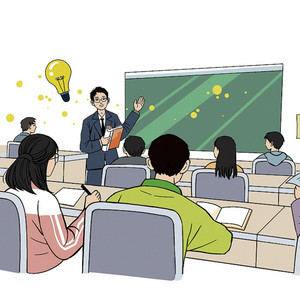
When we think about education, we often picture the traditional mode one teacher, one test and standard lecture delivery.
But in different parts of the world, educators are embracing innovative tools and structures to boost student performance and engagement.
Our focus today is on two of the most powerful changes the use of quick, daily formative assessment tools and the shift toward collaborative teaching environments.
The concept is simple but forward.
Are we using every tool at our disposal to see what students actually learned today, and is the traditional one teacher per room model still the most effective way to teach or to reach every student?
We're exploring how simple strategies like the exit ticket are becoming a powerful reflection tool in the classroom and how a move forward team or a move towards team teaching is fundamentally shaping or shaking up the educational landscape.
And also we'll be providing a little bit of our own tips when it comes to learning.
But let's go to the exit ticket first.
Exactly exit ticket, what it is?
Yeah, this is the first time I've heard of it, as a matter of fact.
And what it is is.
It's kind of like a daily reflection tool that can be used at the end of a lesson.
It's a really quick assignment that asks the students...
To summarize what they've learned.
It allows them to ask perhaps a question that they may have about the lesson that they just heard, or maybe solve one problem related to the lesson's main objective as well.
It's a really brief activity and the goal is to ensure that the students had some sort of comprehension of the lesson or to find out if they didn't have a full grasp of the concept of the lesson.
It's a kind of formative assessment, meaning it allows the educators to check for understanding during the learning process, not just at the end.
And what I mean by the end is, you know, usually at the end of the semester or mid-semester, when you take your midterm exams.
This is just like a little daily check-in tool to make sure that the students are understanding the lesson that was provided.
And the main benefit here is for the teachers, it allows them to, you know, think about it.
If you're a teacher and you get these exit tickets at the end of the class and maybe 60 say I didn't really get the concept today, then it allows the teacher to change or make adjustments to the following lesson so that the students can, you know, keep up with what's going on.
Okay, so now in general, what are the tickets about?
Are they asking, for example, certain questions that they've just taught in the classroom?
Or are they simply asking, what is the hardest point for you?
Which one did you not get?
Or what kind of question are we talking about?
Yeah, it's not just a generic question like, how was our lesson today?
Good, bad, you know, terrible.
Yeah, it's not a restaurant review, right?
They call these metacognition, and it allows the students to engage in that process manner, meaning thinking about their own kind of thinking metacognitive.
So an example would be the 3-2-1 exit ticket.
And that requires students to identify three things that they learned in the lesson, two questions that they still have and one key takeaway from the lesson.
So 3-2-1 exit ticket.
And it allows students to complete them and provide the teacher with some really clear feedback.
I really want Roundtable listeners to do that after listening to our show.
After every show?
Yeah, after every show and leave a comment.
No, no, no, no.
I didn't mean that.
We love you and you can listen and enjoy, but you should.
How long do you think it will take you to finish, for example, an exit ticket like this with a, just say, 3-2-1 structure?
That's exactly what I want to ask because all of these happened at the end of each class, right?
So probably it's going to take, let's say, 10 to 15 minutes for all of the students to finish the questions and have a little bit of a reflection on what they've learned, and giving feedback to teachers, and teachers can assess all of the results.
Yeah, I think when you have the system in place and the students are familiar with it, you could be filling out your exit ticket, as the lesson is going on.
Right.
You know, things that you learn today, if you understood something, OK, I get that.
Then you could fill that in right as the lessons going on.
So yeah, you don't want to be taking up a half an hour of class time for the students to fill this in.
And I have to say it has something to do with the size of the class as well.
For example, when I was in primary school, Our class has more than 70 students.
It's just not... 70?
Yes, yes.
It was a huge class, meaning that the teacher would definitely not have enough time to process the exit ticket right on spot.
They will have to take all the tickets back to their office and start doing serious analyzing if it's that huge of a class.
Yeah.
And that's what the teachers are meant to do is that you don't sit there and use extra class time to go through all the tickets and check the answers.
You do this post-class, perhaps in the evening at home or in your office after work.
But, yeah, the goal still, 70 students or five students, the goal remains the same.
Although yes granted, if you have 70 students in the classroom, it's going to take you a lot longer to go through those tickets.
I think nowadays the average numbers of students in one class would be around 40 to 50 if it's middle school or high school.
And my age was like 42.
Right.
But for smaller students, like younger students, for example, if it's kindergarten or primary school, it can be even smaller a number of students, making this method a bit more doable in that sense.
But do we have any research status or anything proving the effect on students when you apply this kind of method?
A recent study led by Jennifer, a research associate professor at Vanderbilt Peabody College, found that students consistently using this metacognitive-driven exit tickets significantly outperformed control groups.
This is a strong finding that shows these tools are highly effective in difficult and sequential subjects, and I was thinking in the way that it is more comprehensive, in the way they can offer an opportunity for students and teachers to communicate during the class, because I would say This form is not that new, because actually homework is a way for students to have a little bit of reflection.
But it is done after school.
But they have to actively do this by themselves and handing the homework.
And maybe if they still have questions, they can ask teachers.
This is something you cannot use AI for.
Yeah, you have an exit ticket.
How can you use AI for that?
No, I don't think.
I'm not saying you can use AI to do your homework, but I'm saying AI can be applied in it.
Because I was thinking, if we are talking about what are some things that you didn't get, maybe some students would fear making teacher.
Well, telling teacher that I didn't get 80 of what you taught, if it's not anonymously.
So maybe what can happen, or it's in different scenarios, it can be done in different ways.
You can have every student handing up their exit ticket after the class.
You can also have them put in their answers anonymously through an AI app so that the teachers would know.
Oh, 60 of the students didn't get it, but I do not know whom.
But I can definitely teach it again.
And also, I was wondering, Do you think it differentiates between different subjects?
The results of studies showed that this is an effective tool in STEM subjects.
Yeah.
If you're talking about philosophical topics like I don't know English literature and pondering Shakespeare's meanings in his poems, then you know it's not that there's no definitive answer for the arts, right.
But when you're talking about things like math or science questions where there is a clear it's black and white, there's a clear answer, then there tends to be positive results from this.
But with all the positive results, there are drawbacks as well.
And I think the first most obvious one. is that the teacher needs to take advantage of these.
You can't just give out the tickets and then... Ignore the results.
Yeah, ignoring the results.
And, you know, teachers are busy.
They have a lot of things to do.
And maybe I don't know.
Maybe AI tools can help analyze the data, because it is data collection, isn't it?
At the end of the lesson.
So the teachers have to make sure that they have time to review it.
And they say, too, that there's a risk... in this of losing the student's voice.
If the prompts, if the questions become a little bit too repetitive, if they're the same every day, if you're using the three, two one every day, or because that's quite restrictive, isn't it?
You're not actually speaking to the student.
You're having them fill out a survey almost.
So can you get reliable results from that survey?
And also if we're talking about different students from different stages.
I remember in senior high everyone is already very aware of the fact that they need to study hard.
Most students know how important it is, which is why we would have different so-called self-learning lessons, but they're not really self-learning.
You can finish your homework and do exercise, but at the same time there will be a teacher involved in classroom or in the office.
And you can always go find them if you have some problems, if you have some trouble solving one problem or about the things that you've learned.
Yeah, I know what you mean.
This is a little bit different, though, because Your example puts the onus on the student.
Exactly.
That's what I'm talking about.
Because I think in different stages, students know about how well they learn or differently.
They have different level of understanding of themselves, of their learning ability, of their learning results.
So different strategies must be used for different stages, if not different classes.
I mean, I remember in university my professors told us at the beginning of the semester here are my office hours.
My door is always open.
Yes.
I don't remember visiting once.
See, just different scenarios.
Here in China in 2022.
There has been a national.
I think it's a paper, but it's a suggestive kind of paper asking students or asking schools to record students' learning process instead of just the learning result.
Like Steve said at the end of the semester, what they are also encouraging students or encouraging excuse me encouraging teachers and schools to figure out the learning process.
And I think this would be a good way to do that.
And on top of it, we mentioned there is another method that is being discovered and being discussed.
That is the alternative classroom structure.
Yeah, now this one's a little harder to do.
I think any teacher in any classroom anywhere can give out an exit ticket.
Though co-teaching is a much more difficult thing to accomplish for a couple of different reasons.
But they are doing this in Michigan in the United States right now.
They're calling it team teaching and they're finding it to be a really effective system in the classroom because it's a real shift away from the single teacher model.
And what they do here is that you have two teachers in the classrooms and you separate them into groups.
Again, for me, this is a new concept and I've never seen it in any classroom before.
But you take the students who are having trouble with the concepts in the class and you have one teacher for them, and then you have another teacher for the students who seem to grasp the concepts quite well.
Why don't we just put them in two classes?
Well, because that's very difficult to do.
All the time or constantly.
Yeah, because you don't know on day one of the class who's going to grasp the concepts well and who isn't right.
So, even if you split them into two different groups, you're still going to have two groups within each of those groups the stronger students and the students who are a little bit behind in the concepts.
And this is a really high-impact scenario that they're finding in the classrooms.
But this is not easy to accomplish at all.
And here in China, we have the two-teacher scenario, but in different ways.
Yeah, I was looking for some information about this on the internet and I think I get a little bit sense, as they will design this kind of mode in a more targeted way, because there are a lot of issues, I would say, in the educational scenarios.
So when they are designing these kind of like dual teacher classrooms or that kind of things, they will find specific scenarios to fit in, which is this is a hybrid model where a more experienced teacher or master teacher delivers lessons remotely via live streaming.
And then the on-site teacher... Solves problems.
Yes, answer questions and something like that.
And so...
That's kind of in a way that when this classroom or this school is in a remote area, they can also enjoy higher quality educational resources in big cities like Beijing and Shanghai.
So the example that I saw is that a Beijing physics expert teaching rural students in Yunnan with a local teacher assisting experiments.
So they can have both the knowledge and also hands-on experiments.
And this bridges the what we call urban rural education gap.
Yeah, I mean, that's a great idea.
And also you need the resources.
You need a budget for this type of thing, but if you can pull it off, it's just so, so beneficial to the students.
And when we talk about resources, we see a middle school in beijing can provide remote collaborative teaching support to over 200 rural schools across more than 220 provinces and that saves resources and definitely improve efficiency and would allow students in remote areas to have better access to good, really good teaching resources.
And that is the kind of technological advancement we'd love to see.
And on that note, we also have other examples, including a flipped classroom.
Yeah, I mentioned before in your example Niu Honglin when you said it puts the onus on the student.
Yes.
This flipped classroom model puts the onus on the student 100 because in your typical classroom you're going to have a teacher delivering a lecture and then assigning practice problems or homework for the kids to do at home.
But here students will watch pre-recorded video lectures, or they'll read content and um before the class, or maybe they can do the lesson in podcast form as well.
The students do this on their own time.
Then, when they come to the classroom, all this free, all this time is freed up the the teacher doesn't spend time teaching the lecture.
The teacher spends time on the problems, interacting with the students on how to solve the problems, because they've already watched the lecture before they come to the class.
Say, I'm 14 and I'm introduced to this.
So not only do I have to study eight hours in the classroom.
Now, when I'm out of the school, when I'm eating, when I'm walking, I can listen to podcasts and studying.
When I'm eating, I can watch a video and studying.
How fascinating.
But jokes aside, in Chongqing, for example, it has a 10-minute micro lecture system that has led to a 12 improvement in test scores.
Oh, so So the results is definitely good.
So they're using that system, but the class time is much shorter.
A micro lesson in the classroom.
A micro lesson or a micro lecture.
Yeah.
So that's probably like you.
The whole lesson is about like 45 minutes and you spend 10 minutes for teachers to give the lecture and then the last.
Minutes will be students solving all of the problems and get that kind of reflection and to communicate with the teacher.
They say that this model, this flipped classroom model is a really good idea.
And by the way, they're using this already.
They're using it in China.
They're using it in the States and Europe and other areas of the world.
And they're saying why it can be so successful is because it turns the class time into an active learning environment for application and collaboration between the students themselves and the teacher.
And it removes that one-way communication model of the teacher standing in the front delivering information for an hour.
And then the students don't say anything.
They don't practice anything.
They just leave.
So they say this is a big improvement on that.
Yes.
And across China and around the world.
Actually, teachers are finding out different ways, different new tricks and different structures of classrooms just to improve the learning experience and, of course, the score results of students.
And hopefully more and more students can find the way that suits them the most, that can make them understand how incredible learning can be and how fun it can be for them.
You're listening to Roundtable coming up next, Motivational Monday.
Motivational Monday.
Motivational Mondays.
It's Roundtable with myself, Niu Honglin, Steve Hatherly, and Yushun.
And now we enter Motivational Monday.
Yushun, what do you have to motivate us?
First of all, good news.
I recently got my driver's license.
Congratulations.
But just yesterday, I already ran into some road rage.
Oh, really?
How's that motivational?
Come on.
You have to justify yourself.
It didn't take long at all.
I was on a narrow street waiting for pedestrians to pass, which is exactly what the traffic rules require, right?
When the car behind me started honking nonstop.
And then, after overtaking me, this driver deliberately stopped at a green light just to block my way to deliver a message.
Yeah, so it felt so unreasonable and frustrating because that that's what the rule is right as if we could could not understand that I was simply following the law.
And it reminded me of an article about not responding to malice maybe that's too serious, but malice and don't get caught in the need to prove yourself.
So it's said that we should learn not to get entangled, not to over explain and not to drain ourselves emotionally, and don't respond to hostility to or defend yourself against baseless criticism.
Yeah, i'm glad you found uh, buddha and confucius uh, in your road rage lesson, but i'll tell you right now, the next time you're in the car on the road that rage is going to come right back out again, but i think at least yesterday i controlled very well.
Oh, congratulations again.
So um, you know how, having the courage not to care and not about, like these, hurtful words or minds, unfair judgments or random accusations when you refuse to engage, the malice loses its power.
So when you stop over explaining the negativity naturally just returns to where it came from.
So, no matter because I was thinking no matter how you choose to live, there was always going to be something others can say because like, When you're on the internet, whatever you share, people can comment and give any random accusations.
So why not just live comfortably and focus your time and energy on the people and things that truly make you happy?
That is very wise.
Road rage is obviously, at its most extreme, incredibly dangerous.
But in the minor cases, I find it so amusing.
My sister... is one of the nicest people I've ever met in my life.
She's an elementary school teacher.
She's very soft-spoken.
She's very sweet.
Until she drives a car.
Oh, yeah?
You think so, buddy?
Whoa, where'd this person come from?
I know, I understand that.
And also when you're driving.
One theory is that you used up, or you used up this part of your cognitive ability already.
And when it comes to controlling your emotion and the way you react to people, it's not your fault.
It's just when you drive, you're already tired.
I've found this topic to be fascinating on a psychological and emotional level for many years, because there's something that happens when you are placed inside the four walls of a car that makes you behave differently.
Because if somebody cuts you off in a line at the bank or the airport or something, you don't start screaming at them.
Instantly.
Right?
You might feel that annoyance, but when you feel protected, your car functions as a keyboard, right?
Kind of in that moment.
You know, people will comment on the Internet nasty things that they would never ever say to somebody in person.
But for some reason, when you feel the comfort of a car protecting you, people just go absolutely nuts.
And about the point Yusheng was trying to make.
Oh, yeah.
Congratulations on your... Sorry.
And it's also absolutely true because we talk about the ability to say no to certain things in life.
That's vital for sure.
But the responsibility... Well, the ability to stop responding.
Stop responding actively in the sense of giving a comment or say something at the moment.
And also stop responding passively in the sense of feeling not well, feeling bothered, being affected emotionally.
It's also very important.
Hopefully that is motivating enough.
And that brings us to the end of today's roundtable.
Until next time, keep the conversations going and the ideas flowing.
I'm Niu Honglin with Steve and Yuxuan.
Thank you for listening.
Bye-bye.