This message comes from NPR sponsor Stripe. Tap to pay on iPhone and Stripe can help you grow your businesses revenue and reach through accepting more in-person contactless payments right from an iPhone.
To learn how visit Stripe.com slash tap iPhone.
This is the Ted Radio Hour.
Each week, groundbreaking Ted Talks.
Our job now is to dream big.
Deliver it at Ted Conferences to bring about the future we want to see around the world to understand who we are.
From those talks, we bring you speakers and ideas that will surprise you.
You just don't know what you're going to find.
Challenge you.
We truly have to ask ourselves like why is it noteworthy?
And even change you.
I literally feel like I'm a different person.
Yes.
Do you feel that way?
Ideas worth spreading.
From Ted and NPR.
I'm Manouj Zomerodi and I want to go back about 10 years to Berkeley, California.
Specifically to a lab on the UC Berkeley campus run by a woman named Jennifer Daugna.
I've always investigated fundamental questions about the nature of modern biology.
In particular, on molecules of RNA.
These are chemical cousins of DNA that do lots of interesting things in cells and viruses.
So Jennifer was studying RNA molecules and that led her to investigate a rumored bacterial immune system called CRISPR.
CRISPR.
Or clustered, regularly interspaced, short, palindromic repeats.
Wow.
Impressive.
Can I get it?
Thank you.
I've been working on that.
I'm really glad you came up with the acronym.
Well, I didn't, but the field did.
Yeah.
Okay.
So you've probably heard of CRISPR at some point, but you may not know the whole story.
Around 2011, Jennifer started collaborating with a French professor named Emmanuel Chappenteier.
And they began looking into CRISPR, this naturally occurring phenomenon in bacteria.
Correct.
It's an adaptive immune system that bacteria employ to protect themselves from viral infection.
And we began studying an enzyme, a protein called CRISPR-Cas9, which could be incredibly useful for detecting RNA and DNA molecules and for cutting them up.
And Emmanuel found that this CRISPR-Cas9 molecule destroys viruses by cutting up their DNA and altering their genome.
Their discovery was huge.
And this led to a breakthrough, really, a finding that this system could be harnessed as a tool, as a technology for manipulating DNA sequences in a programmable fashion.
And through that work that we realized that this system could, in fact, be deployed as a genome editing tool.
Meaning they could use CRISPR-Cas9 to target and alter specific genes.
It was basically immediately clear that this was an extraordinary breakthrough technology.
Okay, so we should be clear. Scientists have been working on gene editing for a long time.
But there had never been a tool quite like this, right?
The analogy I always hear is that it is basically that you can cut and paste DNA.
Is that right?
I actually love that analogy for genome editing because it really is, in fact, what genome editing is all about.
So we can think of the genome, which is the DNA found in a cell that has all of the instructions for making a cell or a whole organism.
And we can think of that information like the information in a book or maybe better in encyclopedia.
And what scientists have been trying to do now for decades, honestly, is to understand the information content of the genome, particularly the human genome.
And what CRISPR does is to give scientists an incredibly precise and programmable tool for altering the code to identify and cut specific DNA sequences.
And we can control which sequences it is cutting.
We can decide how to program it and have it go to that place in the genome, just like you might thumb to a page in a book volume.
And change a word or a paragraph or move things around.
And it actually is cutting and pasting information in the DNA.
Do you remember what it looked like when you sort of connected the dots where you like, whoa, I have to sit down or I need a whiskey?
Like what went through your mind on a non-scientific level, on a purely human emotional level?
Well, a great little vignette that comes to mind was an evening in those days when I had just come home from the lab.
And we had just gotten the data that showed how this worked.
And I was at home. I was cooking spaghetti in my kitchen, for my young son.
And I just suddenly burst out laughing.
Because I thought, this is so crazy, you know, that we started working on this thing, didn't really know where it was going.
And it certainly wasn't a popular area of science at the time.
Most people had never heard of CRISPR.
And yet we had uncovered this just absolutely extraordinary molecule, whose chemistry was going to probably change the world.
Unlocking the mysteries of the genome has been a holy grail for scientists.
And with CRISPR and other tools, humans have invented mechanisms to change evolution.
But only recently have scientists begun to deploy these tools.
And this next chapter is complex. There are so many questions.
Will genetic treatments become everyday procedures? Should they be used to eradicate disease, revive extinct species,
even help us live longer? And how can we make sure these tools work for the benefit of all humankind?
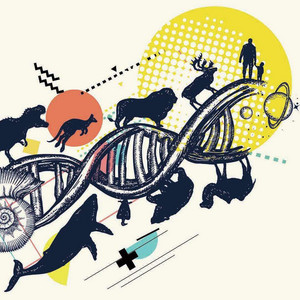
And so today on the show, reshaping evolution.
Because we are on the precipice of the next scientific revolution, one that could profoundly change humanity in exciting and frightening ways over the next century.
Jennifer Daoudna in a manual, Sharp Pentiers' work earned them the Nobel Prize in Chemistry in 2020.
And now their development of the CRISPR-Cas9 molecule is being tested in over a dozen clinical trials.
Everything from sickle cell disease, beta thalassemia, which is another blood disorder, disorders of the eye, liver disease, heart disease, and muscular dystrophy.
So it's just mind-boggling to think of a technology going from initial publication in an academic research journal to being widely deployed for so many different applications.
Can we go back to the blood disorder, sickle cell disease? My understanding is that a person's red blood cells are mischapen. And so that means they can't carry enough oxygen.
That's right. And that's why it's referred to as sickle cell disease. Because when you look under a microscope, the cells have a classic sickled shape.
And people with sickle cell disease make a form of the protein called hemoglobin that carries oxygen in the blood that is prone to aggregation, or prone to sticking together and forming aggregates that lead to the sickle shape of the cells.
And so how does CRISPR work to fix it? To treat sickle cell disease at its source, what's done is to remove what are called blood stem cells from an affected individual.
These come out of the bone marrow. And they are cells that have the potential to develop into new red blood cells.
And to ensure that they don't have the sickle cell trait, CRISPR can be used to either change the DNA of the affected gene, or they can actually suppress the effects of the sickle cell gene mutation.
And that's what's done. So the CRISPR is used to make those changes in blood stem cells. And then the edited cells are infused back into the patient where they can repopulate the bone marrow and effectively replace the red blood cells with corrected cells.
So just to be clear, you're saying that there could be a family that says, you know, we have passed down sickle cell to generation after generation, and we want it to end with us.
Well, that's right. It could, you know, and it's extraordinary. And even today, you know, this is something that is already being used in patients in these trials.
Victoria Gray, she was actually the first US patient to receive a CRISPR-based therapy for her sickle cell disease. And, you know, she's showing that this type of approach can actually work quite well in terms of treating a disease at its source.
And I think that's really what CRISPR offers is that kind of a cure really for genetic disease.
And I think it just paves the way for future applications of this technology as well, because of course when you start to see success and, you know, begin to see how patients' lives are being impacted beneficially by this technology, it's highly motivating to, you know, to carry it forward and see it used in other diseases.
I think one has to think about the fact that, you know, what we're talking about here is effectively changing evolution.
You know, it's changing us at our core and going back to the instruction manual that makes us who we are and making changes there.
When we talk about it in the context of a disease like sickle cell disease that is so debilitating, it certainly seems like this might be something that some families might want to consider eventually, especially if the technology is vetted carefully and shown to be safe.
And by the way, we're not there yet. But I think the broader issue really is equity, access to technologies, who decides about something like that, something as profound as that, who pays for it, who has access to it, I think it gets complicated quickly.
Yeah, I mean, it goes from stopping a fatal disease to maybe optimizing for IQ or even, you know, being thin and tall and having a particular eye color, I suppose.
I mean, in a most extreme case, you could imagine that someday couples, you know, go to an in vitro fertilization clinic and they receive a menu, right? And they decide what types of traits they want for their children.
Yeah, you actually brought that up back in 2015 in your TED Talk.
Imagine that we could try to engineer humans that have enhanced properties such as stronger bones or less susceptibility to cardiovascular disease or even to have properties that we would consider maybe to be desirable designer humans, if you will.
Right now, the genetic information to understand what types of genes would give rise to these traits are mostly not known, but it's important to know that the CRISPR technology gives us a tool to make such changes once that knowledge becomes available.
This raises a number of ethical questions that we have to carefully consider. And this is why I and my colleagues have called for a global pause in any clinical application of the CRISPR technology and human embryos to give us time to really consider all of the various implications of doing so.
That was more than six years ago, but not everyone stuck to a moratorium. Over night, an astonishing claim, a scientist in China saying he created the world's first genetically engineered babies.
A light has been crossed, that should not have been crossed.
It's very disturbing, it's inappropriate.
Oh, this is huge.
In a moment, more from Jennifer Daudna about the ethical implications of CRISPR on the show today reshaping evolution. I'm Manuch Zomerodi and you're listening to the Ted Radio Hour from NPR. We'll be right back.
What does it mean to be black in America?
An NPR's black stories, black truth, a collection of stories as varied, nuanced, and dynamic as black experiences. You'll hear. It means everything.
Search NPR black stories, black truth, wherever you get your pockets.
This message comes from Wired. On Wired Politics Lab, you will be guided through the exciting, challenging, and sometimes entertaining vortex of internet, extremism, and spiracies, and disinformation.
Listen to Wired Politics Lab, wherever you get your podcasts.
This election season, you can expect to hear a lot of news. Some of it meaningful, much of it not. Give the up first podcast 15 minutes, sometimes little less, and we'll help you sort it out. What's going on around the world and at home?
Three stories, 15 minutes, up first, every day. Listen every morning, wherever you get your podcasts.
When voters talk during an election season, we listen. We ask questions, we follow up, and we bring you along to hear what we learn. Get closer to the issues, the people, and your vote at the NPR elections hub. Visit npr.org slash elections.
This is my voice. I can tell you a lot about me, and I'm not changing it for anyone.
In NPR's Black Stories, Black Truths, you'll find a collection of NPR episodes centered on Black Experiences. Search NPR Black Stories, Black Truths, wherever you get your podcasts.
It's the Ted Radio Hour from NPR. I'm Anusha Zamorodi. On the show today, reshaping evolution.
I'm just talking to Nobel Prize-winning biochemist Jennifer Daoudna, whose work on CRISPR marked a new chapter in our ability to alter our DNA.
In 2015, Jennifer called for an international moratorium on applying CRISPR to human embryos, at least until the scientific community considered all the ethical implications of teen editing.
This was definitely a motivation at that time, was to call to the attention of everyone to just be aware that this technology does have the potential to create these very profound kinds of changes in human beings.
The next step was that there was an announcement in 2018, which was actually happened at the second International Summit on the topic of human genome editing of a project in China in which two embryos had been edited using CRISPR, and then were implanted to create a pregnancy that resulted in the birth of twin girls with edits to their DNA.
Remember what your reaction was after he presented his research?
Well, it was pretty horrifying. It was just kind of shocking to see the way that the work had been performed.
Just really an example of unethical behavior on the part of a scientist. Just rushing forward with something before it had been tested to be safe, and also without properly understanding how to explain and consent with patients.
To explain to them what was actually happening to the embryos that they were using in the study.
I think it really did galvanize the international community to realize that this type of work really shouldn't be happening right now.
And there has been a concerted effort on the part of not only scientific organizations, but also by the World Health Organization and the United Nations to get involved in this conversation.
Okay, so you've got governments and NGOs talking, but of course there's the other party that we're not talking about yet, which is private enterprise.
There are a lot of companies who are hoping to make money off of this technology. You've started several companies that are developing CRISPR-Cas9 treatments.
But should we be worried because companies are not always known for taking the moral high ground, right?
You're right that I think this is always something that needs vigilance. One has to, you know, you can't relax. You have to remember, you know, there's always the risks that go along with the technology like this.
But companies play an incredibly important role in all of this because generally this is not something that academic labs have the funding or the resources to do. And that's where companies come in.
So how do you balance your business interests with your ethics?
I think it begins at the beginning. You have to start with creating a culture in your team that focuses on ethical use of the technology and on the benefit that can be.
Created by developing it in the context of the company. And we've certainly I've been proud of the teams that I've been involved with as a founder that I think in each case.
These are people who I like, I trust. I think we have aligned values core values in terms of both doing excellent science and doing it with an eye towards ethics and appropriate use of a powerful.
Tool your biographer. Walter Isaacson has said that your invention of CRISPR heralds the beginning of a next great innovation revolution.
What do you think he means by that?
There's a lot of evidence that we're entering an era in biology in which we have increasingly at our fingertips a collection of tools that allow manipulation of biological systems in controllable ways.
Those capabilities will advance, you know, the kinds of things that have only been dreamt of in biological systems to a point where we can actually achieve them.
Imagine that someone gets a diagnosis for something. Maybe it's even pre-diagnosis. It's they've gone to a company like 23 and me or color genomics and they have their DNA sequenced and the result comes back that they have susceptibility to Alzheimer's disease in the future.
Today, that's kind of, you know, information that's not directly actionable. Whereas imagine in the future, it's possible to use a technology like CRISPR to change those genetics so that that person is no longer has that susceptibility.
That would be extraordinary if we get to that point. Will we get there in 30 years? I don't know, but I think it's entirely possible that we will.
That's biochemist Jennifer Daudna. You can see her full talk at TED.com.
On the show today, reshaping evolution, how recent medical advances may allow us to defeat some of today's most debilitating illnesses.
Imagine you're having some strange symptoms and you don't really know what they are.
This is Nabiya Siklian. You're feeling a lot of tremors, your muscles are stiff, you're having difficulty thinking and understanding and you go to your doctor because you want to know what's going on.
And they run tests, a whole host of them. They order neurological exams, look at your family history, measure your agility, muscle tone, balance, and then you find out that you have Parkinson's disease, which is devastating news.
And I've had family members who've had to go through that and it's a very, very tough moment to realize you have something that's going to completely change your life and you might have these symptoms forever.
Today, your doctor would review your options with you. Medications you can take. Lifestyle changes to make. How to manage a disease which has no cure.
But Nabiya is working towards a different outcome.
What if I told you there is a different future ahead for us?
What if your doctor instead of saying, okay, we're going to be treating your symptoms, your doctor actually says, no, we're going to be able to cure this disease.
And the way that works is you drop off a blood sample, those blood cells are shipped off to a self-factory to generate brand new neurons that are customized just for you.
You come back the next week and a surgeon transplants those neurons into your brain and you just received a cure for Parkinson's.
Okay, wait, let me, let me see if I get this right. Take some blood cells, turn them into new neurons, put them in the right places in the damaged part of the brain and you can essentially cure Parkinson's?
Exactly. Yeah, I mean, Nabiya, I got to say it sounds like science fiction. It does sound like science fiction, but what's amazing is most of the pieces of the puzzle have been figured out.
We know how to make patient specific cells, we know how to transplant them into the right part of the brain.
We've seen these transplants happen in patients and the results are very, very promising and now we just have to figure out manufacturing. How do we make these cells in a fully automated way, make them super cheap and that's what I'm working on with my team?
For years, we've heard that stem cells may eventually cure diseases and treat illnesses that by genetically engineering them, they could fix our ailing bodies. Now, though it's still early, promising new technologies aren't getting us closer.
In labs like those at Nabiya's company, Seleno, we're automating the generation of personalized human cells and these cells can be used for a range of therapeutic applications.
And because they're 100% your cells, your immune system is extremely unlikely to reject or attack those cells.
Nabiya's client picks up this idea from the 10 stage. In fact, the body has no idea that these cells were actually made in a cell factory.
All of this is possible because of a breakthrough at the intersection of biology, laser physics and machine learning. We'll start with biology. The human body is an absolute miracle.
Trillions of cells are working in synchronicity to pump blood, secrete dopamine and let me see and speak to you right now.
But as we age ourselves age to that's why our skin starts to sag our cartilage wears away and your five mile run might turn into a 20 minute walk. Yes, we're all getting older.
Our bodies are taking time bumps, but stem cells could offer a solution.
All right, so stem cells remind us why are they so useful? Yes, stem cells are these very special cell types that have the code in them to become any cell type in the body.
In our natural state of existence, we don't have absolutely 100% pure stem cells in the body anymore because they've evolved into becoming different subsets of cells in the body.
But it's possible now to generate really high quality stem cells for each and every patient for each and every adult that look very much like embryonic cells.
Scientists can make stem cells. Absolutely. They're called induced pluripotent stem cells.
And these stem cells open up the possibility to generate neurons on demand, heart cells on demand, skin on demand, hair on demand, you name it, you can make any cell type where we know the biology of how to change the stem cell to the target cell type.
Now, unfortunately, stem cells are notoriously difficult to engineer.
One fundamental problem relates to how they're made, which involves taking a patient's blood cells and adding chemicals to those blood cells to turn them into stem cells.
Now, during this chemical process, you never end up with a perfect set of stem cells. In fact, you get a very messy plate of cells going in different directions towards the eye, brain, liver, and every random cell must be removed.
Until recently, the main way to remove cells was by hand.
I remember the first time I visited the Harvard Stem Cell Institute. I watched a highly skilled scientist sitting at a bench looking at stem cells, evaluating them one at a time, and removing the unwanted cells by hand.
It's a slow, tedious, and artisanal process, which is why generating a personalized stem cell bank today costs about $1 million.
Right now, there are Phase 1, Slash 2 clinical trials, one that's already launched in the US for personalized IPFC-based therapies.
All of these groups have made enough patient-specific stem cells and therapies and derived tissues by hand, and that's maybe 10, 15, or 20 patients.
That's it.
That's it. Right. So when you think about a Phase 3 trial, you may need hundreds of patients, and there literally aren't enough scientists that can make those cells by hand.
And of course, it becomes very, very expensive. Running a Phase 3 clinical trial would cost $300 million, which is not feasible in most instances.
Okay, and this is where presumably your work comes in, Nabiya.
Yes. So when I came into the biology space, so just a quick background, I'm a physicist by training.
When I started my PhD, I joined a laser physics lab because lasers are the coolest, but I also decided to dabble in biology.
I started using lasers to engineer human cells, and when I talked to biologists about it, they were amazed.
Here's why scientists are always looking for ways to make biology more precise. Sometimes cell culture can feel a lot like cooking, take some chemicals, put it in a pot, stir it, heat it, see what happens, try it all over again.
And contrast lasers are so precise.
You can target one cell, millions, at precise intervals, every second, every minute, every hour. I realized that instead of doing the tedious process of stencil culture by hand, we could use lasers to remove the unwanted cells.
And to automate the entire process, we decided to use machine learning to identify those unwanted cells and zap them.
Here's how it works. Take some blood cells, put it in a cassette, add chemicals to those blood cells to turn them into stem cells, like always.
Now, instead of having a human look for those unwanted cells and remove them by hand, the machine identifies the unwanted cells and zap them with a laser.
As you can see, this entire process happens by machine. The computer decides when and how often to burn the cells and uses a fully automated system to run the process.
After repeated pruning, you end up with a perfect culture of your stem cells, ready to be banked and used at any time.
Nambia, we talked about how hypothetically a brain with Parkinson's could be repaired using stem cells, IPSCs.
But to be clear, stem cells are already being used to treat leukemia and other types of blood cancers. I've also read about them being used to restore a patient's eyesight and clinical trials.
So, so far, it seems pretty promising.
Yes, and just this past month, there's been an amazing result that was put out into the world by the Vertex team where they tested one patient with a dose of new insulin-producing cells.
And this patient is not having to use insulin injections anymore.
That has happened in the past month and it's tremendous. And now it's all about figuring out what is the right format for the specific cell therapy, how many cells should be transplanted, how to get around the immune, evasion problems, and how to manufacture these cells in a scalable and cost effective way.
That's what we need to figure out. But we're going to do all of that. In the next 10 years, I have so much confidence we are as an industry.
Perhaps you have longevity in mind. That is certainly a possibility. In the future, we might use these exact same stem cell banks to generate entire new organs, new tissues, new skin, new bone.
This technology also has the potential to revolutionize personalized pharmaceuticals.
Today, taking medicine is to some degree trial and error. You don't really know if the drug is going to work for you until you put it in your body.
But what if we have a miniature human replica of you with your cells?
I cells, brain cells, heart cells, muscle cells, blood cells, on a chip, a miniature human replica of you.
If you take the drugs, test them on the cells in the lab first to see how it works. If it works, fantastic. Go ahead and take the drug.
If it doesn't, pharmacists can order up a custom drugs just for you.
There was a time that if you were diagnosed with smallpox, I mean, that was it. It was fatal.
But now, of course, smallpox is gone. It's been eradicated.
In the future, do you think that is that how we're going to think about diseases like Parkinson's and diabetes?
If or when we have these stem cell treatments, will these illnesses be so easy to cure that a diagnosis won't really feel as devastating or life-altering as it does now?
I do think there is a possibility to create a world where these diseases don't feel as burdensome as they are today.
However, I do want to mention also this brings me back to a lot of thoughts I have about accessibility in healthcare and how do we make these cell therapies accessible?
It really comes down to how cheap can we make these advanced therapies?
Getting a cell therapy could be just as expensive as buying insulin or taking penicillin or taking painkillers.
That would be what is my aspirational goal for the future. But we have so much, so much work to do to get there because making cells is so complex.
But I am very optimistic we're going to get there because what's happening right now in bioengineering is many different disciplines are coming together and trying to solve these big problems in new and creative ways.
Nabiya Siklian is the co-founder and CEO of Salino Biotech. On the show today, reshaping evolution.
I'm Anushan Zomerodi and you're listening to the Ted Radio Hour from NPR. Stay with us.
It's a high stakes election year, so it's not enough to just follow along. You need to understand what's happening so you are fully informed on November.
Every weekday on the NPR Politics Podcast, our political reporters break down important stories and back stories from the campaign trail.
Do you understand why it matters to you? Listen to the NPR Politics Podcast wherever you get your podcasts.
What does it mean to be black in America? An NPR's Black Stories Black Truths, a collection of stories as varied, nuanced and dynamic as the Black experience. You'll hear it means everything.
Search NPR Black Stories Black Truths wherever you get your podcasts.
This message comes from Pushkin. In the original audiobook, The Art of Small Talk, actresses and comedians Casey Wilson and Jessica St. Clair share six simple rules for how to engage in Small Talk, available on Audible, Spotify or wherever you get your audiobooks.
In this country, some truths aren't self-evident. In NPR's Black Stories Black Truths, a collection of stories as wide-ranging and real as the people who tell them, we celebrate the Black experience for all its soul and richness.
Search NPR Black Stories Black Truths wherever you get podcasts.
Support for NPR and the following message come from the Walton Family Foundation, working to create access to opportunity for people in communities by tackling tough social and environmental problems.
More information is at WaltonFamilyFoundation.org.
Jasmine Morris here from The Storycore Podcast. Our latest season is called My Way. Stories of people who found a rhythm all their own and marched to it throughout their lives. Consequences and other people's opinions be damned. You won't believe the courage and audacity in these stories.
Hear them on The Storycore Podcast from NPR.
This message comes from Kelly Corrigan Wonders. Kelly Corrigan gathers holistic experts from all fields of wellness, like Esther Perel and Francis Collins, to challenge junk science. Come for the myth-busting, stay for the practical advice. Tune in to Kelly Corrigan Wonders.
These days, news comes out you fast. But the truth? Getting there takes time.
There's something that hasn't been disclosed yet.
Embedded is a podcast that takes the time to look beyond the headlines. How did this happen? How did we get here? With original documentary storytelling. Listen to NPR's Embedded Wherever You Get Your Podcasts.
Hey, if you're looking for a way to support our show and public media, I hope you will consider signing up for the NPR Plus Podcast Bundle. You can listen to a bunch of NPR podcasts, including this one, without any sponsor breaks, and you can even access behind the scenes episodes from some of your favorite shows. Go find out more at plus.npr.org and thanks.
It's the Ted Radio Hour from NPR. I'm Anouche Zomorodi, and today on the show, Re-shaping Evolution. Can breakthroughs in altering and controlling our genes, herald the next scientific revolution?
And it's not just for humans, but for animals too. Take a little creature named Elizabeth Ann.
Elizabeth Ann is the most beautiful black-footed ferret. She has dark eyes, little pink ears and white whiskers, and she's also kind of a genetic miracle.
She was cloned from a cell line that had been preserved 30 plus years ago. That's what's amazing about her.
Ryan Phelan is the co-founder and executive director of Revive and Restore. We're a non-profit based in California, and our mission is to enhance biodiversity by trying to bring biotechnology to conservation.
That means using a wide range of genetic editing and engineering tools to rescue a species that would otherwise go extinct, which almost happened to the black-footed ferret.
The black-footed ferret lived all across the American prairie, all the way from the borders of Mexico to the Canadian border.
And they live synergistically with the prairie dog and those prairie dog burrows. And in fact, the prairie dog is its primary source of food.
And of course, the prairie dogs have been considered varments by many cattle ranchers, which is unfortunate because they actually do improve the grasslands.
But cattle ranchers, you know, decades ago, got it in their mind that these prairie dogs were competing with the cattle and they wanted to remove them from the landscape.
And so as prairie dogs started to disappear, so did the black-footed ferrets.
And things got so bad for the black-footed ferret that at one point it was thought to be completely extinct, right?
Well, actually, in the news, it was twice thought to be extinct.
Wow. And so, you know, this is a species that was first on the brink of extinction in the mid-1900s and then they thought they were gone and then they found small populations and those disappeared.
And then it was declared extinct when, if you could believe it, cattle ranchers' dog brought in a dead ferret.
No way. Yeah. The ranchers looked at what he had in his mouth and he went, oh my god, it's a black-footed ferret.
So they, you know, started hunting around on their property and they found, I think it was something like 18 different individual ferrets.
And they brought them into captivity and US Fish and Wildlife ever since as part of an endangered species program has been breeding those ferrets in captivity and then releasing them very successfully back into the wild.
I mean, it's amazing. So, so, it dwindles down to this one 18-member colony, these little ferrets, who then are taken in and bred in captivity
and I mean, is that the story? Like, yay, we saved the black-footed ferret or not that simple.
Well, they, you know, they did save the black-footed ferret, but here's the rug.
Of those 18 ferrets that were brought into captivity, only seven of them went on to breed.
And what that means is that even though over 10,000 ferrets have been born and bred in captivity and released into the wild,
all the ferrets that are out there today are basically siblings or half siblings.
And we all know that that is not great for the gene pool.
No.
And what's interesting to me about the black-footed ferret is it is in many ways emblematic of what happens to endangered species all over the globe.
Once you get these small fragmented populations, the genetic diversity decreases.
And when you start to lose genetic diversity, you decrease their resilience in many ways.
It can cause fitness problems, it can cause breeding problems.
And that brings us back to Elizabeth Ann because cloning is a way around this problem of not having enough ferrets in the gene pool.
Yes. So reaching back into time, 30 years ago, we actually discovered something really unique.
What we learned when we looked at the genomics of the cell line that was, you know, pressiantly banked by the San Diego Frozen Zoo back in 1985,
was that one of these ferrets, which was actually named Willa, had, when we did the sequencing, we learned she had three times more genetic variation than any other living ferret.
So Elizabeth Ann is a genetic twin of Willa and Willa never had any offspring.
And since the cloning of Elizabeth Ann, we've done further studies. And with new levels of genomic sequencing, we've learned that Elizabeth Ann, this adorable young ferret, has 10 times more genetic variation than any living ferret today.
That makes her an eight founder. And that means that her offspring will carry new genetic variation that will help the species in their long-term survival.
I mean, Ryan just put it in context for us. How big a deal is it that she is the world's first successfully cloned black-footed ferret?
Well, I think for conservation, it's a huge deal. It's a milestone for conservation. Cloning has not been used for conservation purposes to actually increase the genetic variation before.
It has been done in a couple of species for the purpose of seeing if you could actually clone from a frozen cell line. But it was never done as specifically as we are doing, saying these are unique genes, and it's going to be part of a breeding program.
That's the profound part of it.
Here's Ryan Fulin on the TED stage.
Now, these genetic rescue stories could not have happened without the collaboration of multiple partners and the tools of biotechnology.
Emerging technologies of genetic engineering hold the promise of helping species adapt to climate change, solve wildlife disease problems, and even help solve invasive species problems.
But very often, these technologies never get out of the starting gate because the fear of unintended consequences absolutely stymies, even the most basic innovation at the get-go.
Probably there's no more urgent need to overcome some of this reluctance to use these technologies than in the case of coral.
Coral, as many of you know, are the most diverse and rich ecosystems in the world, and yet, sadly, 50% of the Great Barrier Reef has been lost already to climate change and environmental degradation.
Estimates predict that by 2050, we could lose as much as 90% of the coral in the world.
There's hope. Scientists around the world are utilizing new technologies to crowd preserve even living coral fragments that can be transplanted onto artificial reefs.
This is just the beginning of some of the work that is pioneering and can happen.
I'm most excited about the use of the new technologies for developing stem cells. Now, these stem cells could be used to actually genome edit in thermal resilience to warming oceans.
Ryan, let me see if I understand this because I think your example might give some people pause.
You are talking about engineering coral, using something like CRISPR to maybe splice out or add a gene that would make it more resistant to warming waters, make it survive.
I mean, that is basically changing the fundamental DNA of a coral species and then putting it back into the ocean.
Well, it could be, that is certainly the engineering approach to it, would be to use something like CRISPR technology. And it could be that you're basically turning on a gene that exists but has been knocked out for some reason over time.
But I think other scientists right now are saying we can also use genomics to understand which coral do better and literally transplant them, physically transplant them from one area of a reef to another where they could do better.
So, you know, there's kind of gradations of intervention.
And obviously you want to do the least intervention possible with the least risk.
Yeah, can we talk about the potential downsides because there are some people who would say, whoa, whoa, whoa, whoa, whoa, we humans have intervened enough.
Some people might say, you know, survival of the fittest, it's how it's worked from Lenia. Other people might say, you know, look at Jurassic Park, the dinosaurs may not behave the way you want them to.
So, what do you hear that the fear is about?
Well, I think very often when people hear about anything really innovative, you get a knee jerk response of, you know, why, you know, what could possibly go wrong here.
And, you know, it's just sort of an inherent kind of knee jerk reaction that I think, unfortunately, really puts a lot of innovation at risk.
Because you're not looking at what could possibly go right.
This question comes up so often with any innovation in science, we decided to actually identify just how often do you, when humans intervene, do they cause the disasters that people fear so much?
And, you know, the classic stories of humans intervening in nature and causing disasters, like intentionally releasing the poisonous cane to Australia.
Back in 1935, the sugar cane industry brought this invasive poisonous cane to in to solve their problem with beetles and their crops.
It didn't do much for the beetles and instead since 1935, it has continued to work its way across Australia, leaving nothing in its wake and killing native species all along the way.
These disasters stoked the minds of people about fear of intervention.
And yet they happened in an era when there was little regard for the overall environmental ecosystem. And they were done in some cases, even with profit, motivation in mind, they weren't done for conservation benefit.
And sadly, we never hear about the success stories. So when we looked at the research about what happens when conservation intent to intervene in nature, we found a very different story.
All across the globe, for over a century, scientists have been introducing and reintroducing plants and animals with no environmental harm.
There have been literally thousands of introductions of native species back into their range that have been incredibly successful across the board.
And I think often these introductions happen completely out of sight and without public acknowledgment that they're even going on.
We take it for granted. But you know, it's a highly curated natural world out there today. And most of it is incredibly successful.
So speaking of a highly curated natural world, there's been some controversy over something that's called the extinction where scientists are working to actually bring species back after they've gone extinct, like the woolly mammoth, which is another project that revive and restore has been involved in, right?
We were involved at the get-go of the big audacious idea of the woolly mammoth. And we've been working over the last eight years with Dr. George Church.
And he has just recently formed a company called Colossal that is a for-profit venture to bring the woolly mammoth back and to bring woolly mammoth back to Siberia with the idea that the cold-adapted Asian elephant could actually help mitigate some of the effects of climate change.
The idea is to use a surrogate species as the scaffold and and to then change traits incrementally genetically through CRISPR technology so that you get more and more the traits of the original species that you're trying to quote de-extinct.
But Manouche, the truth is the work that we do at Revive and Restore is really trying to help save those species that are moving towards extinction and to bring them back from the brink of extinction.
So if somebody listening is saying like, we humans have screwed up enough things. We think that we are like gods. I mean that phrase I know is very familiar to you. What do you say to them?
I say that we have been playing with nature too much. That's why we have the challenges that we have with climate change. We just haven't been doing it with the best intention.
And we can now do it with intention. We can now do it in a way that we can help minimize the risk and maximize the benefit of our interventions.
There are some environmentalists who say if we think we can use new technologies like those you've described in the gene toolbox to save species to bring some back, then people are going to think that they can keep living the way they're living and not try and stop global warming, stop releasing so much CO2 because we think, oh well we'll just use more technology to fix it.
Oh, Manouch, I hear that so often. I do. And it's often referred to as the moral hazard. If you make something sound like a simplistic solution, then we'll let everything go to hell in a hand basket.
I don't think that's true. I think that people understand that when we intervene in nature, we also need to do everything we can to protect nature. These are tools of biotechnology or ones that you don't want to have to deploy.
If we could have healthy coral, called by itself and reverse all the trends that we see with climate change, that would be an ideal world. But the truth is, it's not going to happen overnight, no matter how hard we work.
I think people can understand that we can use new tools and we can protect species.
And it is an important narrative to get out there that people need to stop thinking about inaction and to start thinking about action.
That's Ryan Fielin. She's the co-founder and executive director of Revive and Restore. You can see her full talk at TED.com.
Thank you so much for listening to our show today, Re-shaping Evolution. To see hundreds more TED Talks, check out TED.com or the TED app.
This episode was produced by Rachel Faulkner, James De La Housie and Katie Montellillon. It was edited by Sana's Meschkinpor.
Our production staff at NPR also includes Jeff Rogers, Deba Motasham, Matthew Cloutier, Fiona Gehrin and Harrison Vijay Choi. Our audio engineer is Brian Darbo.
Our intern is Catherine Cipher. Our theme music was written by Romteen Arablui, our partners at TED, our Chris Anderson, Colin Helms, Anna Fielin, Michelle Quint, and Danielle Balorezzo.
I'm Manouche Zamorodi and you've been listening to the TED radio hour from NPR.
On NPR's through line, we cannot function for 24 hours without cobalt because it's in our smartphone, our tablet, our laptop.
And as a consequence, the lives of the people living in that part of the Congo descended into just a catastrophe.
Find NPR's through line wherever you get your podcasts.
On this week's Wild Card, we talk with Esa Rae about those moments where our lives could have gone another direction.
Definitely wasn't supposed to be like, uh oh, uh oh, but I still think about it.
I'm Rachel Martin. Esa Rae tells us how to make peace with the path not taken. That's on the Wild Card podcast from NPR, the game where cards control the conversation.
Pro-Palestinian protests have popped up on college campuses across the country. But from the eyes of students, what are we missing?
From the outside gives protests our painted-as really violent when that couldn't be further from the truth.
I'm Brittany Loose, host of NPR's It's Been a Minute, and I'm inviting you to hear from student journalists who see what the rest of us cannot.
On It's Been a Minute from NPR.