
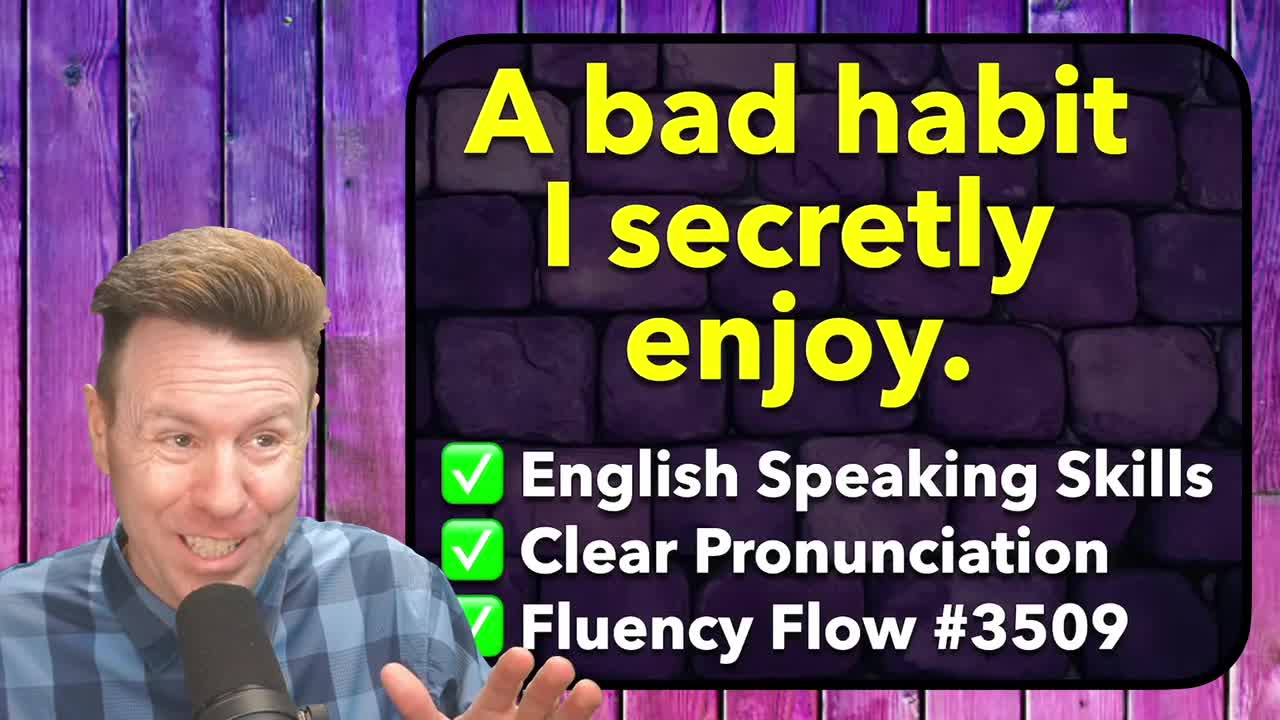
[Mastering English Fluency: Analyzing Bad Habits and Personal Quirks]-[Repeat-After-Me + Shadowing Practice for Fluent English Speaking]
📋 Summary
Exploring the Psychology of Bad Habits Through English Practice
In this podcast episode, the host facilitates an interactive English speaking session centered on a relatable theme: describing a personal bad habit and the secret joy derived from it. The session is structured to improve listeners' pronunciation, fluency, and flow, utilizing a combination of chunked repetition and shadowing exercises.
The Anatomy of a Bad Habit
The host introduces the topic by sharing his own struggle: nail-biting. He describes it as a "terrible habit" that often draws criticism, such as when his wife "shakes her head" and demands he "stop that." The host emphasizes the phrase "I just can't help it," explaining that this expression denotes a lack of control or an inability to stop a behavior that feels natural. By using this specific vocabulary, the lesson helps learners articulate feelings of helplessness regarding their own involuntary actions.
Triggers and the Cycle of Behavior
The podcast highlights how habits are often contextual. The host notes that he bites his nails when he is "nervous," "bored," or even just "thinking about my dinner." He describes the cycle of attempting to quit—promising himself "today is the day"—only to be derailed when a "problem with work comes up" or his "favorite show gets exciting." The onomatopoeic "chomp" serves as a vivid illustration of the moment the habit takes over, signaling that "another nail" has been sacrificed to the cycle.
Finding Secret Joy in Imperfection
Perhaps the most intriguing part of the discussion is the exploration of why one might "secretly get joy" out of a detrimental habit. The host reframes the act of nail-biting not merely as a failure of willpower, but as a "tiny secret thrill," comparing it to the guilty pleasure of "eating a piece of chocolate when nobody's looking."
Key reasons identified for this secret enjoyment include:
- Calming Effects: The act serves as a way to feel "calm" in stressful situations.
- Anxiety Management: By keeping his "fingers busy," the host reports that he does not "feel so anxious."
- Self-Soothing: Despite acknowledging it is "not the best habit," he views it as his "little way to relax."
Practical Application and Conclusion
The episode concludes with a challenge for the audience: to reflect on their own habits and articulate their experiences in English. By suggesting that learners might "get really good at hiding my hands" rather than quitting entirely, the host acknowledges the complexity of human behavior. The session serves as both a linguistic workout and a psychological prompt, encouraging listeners to "keep moving forward, one little step at a time," while practicing their English speaking skills in a meaningful, personal context.
Deep Learning with ListenLeap


