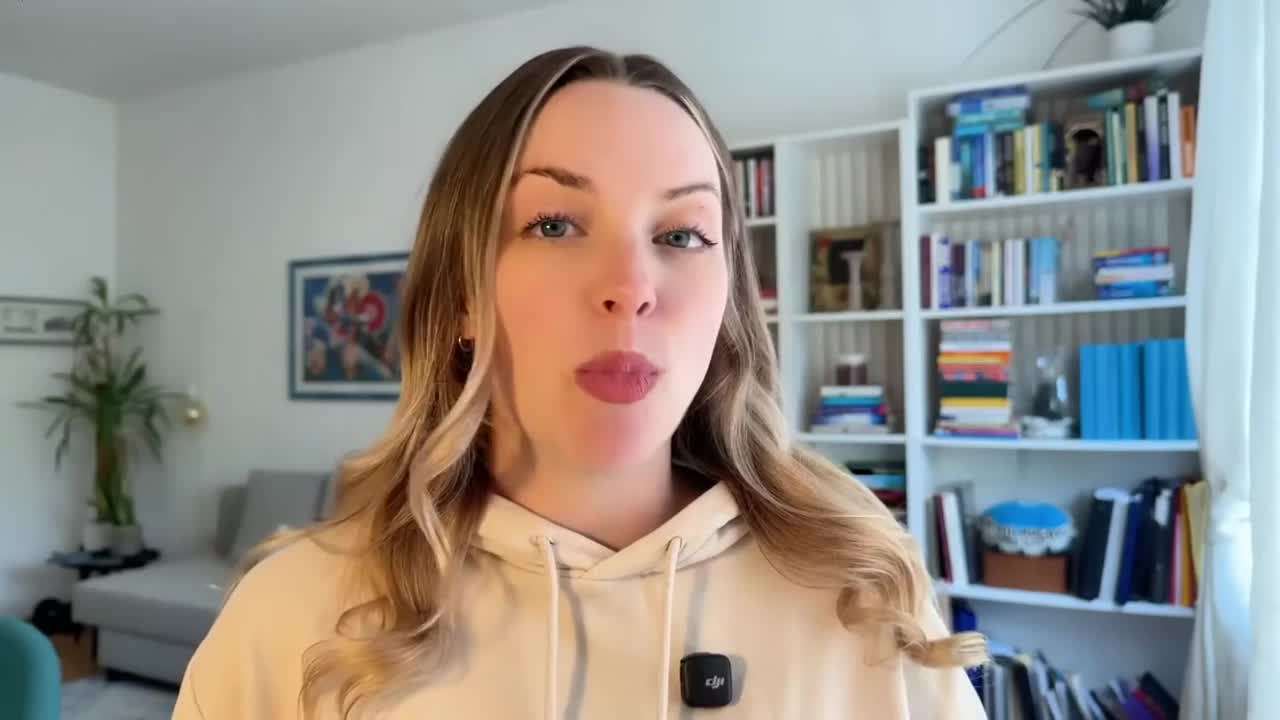
Hello and welcome or welcome back to my channel.
I'm Claire, a native speaker from the United States and an English teacher.
Today's video is a huge request.
It's another shadowing practice video.
And if you are interested in seeing more videos like this, I have a shadowing practice playlist here on my channel, so you can find more shadowing practice videos there.
And there's even more to come because they have been such a big request from you all.
If this is your first time selecting a shadowing practice video and you're not sure what to expect, It's pretty simple.
Shadowing helps you improve your pronunciation and intonation and overall fluency of the language by mimicking a native speaker myself and by doing so it instills in you good pronunciation habits and how to phrase certain things.
The inflection and tone of our voice when speaking a language that is not our own is really important to being understood by other people.
So it's not so much about getting rid of any accent you may have although this will help you if you want to achieve an american accent but it's more about improving your overall pronunciation of English so that you can become more fluent, you can be understood by other people and you can feel confident speaking in English yourself.
For today's shadowing practice, I took a request from one of my channel members and that is to focus on contractions with the word would.
So the story that we're going to shadow together today has several contractions of pronouns with the word would that you can practice pronouncing?
If you have a burning request of anything that you want me to focus on in an upcoming shadowing practice, write it in the comments.
Of course my channel members get priority reply to their comments, so I always read those ones first.
If you're interested in joining, click the join button below.
So I'm going to read through a short story that has, as I said, multiple contractions with pronouns and would, and after each phrase or sentence I'm going to pause, give you time to repeat after me.
I'll take some time to point out certain pronunciations to you, and then we'll shadow the whole story together.
So you will say it at the same time as me.
All right.
Let's get started.
When I was a kid, you repeat.
When I was a kid, my family and I'd my family and I'd Spend every summer at my grandparents' house.
Spend every summer at my grandparents' house.
Good.
So we have our first contraction with would in this sentence.
I plus would becomes I'd.
I'd.
My family and I'd.
Let's say the whole sentence together, so shadow me.
When I was a kid, my family and I'd spend every summer at my grandparents' house.
Every morning.
Every morning.
We'd wake up early.
We'd wake up early.
And my grandpa would make breakfast.
And my grandpa would make breakfast.
We have our second contraction with wood here.
We plus wood becomes weed.
Weed.
Now, it would also be possible to contract wood with grandpa.
You could say, and my grandpa'd make breakfast.
You could actually contract would with a word that's not a pronoun.
So sometimes you might hear native speakers do that.
I personally would, even in rapid speech, not make this contraction.
If I was telling a story, I'm pretty sure I would just say, my grandpa would make breakfast.
But you might hear it, or you might try it for yourself.
My grandpa'd make breakfast.
My grandpa'd make breakfast.
He'd usually make us pancakes.
He'd usually make us pancakes.
Good.
So here we have he plus would becomes heed.
Heed.
Okay, let's shadow these two sentences together.
Here we go.
Every morning, we'd wake up early and my grandpa would make breakfast.
He'd usually make us pancakes.
After breakfast.
After breakfast.
We'd go for a walk in the woods with my grandma.
We'd go for a walk in the woods with my grandma.
She'd show us different plants and animal tracks.
She'd show us different plants and animal tracks.
Good.
She plus would becomes she'd.
She'd.
She'd show us.
She'd show us.
Okay, let's shadow this section together.
After breakfast, we'd go for a walk in the woods with my grandma.
She'd show us different plants and animal tracks.
In the evenings.
In the evenings, We'd sit on the porch.
We'd sit on the porch And they'd tell us stories until it got dark.
They plus would becomes they'd.
They'd.
Pay attention to when I link words, like for example, until it got dark.
Until it got dark.
That whole phrase you can combine in your brain as one inflection.
So try and mimic the inflection that i say it in until it got dark.
Until it got dark, so the t's at the end of it and got become stopped, so we don't hear them very much.
Or it sounds like a d sound, maybe until it got dark got got, got dark.
Especially with the d of dark coming after the word got, you can think of it as dropping that t, completely got dark.
So we just have that d sound and we've dropped the t.
But, like i said, it might be easier to think in one fluid phrase until it got dark.
And you can practice that exact inflection, and you can do that for a lot of the phrases that i go through on your own.
You can pay attention to the way i say it and my inflection and mimic that exactly.
So repeat these parts of the video as many times as you need to really match that.
Okay, let's say this sentence together.
Shadow me in the evenings.
We'd sit on the porch and they'd tell us stories until it got dark.
Those summers were some of the best times of my life.
Those summers were some of the best times of my life.
I'd give anything to relive just one of those days.
I'd give anything to relive just one of those days.
Another phrase you can completely think of linked together is one of those.
One of those days.
One of those days.
One of those days.
So we can link the ending of one to the beginning of of, because it starts with a vowel, and then we can drop the v sound at the end of of, as we often do in rapid speech, to link with the next word.
One of those days.
One of those days.
And the same goes for the phrase in the sentence before, some of the, some of the.
We can drop the v sound in of.
Some of the best times of my life, of my life.
There we do have the v sound.
Now i naturally pronounce the v sound in of with the phrase of my life, but it wouldn't be unheard of to hear on my life to also drop that sound.
But basically it wouldn't be wrong if you pronounced that, if you said some of the, some of the, and you did pronounce the sound or just one of those one of those days, obviously it wouldn't be wrong.
But if you do find that sound particularly difficult or you want to achieve this natural linked speech, that's definitely one of the sounds you can drop.
Okay, let's say this final section all together.
Those summers were some of the best times of my life.
I'd give anything to relive just one of those days.
So the contractions with would are pretty simple, because it's basically just adding a d sound to the end of the pronoun and the pronoun keeps its same pronunciation that it would have without the contraction at the end.
So i becomes eyed, we becomes weed he he'd she she'd they, they'd.
If you found this video helpful so far, one of the best ways you can support my channel is by clicking the thumbs up button and giving it a like, of course, subscribing to my channel or sharing this video with someone else that might find it helpful.
Now let's say the whole story together without stopping.
You are going to shadow me.
When I was a kid, my family and I'd spend every summer at my grandparents' house.
Every morning, we'd wake up early and my grandpa would make breakfast.
He'd usually make us pancakes.
After breakfast, we'd go for a walk in the woods with my grandma.
She'd show us different plants and animal tracks.
In the evenings, we'd sit on the porch and they'd tell us stories until it got dark.
Those summers were some of the best times of my life.
I'd give anything to relive just one of those days.
All right guys, so repeat that part of the video as many times as you like until you feel confident and comfortable getting out all those phrases and pronouncing those contractions correctly.
Let me know in the comments how it went for you and I will see you in the next shadowing practice.
Bye for now.