
[Mastering 25 Essential English Sentences for Everyday Situations]-[REPEAT-AFTER-ME English Speaking Practice]
📋 Summary
Enhancing Conversational Fluency: A Guide to 25 Essential English Phrases
Improving English proficiency requires more than just memorizing vocabulary; it involves mastering functional language that can be applied across various real-life scenarios. This guide breaks down 25 core sentences categorized by situational context, designed to help learners practice through repetition and shadowing.
1. Dining Out and Making Plans
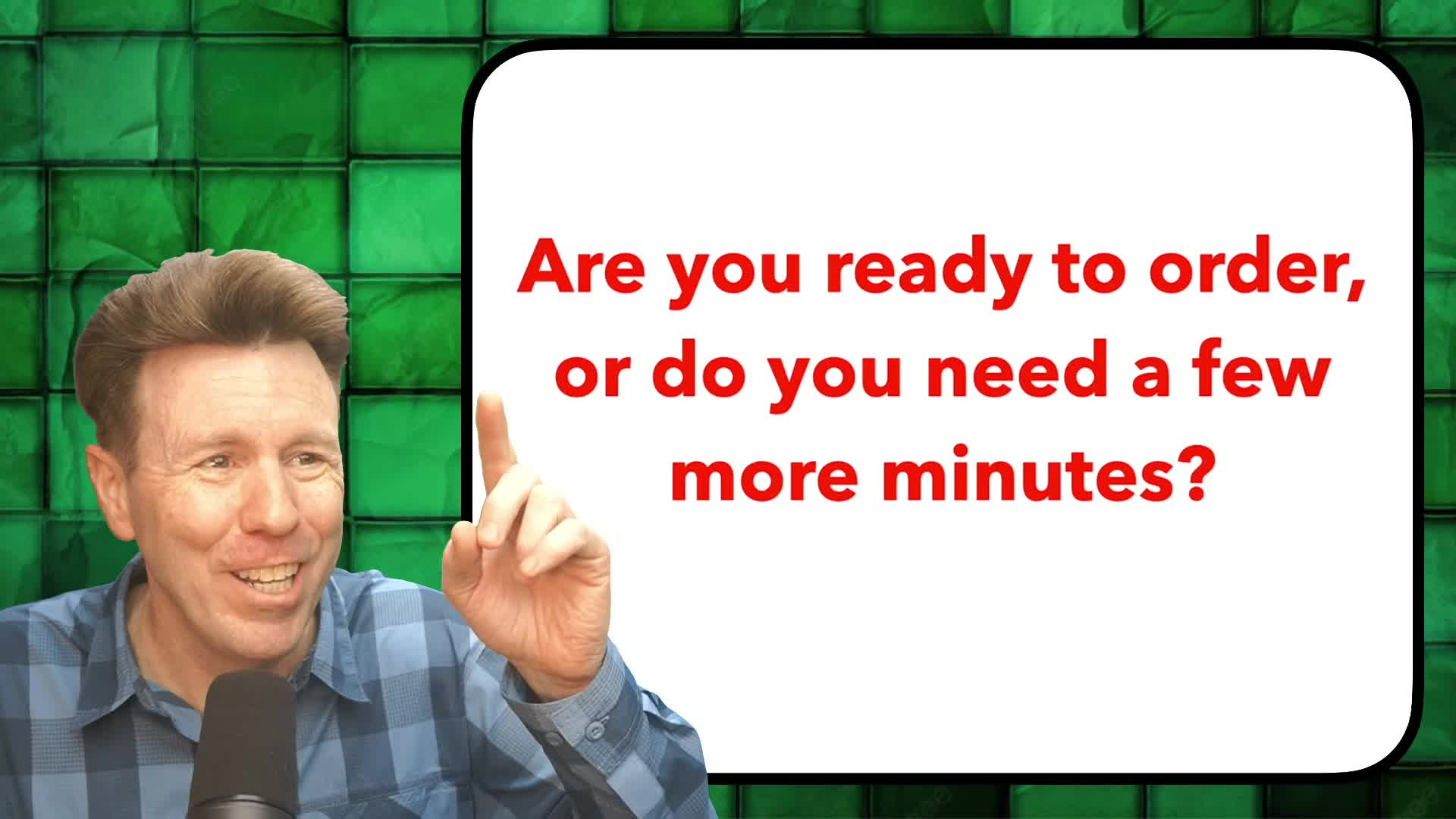
Navigating a restaurant setting requires polite and clear communication. Phrases like "Are you ready to order or do you need a few more minutes?" and "I'll have the chicken salad, please" are staples for any diner. When plans change, flexibility is key. Using phrases such as "Actually, something came up" allows for a polite explanation, followed by a suggestion like "Do you mind if we make it seven instead?" to adjust schedules seamlessly.
2. Seeking Assistance and Small Talk
Asking for help should be direct yet courteous. A simple "Hey, do you have a minute?" followed by "Could you give me a hand?" when you are "stuck on this part" is highly effective. Furthermore, engaging in small talk, such as discussing the weather with comments like "It's really hot today, isn't it?" or expressing a shared sentiment with "Same here. I can't wait for it to cool down," helps build rapport in social settings.
3. Professional and Clarification Exchanges
Whether on the phone or in person, clarity is essential. When calling someone, verifying availability with "Is now a good time to talk?" is professional etiquette. To ensure accuracy when coordinating logistics, one might ask, "So we're meeting at the station, right?" and confirm with "I'll text you when I get there." When communication is difficult, it is perfectly acceptable to ask for repetition by saying, "Sorry, could you repeat that a bit more slowly?"
4. Handling Mistakes and Social Invitations
Everyone makes mistakes, and acknowledging them gracefully is a vital social skill. If a presentation doesn't go perfectly, one might say, "Thanks, but I made a few mistakes," to which a supportive response is, "Don't worry, everyone makes mistakes." Additionally, extending social invitations is easy with phrases like "We're going out for dinner on Friday. Do you want to join us?" which invites a natural follow-up regarding time.
5. Strategies for Language Learning
Finally, the podcast emphasizes the importance of consistent practice. Strategies like "thinking in English throughout the day" are highly recommended. The host highlights the philosophy of "little by little," noting that consistent, incremental efforts "really make a difference" in developing one's English-speaking muscles. By focusing on pronunciation, such as the specific "d sound" in the word "little," learners can refine their accent and build confidence one step at a time.
Deep Learning with ListenLeap


