
[Mastering Essential English Conversational Phrases: A Practical Guide]-[Repeat after me in English using Chunks of speech.]
📋 Summary
Mastering Essential English Conversational Phrases: A Practical Guide
Effective communication relies heavily on the ability to use short, meaningful expressions that convey empathy, validation, and clarification. This guide breaks down four essential English phrases practiced in the podcast, providing context and usage scenarios to help you navigate social and professional interactions with confidence.
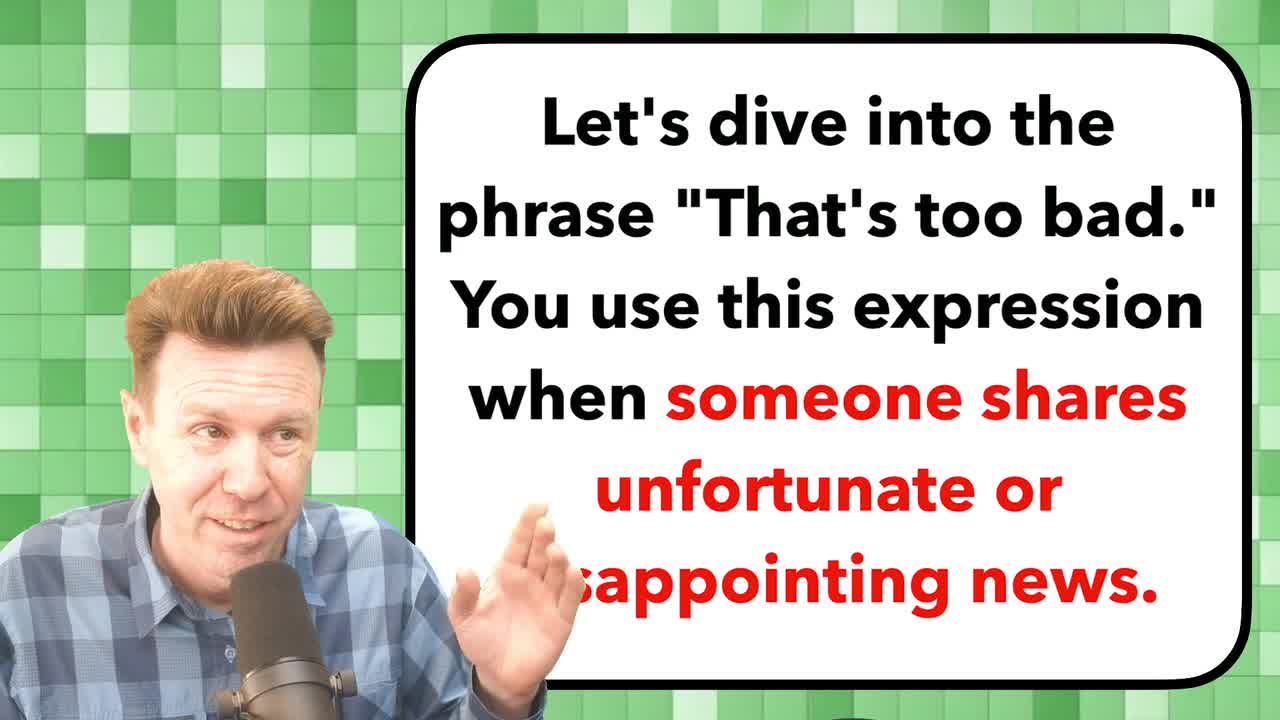
1. Expressing Empathy: "That's Too Bad"
When a friend or colleague shares disappointing news—such as failing to secure a job or missing a social event due to illness—the phrase "That's too bad" serves as a concise tool to express empathy.
- Why it works: It allows you to show you care without needing a "lengthy explanation."
- Enhancing the impact: You can deepen the connection by adding, "I hope things get better" or "I hope things turn around soon."
- Practical Example: If someone says, "I was sick all weekend and missed the party," responding with "That's too bad. I hope you're feeling better now" is supportive, natural, and helps "build trust in your relationships."
2. Validating Observations: "That's a Good Point"
In both collaborative group discussions and professional settings, acknowledging others' contributions is vital for teamwork. The phrase "That's a good point" (or "That is a good point") indicates that you are "listening, understanding, and valuing their input."
- Professional Application: If a coworker suggests, "We should review last month's data before our presentation," using this phrase followed by a call to action ("Let's do that") demonstrates respect and fosters a collaborative environment.
3. Seeking Clarification: "What Do You Mean?"
Misunderstandings are common in conversation. To avoid confusion, the phrase "What do you mean?" acts as a polite inquiry to gain clarity.
- Decoding Idioms: The podcast highlights the phrase "It's going to be tight." If this is confusing, asking "What do you mean?" prompts the speaker to explain that they are "running short on time or resources."
- Deepening Dialogue: By asking for clarification, you move beyond surface-level talk. For instance, if someone says something was "kind of awkward," asking "What do you mean it was awkward?" invites them to share more context, such as, "I didn't know anyone there, so I just stood around all by myself."
4. Demonstrating Flexibility: "It's Up to You"
Being "easygoing" and "open to suggestions" is a hallmark of a good conversationalist. When you want to empower someone else to make a decision, "It's up to you" is the perfect response.
- Usage Scenario: When choosing between two options, such as watching a "comedy or a drama," saying "It's up to you. I'm okay with either" shows that you are flexible and "not too controlling." This trait is highly appreciated in personal relationships.
Conclusion
Language learning is a process of taking it "one step at a time." By incorporating these phrases into your daily routine, you can improve your ability to offer support, validate others, clarify confusion, and remain flexible in social situations. Consistent practice of these "chunks of speech" is the most effective way to improve your natural fluency.
Deep Learning with ListenLeap


