You're listening to Life Kit from NPR.
Hey, it's Marielle.
When it comes to romantic relationships, we tend to place a lot of emphasis on falling in love.
But we overlook what it takes to stay there.
Sure, it's lovely to watch Cinderella and Prince Charming ride off into the sunset.
But then after the honeymoon, Cinderella keeps leaving those glass slippers hanging around where anybody can trip over them.
And the prince doesn't seem so charming when he can't seem to show up on time.
Rupture, conflict, it's going to happen in relationships no matter what.
We cannot avoid it.
Bea Voce is a couples counselor based in Austin, Texas.
She finds that a lot of couples need help with what comes after the fight.
The repair.
And I think we're really missing it.
I think this is actually the thing that helps us grow up together.
Repair, to me, is the single most important ingredient in marriage what actually develops into healthy long-term secure, functioning relationships.
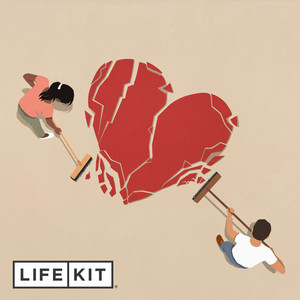
Repair in relationships is the process of mending a tear after a conflict in a way that supports whoever was hurt and ultimately brings y'all back together.
Repair might look like physical touch and that's all you need.
For me, repair.
I might actually need redemption.
I might need you to own a piece of what happened, and then I might really need to see behavior change.
Some people, seeing behavior change isn't actually as important as the apology up front, so repair can look really different for many people, but there are some basic steps we can share.
On this episode of Life Kit, reporter Andy Tegel talks to Bea about her five-step process of repair for couples, including what to do right after the conflict, when you're feeling steamed, how to wait your turn when you're talking to your partner, and how these conversations should feel a bit like providing or receiving excellent customer service.
This message comes from NPR sponsor Adobe.
Introducing the all-new Adobe Acrobat Studio, now with AI-powered PDF spaces.
Need to turn 100 pages of market research into five insights with a click?
Templates for a sales proposal that'll close that deal?
Or an AI specialist to tailor the tone of your market report?
You can do all that with the all-new Adobe Acrobat Studio.
Learn more at adobe.com slash do that with Acrobat.
This message comes from ServiceNow.
People should do the creative work they actually want to do, not boring, busy work.
Now, with AI agents built into the ServiceNow platform, you can automate millions of repetitive tasks in every corner of your business IT, HR and more.
So your people can focus on the work that they want to do.
That's putting AI agents to work for people.
It's your turn.
Get started at servicenow.com slash AI dash agents.
I want to talk about the everyday type of relationship pain.
So Bea, maybe my husband and I went out to dinner with friends and he said something that really embarrassed me, something he knows that I wouldn't want him to share.
Where would the repair process start?
The first step that I think about is what I call do nothing.
Now, doing nothing is actually quite an active process, but what I mean by this is do nothing with your partner.
So maybe you just blew up at them.
Maybe you just walled off, you stonewalled, you distanced, you closed your heart.
Maybe you did something in between.
At this point, you're starting to notice like, ah, I'm in it again.
I'm in the pattern, which is going to take practice anyway, to start to be like oh, I'm out of what I call my window of tolerance.
It could be many cues.
It could be my heart starts to race.
I start to sweat.
It could be that I start to, in my head, make you my enemy.
It could start to be that I literally cannot hear what's coming out of your mouth.
Like everything has gone blank.
So it could be a number of things.
It's going to be different for all of us, but it's pretty predictable what ends up coming up here.
When you start to notice oh, I'm in that predictable pattern where I'm outside of my window of tolerance, I start to understand okay, this is my cue to do nothing.
What do I mean by this?
I mean, you phone a friend, You talk to your therapist.
You go on a walk.
You take a bath.
You're regulating yourself.
You're getting yourself back into your window of tolerance as much as possible.
Basically, the idea at Do Nothing is you don't come back into connection with your partner until you're ready to see someone else's perspective.
Takeaway one.
Do nothing about a rupture with your partner until you're level-headed enough to actually have a conversation with them about it.
Not just restart your fight or bring up the leftover arguments still bouncing around your head.
Bea says you don't have to be totally calm, but you want to be at least a 5 out of 10.
With 1 being your most zen and 10 being steam coming out of your ears.
And doing nothing is actually a really active process.
You want to seek out the most effective ways to regulate your system.
So blast that favorite playlist and go on a run or reorganize your closet.
Then once you've cooled down, ask if your partner is also ready to come and meet you on the couch.
The second step, this is the most important one that most people miss, is one person goes at a time.
In this example, it's super obvious who's going first.
You're the hurt partner.
It's your turn to be repaired with.
This is why we get into so much trouble when we're trying to repair is because oftentimes both or all people are trying to get their perspective heard in that moment.
And so nobody's actually listening.
People are just saying my perspective no, my perspective no, this is what I, and nobody's actually listening.
We're just trying to be heard.
And by the way, if both of us have been hurt, you'll take turns.
That's it.
Your partner might say something like, we'll just keep going with this example.
Hey, it really hurt my feelings when I saw you talking to our friends and I made up the story that you were being sarcastic because you wanted to put me down.
In my head, as the listening partner, I could be like, what are you talking about?
I literally might be thinking about, I don't even think I said that.
All of those things can still be going on in your head.
But the truth is when you're the listening partner and The idea is that you are at the customer service window of your partner.
This is from renowned couple therapist, Terry real.
You don't go to the customer service window and say, Hey, I have a broken microwave.
Can you fix it?
And then the person says, Hmm, well, I have a broken toaster.
Can you fix this?
That's not how it works.
You go to the customer service window and say, Hey, I have a broken microwave.
And the customer service person says, okay, great.
Let me help you fix that.
If both of you are doing it at the same time, it's a, total mess.
It doesn't work.
So this is where one person at a time comes in.
Takeaway two simple in theory, harder in practice.
Share your individual version of events, one at a time.
That's the way you'll actually be able to hear each other.
Then takeaway three when it's your turn.
Share responsibly by letting your partner know how their behavior made you feel, not just bombarding them with judgment or criticism.
So As the hurt partner, your only job right now is to not be a jerk.
You're using I language.
You're using soft startup statements.
So there's a huge difference between you saying Hey, you said something tonight that really embarrassed me.
That was super messed up.
I can't believe you said that.
Sure.
Could you say that?
And your, could your partner respond kindly?
Absolutely.
It's just going to take way more work for them to do that.
If you say Hey, When we were sitting down earlier and you made this joke like, here's what happened to me.
All of a sudden, like I literally felt my body heat up and immediately I went into the story.
Oh my God, I can't believe you're saying this to them.
How could you say this?
Like I'm literally hearing that story in my head.
There's a great line by Terry Real who I just love the way he puts this where he says there's no space in relationship for objective reality.
There are just two subjective experiences.
That's it.
So I have my experience over here.
You have your experience over here.
It's probably somewhere in the middle is the truth.
But that truth doesn't actually exist.
There are two subjective experiences.
So the minute that we start fighting the truth or fighting for the truth, we're in a losing battle.
So, just to be clear, language matters, especially when the objective is to reconnect with your partner.
So like from your perspective...
Sure, it can be as clear as day that your spouse is to blame for that missed flight.
But there is a big difference between you can never be trusted with the schedule and I feel it down because you wanted to leave late and now we've lost a day of vacation.
This is another Terry-ism which I love.
He calls this enlightened self-interest.
You're doing this because...
You know, a lot of people don't want to own their language when they're hurt because they're hurt.
They want to be able to word, vomit and say everything that's on their mind and be able to speak their pain however they feel is appropriate to speak their pain.
But then when their partner can't hold them, now what?
Now we're in the same cycle of pain that we've been in over and over and over again.
So once you start to own your language...
This is going to make it much easier for your partner, for the listening partner, to do steps four and five.
Takeaway four, when it's your turn to listen, do just that.
Try to step out of your own experience entirely.
How I like to think about this is you take your perspective and you zip it down, almost like you're wearing it as skin.
You're wearing it as clothes, right?
So you take your perspective and then you just put it to the side and you taking a little nap.
Now this is really important for people, especially for my people, who feel like they might please or override or fawn.
Oftentimes they feel like their perspective never gets heard.
So it's really important for these people to understand that you get your turn.
It's just not right now.
So your perspective is taking a nap which allows you to move to step five, which I call be an anthropologist.
Okay.
And how do you do that in these kinds of conversations, because your partner's perspective might be completely different than yours?
I literally look at this like your partner is an alien and you're an anthropologist, being like huh, what's it like to be that alien?
You're like oh, I would never think that thought or that thing, that I just that would never hurt me or I would never react that way, but because this isn't about your perspective.
This is literally like studying an alien species, where you're like huh, you got hurt because I said that thing at dinner.
Wait, can you tell me more about that?
Like it is your job to understand this person's hurt.
And the way that you do this is by not taking on, not taking full responsibility over here for my partner's experience.
It's going to be really hard for me to actually come over to your side and understand and be impacted and moved by what you're saying, if I feel like I have to agree with you.
What should the person who's listening first?
Is there anything that person should say or do during that time?
Any questions that can help open up that deep listening?
So if you just start with, hey, I want to understand more.
I don't know if I'm fully getting it and it's important that I do.
Can you tell me more about why it hurt you?
Can you tell me more about what I said that really hurt?
Can you tell me more about what's making you sad?
Can you tell me more about?
Is a great sentence stem to open up your partner into their own deeper reflection.
Takeaway five, attunement is not the same as agreement.
Practicing genuine curiosity means Finding real empathy for your partner will give you that space you need to reconnect.
Of course, that can be hard to do when you're still angry or if you've known your partner for a million years.
So be an anthropologist.
Pretend you just landed on a new planet.
You'll also want to be careful, in this final step, of the difference between attunement and appeasement.
Coming up, what to do when repair isn't working.
That's after the break.
Bea, what are some signs that this process isn't working?
Oftentimes, what happens is two things.
The listening partner at this point, because they're hearing all the things that they did wrong.
Hopefully the hurt partner is able to speak it in a way that has eye language.
But even if they're able to do that because of our conditioning or our wounds or our patterning well, oftentimes what this will look like is collapse.
So I then collapse into your story.
Oh yeah, you're completely right.
I completely agree with everything you're saying.
That makes total sense, right?
And your experience just kind of washes away and you don't actually mean what you're saying.
You're just trying to keep the peace.
So it's not actual repair.
It's not actual attunement.
It's not actual presence.
You're literally just trying to keep the peace right now.
So for the people who tend to collapse, they tend to blame inwards.
It's my fault.
I did something wrong.
I can't, I'm a bad person versus the other side, which is you're crazy.
How could you think that?
That's insane.
I would never do that.
Whoa, you're way too sensitive, right?
So these are my people who tend to go into grandiosity and blame outward.
It's your fault.
And if I feel defensive on my end, I'm not going to collapse.
I'm going to fight back.
Right.
Can't say anything around you.
That's right.
So listen, you could, as the hurt partner, do everything in your power.
You could own your language.
You could come in a pretty regulated state and your partner could still respond in a collapsing way or in a grandiose way.
At that point, it's time to get support.
This is going to be really hard to do on your own because this is work on our self-esteem.
This is much deeper work that we really do need a support system outside of us to help both of us.
When we are trying to hold each other and it's just too much, it can just cause more pain.
I really do think that people often enter into therapy too late because They think they can do it on their own.
And not to say that some of us can't.
But there are going to be some wounds and some triggers that are just going to be too hard for a simple five-step process.
And the five-step process is going to be way too reductionistic to actually work for what's happening on the deeper levels.
And in that case really seeking support is the best, most nourishing thing you could possibly do for relationships.
Okay, and how can you tell if this is less of an us problem and more of a me problem?
You know, you've got to the end of the repair process and you still feel unsettled.
When is it time to maybe seek out help just for yourself?
I like to say that if your partner is doing 70 of the heavy lifting and they're getting it like 70 right, They're doing the hard work of attuning and staying present and regulating themselves to be able to stay curious and open with your experience and not need to go into their perspective or their experience in that moment.
And still, you cannot come back.
That is your work to do.
The part of us that is unrepairable with.
We need to understand the difference of how much our partner can do, which is some, for sure, but not all.
And if our partner can't get to all of it, there's a piece in us that really needs to be met by ourselves.
And the only person that's going to be able to meet that in the way that you really need to be met is you.
When do we know repair is complete, Bea?
You know repair is complete when you feel a softening.
It's not so cut and dry, as your partner says the right things and so now things are repaired.
It's feeling met and understood and validated in the way that has your nervous system calm and say I remember you're my partner.
I want to come close to you again, even if slowly.
It could look much more like a slow thawing out of a nervous system that's coming back from holding and keeping itself safe into a nervous system that is open for connection again.
This isn't an exact science, of course, but you know when the repair process is complete, right?
Maybe it's that warm, fuzzy feeling when you finish talking and your partner makes you feel really seen and heard and understood, or just the willingness to accept her outstretched hand on the couch, or cracking that inside joke after a day of a dead, silent apartment.
Once you've righted that wrong, Learn from it and use it for the inevitable next time you'll need it.
Because remember, occasional conflict and tension are healthy and good relationship repair is a muscle.
You would never go to the gym once and be like, wow, I nailed it.
I don't need to go back again.
That would literally never happen.
We know that.
I don't need to teach anybody that.
But when we're talking about relational fitness...
The skills need to become part of our everyday existence in order for us to get emotionally or relationally fit.
It's not just a one and done.
You do these steps well, you nail it.
You'll never have to do them again.
No, these are practices that you do over and over and over again.
It takes practice and it takes the ability to stay with the tension long enough for your partner to soften.
Beboche, thank you so much for your time.
It's been a pleasure.
Thanks so much for having me.
All right, let's recap those five steps to repair after a rupture.
Takeaway one, do nothing.
That is, don't try to fix it until you're regulated enough to hear out the other side.
Until that point, do the things that help bring you down.
Takeaway two, share one person's perspective at a time.
So you can, you know, actually listen to each other.
If one person's upset, that's who goes first.
If you're both mad, take turns.
Takeaway three when it's your turn to tell your side of the story, remember it's just that your side, not objective truth.
So use I statements and be thoughtful about what you say.
Takeaway four when it's your turn to listen, put your own thoughts and feelings away as best you can.
And then takeaway five Practice deep curiosity to try and truly understand and empathize with your partner's perspective.
That doesn't mean you have to agree, but hopefully it will help you get to a point where you can reconnect.
And remember the repair process is complete when you, your partner, are ready to let go of the conflict and turn back towards each other.
That was reporter Andy Tegel with therapist Bea Voce.
Before we go, I have a favor to ask.
If you have a second, could you please leave LifeKit a five-star review?
If LifeKit has ever helped you save a little money, make a healthier choice or just made you feel a little more seen, a five-star review is a great way to show your support.
This episode of LifeKit was produced by Claire Marie Schneider.
Our visuals editor is Beck Harlan, and our digital editor is Malika Gharib.
Megan Cain is our senior supervising editor, and Beth Donovan is our executive producer.
Our production team also includes Margaret Serino and Sylvie Douglas.
Engineering support comes from Robert Rodriguez.
I'm Mariel Segarra.
Thanks for listening.
This message comes from Capital One.
Banking with Capital One helps you keep more money in your wallet with no fees or minimums on checking accounts.
What's in your wallet?
Terms apply.
See CapitalOne.com slash bank for details.
Capital One N.A., member FDIC.