Hey, it's Manoush here.
So as 2025 wraps up, we want to share a little something special with you.
Earlier this year, I interviewed the absolutely lovely Robert Franz.
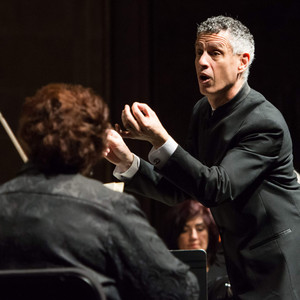
He had served as the music director and maestro of the Windsor Symphony Orchestra in Ontario, Canada.
Sadly, Robert passed away in September.
He loved classical music and he loved helping other people gain a better appreciation and understanding of it.
He even came up with a set of tools.
He called them Bob's Four Tools that can help everyone listen better and enjoy music more.
So originally we produced this bonus episode for TED Radio Hour Plus subscribers.
Those are people who get access to extra interviews with TED speakers, practical advice from our experts and episodes like this one.
So if you enjoy it and want to support the show, please go to plus.npr.org to find out more.
But meanwhile, please enjoy this tribute to Robert Franz.
This is a really special episode where he walked us through his process, starting with focusing on rhythm.
Listen to the rhythm and decide if the rhythm is with your heartbeat or against your heartbeat.
Does the rhythm put you at ease or fill you with tension?
Next, there's melody.
What a good melody does is it takes you from the beginning, it captures you and then it moves you through time.
How does the melody pull you along?
Does it feel like a story with a clear beginning, middle, and end?
And then there's texture.
Each instrument plays a note.
That note has a certain timbre or color.
When those colors blend together, it becomes a vibrant tapestry.
And if you have the benefit of seeing an orchestra play live, you can look for the visual movements of the musicians on stage too.
There's so much nonverbal communication going on between the musicians and the conductor.
And I think all of those elements are really important components to experiencing orchestral music live.
So earlier this year, we asked Robert to walk us through a full piece of music.
He chose the first movement of the 1893 symphony called From the New World by Antonin Dvorak.
And he wrote it after a visit to the United States because he was so smitten with the folk music that he heard during his visit here.
And what's fun about this piece is it has so many emotional curves in it that you can really dig in and bring out those emotions.
As you listen, Robert suggests thinking of the music in terms of shapes moving up and down.
When it goes up, when it comes back down, when it kind of burbles in the middle.
If you will, that really is the indication of of what the composer was trying to say throughout this movement.
There are a lot of gestures that Dvorak uses to get his point across and to get us from point A to point B.
Okay, are you ready?
Here is Robert Franz guiding us through the first movement of Dvorak's Symphony No.
9, From the New World.
So the work begins with this slow introduction to kind of set the mood.
And this tune that you hear, which is so beautiful, is actually played by the cellos in a high range.
Their voice type is high in this point.
A little surprised by the horn.
Now the melody is repeated, but even higher, in the woodwinds.
So you hear the exact same melody that you heard the cellos play, but higher in the woodwinds.
.
.
.
This is a great example of a rhythm that goes against your heartbeat and creates tension.
And so all of a sudden after that beautiful melody, we have this section of tension.
Building of suspense.
Again, the rhythm stops.
Exact opposite of what your heartbeat would do.
It pulls you in and just keeps arresting your heart.
Now we have our first big shape.
Low to high and back down again.
Now what Dvorak is doing is he's using texture.
He's building the texture, building suspense, building intensity.
Now, by repeating the same gesture over and over again and bringing us back to that long, tall melody, he takes us to the next section.
You can feel that the music is almost deflating, if you will, becoming calmer and calmer.
¶¶
Now we have our first singable melody.
And this actual melody is based on the idea of a Native American folk song.
Now using snippets of it to build the texture.
We're building a suspense.
Little by little now we're building these enormous gestures.
So these lines now, instead of little bits, are creating long lines for the musicians and for the conductor to bring to life.
Now the music really winds down and we get another beautiful melody in a solo flute.
This is probably the most singable melody in this entire movement.
Now the intensity builds.
Now this is what we call the development section.
This is when the composer takes the music, twists it up, breaks it up into little pieces and tries to trick our ears.
Now here, listen to this, to the inner voices providing this inner sort of burbling sound.
The development section usually has the most drama in any particular movement.
.
So it's the exact same music, but repeated slightly higher to intensify the sound pitch-wise.
So the pitch becomes a little higher and it becomes more intense.
Now this little section is all about going back to what we call the recapitulation, which is a return to the beginning music.
And here, now we're back to the same music we started with.
So the music is basically A B, A Certain kind of music development section, different music, and then it returns as we're right now where we are.
¦
And you can feel that the energy of the music is really declining as we prepare for this second flute solo, which is very unusual.
Usually when there's a solo in a woodwind section, it's the principal that plays it.
This is the second flute. gives it a darker, readier, meatier sound.
Now we're back in the land of texture.
Just using colors and shapes to sort of build intensity.
Thank you.
When you have a big classical piece of music like this, it's all about building the tension and releasing the tension.
And that ebb and flow in the macro sense and in the micro sense is what makes the music propel forward.
That's what you're listening for when you're listening to a piece of music.
Where is the music taking me?
Am I going somewhere or am I coming from somewhere?
The beautiful melody is back.
Now we're getting ready for our grand finale.
Everyone in the orchestra playing full volume.
Very exciting music.
Again, the shapes of the music the trumpet's playing, this upward line, upward line.
Building of intensity, building, building, building.
¶¶
May we all feel just a little bit of the joy that Robert Franz had for music.
Robert Franz was the music director and maestro of the Windsor Symphony Orchestra.
You can hear more about his four tools in our episode called How We Perceive Time, or in his TED Talk.
You can find the link in the description.
Thank you so much for listening to the TED Radio Hour this year.
Plus listeners, we're especially grateful for your support.
This Plus episode was produced by Kai McNamee.
It was edited by James Delahousie.
Our partner at NPR Plus is Chow Tu.
I'm Manoush Zomorodi.
Thank you again, and I'll be back on Friday.
This message comes from Mint Mobile.
At Mint Mobile, their favorite word is no.
No contracts, no monthly bills, no hidden fees.
Plans start at $15 a month.
Make the switch at mintmobile.com slash switch.
That's mintmobile.com slash switch.
Upfront payment of $45 for 3-month 5GB plan required.
Equivalent to $15 a month.
New customer offer for first 3 months only.
Then full price plan options available.
Taxes and fees extra.
See Mint Mobile for details.
This message comes from Carvana.
The Carvana value tracker shows you your car's worth.
Check it anytime, track changes, and sell when the timing feels right.
Use Carvana value tracker to track your car's value today.