Discussion keeps the world turning.
This is Roundtable.
China's recent food delivery wars flooded the market with deals seemed too good to last. And last they did not.
The situation got to the point where regulators finally stepped in.
So why did this battle start?
And now that the dust is settling a bit, can the platforms in question keep prices low enough where they're not sacrificing fair competition?
We are live from Beijing.
This is Roundtable.
My name's Steve, and we thank you very much for being with us today.
On the show is Niu Honglin and Yushan.
First, on the program.
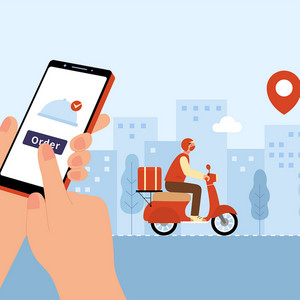
China's food delivery industry exploded into an all -out war this summer, with platforms unleashing billion -dollar subsidies, seeing record -breaking orders, and offering relentless discounts in a a battle for dominance.
As a result, customers ordered in numbers that would actually melt your brain.
The numbers are astonishing.
But the cutthroat competition couldn't last. Regulators swiftly intervened, leaving everyone wondering, in a price war like this, who wins, and maybe more importantly, who loses?
Is it possible for these platforms to deliver low prices without sacrificing fair competition, or the well -being of the riders, or the well -being of these businesses that are selling on these platforms. Today, we unveil the good, the bad, the delicious, the ugly, all about delivery dominance today.
It is such an interesting story.
It's really, really, really complicated, and food delivery is big, big business here in China.
And it's part of people's, I think it's safe to say, daily lives.
Yes, at least for me.
Absolutely. So let's get into it then.
A little background, Yuxuan, you'll kick us off.
A little background on the food delivery seen here in China.
Oh yeah, as an old food delivery buyer, I think I quite understand or witnessed the development of Chinese food delivery platforms. So in recent years, the major players in the food delivery platform market have been Alibaba's Ulema and also Meituan.
That's another platform.
And this year, however, the e -commerce platform JD .com also entered this sector and more recently taobao's shangou or flash sale that's the direct translation of it to prove that they can be really fast has emerged as a new business launched by also alibaba's e -commerce platform taobao we know that but since alibaba already owned that previous delivery uh platform element right you can understand this move as more of a business expansion within the e -commerce ecosystem, I think mainly to combat JD .com because they are the direct rival.
So it's two major players looking at a probable, very powerful, could -be component or contestant in the game.
To give you a bigger picture of the situation, As the end of 2024, food delivery services had a penetration rate of around 26 % in the overall restaurant industry with more than 590 million users.
This means that within China's 5 .7 trillion yuan catering business, food delivery accounts for roughly 1 .5 trillion yuan.
That is how big the market is.
And as for the market, like Yuxuan has just said, previously, it was these two giants sharing the cake, maybe not evenly, because before February 2025, nearly 70 % of the food delivery market shares belong to Meituan, and close to 30 % was held by Ulama, so the Alibaba one.
And with other platforms being basically neglectable.
And however, after JD entered the food delivery market in February, lowering merchant commissions, providing social security benefits for the carriers, which we will talk about a bit later.
The competitive landscape began to shift a little bit and clear winners and losers have emerged.
We see that by the, well, let's say according to data in early June, Meituan had an average of 60 million daily orders and Ulema, 45 million and JD already 25 million.
So it's already very impressionable.
If you live in North America, I think you see food delivery here and there, right?
But this is a whole different level.
I mean, if we walked outside the building right now, we'd probably see 10, 15, maybe 20 or more food delivery drivers going in every single direction.
They're just always on the go from morning until very late at night.
The competition got so fierce that something started circulating that everyone was talking about called Crazy Saturdays.
Oh, yeah. What was that about?
So as these platforms compete with each other by releasing coupons, offering even up to 90 % or even 100 % off, people have started calling these weekend promotional days as Crazy Saturdays.
It's not an official name for these promotional weekends.
But this latest round of subsidy wars was initiated by this Taobaoshan Go and soon after, other platforms followed suit in order to attract customers and also boost their retention.
And the scale of these subsidies this time has sparked this huge and widespread discussion, especially on weekends, as we know.
so you know even some people are even posted some stocking an entire fridge full of milk tea saying that i cannot just consume all of that but i couldn't couldn't resist buying it yeah i cannot let these coupons go so i bought everything some of the deals i mean some of the deals were free were they not for zero zero yuan zero yuan milk tea one yuan coffee are the hashtags that are are really popular on social media, and people are talking about, is it going to last, or is it really good for the merchants, or is it just some money spent by these platforms?
You can kind of understand it, because mostly what these platforms are doing is that they roll out coupons.
So you use a coupon as a discount of 15 yuan.
So it's not like a percentage kind of coupon, but a subsidy for real money.
And if you're purchasing, for example, a 100 yuan Beijing roasted duck, which can be very delicious, you're only looking at a 15 % off, which is not that impressive.
Yet, if you're using the same coupon to buy a bottle of milk tea, you're looking at a zero yuan milk tea, and that is impressive.
Yeah. Or if you pick them up in the store, sometimes free, but if you get it delivered, maybe you'll pay a small delivery charge there.
The point is, is that the battle for retention, as you said, was very strong.
And the battle to gain new customers was really strong as well.
Yes, and it goes to the point where my feeling is that these major platforms are playing the game of, say, uncle.
They are not. Who's going to give up first?
Who's going to give up first?
We see Meituan has collected tens of billions of yuan in subsidies for food delivery.
Taobao initially announced, Taobao being Elema and also Alibaba, initially announced 100 billion yuan in subsidies and more recently said it would invest 50 billion yuan in food delivery subsidies for the year.
And JD has constantly claimed to be offering subsidies in the tens of billions of yuan as well.
So they're not backing off.
And even the founder of these platforms may sometimes openly give remarks in live streams and they just stand out and say, we have the money.
We will put it in the business and we are not backing off.
Yeah, we have deep pockets and we can afford this kind of competition.
And the sales, as I said, when we got started were mind melting.
Taobao Flash had 80 million plus orders on July 7th, including 13 million non -food.
They have 200 million plus daily active users.
Meituan had 120 million plus same -day orders on the 5th of July.
Not July the whole month, not the first quarter, the day.
The day. It's astonishing, isn't it?
And then so many different restaurant brands are as well.
And then the social media tags started popping up, food delivery wars, food delivery freebies, like you said, Yuxin.
They reached the top of Weibo's trending list. And it turned the campaign, the campaigns from the food delivery platforms, into a national online event, you could say.
But that being said, it did get to the point where regulators said enough is enough.
Yeah. On July the 18th, China's State Administration for Market Regulation held talks with these platforms, Meituan, JD .com, and Ulema to warn against unfair competition and food security risks.
In response, subsidies were scaled back and platforms were told to focus on safer and more sustainable practices.
So these were just warnings, right?
It's like being called to the principal's office.
No fines imposed, nothing like that.
Just saying, stop what you're doing to that degree.
And it's not the only party that is showcasing a little bit of concern because we see that the Hong Kong stock market opened on Monday, which is the 7th of July, just a week after this crazy happy Saturday, happy for me, consumer who's buying a lot of milk tea.
And we see the shares of freshly made beverage companies such as Naixue Group and also Gu Ming.
These are the big merchants selling milk tea.
Their stock soared on the back of surging food delivery orders.
Yet we see that Meituan and Alibaba, the initiators of the food delivery subsidy war almost, saw their stock prices dip before rebounding just slightly on the other day.
So the market is not looking at the whole situation as a motivation or as a momentum for these two delivery platforms either.
But at the same time, the government decided to step in and have these talks with the platform.
So why? Why did the government deem it necessary to do that?
Yeah, so because there are some different laws that people need to pay attention to.
The subsidy war triggers concerns under laws like the e -commerce law, anti -unfair competition law and food safety law platforms. They need to know that and they need to behave well and in order to comply these kind of laws.
And some merchants on food delivery platforms have expressed that the burden, maybe some of these subsidies is quietly shifting for some time.
Initially, you know, merchants only had to cover a small proportion.
But now, in some cases, it has soared to even, you know, 60%.
For example, if the consumers are getting a 14 yuan discount coupon, right, the merchant has to maybe cover 8 to 9 yuan while the platform only subsidizes 5 yuan, which is the phenomenon that we're saying that they are putting a noticeably heavier burden on the merchants.
And that is why the loss is telling the platforms that it is not legit.
It is actually maybe implying to unfair competition law or something like that.
And besides that, it's easy to understand the logic behind it.
If you are giving consumer enough profit and only offering a tiny little, tiny, tiny little margin of profit for sure.
But if you're selling milk tea with zero yuan, definitely this is not a normal phenomenon in the market, which would have numerous outcomes in the future.
And one other thing, one other example I see is that for these milk tea shops, maybe some of the milk tea shops are really the kind of franchises that can bear certain costs but for each and every little shop because they have too many orders they would have to hire people to put the milk tea in the bottle or something and that would raise the cost and not to mention the delivery fee is also still bared by these shops so definitely merchants are not looking at it as a 100 positive thing uh yeah i mean this happened this is happening now China, this kind of similar situation happened in the States
back around 2022, I think.
Regulators kind of got involved looking at the food delivery companies, New York City, San Francisco in America.
They placed permanent fee caps on how much third party delivery services could charge restaurants.
The companies were charging up to 30 % per order and various cities decided to crack down.
Because during the pandemic, I mean, the numbers of growth, it was just astonishing, right?
There was 162 % year -on -year growth in April of 2020.
People were forced, weren't they, to start ordering their food.
And that really boomed in terms of the delivery market.
Back here in China, though, so it's fair to say that there is some cost pressure being put on the merchants then yeah and one mechanism is you know some merchants feel compelled to participate in these promotions because it's essentially a you know a battle of for uh traffic right and naturally more people are paying attention to food delivery platforms during this time and by joining the campaign merchants can gain greater exposure for example you can see it earlier at the chart of all of the choices but if you don't join this campaign which means you don't these merchants don't offer some let's
say coupon or subsidies into this campaign they may not be shown at the like a list at the top of the search list yeah yeah besides that there are the milk tea shops which are very very busy they are ready for example accepting orders like hundreds and even Even sometimes up to 1 ,000 orders, they do not think they can deliver anymore.
They would put up the sign of closed on the online platforms, but their offline platforms are still busy packaging milk tea, which would lead to the certain kind of comments from consumers saying, huh, see, this is this huge campaign here and you cannot participate because you're a sour loser and you're not giving us your milk tea.
We will not buy from you.
That is not even the real situation.
the real situation is that they're still very busy packaging the milk tea.
Besides that, we also see certain merchants that they do not belong to any of the merchants.
And it's just this one small mama and papa shop of, I don't know, coffee.
And it's hard for them to gain a place in these kind of fears and unnecessary competitions as well.
Yeah, that's a fair point about, you know, some businesses like saying, oh, we're closed because they're too busy.
They can't keep up with the number of orders.
But I think for smaller businesses who perhaps can't afford to participate in campaigns like this, like you said, you shouldn't.
They get pushed down to the bottom of the search. and when you search on these on these on these apps and you search like I don't know fried chicken or milk tea or whatever of course you get the things that pop up first right and yeah obviously you know a lot of people are gonna choose what they see first or second or third data they don't scroll down I don't scroll down too far down the list so this could hurt those hurt those businesses as well all right so there's pressure on the merchants and then if there's pressure on the merchants you know because of the the struggle to keep up with the sheer
number of orders, that pressure then gets put on to the delivery drivers, which is also a fair point.
Yeah, more orders, which means more orders that the delivery drivers need to take, right?
And more work hour.
And it's really hard these days.
Exactly. And that is why a lot of these platforms, platforms they you know the writers may have to rush under tight deadlines increasing the risk of traffic violations and accidents and more worked longer hours in summer heat but may not receive maybe higher pay due to reduced food delivery fees during these campaigns but i do see some platforms are offering let's say they will offer you a the page saying that you can go a like a lotto draw and then you can get a free ticket for buying a milk tea and then aside from that you can also give the delivery driver 2 yuan for compensation oh really and these
two yuan are offered by the platform it's not paid by you so yeah i think these are some strategies or you know ways to also subsidize the drivers yeah and that yeah it's an incentive isn't it for the the drivers but those positive incentives could have negative side effects because if the drivers or riders know that you know if they are delivering things on time very speedy very quick quickly they can get a kind of a cash reward for that then there's an increased risk of their own safety right i mean i know you know we're we're searching we're searching for negatives here a little bit.
But I think that's a legitimate point to make as well.
This is not new, by the way.
I think it's fair to bring up this point as well.
Food delivery is not new here in China.
And this is not even really the first battle, big battle that took place.
This goes back to what, as early as 2014, 2013?
Yeah, back then, and probably the stage when all of these platforms are emerging.
that's maybe the first round of battling and then new players get to come in right and we can see of course even now new players are getting in and in 2018 DD the you know dry uh right yeah that platform was also trying to get into to this sector and launched a huge fight in maybe not very many cities here in China but that fight was really intensive I know that because my hometown Wuxi was the city that they initiated this you know incentives wars because you can get really really cheap food from the platform you lived through that one oh yeah and then now we have this third food delivery reward
through all of these platforms. And there are so many different strategies, to be honest, directly giving money to the merchants so the merchants can lower the price for the consumers is definitely the most obvious and direct one.
But there are so many different other ones.
For example, we see that usually the commission rates of the couriers would be around six to eight percent, meaning that the money you get, you would have to pay this 60 or excuse me, six to eight back to the platform.
Yet we see certain platforms started to play the game of the zero commission policy.
And also right after the lunar year, we see JD because that is the time when they want to get a share with this big cake.
And their recruitment ads were everywhere.
We see they are offering full social insurance and housing fund contributions and promising that high high performing couriers could be promoted to delivery hub management position within only 18 months.
So here is the thing.
These platforms are trying different ways, trying different strategies to get the loyalty of the consumers, to get more merchants to be on their platforms. And we definitely as consumers or maybe even as regulatory departments, we welcome the nice and healthy kind of competition.
If you're raising the welfare of the courier, definitely it is a plus.
Plus, yet if you're basically throwing money and cultivating this behavior of consumers thinking that with just one or two yuan you can get a coffee, then this would hurt the merchant's heart, the consuming behavior psychology of the consumer.
It's not sustainable.
And it also hurts the offline shops, right?
Because if there are community offline shops that depend on local business and those local customers know, oh, well, I can get a free milk tea, or I can get a heavily discounted coffee, what have you, they're likely to go online to get their purchases delivered, even if it's a little less convenient to have it delivered to their home as opposed to just popping over to the coffee shop next door, the mom and pop shop, for example.
You bring up points, right?
I mean, this is very, very expensive for these companies to go to battle against each other, right?
They're pouring tons and tons of money into this.
So the question is, it has to be asked if it's worth it for them or not.
You know, even though, you know, these platforms are currently spending heavily on subsidies and promotions, right?
Which might seem like a big loss.
If they, like, invest, like, that certain amount of money each year to win market share, JP Morgan predicted that it's still a smart move if the promotional you know the potential future profits make the current spending worth it because maybe in the long run when you really actually take the market share when you really get the consumer stay in your platform and not going to another one maybe you can benefit more in the future however if the market performs only like Like moderately compared to expectations, the total industry loss in just the first year could reach as high as 85 billion yuan.
That's about 11 billion US dollars.
And in that case, such an investment would be seen as aggressive.
Short term loss for long term gain.
Definitely. And even though I really enjoy one yuan milk tea myself, I do understand it's not sustainable.
And instead of using the money in these kind of ways, we see different platforms are also rolling out different strategies.
We see, for example, Meituan boasts a user repurchase rate of up to 68%.
It is far higher than the industry average.
And its courier achieved an on -time delivery rate of 98%.
And its compensation costs for late orders are only one -third of those of the competitors.
So you see when you're improving your service, when you're making the experience really good for the consumers, loyalty would come along.
i mean loyalty is one of the major drawing points for these platforms from their customers right because you're talking about daily life purchases yeah if you have crazy saturday or whatever it was called that might push traffic on onto the weekends but the whole sector is about ordering things in a daily life and customers i don't have stats to back this up but for me if i order from one platform once and i'm happy with it i'm likely to just stick with that platform every single time right now multiply that by millions and millions of customers all over the country and it's easy to see why these
big players are willing to take that short -term loss for the long -term gain the unfair advantage is that if new players are looking to get involved then they might not be able to to stick around yeah if they are not spending enough money to they might not have the money yeah to compete because these companies that we're talking about these are conglomerates right these are these are not like you and your cousin running a delivery shop out of you know the backyard or something like that these are multi -billion dollar companies all right so where we where are we going then even with the regulators
stepping in the competition will not cease to exist right so what what do we learn here what's the market going to look like next Next, another point I would like to mention is that it seems like the kind of, you know, common strategy that these huge or big investors may use in no matter what kind of industries, of course, in food deliveries platforms. Also, I remember back then that car hauling platforms will also try to, you know, like take market share by giving subsidies and different platforms now they will have different strategies to attract customers and also I remember to like keep the customer
retention cloud Drive companies will also use the same strategy they will offer you free spaces they will offer you a free space and you can like you know put things in that cloud Drive and then if you when you like actually stick with this platform you cannot switch because all of your information are on the cloud right some cost yeah and then you you have to pay for it if they are trying to charge you you have to pay for them so these are the strategies that these different industries are also using and but the thing is that when you're using this strategy you need to place a really big bet
on a future market that holds great potential and it it is really important.
And what we can see is that the regulators are stepping in to make sure that platform is sustainable and healthy and not making harm on the merchants who are actually doing the business with the customers.
With the supervisors in place, we see these kind of situations happen everywhere.
Like Steve has just mentioned earlier about in the USA, A, we see because of the fierce competition and maybe not healthy competition, the government would jump in and have a emergency cap on platform commission.
In South Korea, there has been this zero delivery fee accident driving riders, driving rider accidents surging.
And that was when departments, related departments jump in and make sure delivery fees rose uniformly by 5 percent.
And also in the EU, there has been the delivery rules, algorithm abuse of riders, unlegitimately making riders being basically abused by the algorithm and not being able to have a break.
And now being able to have breaks is a mandatory situation in the EU as well.
Mandatory. That's good.
Yes, it is good. You have to have break times.
And there's also reject order buttons so that that if you have to reject the order, you can, you have that choice as a food delivery person.
And here in China, we see more and more regulations and related, including this talk, talking to them saying, you know, stop this unnecessary and also the fight that would not benefit anyone in the long run.
These kind of policies would, I believe, give us a better better food delivery industry and in the long run, making sure that the food health, food security is always up to standard. My food can come to my door on time and these are more important factors.
You're listening to Roundtable.
I'm Steve, joined together by Nguyen Hung Lin and Yushun.
Today, stay with us.
We have much more coming up.