

[The Musical Legacy of Quincy Jones: A Journey into Production and Collaboration]-[Quincy Jones: The Music Legend Who Made History!]
📋 Summary
The Musical Legacy of Quincy Jones: A Journey into Production and Collaboration
Discovering the "Big Black Circle Thingy"
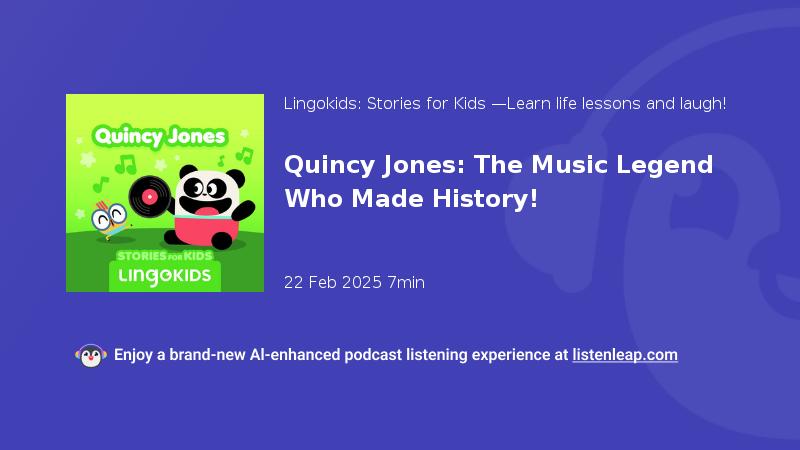
In this episode of Stories for Kids, the Lingo Kids characters stumble upon a mysterious object: a "big black circle thingy." While initially mistaken for a frisbee, the children soon learn that it is actually a record, an "old way to listen to music." By observing the "little tiny grooves" on the surface, they discover that these physical objects act as music holders, requiring a record player to translate those grooves into sound. This discovery serves as a gateway to understanding the history of music consumption and the legendary figure of Quincy Jones.
The Role of a Musical Genius: What is a Producer?
While the children initially wonder what makes Quincy Jones a "musical genius," they soon realize his brilliance lay in his specific role within the music industry. Quincy Jones was a highly influential producer. As the podcast explains, being a producer is not just about playing an instrument like the trumpet; it is about having a "real sense for music."
Jones possessed the unique ability to:
- Select great tunes: He understood which instruments to use and how to arrange them.
- Set the mood: He knew how to guide the way songs were played and sung to ensure the atmosphere was "just right."
- Guide talent: He acted as a bridge between musicians and their potential, helping them decide the best way to present their art.
Breaking Barriers and Achieving Excellence
Quincy Jones’s impact on the music industry was monumental. The podcast highlights that he was the "first black person to be nominated for an Academy Award for Best Original Song in a Movie," marking a significant historical milestone. Furthermore, he produced Thriller, which is described as the "most popular album ever." An album is defined here as a "collection of songs," which, in Jones's era, were typically housed on records like the one Elliot discovered.
The Power of Collaboration: "We Are the World"
Perhaps the most defining trait of Quincy Jones was his talent for human connection. He was known for his ability to "talk to people," helping them "feel comfortable" so they could collaborate effectively. A prime example of this was when he brought together a "huge group of 46 very famous musicians" to record the iconic song "We Are the World."
Despite the fact that these artists "liked different music and came from different backgrounds," Jones succeeded in uniting them to "make a beautiful song together." This ability to foster harmony among diverse artists remains one of the most important aspects of his legacy.
Conclusion: Learning Through Play
The episode concludes by encouraging listeners to explore music from different times and places. By attempting to "make a beautiful song together"—singing "If You're Happy and You Know It"—the characters embody the spirit of Quincy Jones: finding joy in collaboration and the shared experience of music. Whether through a dusty record or a modern digital device, the core lesson remains that music is a universal language, best enjoyed when we come together to create something meaningful.
Deep Learning with ListenLeap


