
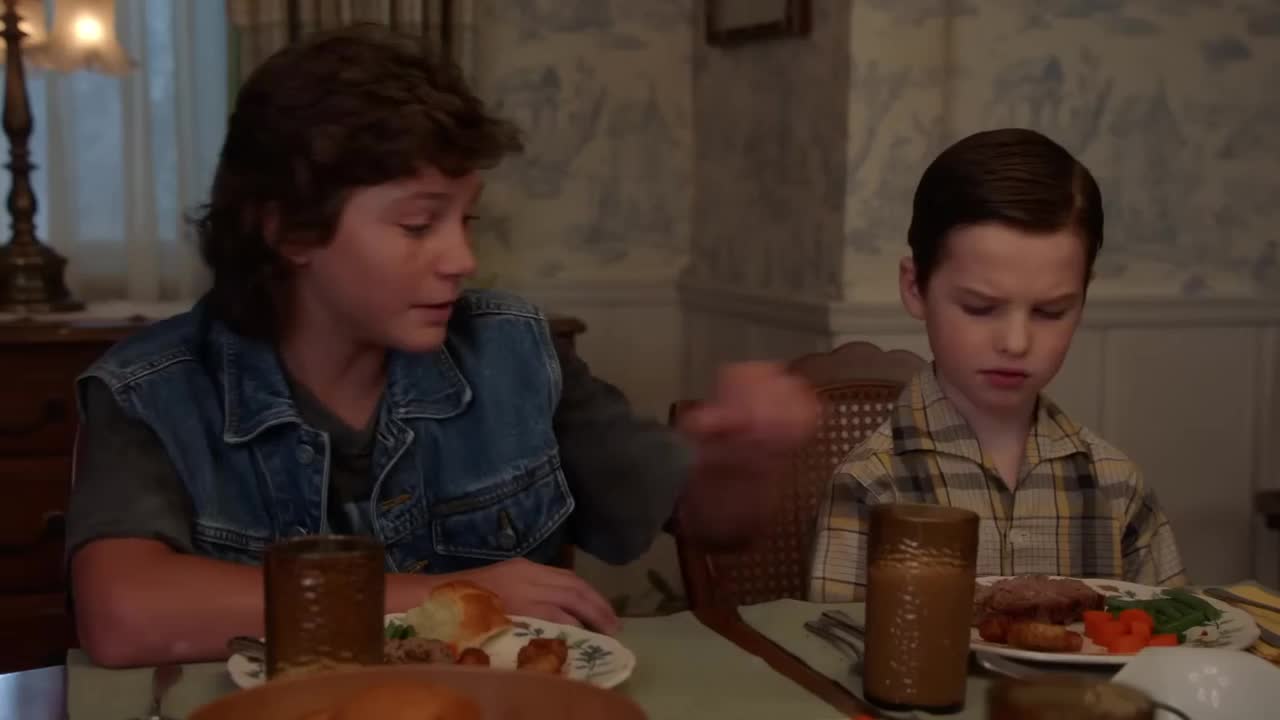
[The Trauma of Choking: Sheldon Cooper's Struggle with Solid Foods]-[Putting All of Sheldon’s Meals Through the Blender | Young Sheldon]
📋 Summary
The Psychological Impact of Choking: A Case Study of Sheldon Cooper
The Incident and Initial Traumatic Response
The narrative begins with a poignant domestic scene where young Sheldon Cooper displays a profound aversion to eating solid foods. Following a near-death experience where he "almost died" due to choking, Sheldon develops a paralyzing fear, stating, "I'm afraid I'll choke again." This psychological barrier is so severe that he perceives eating as "too risky," leading to a complete avoidance of standard meals. His family’s initial reaction is characterized by a mix of confusion and temporary patience, as his parents acknowledge he has been "traumatized."
The Escalation of Parental Intervention
As the days progress, the family's patience wanes. The transition from empathy to frustration is evident when his mother, Mary, threatens to "chew it up and spit it in your mouth like a mama bird" if he does not consume his pork chop. This highlights the high-stress environment created by the conflict between the child’s irrational fear and the parents' biological imperative to ensure his nutrition. The situation reaches a surreal turning point when his father suggests a compromise: "How about I cut that pork chop off the bone and throw it in the blender with some gravy?" Sheldon’s pragmatic, albeit eccentric, response—"If it fits through a bendy straw, I'll drink it"—underscores his commitment to safety over social norms.
The Coddling Debate and Long-term Consequences
As the behavior persists for "five weeks," the narrative shifts to a debate regarding the efficacy of "coddling." George, Sheldon’s father, expresses concern that the boy is "wasting away," while Mary remains hesitant to seek professional help. The dialogue reflects a common parental dilemma: whether a child’s behavior is a temporary phase or a deeper issue. George notes that previous fears, such as his phobia of a bee, eventually subsided, but argues that "this is about his health."
The Shift Toward Professional Intervention
Ultimately, the family acknowledges that the situation has surpassed the threshold of normal childhood pickiness. The resistance to seeing a professional—stemming from the fear that "we're admitting something's wrong with him"—is finally overcome by the stark reality of Sheldon’s prolonged refusal to eat solids. The conclusion of the transcript, involving the blending of "pork chop," "gravy," and even "broccoli," illustrates the extreme lengths the family has gone to accommodate his trauma. The final decision to look for "somebody"—a psychiatrist—marks a turning point, signaling a move from domestic mismanagement to seeking clinical support for Sheldon’s anxiety.
This episode serves as a micro-study on how acute trauma can manifest as obsessive-compulsive behaviors in children, and the delicate balance parents must strike between support and enabling.
Deep Learning with ListenLeap


