
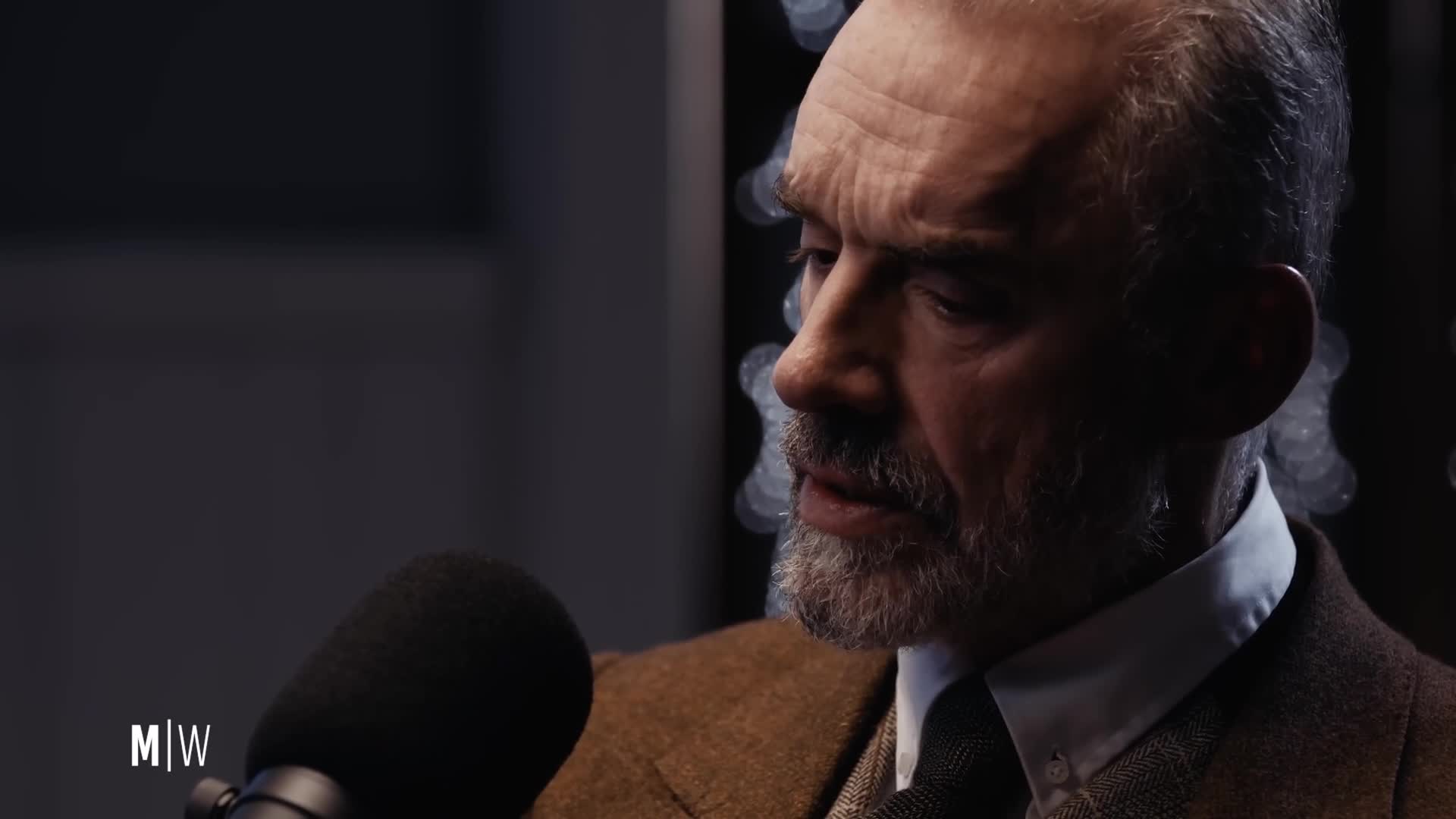
[The Burden of Nuance: From Social Isolation to the Developmental Consequences of Modern Parenting]-[The Psychology of People with Fewer Friends - Jordan Peterson]
📋 Summary
The Burden of Nuance: From Social Isolation to the Developmental Consequences of Modern Parenting
The Solitude of Cerebral Horsepower
The podcast opens with a profound observation regarding the psychological tax of high-level cognition. Individuals who engage in "self-reflective" habits and rely on "cerebral horsepower" often find themselves in a state of intellectual isolation. The speakers argue that as one’s thinking becomes more "nuanced" and "detailed," the pool of people who share that specific cognitive framework shrinks, leading to a sense of being "more alone." However, this isolation is not necessarily permanent. By making these complex thoughts "public," individuals can potentially bridge the gap, finding resonance with a broader audience, suggesting that intellectual depth might be a "threshold phenomena" rather than a lifelong barrier.
The Paradox of Specialization and Generalization
Drawing a parallel between scientific development and personal growth, the discussion explores the trajectory of expertise. A scientist’s vision may "narrow and narrow" as they specialize, achieving "high resolution" within a specific domain. Yet, upon reaching a certain depth, the subject matter begins to "become everything again." This transition—from general awareness to hyper-specialization, and finally to a holistic, synthesized generalization—mirrors the developmental progression of the self. As one begins to consider their life in a "higher resolution" and more "nuanced way," they inevitably confront the friction of social expectation.
The Cultural Weight of Conformity
A significant portion of the dialogue focuses on the cultural hostility toward deviation, specifically referencing the "tall poppy syndrome" in the UK and Canada, and the Japanese adage about the "nail that sticks up" being the first to be hammered down. In insular, working-class environments, thinking differently is often met with immediate mockery. This contrasts sharply with the American ethos, where children are raised with "blue sky vision," encouraging them to believe they can achieve anything. While this fosters confidence, the speakers note that it can lead to a "narcissistic" misinterpretation of reality, where individuals feel entitled to success rather than recognizing that one must "earn everything that is earnable."
The Demographic Transformation of Parenting
The conversation shifts toward the "coddling of the American mind," as popularized by Jonathan Haidt and Luke Yanoff. While ideological shifts are often blamed, the speakers argue that fundamental demographic changes are the true architects of this phenomenon. Parenting has undergone a radical transformation: parents are now "a lot older" when they have children and are having "way fewer children" overall.
In the past, being one of eight children meant constant "intense competition" for parental attention, which naturally acted as a buffer against entitlement. Conversely, the "only child" of older, more conservative, and risk-averse parents exists in an entirely different "developmental milieu." This environment, characterized by an "overabundance of parental virtue" and constant, undivided attention, creates a structure that is likely to produce children who are "overprotected and dependent."
Conclusion: The Necessity of Autonomy
The speakers conclude that while the desire to provide the best for one's children is a virtue, it is possible to "not deprive your child enough." True development requires that children be left on their own "as much as they can tolerate." The lack of such independence, combined with the shifting demographics of modern family life, remains an under-examined variable in the current crisis of over-structured, dependent youth. Ultimately, the challenge lies in balancing guidance with the necessary freedom that allows for genuine individual character development.
Deep Learning with ListenLeap


