Discussion keeps the world turning.
This is Roundtable.
You're listening to Roundtable.
I'm Yuhong Lin joined by Lai Ming and Yuxian.
Coming up soon, we often talk about careers, hustle, and performance.
But there's a question we don't ask enough.
What does work cost your body, your sleep, your piece of mind?
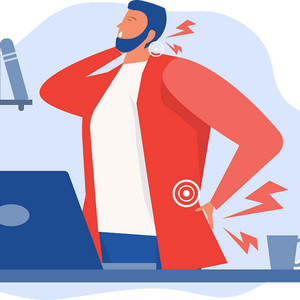
Join Roundtable today to explore what happens when work begins to hurt, and how a major policy update might help fix that.
Also, we all need a little happiness boost, and that's what our special segment is here for, in Roundtable's Happy Place, we share what's been making us smile this week.
But before that. From noise exposure to mental strain, it's time to rethink what workplace health really looks like in the 21st century.
As work evolves, so do the health risks, recently, the National Health Commission recognized the two modern conditions as official occupational illnesses.
Carpal tunnel syndrome and post -traumatic stress disorder or PTSD.
We'll explore what these changes mean, the risk factors to watch for and what both employers and employees can do to build healthier work habits and environments.
To start with, let's have an official definition of occupational disease because I feel like I work too much and all my disease should be occupational disease, am I right?
We use the word wantonly and so easily, but in fact, it's a more serious term.
It actually refers to any illness associated with a particular occupation or industry.
Such diseases result from a variety of biological chemical, physical and psychological factors that are present in the work environment or otherwise encountered in the course of employment.
A very common example that I have heard of during my lifetime is my teacher would often complain that their condition with the throat is the result of occupational disease because of the stress that they endure for having to speak in rather prolonged hours in front of a classroom and also their exposure to chalk powder that has somehow changed a bit but the number of hours they have to spend speaking and talking and shouting obviously should not be overlooked.
Yeah, my mom's doctor and she has to perform surgery wearing this very heavy protective um vest, yes, vest and clothes and it's around 20 to 30 kilos every every one, every piece and she has to wear those and that's why her back would or doctors like her would suffer back pain as well and also, even wearing the protective gear, they will still have to work under x -ray.
So they would absorb x -ray, the volume they absorb would be higher and would be definitely higher than people on average.
So these kinds of occupational diseases I can understand because it's portrayed to a very specific job or occupation, which is why it's occupational disease.
But the two newly added one?
Or my feeling is that much more general?
Not exactly that general, but it's also pointing towards a specific working condition or gestures that's been made repetitively.
So the two newly added categories, the two newly added symptoms, the CTS and also the PTSD, the carpal tunnel syndrome, it actually falls into the category of occupational musculoskeletal disorders, and the PTSD, the post -traumatic stress disorder, falls into another category.
It's called the occupational mental and behavioral disorders.
and that's how they you know specify each type of occupational disease and that's putting a clear say variation between the truly occupational disease that's recognised legally and also what we mentioned earlier which could possibly fall into health conditions related to your job or your work and also there's been a broader shift in China in recent years that is our The country has really been trying to advance the Occupational Health Protection Initiative just to safeguard the working population's health and related rights as well, so the new version of the classification and catalogue of occupational
diseases was actually revised in late 2024.
And that file expands the original list of occupational disease from ten categories with 132 types of diseases to 12 categories, with 135 types.
And is now scheduled to be taken effect and to be practiced in real workforce in real life, starting from August 1st this year.
So that's what's going on right now.
Right. And carpal tunnel syndrome is a growing concern for manual workers.
It's a nerve compression disorder caused by repetitive wrist movement, leading to pain, numbness and muscle weakness in the hand.
High -risk jobs include assembly line workers, manufacturing laborers and anyone performing repetitive wrist motions might be subject to this condition.
Whereas PTSD, I think we are more familiar with that, but it's not just for soldiers.
It's a mental health condition triggered by traumatic events causing intrusive memories or flashbacks, as well as nightmares, avoidance, behavior, anxiety, and emotional numbness.
And high risk jobs would include first responders like firefighters, doctors, and policemen, and disaster relief workers.
So they go into places where normal people wouldn't go and they see things that may cause traumatic memories to be left in their you know in their mind for a long time and they have to deal with them.
And to be honest reporters would encounter such problems as well.
Right, right. Like earthquake, tsunami and fire, these breaking news stories they have to go and to the to the first to the frontline in fact and then try and discover what's happening and how people are feeling and yeah they they are likely to be exposed to PTSD as well yeah.
So in this case definitely it is a good news.
So how good exactly is it by including these symptoms into occupational disease?
Well with this new update let's say China is now broadly aligned with the International Labor Organization and most countries around the world regarding the fact that the categorizing of occupational diseases is at a similar level or at a similar number, at least. And also, this just helps us to recognize how, say, in lack of public attention we might have nowadays in the society on how people are aware of the fact that they might have occupational disease?
Because previously when we talk about PTSD, most of the time, for me personally, it only raises memories from, say, TV dramas of how soldiers are encountering them.
And you have this stereotypical view of how this could be only happening among, say, military scenes or people who participate in that line of work, but nowadays it's more closely connected to our daily lives.
The doctors, the reporters that surround us, they might experiencing this very symptom.
And with the rise of automation we might imagine wow there should be less manual labors but actually many jobs still require repetitive motions making CTS a silent epidemic.
So recognizing how these symptoms are so closely related to our daily life, I think it means a lot to the improvement of the protection at least for our working force.
Adding diseases to a list of occupational diseases officially confirmed by law is only the first step because it means that people who suffer from these diseases are likely to get compensated and also industries likely to cause such diseases should take necessary precautions to protect workers from developing or from worsening their conditions in these scenarios.
So adding them is just a first step and other steps will have to follow up as well, for instance, being able to be diagnosed with occupational disease.
That requires a special cooperation between the medical institutions as well as the verification institutions as well.
And here we see some difficulties and challenges as well.
On the one hand, you want the patients to be recognized and be compensated and protected.
On the other side, you also want to make sure that employers who employ people under such circumstances, are not going to be sent into bankrupt because people are making their claims left and right and without any kind of confirmation or verification.
It's a tricky issue, but then again it's important for us to have a list to begin with and then have a set of protocols or regulations with regard to the recognition, diagnose and treatment and compensation, as well as prevention.
That's the things that we need to be on the lookout for when we talk about occupational diseases.
It's unlike a regular disease that's not on the list, and if you're sick with the common cold you just treat it.
You pay it with your own pocket money, or you try and get medical insurance coverage for that.
That's a private human being's own business, that's an individual's private business.
Whereas if it's occupational diseases, much more than that, is a social phenomenon.
Just like Laming said, it's only the first step.
But if we look at some current occupational diseases and how enterprises, companies, employers, as well as employees are treating them or are learning about what these occupational diseases are, how to protect themselves.
Well, it's not that uncommon here in this country.
We see a lot of companies, they are setting up different types of body checkups every year and for different industries, there are specific ones trying to identify these occupational diseases or the common disease that are more prone to people working in this specific position, They are trying to tackle that, and at the same time, we see mostly or many state -owned enterprises have their own doctors in the company, and they also have shrinks paying attention to their employees mental situation because previously, it's very obvious that the physical situation, especially if it is an already listed
occupational disease.
It's falling to the category of occupational disease.
Yeah, it can be life -threatening, if not, yeah, it can be limiting, if not life -threatening.
And those compensation would go rather smoothly to people who are suffering from it.
Yet, when it comes to mental problems, it's getting a bit harder even compared to the physical ones, which is why in a lot of companies, bigger companies here in China, we see, um, medical staff working with mental issues and staying in the company and trying to identify an early stage, trying to have precaution in advance.
So I think one PTSD is listed as one syndrome or one symptom of occupational disease.
Definitely. We are broadening the area.
But like Laming said, protocols, precaution measures should follow suit.
Yeah, and one more point that I'd like to address here, is that sometimes we talk about how many occupational diseases are, well how detailed it is classified nowadays, how we're putting it into a better category and all that.
But sometimes it's really hard for local doctors or hospitals to recognize the fact that it is an occupational disease going on with the patient right now because, and also, it is It's not just a Chinese issue, it's rather a global topic.
As reported by the CDC Field Epidemiology Manual in August 2024, only few physicians in the U .S. are trained to recognize work -related diseases, apart from day -to -day infections or day -to -day injuries.
and sometimes, for many work -related illnesses, doctors can treat patients without thinking about the job that they are participating.
So that's also an issue.
How can we just recognize it better, faster, sharper in a way that it can be identified as occupational disease?
Talking about the CTS, sometimes it is discovered through studies in the US that patient with CTS, the carpal tunnel syndrome might get injury.
But if they stop doing repetitive wrist movement at work and where they were notified to stop doing that at work, their symptoms could improve or stop getting worse even without surgery.
So that's how it is really important for say medical institutions and hospitals to have personnel trained and ready to recognize occupational disease when they spot it.
Well, that's exactly why we have this category or have this term occupational disease is like I said earlier, it's linked to all kinds of processes.
You have to verify them.
You should recognize them.
There needs to be precautions.
It's the for the precise reason, for the precise reason of protecting employees that we developed the whole system surrounding occupational diseases is not to Not only to compensate, but also perhaps to prevent the situation from worsening.
I mean, we are human beings, we're not tools.
We signed a contract to work for a company, but we are not like rivets to be placed.
Yes, and that's why we're talking about it, because like Yuzhen said, if you realize that your job, your occupation is easier than other people to be affected with this kind of syndrome, you can pay attention to it when you're working, when your colleagues are showing symptoms, you know what to talk to them and to help them.
And that is why we're having this conversation today and hopefully with more people, employer or employee, knowing that there is this idea of occupational disease.
Go check the menu, check the list to see what is your weak points, the vulnerability of your occupation, know that and live a healthier life or work healthier in your workplace.
And you're listening to Roundtable, coming up next to Roundtable's Happy Place.
what is it? Happiness from Roundtable.
This is Roundtable, with myself, Lai Ming and Yuxian.
And here is Roundtable's happy place.
What's making you happy this week?
My happy place is an actual place for a change.
People who know me would know that I enjoy camping a lot.
I've talked about camping for the past few years.
But sadly, this year I've grown tired of it.
Not because I hate camping, the experience, but I hate part of it.
I hate being the only one to stitch the cam.
I hate being the only one to put away the stuff when all the joy is enjoyed and stored in our memories, and the hard work remains of taking off the camping stuff, put them on a little cart and push them back to the car and then drive back home.
So it's all a lot of work if you don't have a group of people working with you Who also enjoy the experience then you're a loner In this in this loan effort, but You're describing yeah, it's kind of sad but well my my happy place is this This place that's very close to my home about 2 km away.
We just founded in the past few weeks and we've been going there three times at least. So it's an estate owned by a farming company, or a farming enterprise.
It's tucked away in the urban and rural conjuncture area, so it's quiet.
You're driving, and you park the car, and you stepped in.
they have tents already stitched up for you.
They have tents stitched up for you and it's nice and quiet under the shade.
They have a coffee shop, where you can get drinks and barbeque.
You don't have to do all the work, you just go there, sit down, read a book.
When you feel hungry, you order the stuff.
They have projects designed for kids, they have projects designed for women in the family.
No, not to stereotype things.
They have things for everybody.
Kids can enjoy playing with water, and with other kids as well.
My son enjoys it so much. He enjoys being a little princess around other princesses, making friends.
Ignore the fact that you just call your sons a princess.
It sounds really nice...
And vegetable and fruit picking...
And on behalf of Yuxuan and myself, are we invited to your happy place?
Yes, we are invited, it's a business, I mean I don't own the place.
Well, I think it's quite nice, because in life, we face a lot of different problems and challenges, and we sometimes are very hard on ourselves, jokes aside, Lai Ming is a dedicated to his own family, he showed her a huge responsibility.
And he's entitled to enjoy life a little without putting in the effort first. So I think it's really nice.
I'd like to read some web novel and drink coffee under the shade for a change, not having to worry about who's gonna put this all up.
Exactly, and that is a message to everyone out there listening.
Even if you are the responsible holder of your family, of the group, of the office, You can still find a little pleasure in your life.
You can still pamper your cell phones a little bit occasionally.
It is even to the level of healthy.
Exactly, I would totally agree with that.
And it sounds like, apart from saying that there's all this facility here, I hear Laming feeling relieved in a way that he can also be part of this enjoying trip, that he is no longer the only laborer but also the the the appreciator of the whole family time.
So a bit of money spent but it's totally worth it.
And also inspiring to our listeners.
Occasionally, spender rather than packer and unpacker.
Right! So for my Happy Flies let me start with a question.
Do you guys have that kind of friend in your life that you know like forever?
But you don't speak on a day -to -day basis but still they are your friends?
Sure. So what - how about you Lemmy?
I have work friends.
All right, okay. That that would fall into this category too, so my happy place would be this very morning I actually received a congratulatory message from such a friend of mine whom I've known since primary school and haven't really been in contact every day.
We're only sending each other messages on important anniversaries once in a while but it's just simply really nice to and touch touching as well to just receive messages from your childhood friend someone that I knew back in primary school but nowadays is living oceans away from me, we're having time lag and all that but still it feels like there's no geographical or any distances or time differences between us just simply at that moment when the message arrives.
So that's something I feel really grateful when I think about, wow, what am I gonna share on my happy place today?
And then that arrived.
So really it reminds me that life, as life moves fast and people drift, but there are always those rare friendship that's quietly anchors somewhere in our life and it's always returning to you at the time that it is ready to remind you the fact that hey it's still there and it's still for you to savor and cherish.
Nice little gossip so is it a he or a she and what the he or she congratulate do you earn?
Yeah I want to ask that question too.
Well actually yeah it's my birthday today so...
Happy birthday and that's not your happy place.
Incredible! Right yeah I wasn't just about to share it out loud like that but hey thanks.
Happy birthday. And you deserve a far away congratulations from your longtime friend.
And hopefully after today, we can all try, find a moment to reach out to our longtime friends who we haven't been talking to for a while.
And sometimes you just know it in your gut.
You know that that friend over there, even if you haven't been talking to him or her for years, sometimes or months hopefully.
once you start pick up the conversation it it's like you've never been apart that's the feeling it brought to you.
And you think it again is a wake -up call to everybody.
I think everybody would have a friend like that.
And we do not have to be just the receiver of such lovely heartwarming message we can be the giver too no matter how busy you are no matter how hard you think currently your life is, instead of waiting for something magical happen to you, you can create that magical moment for both you and your friend far, far away from you.
Because even though you're far away apart from each other, your hearts are still really close to each other.
And that brings us to the end of today's round table.
We'd love to hear your thoughts on today's topics.
Leave us a comment wherever you listen to your podcast or send us an email to roundtable podcast at qq .com.
until next time, keep the conversations going and the ideas flowing.
I'm your Hong In with Lai Ming and Yuxian.
Thanks for listening.
Bye.