Discussion keeps the world turning.
This is Round Table.
You're listening to Round Table with myself, Hyoyoung.
I'm joined by Yuxian and Steve Hatherly in the studio.
Coming up, the headphone cable knots up again.
Your finger finds the sharp edge of a piece of paper and out it comes.
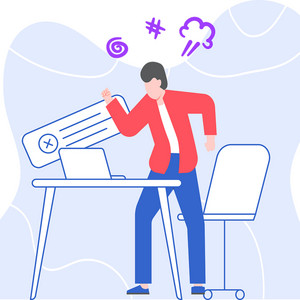
I can't say that word on air, but it's satisfying, slightly scandalous word. But here's the twist. Scientists say that moment of swearing isn't just venting.
It's relief. It's strength.
It might even be treatment.
Should we rethink what it means to drop an F bomb, could it actually be healthy?
What's your go -to word when life gets hard. And should we be judging it a little bit less?
And have you noticed online novel titles in China China are getting longer, like a lot longer.
From a simple title of Douluo continent to the jaw dropping -wait for it.
After entering the cyberpunk game, I defeated the boss and climbed to the top.
That is the title of one online novel?
What's going on? Let's dive into this trend and explore what it means for readers, writers and the industry.
Our podcasts! Now let's switch it up.
Across cultures people have cursed their way through stubbed toes, heartbreaks and even childbirth.
Turns out that reflex might be doing more than expressing frustration.
It could actually be easing your pain.
Scientists have discovered that a well -placed swear word might just boost your pain tolerance, your strength, and maybe even your emotional resilience.
So should swearing come with a prescription pad?
When do you tend to swear guys if I may ask?
When I hurt my elbow on the wall?
Accidentally that's - We're like, yeah or on the table or just your toes at the corner of the bed?
Stubbing your toe is a common one yeah.
For me when driving - Oh, me too.
Yeah in traffic, it's a safe space right?
you're confined within your own vehicle.
So we're not advocating swearing at other people in traffic with your windows down or something like that.
That's for sure. But swearing is one of those really interesting things to me.
When I was a kid, I loved words and I still love words now.
Words to me are so fascinating because when used in one way, they can make people laugh, they can make people love, they can make people cry.
But when you use them in another way, it can elicit anger, frustration, embarrassment.
And swearing is something that is a part of almost all languages around the world.
And it's, excuse me, a universal human experience, the emotions that evoke these types of words.
So it's always been a really, really interesting topic to me.
What's also interesting is that, you know, having lived in Asia for a long time now, what's offensive in one language might not be so offensive in another language or another culture, and that can even happen within the same language.
For example, some words in British English would be really offensive in North America because they have a different meaning.
I'm not going to give those examples on air, but the interesting part is even within the same language, you can find some differences there.
For the target of swearing in different cultures or say um language background it can also vary sometimes it's just on blasphemy others on some in a particular actions or bodily functions and others on insults that's related to say family or social status.
That has a very strong cultural implication behind it as well.
The history of bad language is kind of interesting to this is from the week In England, or in Britain in the 1600s, swearing was a criminal offense at the time.
Legislation described such words as, quote, detestable sins.
There was an act called the Profane Oaths Act of 1745 that introduced a hierarchy of fines.
But in America, you have the First Amendment to the U .S. Constitution and what does that guarantee?
Freedom of speech. speech. So there was even a court case in the early 1970s where a guy wore a t -shirt that had some vulgarity on it, some swearing on it, and he was brought to court, and Justice Harlan at the time, he decided, one man's vulgarity is another's lyric.
So that was decided in the courts, that using profanity in public in some way, shape, or form was considered not illegal.
but also one final example internationally, did you know in Australia, it's illegal to use swearing in public?
This is from abc .net .au, which is the Australian Broadcast Corporation from 2020.
This is the South Australian Summary Offenses Act, a person who uses indecent or profane language or sings in indecent or profane song or ballad in a public place or in a police station which is audible from a public place is guilty of an offense.
Maximum penalty $250.
I was looking up other sites to say, but do they enforce that?
So what the blog post said was, if you're out in a family space, right, maybe a sports ground and somebody swears, if that person complains to the police you will probably get fined.
However, if it's a stand -up comedy act or something then no, not at all.
Okay it's probably best to know these rules before you enter that country.
Before you travel. And Steve you briefly mentioned how it was like for you as you picked up swearing I suppose and I have something to share in that area too.
As a girl, a teenage girl, the first time I found the courage and ability to swear, it was actually a strange mix of empowerment and liberation.
I still remember that zingy feeling today.
It felt like stepping into my own voice for some strange reason.
Breaking free from the constraints I know I've been following.
So it's almost like it's symbolized claiming agency and asserting control over one's expression.
And also I know it because it's being frowned upon.
And then it's breaking social norms. particularly gendered expectations around women's behavior.
And... it felt great.
Period. And I think I go with that too because sometimes, in cases where I'm in a very tough conversation that I am forced to confront, and the other person is kind of aggressive against me, and in that case, swearing is almost like the topping of, or rather, spicing up my courage in defending myself or being aggressive back at, you know, whatever that's attacking me.
So you were actually having a conversation with something?
I was merely swearing to the air.
To the universe. I was born as a woman.
This is what I mean when I say how powerful.
And all they are is words, right?
It's all they are is words, but they have such a powerful impact.
Let's get to the science of this.
Um, research has shown that swearing can boost pain tolerance, it can foster emotional resilience, and it can signal positive traits like verbal fluency and even honesty.
And they've shown that swearing has the imp - has an impact on our bodies and our minds.
It provides stress relief and even a little boost to physical performance.
Let's go over a couple of studies here.
Back in 2018, there was a study in Psychology of Sport and Exercise.
They found through that study that letting out a few swear words during a workout can actually make you stronger.
In the study participants, they swore aloud while gripping a hand vise and they were able to squeeze it harder and they were able to squeeze it longer if they were doing it while they were swearing.
They did another study where researchers found that every 3 seconds during a power test, a muscular power test, swearing could increase performance by 4 .5%.
Swearing for a full 10 seconds before doing a grip strength exercise can increase your strength by 8%.
And if you're a person who does pushups, if you do this while you're doing pushups, you swear every five seconds through that study they increased performance by 15 % while doing push -ups I need to apply that next time I'm in gym I don't think you because it's in public and that's not a safe space to be using some unsavory language what's really interesting is that the person behind that particular study he was inspired by watching the birth of his child because his wife when she was giving birth she started swearing and to help her with the pain and he said oh that's interesting that seems to
help her with her pain management so he decided to research it and that's what he found.
And during these studies did researchers expect this swear your pain away result?
Yeah well I mean for some pain specialists they thought that you know cursing doesn't really help you in that situation.
They theorized that swearing might actually prompt people to overstate the severity of the pain when it might not be that bad.
Well, I guess it makes sense, right?
Because when you swear out loud, especially because of paying and that's in a public space and you're in front of other people's when you swear, you're totally going to attract some attention to your side and making just the room for exaggeration depending on if you would like more attention or not.
Yeah exactly. So that's what they expected right?
But back in 2009 researchers from Keele University's School of Psychology in the UK found the opposite.
They tasked 67 undergraduate volunteers with putting their hands into ice cold water for as long as they could handle it while repeating a swear word of their choice.
This time they did the experiment one more time, but they asked the students to say a non -swear word, any word at all that wasn't considered taboo.
The results were, as you would expect I would say right now, the volunteers that swore could keep their hands in ice water for much longer than those who didn't swear, thereby coming to the result, it can increase your pain tolerance.
Well, swearing in that notion, I totally understand it because as we mentioned how it can boost confidence in a way or boost your resilience for paying, and also because swearing was accompanied by an increase in heart rate as well.
So the scientists also believe that cursing may trigger an individual's fight or flight response, and they suggest that swearing triggers negative emotions that serve, actually serve as an alarm bell and that's alerting to someone to danger or you know sparking an innate defense mechanism inside you which triggers you know a stronger self -defense or whatever that is combating the current situation you're in.
Yeah. The studies that I talked about thus far were all conducted in English right in the English language so the researchers wanted to know oh is this only related to English.
Would this apply in other languages too?
So they tested it with Japanese participants.
The ice water challenge.
They did the same thing.
Hold your hand in water for a long time.
This group say a bad word in English.
Also say a bad word in Japanese and then don't say a bad word in Japanese.
And they found the same results that pain tolerance increased in that language too.
Implying that it's just a human nature thing, not necessarily language to language.
For fellow bilingual and multilingual folks out there, back me up.
Well, since we're, you know, an English talk show coming out of China, I think all of our listeners will have something to say here, but do you feel this?
I am way more comfortable swearing in my second language, that is English, than in my mother tongue, that is Chinese.
And I ask myself why.
Here's my spiel. Swearing in my mother tongue feels like yelling in a sacred temple.
Too raw, too real. But in a second language, it's more like shouting into a well.
The emotion echoes, but it doesn't hit quite as deep.
Curious if anyone else there feels the same?
Mhm. Yeah, yeah, I think it's kind of a universal thing.
swearing in another language that is not your native language feels less impactful or meaningful for many people.
I've experienced this as well, but I'm the opposite from you, Huyang.
I don't really, the reason I can use those words in English is because I know exactly what they mean.
I know exactly the emotion that I'm trying to convey.
But if I use that in another language, I don't fully 100 % get it because I'm not a Master of that second or third language.
So therefore I've always had the opinion Maybe it's better to try to avoid avoid that because I don't really truly know what I'm saying at that time Yeah, that's that's so true because when you try to square in the second language, you're not just simply throwing out words Because sometimes it rhymes with say the context of your speech but in a lot of cases, you're engaging with that culture that generated such words to be what other people from that culture would deem as the curse or something like that.
So a lot of times when people feel this emotional distance of swearing more comfortably in a is actually because we are not entirely part of that culture yet to feel that aggression and the emotion behind it.
Well, interesting. See, I think I'm kind of in the middle.
I know exactly what those dirty, dirty English words exactly.
I've studied the semantics and connotations of those words.
That's what I mean.
But saying it feels so good, satisfying, without being emotionally brash in my case and everybody could be different there so yeah it's almost like giving me license in a way to really express the frustration but without paying the emotional penalty as in Chinese I've been raised you know you're a lady you should never stay clear from those words But all in all, it seems like it is something that all people do.
And just to wrap this up, going back to the pain tolerance part of this conversation, Nick Washmuth is a professor of physical therapy at Samford University in Alabama, and he's focused on the potential, this is amazing, for swearing to be used in a clinical context, which means not understanding not only the mechanisms by which swearing affects pain, but also how a person's environment or age or how much they already use that type of their language in their everyday lives, how that could influence the effect.
meaning could it actually be prescribed as a pain reliever in certain situations.
Okay. Well one thing I would like to say here is that I don't ever do this directed to another person, and even if I disliked that person so much, I would swear without that person there, addressing him or her in a pronoun possibly.
So I still think doing this in the face, I think that's horrible.
Nobody's deserving of that kind of verbal violence, so yeah, I tend just to swear at the universe!
and also kids you know this is for grownups when they feel emotional so stay in school and listen to your mom and dad you're here yeah coming up why are the titles of online novels getting longer is it all about standing out in a crowded market or is there more to this trend we will discuss this worlds of China's growing online literature seen stay tuned Looking for passion?
How about fiery debate?
Want to hear about current events in China from different perspectives?
Then tune in to Round Table, where east meets west, and understanding is the goal.
You're listening to Round Table with myself He Yang.
I'm joined by Steve Hatherly and Yuxian.
All right, book lovers out there, get ready for a title challenge.
Once upon a time, online novel titles were short and sweet.
But today they're turning into full blown epics.
What did these long titles say about the readers, writers, and the market behind them?
Let's unpack the mystery of China's growing online novel title trend.
And remember when online literature was seen as the second -class citizen in the literary world?
Fast forward to today, and it is a mature industry, worth hundreds of billions of yuan, now the envy of many traditional authors.
Let's talk about this.
how these longer titles mirror the rise of this literary revolution.
Have you noticed the length of these online novel titles?
In fact, no, because I'm not really a reader of online literature in general.
I was, as a matter of fact, like around 20 years ago, maybe?
Like back in primary school, that's when online literature had a few very big IPs that's so popular.
and back then, the titles were commonly less than 5 characters, such as Douluo Dalu or Douluo Continent, that's a popular work that once topped many online literature ranking charts when it first came out in around 2008.
And then there are other very successful examples such as Gui Tridong, the Adventures of Three Tomb Raiders, and that came out in 2006.
I still remember how popular it is, it was, for one of our classmates back in primary school to own such a Like a physical copy of that book It was so famous back then that people believe this is what it should be Like for online literature in order for them to get popular like three characters five characters four characters That's cool enough that suffice Nowadays, however, we see that the novel titles tend to get Well much longer very descriptive in a way that is yeah What was the one you mentioned before, after entering the cyberpunk game, I defeated the boss and climbed to the top?
That doesn't sound like a book title.
That sounds like what you did yesterday.
How about this? I'll dominate the world of table tennis after rebirth.
That one's OK. But in Chinese, it's still too long.
So why is this happening?
More of how the new authors are adapting to this whole phenomenon.
because there's one part -time online novel writer called Xiao Lu who told the 36 Ke upon an interview that if you're a top -tier author, the title doesn't really matter.
However long you want it, it's okay.
But if you're a newcomer author that's choosing an overly -sophisticated and poetic title such as the three character ones, the chances are it won't get any traction.
and instead they choose to get it overly detailed with what the story is about so that even if it appears to be long and redundant, at least it works.
I think that's a very good reason for authors to do that.
In Chinese, the number of characters...
so it's not the number of words, it's the number of characters.
That's the important part here.
so would two be considered okay but then once you get to like four or five or then it starts to feel a little awkward when you're reading it?
No not really because Chinese characters you know they're they're like pictographs right so like four or anything within four I think that's considered pretty standard and pretty short yeah but now we're seeing like you know 10 characters or longer and that's just kind of There's an online survey on this, the average number of characters in a book title in China.
When analyzing the title length of the website's top 25 ranked worked over the past 10 years, people actually found that the average number of characters increased from around four characters back in 2015 to over seven in 2024.
That's a rise of 65%.
So authors are taking their poetic license, I guess, and just calling it what they want.
Whereas in the past, it may have been formulaic.
I don't even know if that's fair to say.
Well, yeah, that's a good way to attract not only your potential readers to what you are trying to write about, but also the online editors as well.
They get a full idea of what your book is about and quickly judge if it's worth keep upon being uploaded and updated to attract more fans.
So, for them, it's a good business as well.
They wanna quickly identify if it's worth investing into this author.
So, that's another thing.
The very intense market competition for online literature these days.
Yeah, and a title can either encourage someone to click and read or just move on immediately.
It happens in Hollywood films, too.
And this just makes me feel like a million years old, Because I used to think that you, people deliberately keep the title short because nobody has the time to waste in reading a very long title.
But now what's happening is exactly a slap in my face that people actually do have the patience, maybe not to read the book, but actually to read the super long title.
And this is the established trend in the online literature world these days.
And that brings us to the end of today's show.
Thank you so much Steve Hatherly and You Shen for joining the discussion.
I'm He Yang. You can find us on Apple podcast at Round Table China.
And if you're feeling it, please give us a five star review.
It will help other folks by the show.
I'm He Yang. We'll see you next time.