To roundtable.
I'm steve hatherly today, with feifei and yusha coming up.
Do you ever wish you could see the faces of the people speaking on your favorite podcast?
One time someone texted a show i was working on and said steve, i just saw you on the internet and i think you're younger than i assumed.
I thought you would look like the kfc grandpa.
Okay, There's been an intriguing rise of video podcasts.
I took that as a compliment.
There's been a rise of video podcasts, and the trend is resonating with many creators and audiences.
We'll find out the latest trends in video podcasting.
Our podcast listeners, that's you, can find us at Roundtable China on Apple Podcasts.
And please don't forget that we love hearing from you as well.
Send your thoughts our way. through voice note to roundtablepodcast at qq.com.
Once again, roundtablepodcast at qq.com.
And now.
Podcasts have evolved far beyond a purely audio medium, as a growing number of creators are now switching on their cameras.
This visual shift is transforming extended conversations into engaging screen-based experiences, and audiences are responding by committing more viewing time than many anticipated.
This trend is blurring the lines between traditional podcasts and on-demand video, creating a new hybrid form of entertainment that captivates both the ears and the eyes.
For creators, it unlocks a powerful new layer of connection through expression and body language, while for viewers, it offers a more immersive and personally resonant way to engage with their favorite voices, their favorite shows and their favorite topics.
So what is?
This is going to be interesting to learn about what is changing in the chinese podcast world.
Yeah, i don't know how you guys are feeling like talking about this topic.
It feels like we're just jumping out of our persona and discussing or talking about ourselves.
Yeah, very meta.
Yeah um, and a video podcast has been there for quite a while.
It's not like brand new, but It's also still quite new, because even the concept of podcast is very new.
And that is why I'm saying that, in terms of format, these things can be actually anything.
No fixed template.
But the most common setup is like one-on-one conversation.
There are some variations, include there are group discussions or solo monologues, fixed or rotating guests.
And these things can all be both audio and video.
Some of them are just purely just some of the podcasts, like things that are trans transformed into video form, or some of them are just directly just recording video for their audience, and and they, i mean anybody can do it really yeah, anybody at all.
Some of them can come from major stations, like this one.
Others can be done by anyone who has the tech in their house.
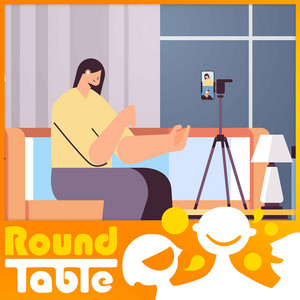
They can just turn on a camera in their living room, sit on the sofa, invite a friend over who also sits on the sofa, record that, upload it.
Boom, you got yourself a video podcast.
Yeah, and I think that's quite interesting.
That's also one of the reasons for a lot of people that are interested to start up their own podcast.
I think a lot of young people these days when they're talking about establishing my own identity online podcast is definitely on the list of items that they want to do.
But when it comes to video podcast, I think it's working, especially on the Chinese market.
Because before that we have this, before video podcast really start to boom.
Podcasts in China are still a very niche thing.
Like only a very small group of people in the country would listen to it.
Or perhaps even know about it.
Yeah, exactly.
But with video podcast, I think the audience... the listenership definitely expanded to more people.
One of the reasons is because more celebrities.
Or just famous people, entrepreneurs.
Yes, established names starting their own video podcast this year as well.
The thing is that it can be just like a one-on-one conversation and it's in a form of video and people call it a podcast.
And yeah, that is true.
I mean, it's just like an interview that you've done And people can call it a video podcast.
Yeah.
I mean, the thing is, though, that a video podcast does not only have to exist in video form.
And that's the hybrid format that I was talking about when we were introducing this topic is that you can extract the audio and then upload that.
And that works for. different types of viewers, depending on where they are.
We'll touch on that part a little bit later.
But the length of the podcast as well, because a lot of the times the video podcasts can be a little bit longer in their content, but that's not proving to be an issue here in China.
Exactly.
There is a research from Fudan University.
They found that the average podcast episode runs about one hour and yet more than half of the listeners finished the full episode, which is very surprising.
If you we've been in the media industry for a long time, we know short form videos, ultra short dramas, yeah.
So right now, video podcast podcasts actually start to shed light On this longer form content that runs one hour or even sometimes more.
There are also podcasts that can run three to four hours.
I mean, one of the most popular podcasts in the world, I think.
I won't mention the show's name.
It's from the United States, but it's a long form interview show.
And I believe they put it in audio and video.
I know it's on video, but that's sometimes over two hours talking with one host talking to one guest.
And people absolutely love it.
Yeah, I mean, that's really the charm of podcast really is that you can listen to what in-depth conversation, but not like in the old TV format.
We also have this interview, which the journalist sit down with an expert or somebody important.
And they also talk about important things for about three, four or maybe half an hour.
Yeah, yeah, exactly.
And the American market, I mean, this is very common and it's very popular as well.
Over half of the top 10 programs on Apple Podcasts and Spotify in the United States market.
They have dedicated video editions as well.
And speaking to when you mentioned the fact that maybe famous people, CEOs or celebrities are now having podcasts here in China.
One of the trends in the United States is athletes.
Pro athletes.
It feels like it's almost a running joke now.
It feels like every athlete has their own podcast.
What they are talking about.
It's like the sport that they played usually amongst other things.
You know, there are different shows.
Sometimes they'll delve into their personal lives or other types of topics.
But you know, if it's a former football player, for example, usually the premise is somehow based around football.
Yeah, of course.
That's understandable.
But I think it's more of an expansion of before.
You know, among celebrities mostly movie stars, singers they'll start their own podcast um also about, for example, their personal life or a chat with their friend, and now we are singing, i think, more um.
So not only celebrities, but former media celebrities like, for example, a very well-known one called Chen Lu Yu here in china.
She started well, she actually started to do podcast a few years ago and it was very, very successful.
A lot of people loved it.
So who is she?
She's a former TV host?
Yes, she hosts a number of very famous TV shows.
One of them is called A Date with Lu Yu and basically she sat down with other people and to have a conversation, but that's more of a in TV format.
You know, they're on stage with a big audience, so that's different.
But when she started her own podcast, first of all she started with female stories and that's been a hit on the podcast platforms here in China.
And then, starting this year, she started her own video podcast called Slow Conversation, where she also, you know, sit down with other friends of hers or other celebrities or writers, you can name it and to have, I think, one or two hours conversation.
The numbers support what we're talking about here, the popularity on Bilibili here in China.
That's a platform that's similar to YouTube, if you're not familiar.
Video podcasts reached over 40 million viewers in the first quarter of 2025, even without heavy platform promotion.
So that's a huge sign of success.
If they're not even trying really to promote it, but they're getting those types of numbers, that's a big deal.
Total viewing time on that platform for those types of shows hit 25.9 billion minutes.
And that might not mean anything to you, but that's growth of 270%.
270 percent from the year prior, and that kind of growth doesn't happen unless users are interested clicking listening, watching and staying and finally coming back and watching again, which is the most important point.
Yeah, that is, i think, a a result of both the the individuals that are doing these podcasts and also these platforms are promoting these kind of uh sensation, I would say.
Because earlier in this platform Bilibili, They launched a campaign called just watch podcasts on Billy Billy.
And I think, of course, this is a new title video podcast.
It is very refreshing to audience.
It is quite new.
And now we know young people just like new things.
They would like to try new things.
So I think they are trying to grasp that kind of title and making it as a signature of this platform so that it is promoting this format and attracting people and trying to make people stay in that platform and also attract these celebrities, as we mentioned, these entrepreneurs and celebrities to actually upload videos on these platforms.
Yeah, it's a smart move, I guess, for celebrities, because it's just another avenue for their fans to be able to interact with them.
Because if they're watching them on a television show, there's no way for the fans to interact with the TV by texting into the television show.
You can't do that.
But if it's on a video platform where you can interact with perhaps the host or.
You can interact with the other members who are sending in messages as well.
I've seen friendships created from communities of people who enjoyed the same show.
And I think that's just such a heartwarming and wonderful thing.
That's Billy Billy.
But Red Note also involved, by the way, but taking a little bit of a lighter route.
It started experimenting even earlier, like earlier, partnering with several podcasts on exclusive video versions.
And this August its campaign called Watch Video Podcasts Whenever You Want campaign encouraged users to simply record their own chats and upload them 15 to 20 minutes per video and three suggested content themes and then promised of serious traffic rewards like up to hundreds of thousands of views.
They will probably just promote your video to more audience, make your account famous and feels more like just don't overthink it, just talk.
Yeah.
So to me that sounds like Red Note kind of trying to instruct people almost lightheartedly on how to make a podcast, because many people in the beginning who don't have experience in it might think well, what am i supposed to do here?
What am i gonna talk about here?
Why am i doing this?
What's the reward?
Like that type of thing.
But with that that type of information kind of takes the pressure off and lowers the barrier to entry, i think for a lot of people who might be interested.
Yeah, exactly.
If you want, if you put it that way, that when people feel like it, they can also start to share their own thoughts online on these platforms and starting their own podcast.
And also, very interestingly Douyin, the famous short video platforms, is also participating in the video podcast.
Short podcast?
Sorry, short video platforms.
They're also participating in the video podcast game.
I think I saw a lot of longer version of this podcast on Douyin as well.
So they launched a series called an official selection of selected contents.
So basically also publishing videos on the app and pushing the video version of podcast.
So they're trying to, I think, connect both audiences who love videos and who love all these together.
Yeah.
Why do you think people love this so much?
Why do you think it's such a hit?
It creates that kind of intimacy.
I would say because, no matter it's the celebrity, the entrepreneur, you can know very, very detailed stories from them.
And they're just talking to each other and makes the audience feel like you're just in the conversation.
You can hear the ideas from them and maybe the most real story that actually happened behind the scene, right.
So it makes you feel like it is actually an opportunity for you to get know better about this individual.
And also, I think it's also about learning.
Because in many surveys, the number one reason for a lot of listeners to podcasts, not only here in China but internationally, is for information, to learn about things.
Infotainment.
Yes.
So, for example, when it comes to these celebrities that we just mentioned, They are not like singers or movie stars.
Most of them have experiences in journalism, for example, or in documentary that for decades, with decades of experiences.
They have a lot of stories to share and people are very curious, first of all, about their experiences and, more importantly, about what their thoughts are afterwards.
Yeah, their life stories, their life thoughts, and that's more important for younger listeners these days yeah and it well yeah, what you said yushan, it's an opportunity to, to learn.
Uh, and feifei, you said it as well opportunity to learn, opportunity to interact.
But if you're interested in creating, then it gives you a voice and you can choose the.
It's the ultimate freedom.
You can choose a topic that's interesting to you and you can discuss whatever you want to With whomever you want.
Yeah.
That's kind of a cool thing.
I want to be a podcaster.
Oh, wait.
What's interesting, I think, is that there's plenty of overlap space as well.
These are statistics from the United States.
So the dominance of YouTube, that's evident.
They account for 70% of the total U.S. podcast consumption.
That's up 60%.
From 18 months ago.
But video podcasting is not killing audio podcasting.
They're complementing each other.
It's kind of a hybrid alliance almost.
Because 77% of podcast consumers alternate between video and audio formats.
It just depends on where they are.
I have more statistics here.
I won't share them with you.
But basically what they say is...
A lot of people watch or listen when they're in the car.
A lot of people watch when they're at home relaxing on the sofa.
And that's the same show.
It's the same content.
A lot of people listen when they're at the gym exercising.
A lot of people watch when they're in bed, before they're about to go to sleep at night, to the same show.
So they're not they're not eating each other here.
There's no competition.
I'm really glad that you know these kind of things, no matter in what form.
They are, keeping the essence of being a podcast, because still, maybe you're just curious about the podcast that you've been listening for quite a long time.
You just want to know who they are, like what they look like.
And then you go to the video form.
Yeah.
And then when you like see them. okay, they're just that podcaster that I always listen to.
And then I just go back to the form that I am used to.
So that kind of the essence of a podcast keep people just doing that thing again and again and they are just destroying each other or they're competing with each other.
And, um, I just feel that it is the, I think successful part of, of video podcast.
But I think I'll start to think about, you know, individuals who are interested in podcasts and want to start their own.
I think, on one hand, video podcasts definitely raise the bar, because you need more time, more resources to record and edit the videos, and so for them it will be more difficult to start their own podcast.
Well, i mean yes and no, depending on what level you wanted to start.
At right you could just get into it without really knowing too much about what you're doing.
But if you were looking at putting out a really top quality product, then you know you want to invest in different or better microphones, or different or better cameras.
You'd want to set up your studio, rather than just you, in front of I don't know your fridge or something in your kitchen, unless you had a gorgeous kitchen that might work.
But you see what I mean here.
It can be fantastic, or it can be, you know.
If you're just getting your toes wet, that's okay too, I think.
That is also one of the attractive points of making podcasts or making video podcasts, because they accept any form of you matter.
You're just lying on your couch or sitting on at a table, it's just everything.
People will accept it.
One of the and and I'm I'm one of these people.
I listen to a lot of different shows.
It's one of the things that makes me feel a little bit like I'm at home, because I do love my sports and I love my hockey podcasts and baseball podcasts and football podcasts, depending on the season, and But I do exactly what we've been talking about.
Sometimes I'll watch the video for my favorite hockey podcast, and they have thousands and thousands of subscribers.
They when they do the video format, they sit on their sofa in their living room.
I want to text them and say, like, gosh, can you guys just please decorate a little bit better?
But ultimately, I don't really care.
They don't even have shoes on.
They're sitting there with their socks and their feet up on the table, because that's the vibe of the show.
Yeah, me too.
When I first started to watch this video podcast, it was really a surprise to me because, as someone who's been in the media industry for quite some time, We always have this mindset.
If you are in front of the camera and you need to have in your suit, you need to be polished.
But when I see one of the podcasters sitting on the sofa putting on a blanket, I don't think he or she even washed their hair.
With a coffee mug.
And they just start the conversation.
I was like, you can do that in front of the camera.
But somehow it's more attractive, don't you think?
Yeah, yeah.
I kept watching it for two hours.
And I think, because it's not polished people are so used to.
We've spent decades and decades watching television, watching the 9 o'clock news, where you've got the anchors with their perfectly styled hair that is somehow magically in the same position every single night at 9 pm.
Which is great.
But I think this is just my opinion that younger people now or maybe not even just younger people, but people in general are looking for something that's a little bit more like them.
A little bit more relatable.
Exactly.
Right?
And therefore, the standards perhaps of that...
Maybe the unpolished look has somehow ironically become more popular than the polished.
Yeah, because I actually listened to Chen Luyu's latest video podcast recently.
In one episode, she was talking to another journalist, former journalist called Yi Lijing.
And they start to share stories about their past interviews and how sometimes frustrated they are during some very unsuccessful experiences.
And I was like yeah, now I'm sort of start to released, because I'm not the only one who feel like that.
The frustration when you cannot perform well in front of the camera or mic.
And maybe refreshing feeling for you, because you felt like wow, every time I saw this person on television before the, the presentation was perfect, so it's so nice to hear.
It's so refreshing to hear that they had some difficulties in their experiences as well.
Exactly, I think that's the part when the format is leading to the content make you feel people.
Make people feel that it is also down to earth, like the format that they've seen, so that kind of um uh, like the the, the vibe and the environment that they created.
Make people feel okay, this sounds like they're just talking to friends.
Yeah, and i am one of their friends and i'm listening to their conversation.
Yes exactly, and the greatest compliment i ever got, somebody said to me i love your show because it feels like you're speaking directly to me and that that that one stayed with me for a long time.
I would encourage anyone who's interested in getting into podcasting.
I say do it.
I say do it because you can find a talent that you didn't know existed within you.
You can find an outlet for your opinions that you'd like to share on various topics.
You can develop your skills.
You can develop your speaking skills and your presentation skills.
It doesn't matter if you have a million followers or not.
That would be great. but there's still so much to take away from the experience.
And also you can find your community.
Maybe it can be as big as 1 million or as small as 1,100.
It's something of yourself.
I have a lot of friends who have their own podcast talking about their own experience, their life stories.
Do you listen to them?
Yeah, I listen to them.
Do you comment sometimes too?
No, I'm a secret listener.
You're a passive listener.
Well, those listeners are great as well.
Well, we certainly love our listeners to Roundtable.
There's no question about that.
We love our own little podcast, too.
That's it for the show for today.
For Yushan and Feifei, I'm Steve.
Please join us again next time.