Welcome to the Logan Bartlett Show.
On this episode, you're going to hear something a little bit different.
Producer Rashad Asir and I talk about the post-mortem of the last 85 episodes and what we've learned about podcasting.
How embarrassed are we going to be in like a year when we look back on this thing and we're like, oh God, we thought we had any insights to share with people, as well as the infinite mistakes we've made along the way, as well as some funny stories about the journey.
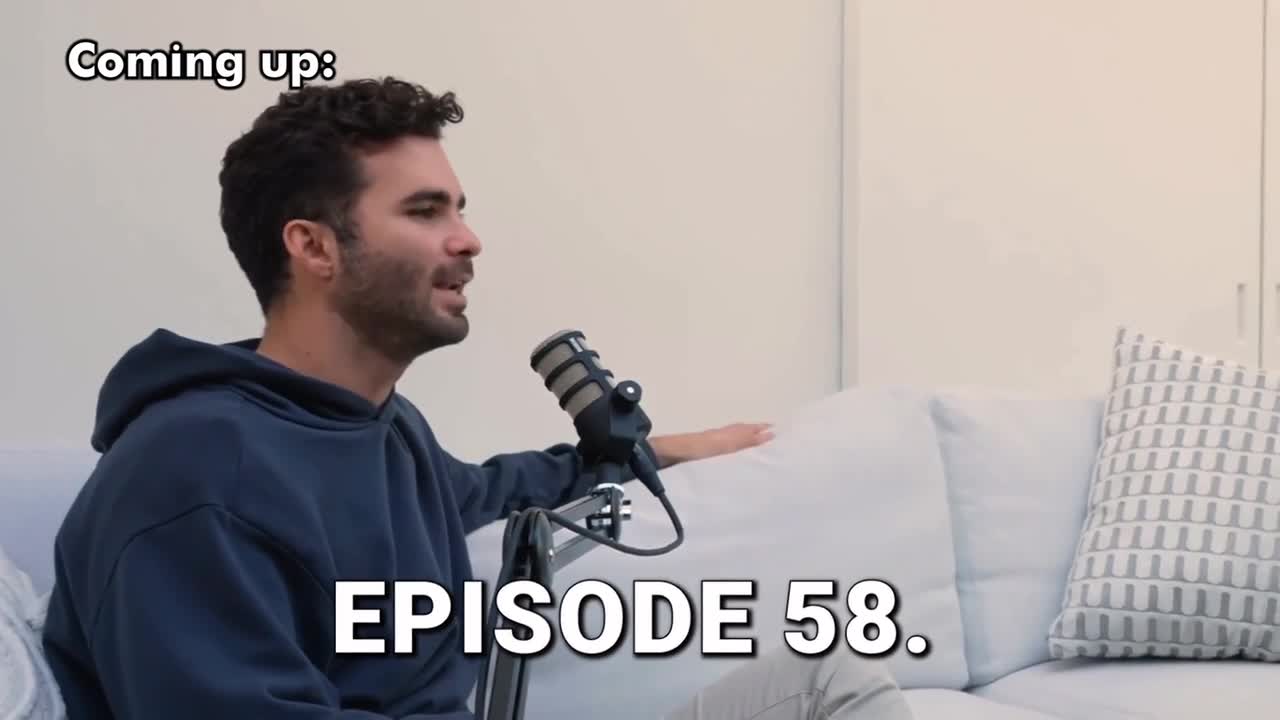
Moments that we've looked at each other like, fuck, man, it's episode 58.
Why have we not been doing this the whole time?
Mostly, I fucked up the scheduling of a next guest, but I think a lot of these insights are actionable to any creator that is thinking about building something, or if you're just a loyal listener and want our retrospective on how we've gotten to where we are, I think this will be a good episode for you.
So hope you enjoy it here now.
All right.
Rashad.
Logan, this is a nonstandard episode.
Do you want to give some context as to what we're doing here?
So we get asked a bunch about how do you make a podcast?
How did all of this come to be?
And I think you especially but me at times as well have had to have a lot of 30 minute long chats with people about our lessons learned and like what we do and all that stuff.
And so I think we've learn some interesting stuff along the way.
And so we've been talking about doing this for a little while, just like a post-mortem on some of the things that we figured out in making the show and producing content and building what we've built.
And so some interesting lessons of like the journey, I guess, now that we're 85 episodes in.
And then 25% is I fucked up scheduling a little bit and didn't have a guest.
So that's the reason for timing here is we're we're committed to every Friday morning delivering something to you.
So here we are.
It's it's the two of us talking about this.
So it was this or no episode.
So be appreciative.
If you don't enjoy this, which hopefully people will then uh, you can pick the other path that we didn't take, which is not listening to this episode.
So yeah okay uh so, in terms of structure, i guess the just to lay out kind of how we'll go through things i figured it makes sense to kind of start at what the show was originally, how it's transformed.
There's been like two or three like major transformations in the show.
And I feel like each one of those we've had some big strategic learning that maybe people can.
I think probably a small percentage of people at this point were here with us in the early days.
It's like just based on the end of how we've grown.
The people that were here in the start probably don't know the path.
Yeah.
So maybe the whole like how this came to be is interesting.
We originally started as more of a news show.
You had two co-hosts that were one founder operator person and one other VC.
It then evolved into just being you.
We hosted a series of web 3 debates and that took up probably 10 to 15 episodes of over the summer of 2022 and then ultimately like how would you describe the show that we've landed at now?
Yeah, I mean, I think the product now is pretty consistent.
We do interviews, conversations with important or interesting people in the broader tech ecosystem.
It's probably.
I don't know if someone can actually but 80 operators and tactical lessons that they've learned along the way and 20 investors or other and their insights about this stuff.
I think our goal now in every episode is to have...
Someone that's uniquely interesting, giving a unique perspective on actionable insights that they've gleaned along the way.
And I think that product at least based on the subscribers and stuff.
It seems like people like that product enough.
Or at least the people that don't like it don't tell me that much.
So it seems like it's... working.
We'll talk about the people that don't like it and very much do tell you in the comments or whatever, and how mean people can be.
But also how nice and great people can be with giving feedback.
And I think, yeah.
One thing I was thinking about as I was going through our guest list is I feel like we are very selective in choosing guests that have really like walked the walk.
Yeah.
Even if they haven't been on a ton of podcasts or don't have the biggest platforms like that's not really something we pay attention to.
Or I don't know, maybe that's something you know.
In the early days I thought like oh, the number of Twitter followers someone had is a mark of importance.
And it's just not.
It's just making good content.
It's almost better if they haven't done stuff before.
And that they have interesting lessons that they haven't shared elsewhere, is actually a better thing than how big of an audience someone someone, has.
And so I guess maybe just the genesis of the show itself was it was.
2021.
Uh, in the fall winter, and the market was crazy for vcs and i was like hey, we need to do something.
I need to do something to stand out more than i have and i've been around on twitter for a while, but uh, that it was.
It was interesting, but it was very one-dimensional in my personality and it grew and i think i sort of figured out like how to grow it and it was shit posting and it was jokes and a bunch of things like that.
And I wanted to do something different that allowed me to showcase a little bit more of my personality than like, 140 or 280 characters or now, infinite number of characters would allow.
And so I thought I looked at the all in pods success and I was like, oh well, If younger people in the industry could do that.
That seems like clearly there's a market for it.
And so that was the only real thought behind it.
And so that was, I guess, December of 21.
I recruited Zach and Nikita. to come on and do it.
We were friends friendly with them.
And so we did a few test episodes over the course of December into January.
And then you came on board around the time.
And then we sort of launched the show as basically a ripoff of All In Pod with younger people involved.
Totally.
Yeah.
I remember we took a bunch of inspiration from... how they were running their show.
It was a very news focused pod like we would find the most interesting five to ten headlines about the week.
Some of them would be like serious things like whatever Sequoia announced the fund.
But then some of them was like more like Twitter news.
Yeah, I remember there were a lot of like, just like in the Twitter zeitgeist news stories that you guys would talk about.
How was that experience?
Well, it's, it's, it's interesting, right?
I think one of the lessons I've learned is people either want to be entertained or they want to be educated.
And I don't think we had that thesis early on.
We were just sort of like, oh, this is working.
We saw something else that was working.
It was like, all right, let's put a spin on it.
And I think founders probably can often take inspiration from something else and iterate around something.
And so it wasn't more thoughtful than that.
It wasn't like.
Oh, I asked myself what deeply appeals to me as a person and that I'm really going to want to commit to for an extended period of time.
It was just kind of like, oh, that works for those guys.
We can do our own.
It was a lot of market testing.
No, there was.
There was zero.
How many people did you talk?
I imagine you you must have talked to some people about like hey, i'm thinking of starting a podcast, what should i do?
Yeah people, but at the end of the day, the thesis of hey, all in podcast, but younger people is like no one's gonna say that's a bad idea, like that could still work today.
I don't know someone, someone probably will do that well, and so like, if some, if you get the right formula of people in place uh, then that could totally work.
What i found is that i hated it.
I like really, really hated it.
I'm not that interesting in my opinions on stuff generally or like this stuff I know I can go really deep on, but the stuff I don't know I don't like doing drive by commentary and hot takes around.
And it's just like if you're going to give opinions about stuff, I wanted to be really informed and well versed in it.
And you can't do that if you're going to be, like, effectively a talking head.
And so I fucking... I hate it.
Also, you have a full-time job.
Yeah, true.
As did the other two guys that were, you know, even equally or less prepared than you were, to sort of have totally, totally.
And so just like shooting from the hip on news commentary, you expose yourself to a lot of you're either not going to be interesting uh because you're too muted on stuff or uh you're not gonna be insightful uh or like have a real perspective on stuff or people are gonna call you a dumb ass right and like none of those things i particularly liked uh and so so we did that for how long 10 to 12 episodes it was like around 12 episodes 12 episodes i mean that's that's when you interviewed keith and that was like yeah and and we had uh nikita was starting gas at the time and so uh he had different time commitments he could make to it and then zach's firm wanted more oversight of like the review and process and all that stuff and and um And so ultimately that those things came at odds with our ability to put something out consistently because you needed people to talk about things that were topical.
Right.
And like those people constrained with time and people that wanted like to review stuff just doesn't lead to publishing quickly.
The review thing is interesting.
It doesn't sound like a huge deal of like, oh, just send it to them.
They'll, you know, redline it a little bit.
But when you're trying to turn around an episode in one to two days like the the operational friction that that adds the justin's here sitting off camera, our editor you know having to go late nights to just like get an episode released on friday consistently because that was our thing, we're like we're gonna release an episode on friday was a huge fan of the app.
Especially if you have three people talking and we all agree and come up with something interesting and then someone else is like yeah, I don't know.
I don't think so.
It's hard enough to make a good product, and then it's really hard to make a good product, And then you know, whatever be handicapped in some way in what you can say.
Our thesis was, I think, one that could work, but for different reasons, none of us particularly could do it right.
And it just kind of, it sucked.
I really, it gave me so much anxiety.
I did not enjoy that.
Did you consider bailing?
Like, I know there's statistics out there about how few podcasts make it beyond 10 episodes.
Like, were you, like, about to throw in the towel?
Yeah, what... Those stats are, like... It's something crazy.
Yeah, here, pull it up.
What is it?
It's... Okay, so...
90% of podcasts don't get past episode three.
That's 1.8 million people who quit.
Of the ones left, 90% will quit after 20 more episodes.
And then to be in the top 1% of podcasts in the world, you'll need to publish 21 episodes.
So my thought process on it was I set different mental milestones and I was like, all right, I'm going to do four episodes.
That was like all I committed to do.
And then we collectively agreed to do 12.
And then at 12 was really the fork in the road thing.
And We had built some muscle memory and infrastructure internally at Redpoint of how to do this.
You had come on board, we had started working with Justin.
It was like, we were a little committed in some ways to figuring out how to do this.
And so I felt some obligation to like keep pushing on, because we started it and i also just don't like those stats right.
I just sort of knew that persisting in some form would lead to something.
If nothing else, i would learn from it, and so it was.
It was a grind, it's still.
I mean, it still is a grind right, and the the market backdrop of this is this is peak, this is pre like market turn.
This is while the market kind of ish was turning right.
So like we or i wanted to do something in a point in time in which i wouldn't have had time to do it, and then the market's like slowing down when i actually had time to do it.
So it worked out Pretty well then.
But yeah, so so we persisted into it.
I looked at the Jimmy Kimmel's and the David Letterman's and the Jay Leno's and Jon Stewart's and whatever all those people in the model they have works pretty well.
It's like you do news and topical stuff and then you do interviews and conversations and people come for the guest but they stay for the, the current events and the news.
And that format really works.
If you have, Either if you're willing to shoot from the hip you're smart enough to do that, or you're willing just to expose yourself to hot takes and stuff, or you have time to do this.
You have an entire writer's room.
Yeah.
Jokes or you're charismatic like Jimmy Kimmel or totally like totally anything.
And even then, if you go back and listen to like Kimmel talk about his early days, he like says he wasn't good at it, right.
And that's someone that's like insanely talented.
And so that format clearly works.
There's a reason people do it.
And so I was like, all right, well, we'll just keep doing this.
But it was like, I had three jobs.
It was, hey, I had to stay up with current events.
I had to interview a guest and also book guests.
And then I had my actual job as well.
And all of those were like different things.
And especially the ephemerality of news cycles and stuff.
You couldn't backload a bunch of episodes or something.
It was like you couldn't can them and release them.
Sometimes we'd record Thursday and by Saturday, our release day, it would already be.
Yeah, exactly.
It was like the news cycles were so tight and it was it was just a hard product. to keep going.
But we kind of evolved for a while.
And I couldn't find a co-host to come on and do anything with me.
It's really hard just to talk behind a mic by yourself and give opinions and stuff.
It's much easier to banter with someone.
And so then Weinberg and I, Zach from Flatiron, now CurieBio, was kind of a lightning rod. uniquely talented in a bunch of vectors of he's just very smart.
He doesn't give a fuck.
He has a ton of credibility.
And he was the one that I kept trying to recruit in, thinking all right, I can be diplomatic and not as interesting, and he can be a lightning rod and very interesting.
And it worked really well well with him, which led to all the crypto stuff as well, where he would just kind of rail on crypto and debate people and all of that.
And that was like a it was.
That was lightning in a bottle of people just loved that, and there's a reason.
Uh debates, presidential debates or like whatever people yelling at each other and arguing points like they will on all in podcasts.
There's a reason it works well.
It's just like high uh entertainment and high education as well, because you get to feel out two points, and so that was like a real lightning in a bottle kind of moment.
Yeah, i was going back and listening to some of the crypto debates episodes.
We had probably 10 or 12 people come battle zach and these were like very credible people in the crypto world.
Yeah, And yeah, those episodes were great.
We were still doing news as well, and we were having guests on.
So what was the major learning from that chapter where we were doing crypto debates?
We had evolved from three co-hosts to just you and you were still doing a combination of news, bringing on people you like and crypto debates.
I would say that the founding principle of what you enjoy doing and having people committed with you to go do that.
I think that's probably true of those entire periods of time.
And the crypto debate thing or that debate format again, it could have worked if Zach could have committed the time to doing it.
And I don't know if I would have been happy doing it, but I probably could have.
You were pretty adamant about like.
I remember there were three or four episodes where you were like this is our last one.
This is going to be the last crypto debate, because I don't want us to just be a crypto debate podcast.
Yeah.
And at some point like clearly the market runs out of that content, and then you become known for something that isn't what your brand was.
And so I think the biggest lesson that I learned as we started to do the interviews and stuff and this is true for any podcast is you really need to niche down into what it is that you're going to have your product as, and so whenever i talk to someone, you maybe you're mark cuban, or you're the smart list guys, or you're the strike force.
Five, like some of these podcasts that have come out, where they're actual celebrities themselves and uh they're they're, they're able to be interesting in their own right and talk and whatever, and those people are just supremely gifted.
And otherwise one, you're gonna have to really work at what it is that you do and you're gonna start out really shitty.
It's just like whatever product you pick, you're gonna be really bad at early on.
And two, You really should be in the top 1 of where you're going to start and then build concentric rings around that.
And so the TAM initially for content should be really small.
And that's like really counterintuitive to people.
And I made that mistake.
I was like, who are the most interesting people that I can get on to interview?
And I'll just get them to tell their story and that will be interesting.
And actually like no one but their companies or their coworkers or their family really care about their story.
Even for someone as big as I mean.
We had Mark Cuban on, we had Kara Swisher on and they were great guests, but did they perform like disproportionately higher than you know your average?
Like No, and that's.
The other thing is people have.
If people are like big Kara Swisher fans, they can go hear her whatever five times a day or whatever.
It is right.
And Mark Cuban, you can hear from a lot.
And so you A big lesson of that was not just like go for a breath of like famousness or whatever, or notoriety.
It's like niche down into the content that you want to deliver to people that is actually uniquely interesting, that you're uniquely able to provide.
And I think the mistake i made was just like oh, i'm gonna chase the people that are the biggest that i can find, the biggest name that i can do, who's the biggest name i can get, and i'll just get them to tell their story and people don't really care, like that's.
The fact of the matter is like if they're really big, they can hear them other places and get their story other places, and so that was a really interesting learning and mistake.
And then also my interests don't align with everyone else's interests.
And so if you, if left to my own devices, I would just go pursue some smattering of like B2B software and NCAA yeah yeah, exactly.
College football coaches.
Yeah, i would go just like hip-hop yeah, exactly some hip-hop rappers um and like.
Instead, you need to think about who your core audience is and who gives a, and then build out from what they would want to hear, to be educated or entertained around that.
And that was something that I didn't even know who our core audience was, who we were trying to appeal to, what we were trying to teach them or educate them on.
I was just kind of like, oh, founders or other people that like tech stuff.
Right.
And that's, That's not.
You can get that from a bunch of different places, from people that are far more entertaining than I am.
Totally.
And we also constrained ourselves.
You said totally a little too quick after entertaining than me.
That was supposed to be like a deprecating joke.
And you're like, yeah, yeah, yeah.
Fucking loser.
Yeah.
Yeah.
The idea of you being entertained.
We constrained ourselves to a caliber of guests too.
That was like really high to your point about the niche thing.
Like if you find a niche, you know, Lenny was a great example of this with the product stuff.
Like you don't have to find like mega famous people to talk about that.
You just have to talk, talk to people that really know that field.
I have so much respect for Lenny and Lex Friedman and Harry Stebbings and these people that started with like you need to start really small.
And Lenny was like, the people he get aren't notable in their own right for the most part.
There are some that are.
But they're people that are real practitioners in their domain.
And a lot of people care about product.
And he gets them to give very actionable insights.
Right as you expand from there, you can start putting more loops around it and go.
I mean, Harry's name of the show is still 20 BC, right.
But he interviews Scooter Braun or whoever it is, like just different people all the time.
And so you can build.
Or Lex Friedman used to be the AI podcast and then he has like, Kanye West, coming on now and so, like you can evolve, but you have to have a core, foundational base of people and you have to do.
You have the answer to the question of why they should give a shit about you versus infinite content out there, there's infinite things they can go watch and you're not competing with just the other people in the market that you're thinking about.
It's like, oh, well, I just need to be better than the other tech podcasts.
Or all in.
Yeah.
No, you actually need to be better than anyone, anything else anyone can do with their time.
Totally.
Binging shows on Netflix, scrolling on TikTok.
Going to a bar with their friends, going to a movie, watching sports.
You're competing with all of these things.
And so your competition, and that's why I don't mind saying this stuff, is we're not...
I want to help people start their podcast and get going because ultimately there's no market share capture really from from me.
I am friends and a lot of people have been magnanimous in the in their support of me along the way.
The acquired guys have been super helpful.
Eric torenberg uh, has been super helpful uh.
Jason calacanis has been very magnanimous with me um, harry stebbings has been very kind, like all these people.
I'm sure i'm forgetting a bunch of people that have been helpful along the way, but they've been very nice because we're not at competition really with one another.
We're competing with TikTok and we're competing with, like you know, whatever going to a bar with your friends, not each other.
Within this chapter of we were starting to do interviews.
I was going through episodes like 25 to 35.
And we did have a few episodes that resemble what we do now.
A few of them being Parker Conrad.
We had come tell his story and give a bunch of operating lessons.
That is still today one of the best episodes we have.
I feel like it feels the same product today.
Totally.
And which was kind of accidental, uh, in that it worked out that way, but it ended up being.
And the other thing that was interesting with him is I did all this prep.
Like I do a ton of prep before these things.
And I did both of those, uh, or I did that in person.
And, um, And I felt like there was something that people would tell better stories in person.
I just felt that.
And I didn't have any evidence to support it, but it just really felt like the difference might not be apparent to the listener of like, the quality of audio.
If you're just listening on Apple Podcasts you might have no idea.
The numbers weren't also substantially validating that in-person was-.
I would actually say all of this stuff in the early days was mostly intuition for the most part.
Had we just listened to the numbers, we would have been a crypto debate podcast and we would be reeling now trying to pivot and find our own way.
So the numbers didn't support spending the effort to be there in person with people.
Scheduling, there were all these constraints of.
I had like four different vectors of constraints that that presented themselves.
One was the caliber of the guest, and so that holding that bar high.
One was quality of the conversation, so the ability to uh to, to have deep dive conversations with folks and being, like i was well researched in it.
One was doing in-person versus virtual, and then one was releasing every Friday.
And those four things, even still today, are at odds with one another, right?
It's like all of those.
At some point, it's going to break.
I just can't do all of those things.
And the consistency one is one that I debate, especially now.
I have a wedding coming up and I'm going to be on a honeymoon, and will i be able to keep up the consistency thing?
For the most part though, everyone that is successful is fairly consistent.
The acquired guys are the ones that uh, is the the exception, and they do so much research and go so deep on it, and so i.
Those things were all at odds with one another, but in the parker Conrad example, what I found was I knew every interview he had ever done.
And somehow in person, which was just an intuition, he told the story of David Sachs and him and Zenefits, which he had never told before.
And I assume it was under like some whatever nondisclosure agreement or something.
And I don't know why he decided to tell it there.
He was he was comfortable with me and we got going in the conversation.
I bet he wouldn't.
There's no chance he would have told that story virtually.
0%.
If he had been staring into the camera knowing it was recording, there's no chance.
And a similar thing happened with Palmer Luckey when he told the story of getting fired from Facebook right.
He had never told the story so in depth and all the specifics around it.
And I went and read a book about all the stuff before.
So I was very well researched when I went into that conversation and he just went for it.
And I know he was under NDA with a lot of stuff.
And he was like, ah, well, you know, come after me if you choose, I think was his mindset.
I don't know.
He dealt with enough of, you know, of that.
Totally.
He felt probably like comfortable dealing with it.
But that was an intuition and a learning and something we've mostly stayed consistent to.
There's been some times in which we haven't been able to make it work for whatever travel related reasons.
But I think that's held true.
And even still today.
We've had episodes, maybe in the last couple of months, in which people said things they definitely shouldn't have.
And their PR teams came back to us like pleading, because realizing we were maybe going to make national news.
We had already clipped it and made it the intro.
And we had all these animations.
And the fullness of time.
Yeah, there's been we've had two of those in the last like two or three months of the things that that, like the PR teams, were very much like.
And that's actually an interesting other thing is there's this weird dichotomy of These people, especially those that don't do a lot of interviews they they, want some type of ability to strike stuff.
And I actually like giving them that comfort because then they know they're not like they let loose a little bit in the conversation, knowing they can take it back after the fact.
Most people don't take take us up on that.
And then when they do, it's really fucking frustrating, because you're sitting there and it's like, oh my gosh, this is so good.
And then maybe we'll release.
You know, when I, when I'm where my will, I'll just, I'll just Let them read it.
Yeah.
Yeah.
It's like all the things that are like would have been national news stories or something which weirdly, we've had a couple of those things come out.
But it's very rare stuff gets taken out.
But when they do, it's usually to really salacious stuff.
So those are like tensions around it.
But the in-person thing has been really beneficial too.
And I think we realized that during that stretch.
100%.
And to your point about consistency, because I've gone back and forth of like does it really matter?
I think it matters for a few reasons.
One, it's just like holding yourself accountable to actually doing something.
Because if you give yourself license like ah, we'll just release on Sunday, it's a very slippery slope to Sunday becomes Monday, to becomes ah, we'll just skip this week and we'll go next week.
Well, maybe we should just do it every other week.
And then all of a sudden, like you're not producing nearly as much as you would.
And so that's a first point.
The second point ties to a broader thing of just like building trust with your audience, which is what this is all about.
No one episode is going to make you a huge podcast.
You might get a banger and it'll get you some new listeners and they'll come along for the ride.
But like ultimately, you need to be doing something consistently over time.
Very well, and giving your listeners the sort of uh the the, the certainty that, like you know, i have a workout class every tuesday, i go home, i make dinner, i put on youtube and my show is going to be there.
And if it's not there, I'm a little disappointed.
And so like, and you go find something else that's going to fill that spot and you risk.
It's interesting.
The slope of the line and the graph that we have on low listenership.
And I'm going to describe this for people that aren't watching a video here but basically when, when you start everyone uh, You get a ton of like drive by people that are willing to listen because it's like oh, maybe this is a product for me.
Yeah.
And it turns out like for the vast majority of them, it's not a product for them.
And this is this is if you launch with a something of a audience like I had a big Twitter audience.
And so the vast majority of people didn't like the product.
They were like, oh, this guy's not as funny as I thought he was.
Yeah.
Like he's a little this is not what I expected.
Like, you know, make some more jokes.
And and so you get a bunch of churn initially and that continues to happen.
People will give you a second shot, a third shot, a fourth shot or whatever it is.
But then you bottom out at some point and then you start to compound on the way back up.
And so the consistency of building that audience of people that listen to you is just really important.
And what they're coming for is delivering it every time and setting the expectations that you're consistently going to deliver that.
One of the interesting dichotomies as well is like you suck.
When you initially start, you just do like no one's naturally good at any of this stuff.
And so when your bias is like oh, let me get the biggest guest I possibly can as my initial episode,
And weirdly, that's kind of a terrible idea, because you're going to be at your worst at that point in time and your audience is going to maybe come in but then bottom out because they're not going to like you or they're not going to like the product or whatever it is.
And so there's this weird tension of like how big of a guest do you launch with keeping them going and incremental, but also you being bad.
And that's a very weird thing is like you're at your worst and you're trying to get more people to come on.
And so I think the best podcasts for the most part start out random.
And then they compound the people like aren't notable people in the industry for whatever reason.
And then they compound over time as they get better.
And so, by the time most people discover it, they've refined how they do things right, and so we go.
Look at people that i buyer like talk to, or whatever i mean.
The acquire guys started out with a very small listenership and just kept compounding over time.
Patrick o'shaughnessy same thing.
Harry stebbing same thing.
Lenny, Like started a newsletter and then to a podcast same thing.
Lex Friedman, same thing.
All these folks started in relative anonymity and this built a good product and got more people to come in.
And I think that's an interesting sort of thing that you just need to work through.
You're not going to be very good initially, right?
I don't know if we still are, but we're better than we were.
For sure.
So...
We kept at that.
It weirdly kind of times to the rebrand as well, for the most part.
I think by early December we were mostly doing the same product, doing standalone single interview releases, I think for the most part by November, December of last year, without a ton of news.
I don't exactly remember the timeline.
But then we rebranded in January and we've been more or less the same product since then for the most part, with the occasional exception of like whatever SBF or SBF, but SBF too.
But SBB goes under or whatever, like Elon bought Twitter, some like topical episodes and stuff, which I think we'll continue to do, or we don't.
We don't have a guest booked and we just sort of talk about ourselves for a while.
Well, this is the first of its kind.
Yeah, maybe the last, but we'll see how it does.
Hey, guys, Rashad here.
I'm the producer of The Logan Bartlett Show and wanted to take a quick second to make an ask.
We are close to 10,000 subscribers and are trying to get there by the end of the year.
If you're enjoying this conversation and these episodes, please consider subscribing to the YouTube channel.
Now back to the show.
So how would you describe it?
Cause we've gone back and forth on trying to create a tagline for the show.
And it's some combination of like untold stories of you know Silicon Valley to we emphasize a lot of like tactical um, you can learn something from this to go apply it to if you are a founder, an operator or even an investor.
Like there are stories that you can take away from this or things that, from a hiring perspective, the best question to ask when you're interviewing executives or you know how to launch your second product.
Yeah, I don't even know what the right description is.
And this is why we don't have a good tagline, obviously.
But it's some combination of stories which are certainly interesting and powerful at times, and then the actionable insights, uh as well, and i think the stories are the entertainment and the insights are the education.
Right, it's sort of like, when you think about that, that dichotomy, totally and and so pulling those things out, everyone has a story to tell, but There's only so many elements of someone's life that is particularly interesting.
And so going all storytelling and narrative narrows your TAM a little bit.
And then going all actionable insights, I think, can work.
And if I had to bias, I would probably bias towards more actionable insights.
Personally, enjoy the human side of pulling things out of people as well.
And so I don't want to give up on the storytelling thing and elements of that.
And so I think the product that I hope people walk away with both the guest and the listener is something of a definitive account of, at that moment in time, that person's journey, as well as their learnings.
And I don't know what pithy little tagline that ties into.
But I think that's the consistent product.
We've kind of come on.
And now we've reached this.
There's this funny referential element of like when you you keep on up leveling your guests, but the guests also want validation from other people coming on.
And so there's this funny little flywheel that you just keep building on of like well, x person went on and next person's important, so like, okay now, and each person, no one wants to feel like it's the most important podcast they've ever been on.
That was actually funny.
I reached out to naval one time we were in um or i bumped into him in miami and uh, i asked him and he's like, you know, i went on rogan, i think it was, and he's like, And I never wanted to go on a podcast less important than the one I've been on before.
And so I'm never doing another podcast.
That's what he said.
He's like, I'll do Tim Ferriss because he helped break me in the early days and make me important.
But he's like, I'm not doing podcasts anymore.
And I was like, interesting.
So if you break that in a ball, you motherfucker, you lied to me.
But it's an interesting thing of like.
That's a funny social proof of just the compounding that people want the validation.
We think about that, right?
I still do all the outreach today to guests.
I still do all the prep today.
We've tried to outsource that.
And I just, I don't know, I'm too OCD.
At some point, scalably, I might need more support than I actually do from a research standpoint.
But there is a funny thing of how I craft cold emails to whatever public company CEOs and say why they should come on.
And I would say half or maybe half our guests at this point are cold outreach and half our guests are some ref furl in and the cold outreach it's like okay well, i know this person probably views that person as a peer or someone that i know will entice them a little bit and that's like an interesting thing of keeping all this stuff.
Is this the same outbounding strategy that you use to get founders to talk 100?
Yeah, it's the exact same thing.
It's just like what's in some of your notes and i'm like this is yeah, this is.
It's like what can I interestingly and uniquely say to get this person to spend time doing this?
And there's a staging as well of waiting for.
Okay, I'll wait for that episode to release, because then the other person will be more inclined to go do it right.
And I also think we've...
By not screwing over PR teams at times, by doing a ton of research in advance, we try to walk away with the other person feeling like they really enjoyed it.
And now I think people recommend it to other people.
And I get former guests referring in their friends and being like, oh yeah, you should do that, been like since we've we kind of started doing that naturally and now we've kind of built that into our brand of like we want to be One one of the most well-researched interviews that you're going to hear.
So you can go listen to 15 interviews of Mark Cuban but, like the one that the Logan Bartlett show does, is going to be more in depth, more nuanced.
Like clearly we have done the prep coming in.
And then also the guest is going to like us coming out of the interview.
Yeah, that's an important... Certainly a goal.
Like, you don't want to be confrontational.
I could probably count if we've... I don't know how many interviews you've done, 65 or something.
I could probably... 70?
I don't know what the number is.
But there aren't many people that walked away, I think, feeling uh like the, they didn't get what they asked, they signed up for in it.
Uh, so i i think for the most part i don't like giving questions in advance to people um, but if they really want it, It's like whatever.
At the end of the day, I want them to be proud of the product as well, which we found is actually an important thing.
The sharing and all that, I think, is an interesting.
Harry Stebbings originally did a really good job of that of making sure the guests shared it and then asking other people for questions in advance and then asking those people to share it on the behalf.
And that was definitely something I thought we were above was like asking guests to share the episode.
So important.
But it's it's, that's been an unlock in the last whatever six months, nine months of just like leaning into that as well, which is just a little lesson.
And it feels like you're above like oh, I don't want to plead with my guests to share it or whatever.
No no no please yeah yeah yeah, sometimes you please, because it makes a huge difference and it's like they're sharing it with their audience.
So we'll have, you know, jody bonzal on, and he has 50 000 linkedin followers that have been following him for years because of what a great you know executive he is.
And then he'll be like here's an hour and a half of me sharing my operating secrets yeah, and then you retain x people.
That's the thing is, there's a very natural bounce rate of people, but you retain and compound right over time and the yeah the, the n you start with is important, then the consistency of delivering what their expectations are are important, and then you retain some percentage of them and then that compounds over time, right?
I want to hit some of these others sort of like again.
Not, we are far from a perfect product.
We have room to evolve.
How embarrassed are we going to be in like a year when we look back on our this thing and we're like, Oh God, this is so we.
We thought we had any insights to share with people.
Um, it's, it's more framed as mistakes of things that we've completely fucked up so far.
But what are some other moments that we've looked at each other and like, fuck man, it's episode 58.
Why have we not been doing this the whole time?
I think some other ones I can think of is, is like really leaning into video.
We, we made it a point to, I think episode one is on YouTube still.
Like we were releasing a video and honestly, we made, not we we probably shouldn't have released that video on video.
Now episode one definitely isn't on YouTube, but like episode four or something or whatever.
But like should take that down.
We didn't know how to do video at all.
We didn't know how to like we did.
We were just treating it as a listening product on youtube.
So i kind of treat like, i think we treat listening and maybe spotify is just in the middle because they they actually accept video, but then youtube is its own beast and then listening as its own beast.
But um, with spot with, with the listening platforms, there's only so much you can do to get people to listen.
It's a dumb rss pipe that if you listen to apple podcasts like there's no algorithm, the analytics you get back are terrible.
There's no like algorithm that's recommending anything, favorite a show or you can follow a show.
I don't even really know that, but that's it.
But it's not like you.
It's very simple and it's all feed based.
Uh like like like, just an rss feed.
It's a.
The benefit of that is that, like i think you'll have more recurring listeners or or like once people are, you know, that sort of tuesday night i'm gonna listen to it while i go for a run type listener.
They're gonna keep coming back to it when and that's definitely the biggest historical market for podcasts, podcast quote, unquote is that like apple podcast?
Right, i'm cooking, put it on and, you know, make my dinner while i learn how to get better at my job.
Yeah, with the thing shows that call themselves podcasts, the majority of those are consumed on apple podcasts, for sure.
Now then there's spotify, which is a little bit in the middle of like, it's more algorithmic.
There's recommendations.
We get better analytics back from them.
You can do video on it ratings, all that stuff is chapters, chapters.
You have some level of interactivity, but for the most part it's still kind of a dark hole of like you publish it.
Like anyone can go release a podcast, publish it.
It'll show up the same as a very well-established podcast.
Yes, and they're getting better at it.
They're pushing on a lot of the algorithmic iterations and stuff.
Maybe one day they'll figure out Discovery, but until then it's really not worth devoting our attention on those things, because all we can do is produce the best podcast ever listening show that we can and then release it and hope that people go listen to it.
Now, YouTube is where we probably it's not the majority.
I don't know what percentage of our listenership it actually makes up, but it's certainly where we spend the majority of our time.
By far the fastest growing.
And it's the fastest growing. and you have the opportunity for like these mega bangers.
I don't know what Eleazar did, probably close to 200,000 views.
Like you're just not gonna get that on some of these other platforms.
It quite literally goes viral within the YouTube algorithm, which is not.
You can't go viral on the Spotify algorithm, or you can't go viral on the Apple podcast algorithm, right?
YouTube is its own beast.
And as much of more of a pain in the ass it is.
It's like... it's like 500% more work to do a podcast that has video, but.
The reward is like, I mean, the potential and the number of knobs you can twist on.
It's more fun.
I find it way more fun than like.
But it's infinite.
It's actually, do you hear Mr. Beast talk about this stuff?
Yeah, yeah.
It's insane the level of algorithmic sophistication and content iteration you can do.
I mean our thumbnails.
How enticing you make the thumbnails to click on the intro.
How long it takes you to set up a guest.
How you whatever introduce the person.
What kind of context you give in advance, versus getting right into the conversation itself.
There's just so many dials that you can twist on YouTube, not to mention YouTube Shorts, which is its own kind of algorithmic whatever TikTok clone.
There's just descriptions, chapters.
Intros, like how you entice someone to click through and then how you get them engaged in the first minute and then how you retain them, like we literally have a different video editing treatment for the first 15 minutes, because we know that that's the most important time for and then it compounds right, and so if you get better click-through rates because of the thumbnail and you get better uh like listener, like less drop-off, then it shows more people, and so it's.
It's just All the effort that you can put into that is rewarded in an algorithmic way.
And it's just like you have to iterate on it and just keep getting better.
Each episode, we're like a little better at YouTube and we're still not great at it.
You I don't know.
Would you recommend to someone today to to start youtube first?
Uh, and if you're thinking you want to do a podcast, is this like worth the squeeze of everything?
Or like first validate that you at least want to do 12 episodes or 20 episodes or 50 episodes and then go there over time?
If you don't have the time, if all of your attention is going on the show itself, I'd say it's better used there.
If you feel like you have a good premise though, and you have a decent show idea and you have some time to focus on video, then I'd say it's worth uploading it.
And the other thing is YouTube's the only one that has listener and viewer numbers public.
Right.
And so it's if you're if you're starting, it's a delicate balance of like starting and everyone's going to see how many people listen to it unless you're going to suck.
Yeah.
And so you're going to want to keep improving it and you're rewarded for improving it.
But it's a ton of fucking effort to improve it and the amount of iterations and stuff.
I think today, if you were to say, let's take out the core uh product itself, like the stuff that for the most part, my research outreach whatever, all that stuff, and then the scheduling, we get someone there and we get a product set up and recorded everything in post, what percentage of time do you think goes to youtube versus spotify and apple?
Spotify and apple in a bucket together?
It's got to be 80 plus.
That's what i would guess is 80.
Maybe we don't actually do much to the actual episode, like the conversation that gets had between you and the guest is, for the most part, what gets published, with the exception of the pr stuff and whatever i would say, and i would say everything that goes into apple and spotify benefits, youtube and so like.
That's a base of what an episode is, and then all the bells and whistles is incremental on top of that and different for for youtube, which has been a very interesting learning.
And I guess it's just something that you need to keep working at and getting better.
And on an Apple podcast making one episode or thumbnail or title better than the prior one.
You'll never know if it actually worked.
On YouTube, the click through rate percentage that you can see on the episode is just like.
It's very incremental from one episode to the next.
And so you learn so much more and you can keep improving and optimizing.
And it's fun to sort of obsess.
I mean, sometimes it drives you crazy, but like at least you have some visibility like spotify it's like oh this episode got x thousand downloads like okay great i don't really know what was driving that or what wasn't on youtube you're like oh this many people are coming in from a linkedin promotional post that we you can literally see like the inbound traffic you can see what the click-through rate is you can see how many people youtube is showing to and all of those things are very motivating if if you're the sort of operator behind the scenes like trying to make this thing uh big yeah like gives you something to go off of to be like okay next week i hope we do uh better in these different things and i think that ties to a point of just like if you are thinking about doing a podcast or doing a podcast and you're it can be so frustrating at times because you fucked up the intro and it published and you're like god that was a really good episode but it's so important to just like put that behind you keep going forward and really just focus on getting all of the things that you need for a good episode right.
And it's so many things.
And none of them individually will make or break an episode, but just got to keep doing them all right.
I found that, like learning, like looking back but not agonizing over it, and looking in the distance, like looking one episode back and learning but not agonizing, and then keeping your eyes on downfield, on how many you need to do, is the most important psychological thing.
And so, Like every episode, we do a postmortem on like what we did right, what we didn't do right, all that.
We learn from it.
But then it's kind of snap and move on, with the exception of the Keith Raboy Miami incident when they fucked up the audio.
And I still want to, if I, if I see those guys in the street, I I don't think I've ever been so emotionally distraught from something that happened at work.
As I was with.
Do you want to tell the story of?
Well, I mean the production.
We hired a production company in Miami.
Like we have our New York guys, we have our SF people, because that's most you know, 90 of the episodes we shoot.
But Miami tech week we always do an episode with Keith for boy.
So we had this like local production crew in Miami.
Yeah.
I want to, like, link that.
No, yeah.
And they just like they were an audio crew and they just messed up the audio, fucked up the audio.
And then we're just like very unapologetic about it after the fact and they were like yeah no we, we mentioned it to logan like midway through the interview, like we asked him to to to re-record.
It's like we're not going to re-record 45, like keith raboy has 90 minutes to record with us.
Like this is very important time.
And like you, you have one job.
It's just like yeah, just monitor the.
Just like tell us that it's good to go right.
Uh, gosh.
So with the exception of that, that's still still pisses me off.
Uh, I think everything else is kind of like snap and move on after you do the post-mortem, but keeping your eyes downfield on, uh like, get incrementally better each episode, but keeping your eyes.
I committed to, I said, four episodes and 12 episodes and I think it was six months, then 12 months than another year.
And so January, uh 31st or whatever of this year, will sign up.
Mentally, there's no like obligation.
We don't have any advertisers or anything, but there's we're going to sign up for another season presumably, and that will be another year and we'll see if we want to keep doing it.
But psychologically, just the commitment to keep going is helpful and not to agonize too much about the past.
The other interesting thing from an interview standpoint and I think I can probably speak to that best, although we obviously tried other formats is your inclination is to tell a story kind of linearly, in a way of like okay, give me your background and where you went from there.
I found that jumping around and we don't really reorder the episode in terms of how it happens.
But sometimes we've pulled forward a segment of the conversation.
Right.
Just, we feel like it's appealing and we'll reorder.
Your first 20 minutes matters more than your last 20 minutes, because more people are listening.
So we want to put and and like if they're, if they've stuck with you for an hour right, they'll stick with you most likely for another 15 minutes, versus the chances that they don't make it past the 10th minute.
Uh, if the content isn't interesting, is is decently high, but asking questions in a way up front that makes people feel comfortable uh, but then also be willing to dive into the meat of like what you want to get to is an interesting, just like tactical thing, and so one of the things that i do when i get together most of these people at this point i've never met before and we maybe we've interacted on email a little bit and maybe had good banter, or maybe I passed off to a PR team pretty quickly.
But getting like 10 minutes ideally, with them just riffing initially, making them feel a little comfortable.
And even when we start recording the first like five minutes or something, talking to them in a way that allows them to warm up a little bit, rather than if you, if you went to the gut of the conversation that you wanted to really ask about initially, their guards definitely up a little bit more.
And so I found, the longer I spend with people in advance, the more I kind of am able to warm them up if they get there 15 minutes early.
Generally, I know that we'll have a great discussion.
I've tried to do some prep calls before with people to get them on and say, these people are so busy and it feels...
It's probably worthwhile.
Maybe that'll be something in a year that I'll look back on.
As we have grown, we've earned the license to ask for more from our guests.
We used to do one hour.
Now we do two hours.
And that can be one thing that we ask for in the future.
But That's decently onerous actually of people is we're asking at least two hours from all of these people.
And with the most part, we get that.
And these are very busy, important people in the world.
Yeah.
Yeah.
Yeah.
The per hour rate.
Yeah.
Yeah.
Not worth fucking up their audio.
Yeah.
So so I think that's been something that we've been able to do with time.
And I think when you look at Lex Friedman or Joe Rogan or some of those, like they've gotten longer because they were in the right to be longer with the guests.
The guests is going to come in and sit there and really go through all the different stuff in their career.
And I feel like we've gotten more to a point that not only is our guest quality gotten better, but their willingness to dedicate the time to doing it has gotten a lot better too.
So Do you want to talk about?
People are mean and how you've maybe balanced, like taking the feedback we get in the comments on YouTube?
Some of it we've actually like because because it can be mean and true.
Oh, totally.
I think actually, I actually think every episode has a fair thing to criticize.
And stylistically, there's a lot of things that you can criticize me for that I don't.
Yeah, I want to be better at the question.
Asking thing is like the most recent one, where I think I'm like in my effort to make people feel comfortable.
At times I can be a little circular in my question asking and I've gotten better at it, but someone called it out one time.
I don't know if we want to tell people this, because now they'll be listening to like hear me ask uh, ask you know, random questions and stuff.
But, uh, but someone wants to call it, they're like, just get to the fucking question already.
And I'm like, ah, good feedback.
You hurt my feelings, but like this guy spends more time building up to a question than asking it, or something.
And I'm like, oh, I actually put them up to that.
Yeah, exactly.
Paid him to do it.
But it is a funny balance of like, that feedback is definitely true.
My energy is to get people more comfortable.
And so I don't go to the crux of the question initially, sometimes, which can definitely be.
And it's easy to look at that comment and be like, have the attitude of like well, you fucking interview you know whoever, or like you know you don't understand.
It's really, it's tough.
Like you're, you're high stakes.
And then you're yelling at it and on Twitter or like YouTube reply person.
Yeah.
But it's important to take that stuff in and we No, I actually love.
I think you're actually very accessible.
This is something people, if you made it this far, should know is like.
You are very accessible on Twitter.
I think you respond to a lot on email, like YouTube comments.
Yeah, I think every nice comment i've ever gotten i've tried to respond to in some way uh, in whatever format, that that is uh, and that's gotten harder as it's gotten whatever bigger, but but i think that's really important and the feedback people give, or When people reach out and say stuff, I internalize it for good and for bad.
Right.
And so when, when people are, I don't read all the TikTok comments.
I guess, to be fair, that's an example of, that's a black vortex of, of Gen Z people very upset with with mostly not me, mostly the guest.
But going down the rabbit hole of TikTok comments is like a really funny thing.
Most common thread, i would say, on the the people getting like the rage on tick tock is usually a more tenured ceo talking about like hey, I expect my employees to like work hard and people in the comments are just like well, it's not fucking fair.
Yeah.
It's like, oh, typical patriarchal society mindset.
Capitalism is like trying to, you know, whatever.
If you'll just like flip out anything, it's when someone won't work.
The remote work, that's my favorite.
When a CEO, people have stopped sort of taking bait on that because I think it's sort of settled out a little bit.
When it was up in the air a little bit of how things were going to evolve.
If you asked someone and they were like yeah, I think we want our people coming in person, just TikTok, the Gen Z TikTok.
People will get so fucking mad about, like typical boomer mindset, wanting us to show up to work and be employed.
You know, it's like I that is a funny example.
But to your point on the comments, yeah, I mean, that is an interesting thing.
If you're going to do this, And especially if you're going to do what our original product was, which is commentary and opinions and all that stuff like, just be prepared for people to be upset and disagree.
Where, if you have one opinion, the Internet will find the people with the other opinions to argue with you about it.
And so that's something you do need to have, even as benign and innocuous as like oh, interviewing tech executives or investors about their career and their operation.
Like that's a pretty benign, benign concept, but still people find stuff to be outraged about or criticize you.
For now, the good side of it is, I think, for the most part, our listeners, at least the ones that I've interacted with are all very respectful and thoughtful and considerate and kind.
People that gravitate towards this type of content tend to be people that agree with that sentiment in general.
Yes.
I have a friend that does a sports podcast and it's really big and it's under the barstool umbrella and like the stuff he gets said back he'll be like, oh you know, whatever.
The Giants sucked yesterday.
And his comments are like from Giants fans being like, you know, you suck and you're whatever.
It's like your parents don't love you and like it's probably because you were adopted as a child or something, and it's like where did all he said was the football team was bad and so thankfully it's not quite that level, but you'll still get it.
No matter what content you'd put out there, you'll get people criticizing, which I think is a feature, not a bug, of this.
If people are willing to invest the time with you inevitably like to have 100000 people listen.
To have 100000 people listen.
If you have a 90 approval rating, that means 10000 people are going to dislike you in some way, which is That's just a feature of law of large numbers and 10000 people saying mean stuff to you can be pretty mean.
And if you ever want to be like entertained with that, go to any big podcast or whatever reality show i'm sure is reddit sub forum or something.
Or go to the youtube comments or go to their tiktok page and just read the comments from people that presumably even like the show enough to subscribe to the reddit uh forum or something.
Yeah, and they are just like Brutal to the to the people at all times, right.
And so it's just, it's something you got to know going and especially if you're gonna have some level of success, I also think that's a important.
Other thing is what is success for you is an interesting thing to ask yourself.
Going into it, because it can be insatiable of just pursuing the next rung in the ladder of well, you just want the numbers to go up, right.
And to keep bigger, keep growing and be better than before.
And at some point you need to acknowledge what success actually looks like and what you want it to be and who you want to emulate, and also when to quit if it's not working.
Right.
Or if you hate your life, yeah well, which which could be not working, like if it's not working, it could be you're miserable with it right and finding something that actually resonates with you because it it is a grind.
It we said it earlier, but it's 100, like the amount of work i think next week we have.
Right now I think it's four separate episodes, two hours each.
Normally obviously number-wise, I don't have all those stacked in together, but just the way the scheduling kind of worked out.
I'm very underprepared for it and I need to sit down and do a ton of research and I'm going to do it over the weekend and spend my whole weekend just kind of listening to other podcasts or reading news articles or just sort of thinking or reaching out to people to ask questions that I should ask.
And, um, you need to uniquely enjoy it and also recognize that the journey, no single episode will ever feel fulfilling and the it's like oh yeah if i just get xyz guessed it's like no the the second that episode's published and you get the gratification of it being out there it's on to the next one and so i think acknowledging that if you don't enjoy the journey there's no milestone at the end that you're uh gonna get to that's gonna feel like oh yeah once you hit whatever 10 000 subscribers it's like so much better it's you know it's not it's like it's just the same it's the numbers are a little bigger and there's more people saying nice stuff and more people saying mean stuff and like that's maybe you get better guests on but the the process is no different than than what it was before well hopefully this has been uh some combination of entertaining, educational to our guests.
Probably a good opportunity to just thank people that have tuned in and listened to the show.
It's grown pretty significantly, especially as we've sort of figured out, based on feedback, what what's worked and what we've enjoyed.
So yeah yeah no, it's been uh, it's been a really fun.
I mean any of the the uh one, any of the lessons i guess that we have here, or post-mortem and retrospective uh, with a caveat that i still think we don't know.
We know some things, at least the mistakes we've made, but we still don't know.
We don't have it figured out.
Like we're not.
We're certainly not the, you know, the top charting podcasts in the world, or whatever.
These are just sort of our own antidotes, which is, I guess, a good plug to please share with your friends.
So we are the top performing podcast. in the world.
But uh, but I think um yeah, this is uh, it's been, it's been gratifying doing this and the people we've met along the way, both on the listener side as well as the uh guest side.
Um, it's just been.
It's been a fun experience and I think I'm much better uh, As an investor.
Interestingly, I got asked the question now of like why I keep doing it by by guests that we're gonna have on at some point in the next couple weeks.
He's like, why?
Why are you?
Why do you do this?
And I was like, I kind of I just enjoy it.
And I think it makes me a better board member to the companies I work with, both because of the network I've been able to build around it and also the insights.
It's one thing to like go learn for the sake of learning.
It's another thing to learn to study for an interview with someone right, because you're about to put on a show in front of thousands of guests like you're.
You're not going to want to look stupid, so you are going to Do the.
You know, read every book that You're going to take notes in a way that goes above and beyond what you would do otherwise.
And so I am really appreciative of everyone kind of allowing this to exist, because i am, i think, better at my job in a meaningful way, as a, as a resource for founders, both because of the network i've been able to build as well as the lessons i've learned along the way.
So it's been super fun.
So thank you everyone for for the journey and uh yeah, we'll see.
Uh, i promise there there won't be any more naval gazing episodes here for a little while and uh we'll, we'll get back to your regular scheduled programming, uh by uh, by next week.
But um yeah, just thank you to everyone for for coming along the way.