
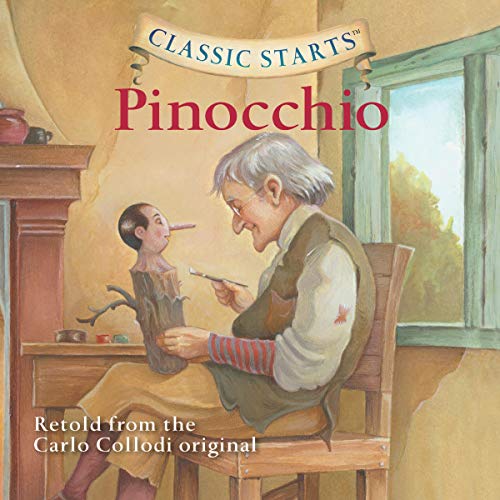
[Pinocchio's Desperate Quest: Grief, Reunion, and the Sacrifice at Sea]-[Pinocchio - Part 10]
📋 Summary
Pinocchio's Journey: From Mourning to Heroic Rescue
The Discovery of Loss
Following his escape from the dog collar, Pinocchio experiences a sense of freedom, feeling "light" as he races toward the Fairy’s house. However, his optimism is shattered upon arrival. Instead of his beloved mentor, he finds only a "marble slab" bearing a heartbreaking inscription: "Here lies the lovely fairy who died of grief when abandoned by Pinocchio." This moment marks a profound shift in Pinocchio’s character; he moves from his previous patterns of negligence to genuine, visceral mourning. He cries out to the empty air, "You are not really dead, are you?" and laments his profound isolation, realizing that with the Fairy gone and his father missing, he is truly alone.
A Fateful Encounter with the Pigeon
In his distress, Pinocchio attempts to tear his hair out—a futile gesture hindered by the fact that it is "painted on his wooden head." His lament is interrupted by a "large pigeon" searching for him. This encounter serves as the narrative catalyst for his next mission. The pigeon reveals that Geppetto is alive and currently building a boat on the beach, intending to "cross the ocean to find" his son. Upon hearing this, Pinocchio’s grief transforms into an urgent, singular purpose: "I must get to him at once." The pigeon agrees to transport the puppet, noting that Pinocchio is "light as a feather," and carries him through the "cool and misty clouds" toward the sea.
The Crisis at the Shore
Upon reaching the coastline, Pinocchio encounters a scene of communal despair. A crowd of onlookers is "wailing" as they watch a tiny boat struggle against "very rough" waters. The situation is dire; Geppetto, unaware that his son has arrived, is attempting a perilous voyage. Pinocchio spots the boat, which appears as a mere "speck" on the horizon. He attempts to signal his father by waving his nose "like a long skinny flag." For a fleeting moment, there is hope—Geppetto sees him and gestures that he is "coming back in."
A Heroic Act of Devotion
Tragedy strikes instantly as a "huge wave" overtakes the boat, and the sea seems to "swallow Geppetto in one gulp." While the gathered crowd resigns themselves to the tragedy, offering prayers and turning to leave, the narrative culminates in a definitive act of character growth. Pinocchio, the once-selfish puppet, chooses action over despair. He dives "bravely into the ocean," declaring, "I'll save you, father." This final image of the small puppet plunging into the vast, indifferent sea underscores his transformation from a wayward child into a courageous son, willing to risk his own existence for the man who built him.

Deep Learning with ListenLeap


