
[Mastering Airport English: Vocabulary, Travel Tips, and Essential Phrases]-[Phrases for checking in at the airport]
📋 Summary
Navigating the Airport: A Linguistic and Practical Guide
Traveling through an airport requires not just a passport, but a specific set of vocabulary to ensure a smooth journey. This guide breaks down the essential terminology and etiquette needed to navigate the check-in process, cabin class distinctions, and safety precautions.
Understanding Baggage Terminology
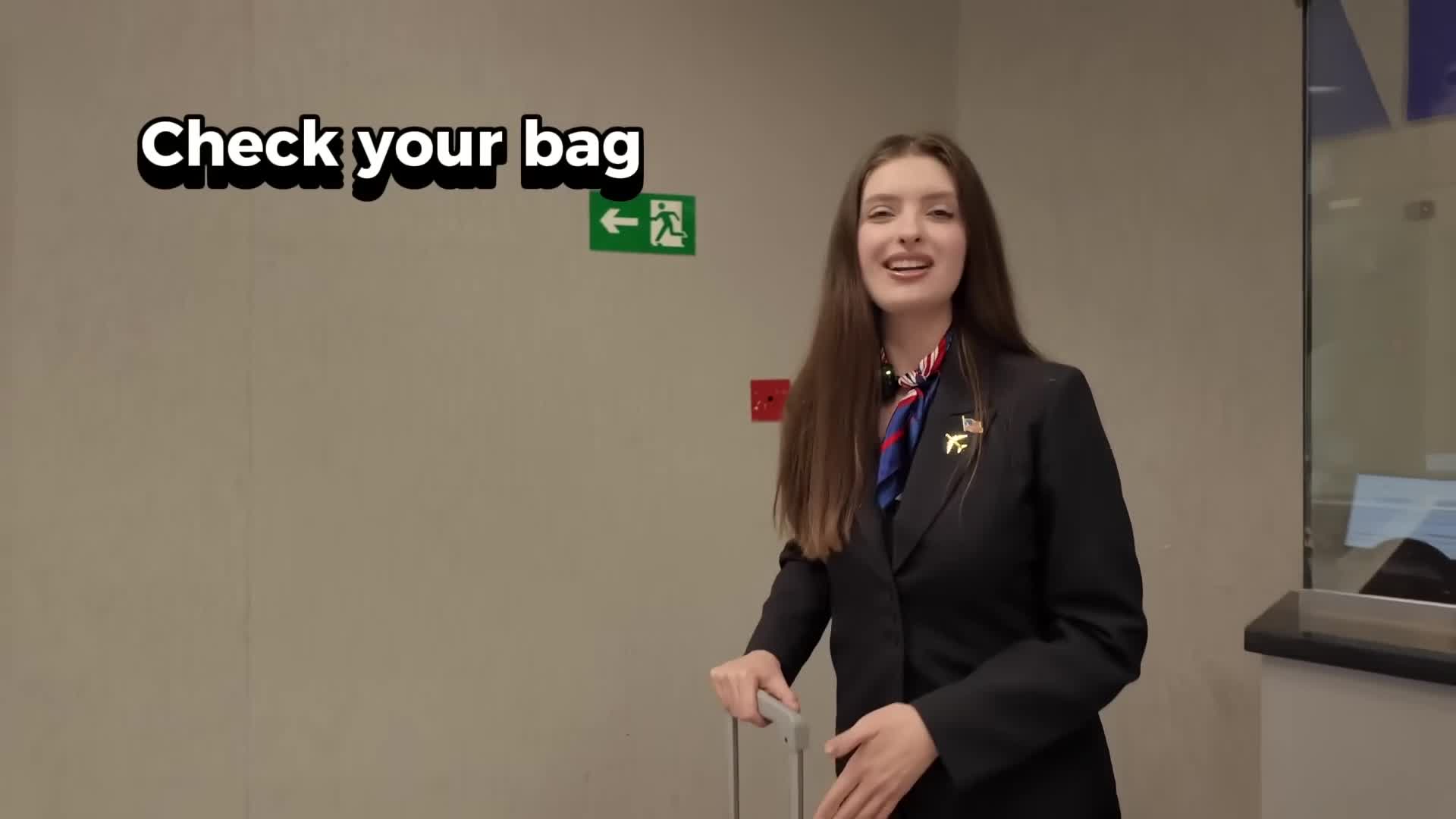
One of the first interactions at an airport is the check-in process. It is crucial to distinguish between a checked bag and a carry-on bag. A "checked bag" is handed over to the airline to be stored in the plane's cargo hold, whereas a "carry-on bag" is the luggage you keep with you inside the cabin. While "bag" is a general term, travelers should be familiar with specific types: a suitcase (the classic rectangular container), a backpack, a tote, and a duffle bag.
Essential Airport Etiquette and Grammar
Effective communication is vital when interacting with airport staff. A common mistake learners make is using the verb "take" when handing over items; instead, one should use polite phrases like "here you are" or "here you go." Additionally, understanding the difference between "leave" and "let" is important. For instance, if you forget your passport in the car, you should say, "I left my passport in the car." Using "I let" would be incorrect in this context, as "let" implies permission or allowance, such as "I let him borrow my book."
Safety and Technology in Public Spaces
Connecting to public Wi-Fi at an airport can expose travelers to security risks. Hackers may create fake networks to intercept passwords or credit card information. To stay safe, experts suggest using tools like NordVPN to hide your location and encrypt your data. Additionally, a password manager is a "must-have" (something essential) to generate secure credentials. If you find yourself worried about these risks, the correct way to express your feelings to a native speaker is by saying "I'm scared" or "I'm afraid," rather than "I have fear," which sounds unnatural.
Cabin Classes and Plane Vocabulary
When choosing where to sit, understanding cabin classes is key. Economy class is the most common and affordable, though it often features smaller seats and limited legroom. Premium economy offers more comfort, while business class provides larger, reclining seats and priority services. The most luxurious option is first class, which may even include private suites.
Regarding the plane interior, it is common for learners to confuse "corridor" and "aisle." A "corridor" typically refers to a hallway in a building, whereas an "aisle" is the narrow passage between rows of seats on a plane.
Finalizing Your Flight
Before heading to your gate, you will receive several documents:
- Boarding pass: Your official ticket to enter the plane.
- Baggage tag: The receipt for your checked luggage.
Finally, pay attention to how native speakers pronounce numbers. When mentioning costs like "$3,600," speakers often use hundreds (e.g., "thirty-six hundred") rather than thousands, though round thousands are usually stated as "one thousand" or "four thousand." Understanding these nuances will help you communicate with confidence as you prepare for "boarding," the process of entering the aircraft.
Deep Learning with ListenLeap


