
[The Perilous Journey of an Antarctic Chick: Survival and Adaptation]-[A Penguin Chick's Brave First Steps | Penguins: Meet the Family | BBC Earth]
📋 Summary
The First Steps into a Frozen Frontier
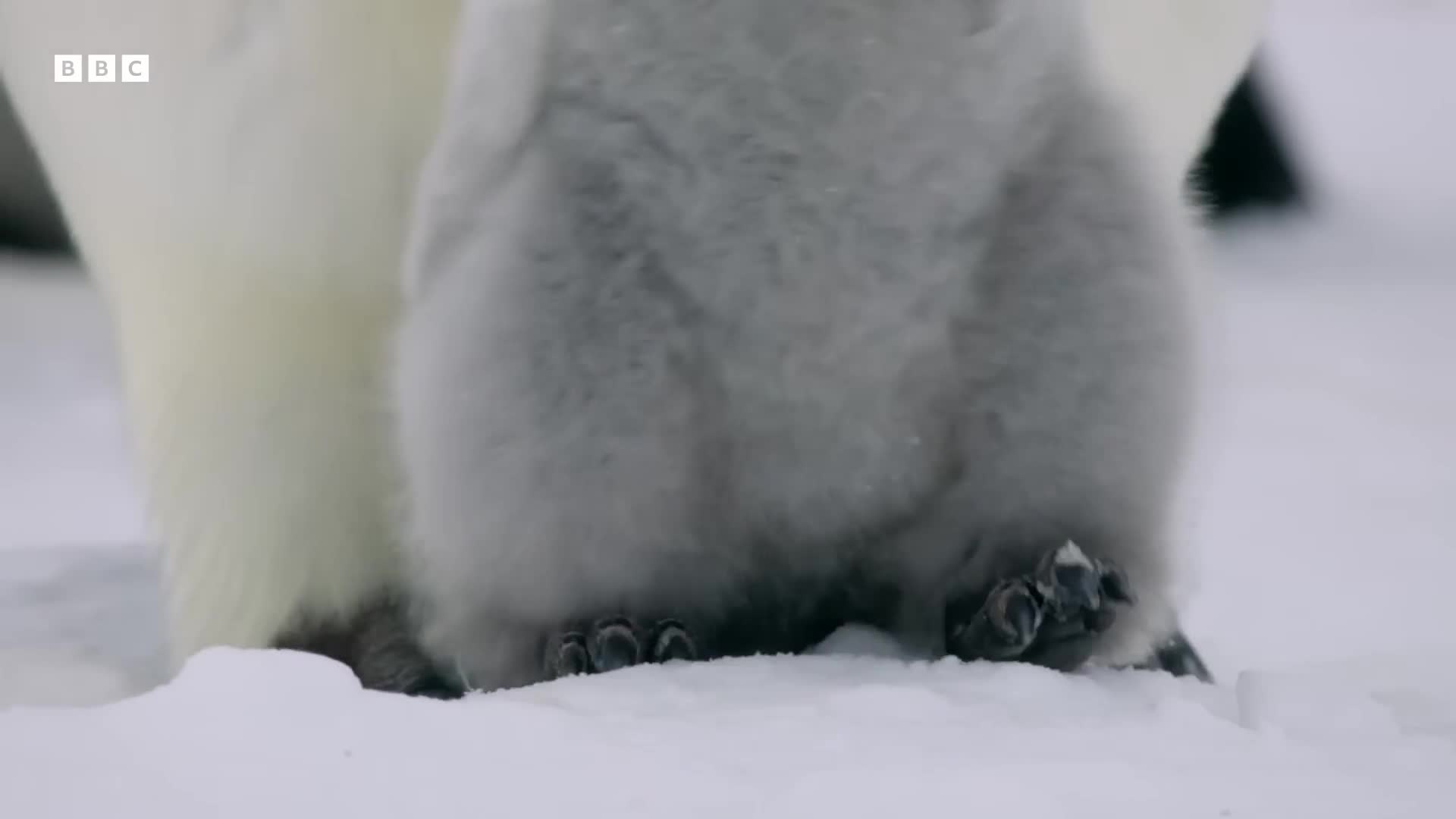
The life of an Antarctic penguin chick begins with a tentative but vital milestone: taking its first steps onto the snow. Encouraged by its father, the chick begins to navigate an environment for which it is biologically prepared. Its feet are "perfectly adapted to the terrain," featuring "special fats" that serve as a natural antifreeze, preventing them from freezing in the sub-zero temperatures. Furthermore, the chick possesses "strong claws" that provide the necessary grip to traverse the treacherous, icy landscape. These early solo explorations, monitored closely by the father, are essential developmental stages that pave the way for the chick’s "eventual independence."
Social Dynamics and the Dangers of the Colony
Beyond physical survival, social integration is a cornerstone of a penguin's life. The ability to "make new friends" is described as "crucial to a successful life in the colony." However, this social environment is fraught with peril. The instinct to parent is so profound that adults who have tragically "lost their chicks in the bitter storms" may attempt to "kidnap others." The narrative highlights that "desperation can turn to violence," creating an environment where the chick must remain vigilant. Straying too far from the father can lead to dangerous encounters, though in this instance, the chick manages a "lucky escape."
Surviving the Volatile Antarctic Climate
The Antarctic environment is characterized by its "volatile" nature, where weather conditions can shift in an instant. Despite its specialized adaptations, the chick remains in a state of vulnerability. It is not yet prepared for "complete independence" because it lacks the "insulating adult feathers" necessary to withstand the extreme cold. Without the constant "warmth of its parents," the chick would inevitably "perish" in the harsh elements.
The Bond of Sound in a Howling Wilderness
Communication serves as the ultimate lifeline in the vast, snowy expanse. The "chick's call" is described as being "as unique as a fingerprint," a biological marker that ensures identification amidst chaos. Even when surrounded by "howling winds," the father is able to recognize his offspring from a distance, proving that their bond is sustained through sound. After a day filled with the stresses of exploration, social threats, and the unforgiving climate, the return to the parent marks the end of a day of "excitement" and the continuation of the chick's survival journey.
Deep Learning with ListenLeap


