
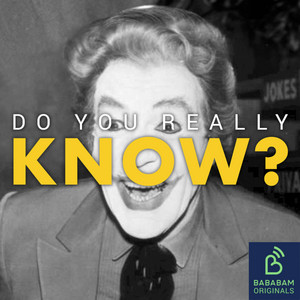
[The Reality Behind the Joker’s Laughter: Understanding Pseudobulbar Affect]-[What is the pathological laughter condition that affects The Joker?]
📋 Summary
The Clinical Reality Behind the Joker’s Iconic Laughter
Introduction: The Joker as a Cultural Staple
The Joker stands as one of the most compelling figures in pop culture, transcending comics to become a central pillar in cinema, television, and video games. The character has been elevated by legendary performances, most notably by Heath Ledger in The Dark Knight and, more recently, by Joaquin Phoenix in Todd Phillips’ 2019 and 2024 films. While these portrayals are often celebrated for their artistic intensity, the 2019 film provided a deeper, more unsettling look into the character’s origins through the life of Arthur Fleck. A defining feature of Fleck’s portrayal is his "uncontrollable laughing fits," which serve not as a comedic relief, but as a source of profound social discomfort and personal suffering.
Defining the Condition: Pseudobulbar Affect
Contrary to the belief that this behavior is purely a cinematic invention, the "pathological laughter" depicted in the film is a documented medical reality. First described by French neurologist Charles Ferre in 1903 as "Fourier Prodromique," the condition is most commonly referred to today as Pseudobulbar Affect (PBA).
According to a 2011 definition published in the Expert Review of Neurotherapeutics, PBA is characterized by "uncontrollable outbursts of laughter or crying that are inappropriate to the patient's external circumstances and incongruent with the patient's internal emotional state." This definition perfectly mirrors the onscreen struggles of Arthur Fleck, such as his attempt to entertain a child on a bus—which ends in the mother’s distress—or his laughing fit while meeting with a social worker after being physically assaulted. In these moments, the laughter is entirely divorced from the character's actual emotional distress, highlighting the disconnect between the brain’s neurological output and the individual's true feelings.
Neurological Roots and Real-Life Cases
Pathological laughter is far from a simple mood disorder. In many cases, it is a neurological consequence of brain trauma. A poignant real-life example is the case of Paul Pugh, a Welshman who developed the condition following a brutal attack by a gang in 2007 that resulted in "serious brain injuries." For individuals like Pugh, the laughter is an involuntary neurological response, not a reflection of humor or joy.
The underlying cause often involves damage to specific areas of the brain, such as the "right frontal lobe." This region plays a critical role in social regulation, effectively acting as a monitor that tells us "when it's socially acceptable to laugh." When an abscess or injury impairs this region, the brain loses its ability to regulate emotional expression, leading to the episodes that define the condition.
The Challenge of Misdiagnosis
One of the most tragic aspects of Pseudobulbar Affect is the frequency with which it is misunderstood. Because the symptoms manifest as emotional outbursts, the condition is "often misdiagnosed as a mood disorder like depression or bipolar." This misdiagnosis is dangerous, as it fails to address the underlying neurological damage, leaving patients like Arthur Fleck or Paul Pugh to navigate a world that views their physiological condition as a psychological or social failing.
Conclusion
By bridging the gap between pop culture icons like the Joker and clinical neurology, we gain a better understanding of the human condition. Pathological laughter is a stark reminder that what we perceive as a personality trait or a character quirk in fiction can, in reality, be a complex neurological struggle. Understanding the true meaning behind these symptoms is essential for shifting the narrative from judgment to empathy, recognizing that for those suffering from Pseudobulbar Affect, the laughter is "not funny at all."
Deep Learning with ListenLeap


