
[The Silent Predator: How Cordyceps Fungi Manipulate and Decimate Jungle Ant Colonies]-[Parasitic Cordyceps Take Over Insect's Body | 20 Years of Planet Earth | BBC Earth]
📋 Summary
The Biological Horror of Cordyceps: A Deadly Evolutionary Strategy
In the dense, sprawling ecosystems of the world's jungles, where 80% of all insects reside, the ant stands as one of nature’s most successful creatures. With populations reaching as high as "8 million individuals in a single hectare," these colonies represent a pinnacle of social organization. However, this success is constantly threatened by a biological phenomenon that feels "like something out of science fiction": the parasitic fungus known as Cordyceps.
The Infiltration of Mind and Body
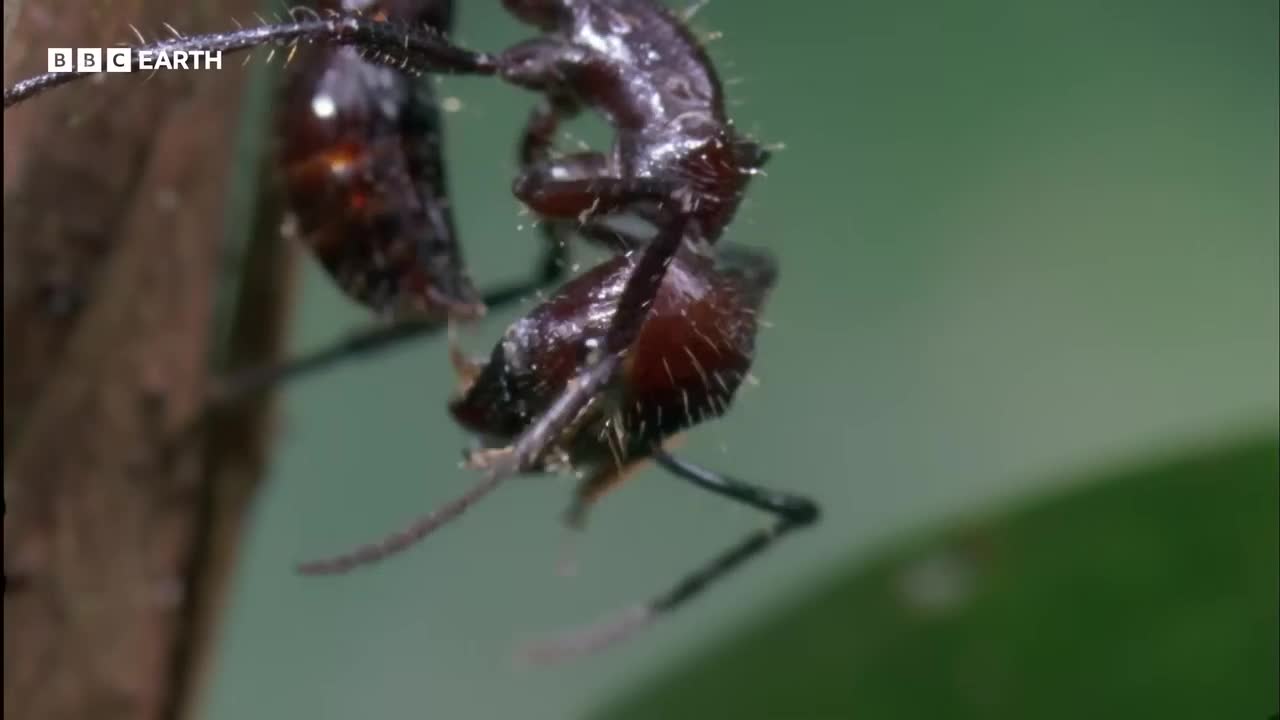
The survival of jungle ants is precarious due to the presence of Cordyceps. This parasitic fungus does not merely consume its host; it infiltrates their "bodies and their minds." Once the spores breach an ant, the infection takes hold in a chilling display of biological control. The "infected brain" of the ant is hijacked, forcing the host to abandon its colony and travel "upwards." This behavior is highly specific, leading the ant to a point where, "utterly disorientated," it uses its "mandibles" to grip a stem, anchoring itself in a position that serves the fungus's reproductive needs.
The Colony's Defensive Strategy
Ant colonies are not passive victims; they exhibit a sophisticated, albeit harsh, defense mechanism. When workers discover an afflicted individual, they recognize the threat immediately. These infected ants are "quickly taken away and dumped far away from the colony." While this behavior might seem "extreme," it is a necessary survival tactic to prevent the spread of the pathogen. The colony operates on the principle that individual sacrifice is the only way to preserve the collective, as the proximity of an infected ant poses a catastrophic risk to the entire population.
The Growth of the Fruiting Body
Once the ant is anchored and its life cycle is effectively terminated, the fungus enters its most visible and terrifying phase. Over a period of "three weeks," the "fruiting body of the cordyceps" slowly "erupts from the ant's head." This structure serves as a biological artillery piece. Once the development is complete, the "deadly spores will burst from its tip," creating a zone of contagion. Any ant passing through this vicinity is at "serious risk of death," as the fungus is "so virulent" that it has the potential to "wipe out whole colonies of ants."
Evolutionary Specialization
What makes the Cordyceps genus particularly fascinating and lethal is its extreme evolutionary specialization. The text notes that there are "literally thousands of different types of Cordyceps fungi," and in a remarkable display of biological precision, "each specializes on just one species." This narrow focus allows the fungus to become a master manipulator of its specific host's biology, ensuring that the parasite remains perfectly adapted to the ant's unique physiological and behavioral patterns. Ultimately, the Cordyceps fungus serves as a stark reminder of the brutal efficiency of evolutionary warfare, where the line between host and parasite is continuously blurred by the relentless drive for survival.

Deep Learning with ListenLeap


