This BBC podcast is supported by ads outside the UK.
Along with Emirates, chauffeur-driven airport transfers and entry to the luxurious Emirates lounge.
It's just a better way to do business.
Book now on Emirates.com.
Podcast Mukalema, Podcast Mukalema.
A plot twist in Hollywood, not in the script, but on the balance sheet.
I was surprised at mostly just the timing, because that was quick.
But it didn't surprise me that they backed up.
It's worrisome.
I would lie if I said I was someone that's making work and producing work, that it isn't worrisome.
It's World Business Report from the BBC World Service.
I'm Vishala Sripathma.
On the way, Netflix drops its bid for Warner Brothers after Paramount ups its bid.
And Pokemon turns 30.
How has a kid's craze grown into a cultural heavyweight?
So a twist in Hollywood then, not on the screens, but in the spreadsheets.
Netflix has walked away from its attempt to buy Warner Brothers Discovery, clearing the lane for Paramount's Skydance with a 111 billion bid.
Warner Brothers has called the offer as being superior.
Netflix says it's plainly that the price is just too high for them and has put away its checkbook for now.
Well, if we rewind for a moment, back in December, Warner Brothers had accepted a Netflix proposal worth around 82 billion.
Then Paramount stepped in with a rival bid, which was initially rebuffed but returned this week with a small but significant sweetener 1 more per share.
And suddenly the storyline moved in a very different direction.
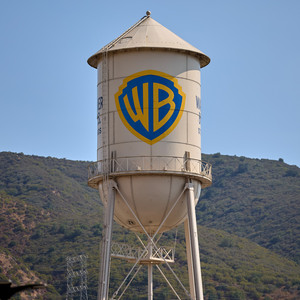
And remember, this simply isn't just about buying a famous name on a water tower.
It's about acquiring a century's worth of intellectual property, a deep archive of films, global television networks, including CNN.
Also, all the raw ingredients for streaming catalogues, licensing deals, theme parks and franchises.
There's been some reaction in Hollywood.
Here's Marvel and Creed star Tessa Thompson.
Mergers and this sort of both contraction in the industry and consolidation in the industry, which means there's frankly... less places to go when you're selling something, when you're trying to tell stories.
Yeah, it's worrisome.
I would lie if I said you know, as someone that's making work and producing work, that it isn't worrisome.
But I think the North Star always has to be, do you have a story to tell?
The actor Tessa Thompson there.
So despite the headlines, talk of a done deal is somewhat premature at this stage.
California's Attorney General has already warned the merger will face serious scrutiny, and both US and European regulators have their own questions to ask before anything resembling approval is on the table.
Now, if you were listening to the show last night, you'd have heard Guy Petty, a former Paramount executive.
He's now head of the consultancy firm Fulcrum Media.
Moments after he was off air, the news broke.
So we want to get his take on how the deal has played out.
I was surprised at mostly just the timing, because that was quick.
I was expecting them to wait a day or so.
Find out any more information of why Paramount's offer was superior?
I guess they already knew.
But it didn't surprise me that they backed out, because obviously Ted Sarandos and Netflix had been talking in almost every one of their interviews about how disciplined they, So I kind of had a feeling that they just might say no.
We're out.
So that was Guy Petty, a former Paramount executive.
Joining us now is Dawn Chemeleski, who is a U.S. entertainment business correspondent for Reuters.
Hi, Dawn.
Thanks for joining us.
Thanks so much.
So surprise, not surprise is the general vibe here.
But crucially at this point, it's not a done deal yet, is it?
And regulators still need to approve.
That's exactly right.
Now today, or earlier today, the boards of both Skydance and Warner Brothers formally approved the new merger agreement.
Paramount has already written a check to Netflix for $2.8 billion.
That's the fee that Warner Brothers owed for exiting its previous deal.
So that's already happened.
And come Monday morning David Ellison will be addressing the press to outline his vision for the combined companies.
And it's interesting because Ellison's role here is something that's been reported on quite a bit because of his connections to the Republican Party and also to the President, Donald Trump.
That's correct.
Look, you've certainly been watching the new Trump administration, how it operates.
David Ellison's father, Larry Ellison, is one of the richest men in the world.
He's a supporter of Donald Trump.
Larry Ellison is a supporter and his son, David, has benefited from that connection.
And perhaps the the Trump administration will look more favorably upon this deal.
And there has been some concern around the future of CNN because President Trump doesn't hold back when it comes to his views on CNN.
And CNN is tied up in this deal.
That's very true.
I guess it remains to be seen.
The government really has no regulatory oversight over cable news networks.
It does for broadcasters here in the U.S.
So I'll be curious to see how that factors into the regulatory review.
You'll recall a few years back when AT&T was acquiring this same asset.
It was then called Time Warner.
Trump's Justice Department spent 600 days trying to block that transaction, precisely because of Trump's enmity about CNN.
It seems as though there's a different relationship between the Ellisons and Trump, as so perhaps this deal will be on a glide path to approval.
We'll see.
Okay, Dawn, we're going to come back to you in just a moment.
I'm going to bring in now Tom Noonan, who's a former American media executive and an Oscar winning film and TV producer, who's in Los Angeles at the moment.
Hi, Tom.
Good afternoon.
Tom, what does this tie up potentially mean for you as somebody that works in the industry?
Well, neither scenario was appealing as a producer because basically you're losing one buyer, whether Paramount acquires Warner Brothers or Netflix does.
In essence, Warners becomes just a label beneath the umbrella, so to speak, of either one of those giant media companies.
So, in any event, whether Paramount prevails or Netflix somehow resurfaces down the road, we're losing a major buyer.
And so what does that mean in practice in terms of jobs, for example, production, content pipelines?
What was appealing about the Netflix deal is there was great assurances by Sarandos and his team that essentially, Warner Brothers would be left alone or, if it was tampered with, it might even be invested in by Netflix, built up more by Netflix.
Paramount is a completely different situation.
It's been made clear that they're going to have to make severe cutbacks, and The lowest, the most modest estimates are 6 billion in cutbacks.
The more aggressive ones, of course, offered by Netflix against Paramount are closer to 16 billion in cutbacks.
Paramount's already made tens of thousands of cutbacks at Paramount itself.
So one can only wonder what lies ahead for Warner Brothers.
And it must be generally a sense of anxiety around jobs over the last couple of years anyway, but given what's happened in the industry,
Yes, and I think one can't underestimate what the political feeling is over, you know, over Hollywood, where two of the biggest legacy studios in a town that's notoriously progressive and liberal in terms of its economy.
Sort of artistic way, if you will.
Two of the biggest legacy studios are now owned by a very conservative owner.
And what will that mean in terms of content, news and other studio and streaming activities, you know, under Paramount's leadership.
Tom, really interesting questions there.
And I'm sure we'll be finding the answers drip by drip over the next couple of years.
Tom Noonan there, former American media executive and an Oscar winning film and TV producer.
Dawn is still with us.
Dawn.
We talked there about the anxiety over this consolidation that we're seeing in the media industry.
We've seen a lot of change.
Do you think that this is a predictor and a trend that's going to happen over the long term?
I mean, I think it feels as though it's inevitable.
We all know as consumers that the way we are entertained has changed.
We are increasingly watching movies and television shows streamed into our home, and the economics of the whole entertainment industry have been upended.
We're going to fewer movies.
And so the industry is contracting to reflect that new reality.
And is there going to be other players, do you think, entering the market?
Because Netflix is widely seen as a Silicon Valley company, for example, as opposed to a business that's kind of like entrenched in Hollywood.
Silicon Valley is already here and spending quite liberally.
Thank you.
Apple has a large presence with its Apple TV service.
They are known to spend richly on coveted projects with big name stars.
So that's That's another new buyer, as is Amazon, which has made a significant investment in movies and television shows.
As you recall, not too long ago it bought MGM to provide more of the familiar stories to the subscribers of Amazon Prime Video.
So we already do have some new entrants in the market who are also spending on movies and TV shows.
So, while Hollywood is losing potentially losing one buyer in Warner Brothers and it's a century-old studio, so everyone feels that deeply new buyers have in fact emerged.
Okay, Dawn, thank you very much for joining us.
Dawn Chmielewski, US Entertainment Business Correspondent for Reuters there.
Chris Lowe is Chief Economist at FHN Financial in New York, and he joins us now.
Hi, Chris.
Hi, Michelle.
How's it going?
You okay?
Yeah, terrific.
Terrific.
So we're just talking there about this big deal.
It's been news for the last couple of days.
What has market sentiment been like about this deal?
Because it's been rumbling around.
It has.
And, you know, what's interesting is shareholders of both companies really don't like the idea.
I think mostly because...
It's a struggling industry.
It's a huge investment.
And it's an investment in an old line movie franchise more than anything else, which is the part of the industry that's suffering the most.
And just to put that into context, if you look at Netflix share price, it's up 26 in just the last three days.
And there's lots of talk about Netflix because a lot of analysts and commentators have been citing the Netflix share price the last couple of weeks and saying it's quite a good opportunity to enter the stock.
Well, that's right.
You know, the high in Netflix was last summer at the end of June, over $130 a share.
At the beginning of this week, it was down to about $76 a share.
So it has come down significantly.
And what the analysts are thinking is.
If this deal does indeed fall through, Netflix will go back to focusing on what it has done best in recent years expanding its viewership by investing in its own content.
And content creation is not cheap, is it?
It's not, but for Netflix.
They've managed to find the sweet spot so many times, creating shows and one-off films that really appeal to their viewership.
They continuously surprise by bringing new subscribers in, or at least did until the last couple of quarters, when they've been distracted by this attempt to buy Warners.
OK, Chris, we'll be following that story very closely on World Business Report.
Something else that emerged a bit later on today was from the White House that President Donald Trump said that he was to be directing every federal agency to immediately stop using technology from AI.
Developer Anthropic.
Now Anthropic is in a row with the Trump administration over who decides how its AI tools can be used in the battlefield and in domestic security.
We'll hear now from our North America correspondent, Technology correspondent Lily Jamali.
This has been simmering in public view for the last week, this dispute.
But our understanding from our sources is that it's been under the radar for many weeks before this.
And what the president said today was that he's going to effectively ensure that no US government agency does business with Anthropic
The Pentagon alone.
The Defense Department, or now the Department of War as it's known, has a 200 million contract.
Okay, that was Lily Jamali reporting on that news.
Chris, this is another kind of row that seems to be rumbling along.
How are investors feeling about this?
Well, investors are already feeling rather shaky about AI.
And one of the reasons is that every new AI product and they seem to come every six months or so is so far superior to the ones that came before that they knock the whole rest of the sector down.
In the case of Anthropic, They have the superior product right now.
They were the ones putting downward pressure on others.
Losing government contracts, though that's a hugely lucrative business and it's across all agencies.
So it'll be really interesting to see how they respond to this threat and how other companies step up and bid to fill the void.
Do you think we're going to see this ripple effect that we've been seeing for the last six weeks or so?
I think so.
You know if you listen to the companies themselves and the chatter they have about the competition.
Of course Elon Musk has been pushing Grok AI everywhere as specifically being sort of politically neutral and available, less biased and, in his words, less crazy than other AI systems.
He'll be making a push for sure to step into the breach.
Now, it's been quite the week with markets and AI.
We had those NVIDIA results earlier in the week and that didn't shift the dial in terms of share price, even though those results were quite good.
What's your take on it all?
I think at this point, investors are just trying to catch their breath and reassess.
One of the big themes was an essay on Monday that I think everyone on Wall Street read, essentially making the case that AI is going to shake up so many businesses that even some of the AI adjacent industries we've been investing in could be hurt.
And it is, I think, that threat that's been the significant weight on the market this week.
Okay, Chris, thank you for now.
You can enjoy delicious regional meals and premium drinks.
And there's onboard Wi-Fi if you need to work along with Emirates chauffeur-driven airport transfers and entry to the luxurious Emirates Lounge.
It's just a better way to do business.
Book now on Emirates.com.
This is not the future we were promised.
Like, how about that for a tagline for the show?
From the BBC.
This is The Interface, the show that explores how tech is rewiring your week and your world.
This isn't about quarterly earnings or about tech reviews.
It's about what technology is actually doing to your work and your politics, your everyday life.
And all the bizarre ways people are using the internet.
Listen on BBC.com or wherever you get your podcasts.
You're with World Business Report from the BBC World Service.
Now, after nearly a month of a full oil blockade of Cuba, the US said it will ease the ban if the oil is sent to the island's small private sector and not the government.
Now, since US forces removed its closest ally Nicolas Maduro from power in Venezuela.
Cuba has lost its most important source of crude oil.
So far, other nations, under pressure from Washington, have been unwilling to step in to replace Venezuela and prop up the Cuban revolution.
Well, the effects of the US blockade are increasingly clear, with 18-hour long blackouts and a worsening humanitarian crisis.
Will Grant reports now from Havana.
With Washington in control of Venezuela's oil industry and President Trump threatening tariffs against any nation which sends Cuba fuel, Brainy Hernandez has to chop driftwood he found on the beach.
Gas hasn't been delivered in months to their huddle of flimsy homes in a Havana suburb, so the construction worker has no choice but to cook with firewood.
His daughter went to school with no breakfast this morning.
Every day the same thing.
Every day is the same hunger, the same misery, says Brainy, stirring a pot of rice.
Hopefully I can get enough money together in the next couple of days for a packet of hot dogs or three or four eggs.
The situation has worsened since the US imposed a total fuel blockade on Cuba.
Yet Brainy doesn't direct his ire at Washington.
Quite the opposite, in fact.
I wish Donald Trump would take this.
I'd like Trump to take this place over.
Then let's see if things get better, he says with disarming honesty.
Brainies remains an extreme view.
Most don't want President Trump in charge.
But such is the level of exhaustion at the dire circumstances.
The public's fear of reprisals for speaking out is beginning to evaporate.
I'm at a crossroads in central Havana.
It's always been a rundown and difficult neighbourhood for its residents.
But now, every couple of corners there is a huge festering pile of uncollected rubbish just discarded box after box and plastic bag after plastic bag.
There's no fuel with which to run the rubbish trucks.
Amid this energy crisis, such basic services are some of the first to go.
I have come here to bury the last remnant of the Cold War in the Americas.
The Trump administration's oil shutout is a far cry from the optimism of Washington's Cuba policy of a decade ago.
Next month marks the 10th anniversary of Barack Obama's historic visit to Cuba, becoming the first sitting US president to step foot on the island in almost a century.
The man who oversaw the diplomatic thaw was the then US ambassador to Cuba, Jeffrey De Laurentiis.
It seems like they're taking sort of coercive steps to bring the government to the table or capitulate, but not necessarily collapse.
And that's a pretty risky strategy, it seems to me, with a lot of potential for unintended consequences.
The former US ambassador thinks the Trump administration is trying to repeat in Cuba the model it's applied in Venezuela.
That is not overnight change, but rather working with an acceptable partner inside the existing regime.
Drivers must use a government-run app called Ticket, under which they're allowed a maximum of 20 litres of fuel, paid for in US dollars.
Esteban Bello is a tour operator with several Almendrones, the big gas-guzzling 1950s automobiles.
There's a problem here, the fuel problem.
So surely the people at the top on both sides have to sit down and figure this out.
Esteban says bluntly
This is affecting the entire country, all of us, from the very top to the very bottom.
In a time of delicate diplomacy allegedly taking place over this beleaguered nation.
It was a diplomatic answer.
But the truth is those at the very top are feeling the oil blockade much less acutely than those at the very bottom.
Well, it's 30 years today that the world was first introduced to Pokemon.
What began as a video game, originally called Pocket Monsters, has spawned a multimedia franchise including trading cards, comic books, an animated TV series, movies and the mega hit mobile game pokemon go.
Now, as part of the birthday celebrations, a pokemon theme park has just opened in japan, the country where it all began.
Well, shaima khalil has been speaking to fans in poke park.
Kanto kawaii, They're so cute.
I feel like the Pokemon characters, their voices and everything are just really adorable.
You get attached to them, and I think that's how people overseas, people outside of Japan, started getting interested too, and how more fans came on board.
You have a story.
It's such a good conversational point and communication starter.
There's loads of friend groups.
I really like how cute they are.
Yeah, my favourite Pokemon are all the cute ones.
It's the highest-grossing media franchise of all time, with an estimated lifetime revenue of around 100 to 150 billion.
Earlier, I spoke to Tom Ryan-Smith of WhatCultureGaming.
I think it's just generally down to how appealing the brand is and how widespread all its products are.
Because you can have someone who's into the TCG, which is the trading card game, or someone who's into the video games or someone who likes the anime.
There's so much space for it and so much room where I mean there's things.
In my house I have bowls with Pikachu on it.
They're ingrained in society in a way that I don't think many things can be.
And I think it's just the general appeal.
And one thing Pokemon does really well is it's all about working together and teamwork.
So it's a very social brand.
It's a very social series.
So it inherently brings people together.
I think that's why it's so big.
And yet it's managed to reinvent itself for younger generations.
In terms of brand sustainability, what's its edge today?
Right now it's in a really good place because millennials like myself who have kids are now bringing that to them.
These new children, this new generation are learning from their parents who the brand is.
And I have a cousin and her three sons.
She brings her cards out and shows them.
They go out to Pokemon events.
It's a whole thing.
I think it's in a really good place now where there's a passing of the torch.
It just works so well.
And even with the trading cards now have quite a high monetary value, where is that market from?
What's driving that market and those values?
It's a really strange one because I don't believe it's the fans as much anymore.
The Pokemon brand has got a real issue with scalping, where people who don't really care about the brand will go out there and buy all the products in bulk before the normal people get a chance and then sell it at a higher price.
And this has raised the price of cards, which has been also with popularity.
So there's a real scarcity to the product now.
And it's really difficult to get it just because of this scalping issue.
But also it's a strange thing that when we were children, we knew the cards were going to be worth something.
We decided that.
And now we're adults.
We're like, OK, now these cards are worth something.
And we added this value to it that we just do for our own sake, I guess.
We just put it on it.
And who's paying for this?
Where's the money coming from?
Because it is a children's product.
Well, it's a children's product to an extent, but I think that millennial edge, where older people now, like myself I'm nearly 35 are still buying all these products.
They're still buying things and still love the brand.
And yeah, kids will want their parents to go out and buy them a few packs.
But really, now I think the brand is sustained by us, which is so strange.
There's some events later this year for Pokemon, and one of them is Pokemon Day and one of them is Pokemon Nights.
And Pokemon Nights is there for the older people, the older players, the older fans.
And I think now Pokemon catering that way, especially with some very expensive products.
There was a 300 pound pokemon set a few years ago for the 20th anniversary and no child can buy that but the older generation.
We are throwing money at something that we really shouldn't but we absolutely love.
So there's a legacy brand there and that spending power with the millennials is sort of being passed down by their children, and you mentioned their pokemon knights.
I mean, it sounds pretty wild and there's clearly like an events business around that as well.
Yeah, Pokemon events are huge.
So I don't know if you know much about it, but every year there's an event called Pokemon World Championships where all the best players from around the world will come in.
And I think last year when in Anaheim, there was 25,000 people attended, which is wild.
But even every year we have Pokemon European Championships in London where they have a Pokemon Center, which is the pokemon branded shop, which is a temporary thing where people can just like come in and buy products and get tickets to book in.
The events are huge.
And then today there was an influencer event in london which you'll see all over instagram and tick tock if you're part of that world where they got to watch the new pokemon game be announced.
The events are probably one of the biggest things they do and everyone is clamoring to attend the pokemon world championships every year in some capacity, even if you're not a player, just to see it and be there because it's such a spectacle.
That was Tom Ryan Smith there.
Well, that's it from World Business Report.
Don't forget to subscribe wherever you get your podcasts and you'll also get the daily edition of World Business Express.
Thanks for listening.
On your flight, you can sink into leather seats that recline flat for a better sleep.
You can enjoy delicious regional meals and premium drinks, and there's onboard Wi-Fi if you need to work.
Along with Emirates, chauffeur-driven airport transfers and entry to the luxurious Emirates lounge.
It's just a better way to do business.
Book now on Emirates.com.