You're listening to LifeKit, from NPR.
Hey, it's Marielle.
I saw this video the other day of a little bird that's sitting on somebody's kitchen counter.
It must be a pet.
And the bird, it sees a potential mate on the floor.
So it jumps down and sidles up to the other bird, nuzzles it, tries to mount it.
Yes, that's the yin-yang twins playing in the background.
The iconic seduction song, Wait, the Whisper Song, came out in 2005.
Anyway, then you realize the other bird, it's not actually a bird.
It is a bird wind-up toy.
I feel like I've done this before in dating.
Set my sights on somebody.
Juicy slid into their view, did my little mating dance and then realized they were not a suitable companion.
And yet I couldn't stop thinking about them, even after I knew they were a wind-up toy.
I would say limerence is an altered mental state fundamentally.
So it's a state that many of us go into in the early stages of love.
And it's kind of a profound romantic infatuation with another person.
So the kind of early experience of limerence could quite be well described as a love intoxication.
Tom Bellamy is a neuroscientist and author of the book Smitten, which is all about the neuroscience of this state called limerence.
Limerence is a term coined by a psychologist named Dorothy Tenov in the 1970s.
And Tom says it's essentially when you get an extraordinary natural high from being with or around another person.
You feel euphoric and exhilarated and you have this strong desire to bond with them, typically romantically or sexually.
And that's not always bad, right?
You might feel limerence in the early stages of a healthy mutual relationship.
I felt that myself.
But sometimes these feelings get pointed in the wrong direction.
You have them for someone who you can't or shouldn't be with, and you get all twisted up.
Limerence.
If it goes on for too long, usually either because the other person isn't available or they're incompatible in some way and there's some uncertainty around it so you're not actually able to form a healthy bond with them, then it can take quite a negative turn.
Sure, you still get that high feeling when you're with them, but when you're not, you get anxious.
And instead of desiring them in a straightforward way, you crave them.
And it kind of develops into an obsession that's very hard to break.
And so I think limerence, certainly in those later stages, is very well described as addiction to another person.
Tom started writing about and researching this topic after he experienced this kind of limerence limerence that was a problem.
He was happily married, but that didn't stop him from developing this craving for somebody else.
My first thought, obviously, was, well, what's going on in the brain?
What's happening to me?
How can I make sense of this experience that I'm going through?
And so I then came across the book Love and Limerence by Dorothy Tenhoff and realised that this described exactly what I was going through, but that I had a perspective on it, with an additional sort of 40 50 years of neuroscience research.
I had a completely different perspective on limerence compared to when the book was written in the 1970s.
So he started a blog anonymously and it grew and grew until he had a large following and a community of people who'd been through the same thing.
And so that also gave me a huge kind of database of information of what limerence is and how people experience it and the effect that it has on our lives.
On this episode of Life Kit, I talk to Tom about limerence.
What does it feel like?
When does it become unhealthy?
And how can we snap ourselves out of an overwhelming crush or remove ourselves from a romantic relationship that's become unhealthy and addictive?
That's after the break.
This message comes from Carvana.
Selling your car shouldn't take all day.
With Carvana, it doesn't.
Get a great offer in no time.
Then choose to drop off or pick up and get paid on the spot.
Sell your car today on Carvana.com.
Pickup fees may apply.
This message comes from Amazon Business.
With smart business buying, get everything you need to grow in one familiar place.
From office supplies to IT essentials and maintenance tools.
Ready to bring your visions to life?
This message comes from NPR sponsor, U.S.
Bank.
With U.S.
Bank Business Essentials, you get more than just a bank.
You get a dedicated partner that provides you a powerful combo of checking and card payment processing with quick access to the money you've earned, proving that there is nothing as powerful as the power of us.
Visit usbank.com today to learn more.
Member FDIC.
Copyright 2025 U.S.
Bank.
This message comes from ServiceNow.
People should do the creative work they actually want to do, not boring busy work.
Now, with AI agents built into the ServiceNow platform, you can automate millions of repetitive tasks in every corner of your business IT, HR and more so, your people can focus on the work that they want to do.
That's putting AI agents to work for people.
It's your turn.
Get started at ServiceNow.com slash AI dash agents.
I'm looking at the list here from the book of symptoms that are characteristic of the condition frequent intrusive thoughts about the other person.
An acute need for reciprocation of equally strong feeling insecurity or shyness when in the presence of the other person, often manifesting in physical discomfort like sweating stammering, racing heart.
An aching sensation in the heart when uncertainty is strong.
A remarkable ability to emphasize the positive features of the other person and minimize or empathize with the negative.
Exaggerated dependency of mood on the other person's actions.
So elation when they're reciprocating and devastation when you sense disinterest from them.
Yeah, I've been there.
Yeah, it's a common experience for me that when I describe the symptoms of limerence, people split into two camps.
Either they say, just as you have, oh gosh, yes, I've experienced that.
Or they say, that doesn't sound healthy, that sounds neurotic.
So some of us go into that very intense state state of intoxication and addiction, but others don't.
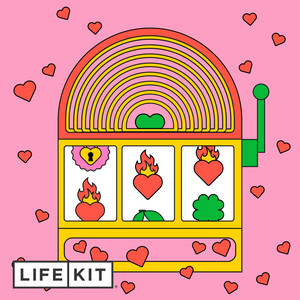
You talk in the book about how unhealthy limerence is a lot like gambling.
It's like you go to the slot machine and then most often you don't get a payout.
But sometimes you get a big one and then you get nothing for a while and then you get like just a little small reward.
And something about that really keeps you hooked, and For some people, the thrill of winning in gambling is so exhilarating that it's a very powerful reward that can get reinforced.
It's the same idea.
So when we were talking about uncertainty in a relationship or uncertainty about being able to form a bond with the person that you're limerent for, That's what's going on in gambling addiction as well.
The payouts are intermittent.
So they're not predictable.
There isn't really a pattern to the payout from the slot machine.
And so you end up in a situation where you have what the psychologists call an intermittent reinforcement schedule.
Because it's not predictable, because there isn't a pattern that you can actually learn, you kind of just keep reinforcing that dopamine drive, that wanting drive, and so that is what would be happening in a scenario like say, a situation ship, where Sometimes they're very affectionate.
Sometimes the person obviously shows that they're attracted to you and you're together and you're enjoying each other's company.
But other times they're not available or they're not forthcoming and maybe they're emotionally withholding.
And so it's very difficult in that scenario for you to kind of settle into a state of thinking oh, I can learn what predictably gives me the good reward.
And so you end up just constantly in a state of uncertainty and that can deepen the addiction.
I think what happens in these situations is you keep going back to the other person hoping they can fix things right.
And almost thinking they're the only person who can make me feel better again.
Yeah.
And I mean there's other details to the neuroscience as well about it that are bit depressing when you reflect on it.
But in that sort of later stages of addiction it's more that you desperately want contact just to relieve the pain, rather than that it is actually exciting or euphoric or rewarding anymore.
It's just being absent hurts.
So you have almost withdrawal pains if you try to detach from somebody that you've been limerent for for a long period of time.
And the way that the brain works is.
It's a bit peculiar that reward and motivation is actually separate at a neurochemical level from liking.
So wanting and liking are actually different drives in the brain.
So you can get into a state where, even after you've stopped liking something like if you're addicted to a person that's not treating you well you still want them.
I think that that's so powerful because a lot of us have experienced that, wanting someone who we don't even like or who doesn't treat us well.
And it's easy to beat yourself up for that and say, what is wrong with me?
That is so pathetic.
Yeah.
First of all, that's not a great way to talk to yourself.
But also learning about the neuroscience of it, I think, is really helpful because Yeah, I agree.
I mean, I think again.
A lot of addicts feel guilt because they know what I'm doing is destructive, but I can't stop myself.
And if you do understand the neuroscience of it, of what's happened, it makes sense.
Oh, yes, I have actually driven my brain into this state.
But that is also a starting point for trying to change your behaviour and so that you can get out of that state.
After the break we'll have tips on how to move on from limerence.
On the plus side, you get sponsor free listening to over 25 NPR podcasts.
On the minus side, you get fewer chances to tap fast forward on your podcast player.
On the plus side, you get to support something you care about.
On the minus side, you like challenges and think this makes it too easy.
So why don't you join us on the plus side of things with NPR Plus.
Learn more and sign up at plus.npr.org.
Well, let's talk about getting out of it.
How do you start to step back?
How do you start to say, okay, I'm breaking this addiction?
So I think the starting point is to begin with your mindset, recognize that what's happened is that you followed completely natural urges, completely natural processes that feel good and in many contexts, are good, because you know, falling in love with another person and getting head over heels for them actually does feel fantastic if things go well.
But It's happened in a context in which it's not good for us.
And so the kind of mindset shift is to get into that idea of okay well, this is all happening in my head.
It's happening within my brain, within my mind.
So that's where I need to fix it.
And so kind of realizing I don't need to change the behavior of of the person that I'm infatuated with.
It is going to be within my own mind that I can recover from this state.
And so then, reverse the behaviors that you were following, that were reinforcing the limerence, and do the opposite.
So you kind of, if you like, you've accidentally trained yourself into limerence.
Now you can deliberately train yourself out of limerence.
Okay, takeaway one is to shift your mindset.
There's nothing to be ashamed of here.
Having a crush on somebody or being in those early stages of a relationship with them.
That is a very strong natural high.
It's just that sometimes, especially if you can't be with them or if they're not a good fit for you, these feelings get all twisted up and they turn into a behavioral addiction.
You feel like you need this person.
You overvalue their opinion about you and your life.
When that's the case, it's time to step back.
And you can do that.
You give a few strategies in the book on how to get over limerence, and one of them is to limit contact.
Yep.
So cut off your supply basically.
So as far as you can.
It's not always possible, of course, that sometimes you can't necessarily control if you're going to have contact with this other person.
But as far as you can, limit contact so that you're not reinforcing the addiction, you're not reinforcing that connection.
And limiting contact isn't just about like I don't date this person anymore or I don't get into long conversations with them or whatever, but it's also I don't look at their social media and I don't daydream about being with them.
Exactly.
So any of those sorts of things will reinforce the desire, reinforce the connection.
So you want to try and first look at the things that are within your control, like blocking them on social media or or using software to mean you literally can't connect with them, but then trying to reduce in-person contact as well.
Takeaway two, limit contact.
That also means you cannot be friends, at least not until you're over this crush or these feelings.
You're trying to do incompatible things to stay close to this person while also losing your romantic feelings for them.
Also, your feelings are not likely to stay buried.
If you're really crushing on them, it's gonna show itself through jealousy, weird behavior coldness, attempts to smell their hair when you hug them goodbye.
Seriously, take a beat.
Take many beats.
OK, another strategy you offer is to train your brain right, like to show yourself that you can exercise self-discipline.
And you can start by simply noticing the urges you have around this person.
So it's recognizing when those impulses, when those urges are coming up from the subconscious, when that wanting drive is pushing you, that you train your executive brain by recognizing it.
And even as a first stage, you don't have to take any action.
You can, in theory, just behave exactly the same way as you would have done, but just spotting it is very powerful.
That, oh, that was a limerent urge.
Oh, that's my brain trying to push me to connect.
That's my reward-seeking urge.
So, psychologists sometimes call this metacognition.
You're sort of thinking about thinking.
So you're recognising your thoughts as you have them and then processing about what the meaning of those thoughts and the meaning of those feelings are.
And so that can be very useful as well, because that is a point at which you can kind of exert your willpower to intercede and think oh, that was a limerent urge.
I've decided not to act on those.
Takeaway three train your brain.
When you find yourself wanting to interact with this person or get their attention.
Recognize that urge for what it is.
Even if you act on it this time, that'll remind you that you do have free will and that you have choices.
You can also do things that reinforce your self-discipline unrelated to this person.
Make small promises to yourself and keep them.
I'm going to drink a glass of water every morning when I wake up.
I'm going to go to bed by 11.30 p.m.
I'm not eating lunch at my desk this week.
Tom says, small things like that can have spillover effects in other parts of our lives and help us exercise self-discipline when we have the urge to say no.
Look at our crush's Instagram.
Another strategy that you offer in the book is about spoiling the rewards you're getting from this person.
And you talk about that in terms of daydreams.
You say if you find yourself fantasizing about this person, turn your daydreams into your daymares.
Can you talk about that?
Yeah.
So the idea here is that you want to break the association between the person you're infatuated with and reward.
So the idea with the daymare strategy is that you take a daydream that you've had and you turn that previously pleasant daydream into a nightmare.
If you had this daydream about driving off into the sunset with them.
Now you change it and they suddenly shout stop the car, stop the car.
And they jump out and say, this is a terrible mistake.
I don't know what I was thinking.
And they run off and you're left there feeling foolish and ridiculous.
All right, so takeaway four, spoil the rewards for yourself.
If you're always fantasizing about this person, change the ending of those daydreams so it's not fun to get lost in them anymore.
You could also think about the details of this person that you don't like.
The way they treat you for one like that time.
They were supposed to meet up with you and never showed.
Or the fact that they always wear cargo shorts and you think they look bad in them.
What you're doing here is intentionally trying to give yourself the ick.
There's one last stage that is very important.
And that last stage is everything that I've kind of been talking about so far is pretty negative.
It's pretty demoralizing.
So you're spoiling rewards, you're training your brain, you're breaking contact with somebody that you know used to be, even if it was unhealthy, a source of excitement and exhilaration.
So it's very important that you have something positive to look forward to as well as you're going through this process.
And so that's the concept that I call purposeful living, where you essentially have to think about using the experience of a negative limerence episode to as an opportunity for renewal, that you've learned something about yourself, and that you can then use that to improve your life, looking to a more positive future.
Yeah, and you don't necessarily just have to go from one relationship or crush or whatever into another romantic pursuit.
No, absolutely.
It's probably a good idea to take a break from romantic things until you're sure you're confident that the limerence has passed.
Takeaway five, to overcome limerence, live with purpose.
Find the things that you enjoy and that offer new rewards that are, as Tom puts it, similar in scope to the feeling of limerence.
So basically get your thrills somewhere else.
I feel like I've been doing that this summer by playing softball.
I love the way it feels when I successfully make a play.
The way it feels when the ball lands in my mitt, when my bat cracks against the ball and sends it flying through the air, when I high-five with my teammates, when my foot hits home plate.
That's a high.
And it includes connection with other people and successful completion, which is one thing that's lacking from an unhealthy limerence situation.
Still, if you're someone who's experienced limerence, you might be wondering how am I supposed to date?
It's kind of a bummer if you've had one of these unhealthy crushes before or unhealthy romantic situations.
Because then going forward, you're not sure you can trust yourself when you like somebody enough.
Because it's like, it led me astray last time.
Maybe I just like people who are emotionally unavailable.
Yes, and that can be actually true in the sense that you may identify the things that attracts you or causes the limerence within you to be something negative.
So if it's people that treat you badly or people who are very, you know, sarcastic or put you down or something like that often, it can be the case that the triggers for that early excitement, that glimmer, predict bad outcomes for a long-term relationship and in that case, you know it is sensible to to see it, you know, the limerent glimmer almost as a warning sign rather than a sign of promise.
And limerence isn't necessary to have a full and happy romantic life.
This has been so wonderful, Tom.
I really have, I loved the book.
I learned a lot from it, learned even more from this conversation.
That's great to hear.
Thank you.
That was Tom Bellamy, neuroscientist and author of the book Smitten.
Okay, time for a recap.
Takeaway one, shift your mindset.
Having a crush on someone or being really excited about them isn't necessarily a bad thing, but if you find that you're craving a person you can't be with or someone who you know isn't good for you, it's time to step back.
Takeaway two, limit contact.
Try not to see them or text them or look at their social media or daydream about them as much as you can.
Takeaway three, train your brain to recognize limerent urges and call them out to yourself.
Also do things that reinforce your self-discipline unrelated to this person.
Takeaway four spoil the rewards that come with this person if you're always fantasizing about them.
Turn those daydreams into daymares intentionally, give yourself the ick.
Finally, takeaway five to make unhealthy limerence less likely, live purposefully.
Find the things that you enjoy and that offer new rewards that are similar in scope to the feeling of limerence For more Life Kit.
Subscribe to our newsletter.
Every Friday you'll get even more expert advice on health, money and more, all curated by the Life Kit team.
And we're hard at work, by the way, on a special series all about credit card debt.
You can subscribe at npr.org slash Life Kit newsletter.
This episode of Life Kit was produced by Claire Marie Schneider.
Our visuals editor is Beck Harland, and our digital editor is Malika Garib.
Megan Cain is our senior supervising editor, and Beth Donovan is our executive producer.
Our production team also includes Andy Tegel, Margaret Serino, and Sylvie Douglas.
Engineering support comes from David Greenberg and Jimmy Keeley.
Fact-checking by Tyler Jones.
I'm Marielle Segarra.
Thanks for listening.
We were too, too early in that case.
The CEO of Alphabet's Moonshot Factory on innovation and getting the timing right.
Listen on the NPR app or wherever you get your podcasts.
These days, with all the information coming at you, it can be hard to know what's accurate, what's not and what's worth your time.
Here to help you navigate it all is 1A.
Five days a week.
The 1A podcast provides a forum for curious minds to explore different angles on the biggest headlines and give you a more balanced take on what's happening.
Listen to the 1A podcast from NPR and WAMU.