Every runner knows this.
You run and run, mile after mile, and you never quite know why.
You tell yourself that you're running towards some goal, chasing some rush, but really you run because the alternative stopping scares you to death.
So that morning in 1962, I told myself, let everyone else call your idea crazy.
Just keep going.
Don't stop.
Don't even think about stopping until you get there, and don't give much thought to where there is, whatever comes, just don't stop.
That's the precious prescient, urgent advice i managed to give myself out of the blue and somehow managed to take.
Half a century later, I believed it's the best advice and maybe the only advice any of us should ever give.
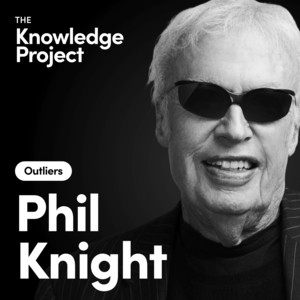
That was an excerpt from the book I'm going to talk to you about today, which is Shoe Dog by Phil Knight.
Today, Nike looks inevitable, but for nearly two decades, this company almost died daily.
It was that close.
Two banks dumped him.
His only supplier tried to replace him.
The FBI opened an investigation.
The government hit him with a customs bill larger than their revenue.
And that's not all.
Phil's inner monologue during these years is extraordinary.
He swings between extremes, beating himself up in one moment, and then positive affirmations of things he doesn't quite believe to keep him going.
He was also a misfit, and I mean that in the best way possible.
He's an introvert who bombed at selling encyclopedias.
He surrounded himself with oddballs a guy in a wheelchair, an obsessive letter writer, people nobody else would have bet on.
He never praised them and often ignored them, but he trusted them completely and they rewarded that trust by giving everything they had.
Shoe Dog is one of the best business books ever written, because it tells the truth about what building something actually feels like.
Let's start with some of the lessons.
Lesson one, belief is irresistible.
Phil Knight was a terrible salesman.
He tried encyclopedias door to door and hated every moment.
He was an introvert.
He tried mutual funds next, and while he was slightly better, it was a job.
And then he started selling Japanese running shoes out of the trunk of his car.
And something strange happened.
He couldn't stop selling them.
Here's how he explained it.
So why was selling shoes so different?
Because I realized it wasn't selling.
I believed in running.
I believed that if people got out and ran a few miles every day, the world would be a better place.
And I believe these shoes are better to run in.
People sensing my belief wanted some of that belief for themselves.
And then he writes a line I keep turning over for the rest of the book.
Belief I decided.
Belief is irresistible.
You can learn all the sales techniques in the world.
You can study persuasion.
You can read every negotiation book, listen to every podcast.
But if you don't genuinely believe in what you're building, people will sense it instantly.
The reverse is also true.
Genuine conviction is contagious.
You stop persuading and start attracting.
In my conversation with James Clear, he put it this way.
If you're having fun, then you're dangerous.
You're hard to compete with.
And Phil Knight was having fun.
He didn't pay himself for years.
He wasn't in it for the money.
Nike wasn't a job.
It was him.
I mean, just listen to how he closed his memoir.
It's never just business.
It never will be.
If it ever does become just business, that will mean that business is very bad.
Lesson two, fail fast, but fight like hell not to.
Two words become Knight's internal mantra, fail fast.
This is strange advice from someone who never actually fails.
He comes close, though.
In fact, you could say he lived on the edge for over a decade.
So what does fail fast really mean?
Not what you think.
Knight isn't celebrating failure.
He desperately does not want to fail.
You feel it on every page of his memoir.
Throughout a lot of the book, he's holding himself together with positive affirmations.
He doesn't fully believe, coaching himself through one crisis to the next.
But he does something the Stoics would recognize.
He thinks about the worst case.
The reason you do this isn't about pessimism.
It's about changing your relationship with fear.
Listen to how he does this.
If Blue Ribbon, which is the precursor to Nike, went bust, I'd have no money and I'd be crushed.
But I'd also have some valuable wisdom, which I could apply to the next business.
Wisdom seemed an intangible asset, but an asset all the same, one that justified the risk.
He imagines the worst outcome, thinks about it, and says he'd be okay.
In fact, if it happened, it would just be tuition.
Fear is the real enemy.
Fear is the thing that stops you from getting where you want to go.
It clouds your judgment at the exact moment you need clarity most.
Knight nails this later in the book, when he says when you see only problems, you're not seeing clearly.
By accepting the worst case scenario upfront, he took away its power.
Fear stopped blinding him, letting him see what was in front of him instead of what his anxiety invented.
And this gave him the power to take big swings and go for it.
Lesson three, let people surprise you.
Phil's approach to people was unorthodox.
In fact, some would have called it outright neglect.
He hired oddballs.
Consider Jeff Johnson, his first real salesman.
He wrote Knight passionate letters from the road.
His letters were long, they came daily, and they were filled with random missives.
And Knight barely acknowledged or even responded to these.
Sometimes he'd sit down to reply, stare at the page, realize he didn't even know where to start because he was so behind, and get up.
And by the next day, there would be a new letter anyway.
Knight was following a principle he'd absorbed from studying military leaders, especially General Patton.
Don't tell people how to do things.
Tell them what to do and let them surprise you with the results.
Here's Knight in his own words.
One lesson I took from all my homeschooling about the heroes was that they didn't say much.
None was a blabbermouth, none micromanaged.
So I didn't answer Johnson and I didn't pester him.
Having told him what to do, I hoped that he would surprise me.
Sit with that last line for a second.
Having told him what to do, I hope that he would surprise me.
This is the difference between managing and leaving.
If you tell someone how to do something, you cap the upside at your own imagination.
But if you tell them what to do and you leave them alone, there's room for their imagination.
They could surprise you.
His people rewarded that trust with devotion.
They called themselves buttfaces, a name from their brutally honest retreats where no idea was sacred and everyone was fair game.
They were a band of misfits who had walked through the fire for the company.
Not because Nike paid them well, he didn't, for years.
Not because he praised them constantly, he wasn't the type.
They did it because he saw something in each of them that the world had missed.
He bet on them when nobody else would.
There seems to be two competing worldviews around trust.
Some people think that you earn it, and some people think that you give it.
And in this case, Phil gave it generously, with real responsibility and real autonomy, and people moved mountains to prove him right.
Knight's team didn't just work for Nike.
They were Nike.
Lesson four, make work play.
Everyone talks about work-life balance, but Knight wanted the opposite.
Listen to what he writes here.
I was putting in six days a week at Pricewaterhouse, spending early mornings and late nights, and all weekends and vacations at Blue Ribbon.
No friends, no exercise, no social life.
And holy content.
My life was out of balance, sure, but I didn't care.
In fact, I wanted even more imbalance.
Or a different kind of imbalance.
I wanted to dedicate every minute of every day to Blue Ribbon.
I'd never been a multitasker, and I didn't see any reason to start now.
I wanted to be present always.
I wanted to focus constantly on the one task that really mattered.
If my life was to be all work and no play, I wanted work to be play.
Two lines in there deserve a second listen.
First, I wanted even more imbalance.
He's obsessed.
This isn't hustle culture porn.
This is someone who found their life's work.
Work is life and life is work.
And second, if my life was to be all work and no play, I wanted work to be play.
This connects directly back to belief.
When you believe deeply in what you're building, the boundary between work and play dissolves.
You're not forcing discipline.
The work is pulling you forward.
Lesson five, the goodbye test.
Phil writes one of the most quietly powerful lines in the book about the woman he's dating, his future wife Penny.
And he says, the single easiest way to find out how you feel about someone is to say goodbye.
He meant it about love, but the principle applies everywhere.
Brad Jacobs has a framework for evaluating your team.
He calls it ABC.
When a C player tells you they're leaving, you feel relief.
When a B player says the same thing, you think we'll miss them, but we'll manage.
But when an A player walks into your office and says they're done, you feel a pit in your stomach.
You do almost anything to keep them.
That gut response tells you the truth about how you feel.
You don't always know what someone means to you while they're there.
You find out when they're gone or when you imagine them gone.
And this applies to everyone from co-founders to employees and friends.
If you want to know who really matters to you, run them through the goodbye test.
Lesson six, one thing.
Phil was always overwhelmed.
There were too many crises, too little cash, and not enough hours in the day.
But he had a discipline that carried him through all of it.
And he writes, I wanted to focus constantly on the one task that really mattered.
His team adopted the same principle.
Each of us found pleasure, whenever possible, in focusing on one small task, one task, we often said, clears the mind.
Knight didn't want to just tackle every problem at the same time.
He focused on the most important ones and ignored everything else.
And there's one other detail that stood out about his focus.
When things were toughest, he deliberately directed his attention to what was working and not what was broken.
He forced himself to focus on the good.
Okay, that's the setup.
A misfit with a crazy idea.
A thousand borrowed dollars and the kind of obsession that makes balance irrelevant.
Now let's get into what he built.
So it's 1962.
Phil is 24 years old, sitting in his father's TV room in Portland waiting for a commercial break during wagon train.
He's rehearsed what he wants to say for weeks, but he's nervous because what he's about to propose sounds insane.
So dad, do you remember that crazy idea I had at Stanford?
The crazy idea came from a research paper.
Phil was a runner good enough to compete at the University of Oregon under a legendary coach named Bill Bowerman.
So he knew running shoes, but he was also a business student, and he'd noticed something.
Japanese cameras had recently blown apart the German-dominated camera market.
They were much cheaper and just as good, if not better.
So his paper asked a simple question.
Could Japanese running shoes do the same thing to German running shoes?
At the time, Adidas and Puma owned that world completely.
At the 1960 Rome Olympics, 75% of track and field athletes wore Adidas.
If you were a serious runner in the 60s, that's what you wore.
So Phil presented his idea to his classmates with passion and intensity, and they responded with what he called labored sighs and vacant stares.
His professor gave him an A, but nobody else cared.
But Knight couldn't stop thinking about it.
When the commercial hit, he laid it on thick.
Remember how we talked, Dad?
How I said I wanted to see the world, the Himalayas, the pyramids, the Dead Sea, Dad?
The Dead Sea!
Well, haha.
I'm also thinking of stopping off in Japan, Dad.
Remember my crazy idea?
Japanese running shoes.
It could be huge, Dad.
Huge.
Now his father worshiped respectability.
You go to school, you get a job, you buy a house and you live a normal life.
And what Knight was proposing was the opposite backpacking trip around the world to chase an idea about importing shoes.
And then something unexpected happens.
In the flickering light of the television.
His father walks forward in his recliner and says he's always regretted not traveling more when he was young.
He says a trip might be the finishing touch to his son's education.
Okay, he says.
Okay, Buck, okay.
So Phil thanks him and flees before the old man can change his mind.
He arrives in Japan in November of 1962.
The country is still rebuilding from the war.
He takes a seven-hour train ride from Tokyo to Kobe, packed against strangers.
He's going to meet executives at a company called Onitsuka, which makes athletic shoes under the brand name Tiger.
They don't know he's coming.
In fact, they've never even heard of him.
So when he gets there, he's escorted into this conference room with four executives seated around a table.
And they bow, and he bows, and everyone sits.
And then one of them asks, what company do you represent?
And panic sets in.
He doesn't have a company.
His mind races back to his childhood, to the blue ribbons he'd worn at track meets.
Gentlemen, he says, I represent Blue Ribbon Sports of Portland, Oregon.
Of course, Blue Ribbon Sports doesn't exist, but it will if they give him a chance.
The only thing he has going for himself right now is an unwavering belief in what he's trying to do.
And it's the same force that will create Nike.
The executives feel his conviction, and it's contagious.
He launches into his pitch.
It's basically his Stanford paper all over again, delivered with all the passion of a man who has nothing to lose.
Japanese shoes can capture the American market.
The quality is there.
The price is right.
All they need is the right distributor, someone who knows American runners, someone who is a runner.
When he finishes, there's a long silence.
The executives confer in rapid Japanese, talking over each other, and then they stand up and leave the room.
And Knight sits there.
He's certain he's blown it.
But a few minutes later, they come back carrying shoe samples.
They want to make a deal.
Phil orders 12 samples of Tiger shipped to his father's house in Oregon.
The deal is tiny.
It's almost trivial, but it's a start.
He finishes his trip around the world and at the Acropolis in Athens, he stops in front of the temple of Athena Nike.
Nike is the Greek goddess of victory.
He feels an inexplicable connection to the place.
He has no way of knowing it yet, but soon that name will become the most famous brand in sports.
Knight returns to Oregon in 1963 and waits and waits.
The shoes don't arrive for a year.
During that time, he gets a job as an accountant.
So to the outside world, his crazy idea looks like it's gone nowhere.
He's living with his parents still.
When the samples finally arrive, he does something clever.
He sends two pairs to Bill Bowerman, his old track coach at Oregon.
It's important to understand who Bowerman was at the time.
He was the Yoda of running.
He was one of the most respected coaches in the country, in the world even.
He trained Olympic athletes.
But what made him different was an obsession.
He couldn't stop tinkering with shoes.
He'd cut them apart, shave off weight, add foam, try anything to give his runners an edge.
He made shoes out of fish skin.
He experimented with kangaroo leather.
The man was basically a mad scientist who happened to coach track.
So Knight sends him tigers, hoping that Bowerman might like them and maybe recommend them to a few athletes.
But he doesn't just like them.
He wants in.
So over hamburgers at the Cosmopolitan Hotel in Portland, Bowerman makes him an offer a 50-50 partnership.
Stop and think about that for a second.
Knight is a kid with no track record, no money, no infrastructure, selling shoes out of the trunk of his Plymouth.
And the most respected track coach in America is sitting across the table offering to go halves.
It's not like Bowerman didn't know him at all.
He used to coach him.
But this is a big leap.
Knight looked across at the man whose approval he craved even more than his father's and said yes.
They shook hands.
He later wrote that he felt like he was daring to negotiate with God.
Bowerman wasn't doing charity.
He saw something in this awkward young man that others had missed.
He trusted his business sense enough to bet real money on it.
January 25th, 1964, Blue Ribbon Sports is officially born.
Each partner puts in $500.
That handshake would be worth billions.
For the next several years, Knight lives a double life.
By day, he's a respectable accountant.
By night and on weekends, he's a shoe peddler.
He drives his green Plymouth around the Pacific Northwest, pops open the trunk, lays out the tires and waits for runners to wander over.
He talks to them about pronation and cushioning and weight.
He listens to their complaints about existing shoes and makes notes about everything that's wrong.
And he sells.
Not a lot at first.
His first year, Blue Ribbon grosses $8,000.
The next year, they gross about $16,000.
And then $32,000.
Every year, the number doubles.
He's awkward and introverted.
But remember, belief is irresistible.
He believes in running and he believes in these shoes.
And runners can feel his conviction and it's contagious.
When someone believes in something so totally, we respond to it.
We want to buy in.
So he also does something that seems obvious but wasn't common at the time.
He tells the truth about the product.
If the shoe has a flaw, he admits it.
If one model is better for a certain foot type, he says so.
Even if it means selling a cheaper shoe, he doesn't oversell and he doesn't exaggerate.
After a few years, runners start seeking him out.
They tell their friends.
Coaches recommend Blue Ribbon.
The company develops a reputation.
These guys know what they're talking about.
They shoot straight.
As Blue Ribbon grows, Knight starts hiring.
And the people he hires are not what you'd expect.
His first real employee is Jeff Johnson, a runner and former competitor.
Johnson is obsessive.
He writes Knight long rambling letters about everything from shoe design to the meaning of life.
And Knight almost never writes back.
Johnson keeps writing anyway.
It's like Phil knows that he wants his approval and Knight never gives it to him.
Then there's Bob Woodall, a runner who became paralyzed from the waist down after a freak accident.
And Phil hires him without hesitation.
And Woodall turns out to be one of the most resourceful people in the company.
And then there's Hayes and Strasser, one by one, the oddballs and misfits who didn't quite fit anywhere else, but at Blue Ribbon they fit.
And here's what's remarkable about this.
Knight doesn't just manage, though, not in any traditional sense.
He develops a management style based entirely on trust, though some would probably call it neglect.
He gives Johnson.
The East Coast tells him to open a store, then a factory, and he has zero manufacturing experience.
He puts Woodle in charge of operations, and he has no experience.
And then Phil gets out of the way.
He trusted them implicitly.
He later said he was adhering to the wisdom of General Patton.
Don't tell people how to do things.
Tell them what to do and let them surprise you with the results.
And because he trusted them with autonomy, they rewarded him with devotion.
They were a band of misfits who had walked through fire for each other and for the company, and not because he paid them.
Well, because he didn't, at least not for years.
Instead, he saw something in each of them that the world had missed, and they spent the rest of their careers proving him right.
And while Knight was off building his team, Bowerman was doing what Bowerman always did.
He was tinkering.
And one Sunday morning in 1971, he's having breakfast with his wife and he can't stop staring at her waffle iron.
And he has an idea.
What if he poured rubber into it?
What if those little waffle squares became treads on a shoe sole?
So he grabs the waffle iron, takes it into his workshop, and starts experimenting.
And of course, he ruins the waffle iron.
While his wife is not happy, what comes out of that experiment totally changes the company.
The waffle sole grips the ground better than anything on the market.
It works on grass, on track, on pavement, all without adding weight.
It's the kind of idea that seems obvious after someone else does it, but nobody had done it.
It took a guy who looked at his wife's kitchen appliance and thought, running shoes.
And the sole becomes the foundation for the waffle trainer, which helps fuel the running boom in the 1970s.
It's their first product that isn't borrowed from somebody else's factory.
And years later, that destroyed waffle iron is recovered from a garbage pit.
And today it sits on a display case at Nike headquarters, proof that innovation doesn't require an expensive lab or a big budget.
Now, here's where the story gets dark.
Throughout the late 60s and early 70s, blue ribbon grew fast.
Sales doubled every year.
They can't keep up with demand.
Phil Knight's philosophy is life is growth.
You grow or you die.
But growth is killing them.
The business model is brutal.
Knight has to pay for shoes from Japan months before he can sell them in America.
So he's constantly borrowing, placing orders he can barely afford and then scrambling to sell enough to pay back the loans before the next shipment arrives.
It's a treadmill, and it's speeding up.
Meanwhile, his supplier turns hostile.
Onitsuka sees how well he's doing and starts asking the obvious question why do we need a middleman?
They began looking for ways to cut Blue Ribbon out entirely.
And the banks are done.
Blue Ribbon has been kicked out of multiple banks for being too leveraged.
Nobody wants to touch them.
By 1970, the company is legally insolvent.
They have zero cash and the banks are getting hostile.
A shipment of shoes is sitting on the docks and it needs to be paid for.
In every meaningful sense, they're finished.
And then Bob Woodall rolls into Knight's office.
Woodall, the man in the wheelchair who runs operations, tells Knight that his parents want to lend the company their life savings 5000 with no interest.
Knight is stunned.
He drives to the Woodall house and sits with Bob's parents.
And he can see, looking at this modest home, that these people are not rich.
$5,000 is a lot of their savings.
He knows that taking this check is reckless.
If the company fails, he will have destroyed the retirement of the parents of one of his most loyal employees.
He doesn't want to take their money, but he has no choice.
And then they ask if he needs more.
They have another $3,000.
It'll drain their savings to zero, but they'll do it.
And Knight says, yes, he has to.
As he walks out the door, check in hand, he asks Ms.
Woodall why she's doing this.
She looks at him and says if you can't trust the company your son is working for, then who can you trust?
Think about what's happening here.
There was no spreadsheet that justified this investment.
There was no bank that would touch Blue Ribbon.
But this woman had watched Knight give her paralyzed son a chance when no one else would.
She watched him treat Bob with respect, with real responsibility, and with trust.
And she decided that a man who would do that was worth betting everything on.
The Woodall loan bought time, but it didn't fix the real problem.
Knight discovered that Onitsuka was actively shopping for other American distributors.
The company that gave him his start was now trying to cut him out.
The partnership that built Blue Ribbon was dying.
Knight faced a choice fight for a relationship that was already dead, or bet everything on making his own shoe.
And with help from a Japanese trading company called Nishu, he found new manufacturers.
His team started designing their own products.
Jeff Johnson suggested the name Nike after it came to him in a dream.
A graphic design student named Carolyn Davidson created this swoosh logo that is so popular today for 35.
Knight's reaction when he saw it was, I don't love it, but it will grow on me.
In 1972, Nike made its debut at the National Sporting Goods Association show in Chicago.
The shoes were flawed.
Some of the swooshes were crooked, but buyers trusted Blue Ribbon enough to give them a shot.
People didn't buy the shoes because they were perfect.
They bought them because they believed in the people behind them.
So Nike was born, but the worst crisis was still coming.
Nishu provided financing when American banks wouldn't buying shoes from the factories up front, so Nike could use his cash to actually run the business.
Their incentives were perfectly aligned.
The more shoes that Nike sold, the more Nishu earned.
It was a true partnership.
But then the Bank of California pulled the plug.
They'd had enough of his aggressive borrowing.
They fired Nike as a client.
And then they did something worse.
They referred the account to the FBI because they suspected fraud.
Without bank financing, the company would collapse within weeks, and now Knight might base criminal charges on top of it.
He had one option, an issue.
But there was a problem.
He had been using Nishu's money to secretly fund a factory in New Hampshire.
He built it to reduce his dependence on Japanese manufacturers, and it was a smart, long-term move, but it was also a clear violation of his agreement with Nishu.
He gambled he could get away with it, and now he'd have to get caught.
So Knight walked into Nishu's offices and sat across from a terrifyingly stoic executive that he privately called the Iceman.
And he confessed everything.
The bank had fired them, the FBI might investigating.
And oh, by the way, he'd been secretly diverting their money into an unauthorized factory.
He had deceived his partners, and now he was at their mercy.
The Iceman took it all in, and then he looked at Knight and he said there are worse things than ambition.
What happened next is extraordinary.
The Iceman didn't just forgive Knight.
He walked into the Bank of California, paid off Nike's entire debt on the spot and then told the bank that Nishu would be terminating its own relationship with them.
Let that sink in for a second.
A 100 billion company just burned a bridge with a major American bank to defend a tiny shoe operation based out of Oregon.
After he paid off the debt, the Iceman said two words, such stupidity.
And Knight thought he was talking about him, but he was talking about the bank.
Then the Iceman continued, I do not like stupidity.
People pay too much attention to the numbers.
There it is again, the pattern that runs through the entire Nike story.
The Iceman had watched these guys operate.
He'd seen how they treated people, how they ran toward problems, how they cared about the product.
The numbers looked terrible.
He trusted the man and not the balance sheet.
There's a garden at Nike headquarters today named after Nishu, a small tribute to a debt that can never be fully repaid.
With Nishu's backing and the bank crisis behind them, Nike entered its golden age, but not because of anything.
Nike planned, because America started running.
In 1972, a Yale-educated American named Frank Shorter won the Olympic marathon in Munich.
ABC broadcast it live.
Millions of people watched this lean, determined man cross the finish line, and something shifted.
Running clubs popped up.
Joggers appeared on suburban sidewalks.
In the 1970s, the New York Marathon had 127 finishers.
By the end of the decade, it had tens of thousands.
Nike didn't start the running boom, but they were the only company ready for it.
They rode the wave.
The waffle trainer caught fire because it's better traction, better cushioning, and a better price.
But what surprised everyone, including Phil, was what happened next.
People stopped taking them off.
And here's what Phil wrote in his book.
He said.
Watching the shoe evolve in 1976 from popular accessory to cultural artifact, I had a thought.
People might start wearing this thing to class and the office and the grocery store and throughout their everyday lives.
Until that moment, athletic shoes were for athletics.
You wore them to run, then you changed.
The idea of wearing running shoes to the grocery store was radical.
So Knight made a small decision that turned out to be enormous.
He ordered the waffle trainer in blue to go with jeans.
We couldn't make enough.
Retailers and sales reps were on their knees pleading for all the waffle trainers we could ship.
Blue shoes and blue jeans.
That's the moment Nike stopped being a running company and started becoming a lifestyle brand.
They weren't just selling performance anymore.
They were selling identity.
They also realized the power of athlete endorsements.
And then, as in now, they went after the best.
They landed Steve Prefontaine.
At the time, Pre had every American record from 2,000 to 10,000 meters.
He was brash, rebellious, and utterly devoted to the sport.
He didn't just wear Nike.
He was Nike.
Phil Knight later called him the soul of Nike.
But when Pre died in a car accident in 1975, at just 24, the company was devastated.
But his spirit became part of their DNA.
There's a building... at their campus today named after him and even a statue.
And at the end of the 1970s, Nike sales hit $270 million.
They'd captured half of the American athletic shoe market.
They'd passed Adidas in the United States.
A handshake and $1,000 had turned into the biggest name in American sports.
But growth created its own problems.
The bigger they got, the more cash they consumed.
And the more cash they consumed, the more vulnerable it became to forces beyond its control.
Just when Nike found its footing, its competitors found a weapon.
The established American shoe companies had watched this upstart from Oregon eat their market share for a decade.
They couldn't beat Nike on product and they couldn't beat them on price.
So they went to Washington.
They dug up an obscure customs rule that let the government recalculate import duties not based on what Nike actually paid for shoes overseas, but what on similar American made shoes sold for domestically.
The difference was enormous and they get it applied retroactively.
The customs bill was 25 million.
Nike's entire revenue at the time was 24 million.
The government was demanding more than the company earned in a year.
Phil was furious.
Nike hadn't broken any law.
The shoes were imported legally.
Duties were paid correctly at the time.
This was a retroactive rule change, weaponized by competitors who couldn't win in the market.
So they tried to win in a bureaucracy.
For the first time, he went political.
He hired lobbyists.
He ran TV ads.
He argued this wasn't about protecting American jobs.
It was about protecting American companies from competition.
The battle dragged on for years, and Phil Knight described it as one of the most stressful periods of his life which, given everything else he'd survived, tells you something.
There were moments he believed they would lose, that this arbitrary bureaucratic weapon would accomplish what banks, suppliers and the FBI had all failed to do.
Nike eventually settled for $9 million, still a staggering sum at the time.
The customs war taught Phil Knight something every successful founder eventually learns.
Winning creates enemies.
The people who can't beat you in the market will try to beat you in court, in the press, in the halls of government.
Success doesn't end the fight.
It changes the arena.
But the war also forced a decision on the butt faces, one that they had resisted for years.
Nike needed a war chest.
It needed resources to survive whatever came next.
The company that had been built on a handshake and loyalty was about to go public.
On December 2, 1980, Nike went public at $22 a share.
By the end of its first day of trading, the company is valued at hundreds of millions of dollars.
Phil Knight, the kid who borrowed 1000 from his father to chase a crazy idea halfway around the world, is worth about 170 million on paper.
But he doesn't describe that day as a triumph.
He describes it as a kind of death.
The scrappy, trust-based company he'd built was now a public corporation.
The buttfaces would answer to analysts.
He gathered his original team, the misfits who'd built this thing with him, and they sat together in silence.
They'd won.
They'd actually won, but something was ending too.
Phil Knight writes I wanted to build something that would last, but I also wanted to build something that would stay small enough to feel like family.
You can't have both.
That's the trade-off at the heart of every company that succeeds.
You can stay small and preserve the culture, or you can grow and change the world.
And it's really hard to do.
And Phil Knight chose growth, and he spent the rest of his career mourning what it cost.
Decades later, after the customs war, the labor controversies and the endless expansion into every corner of sports, the story circles back to where it all started.
In 2005, LeBron James asked for a private word with Phil Knight.
Nike had signed LeBron as a teenager before he had played a single professional game.
Millions of dollars on an unproven kid from Akron, Ohio.
And LeBron handed Phil Knight a gift.
It was a Rolex from 1972, the year Nike was founded.
And engraved on the back, it said, with thanks for taking a chance on me.
Phil Knight stood there holding that watch and the whole journey collapsed into a single frame.
His father took a chance on him when the crazy idea made no sense.
Bowerman took a chance over hamburgers at the Cosmopolitan Hotel.
Bob Woodall's parents handed over their entire life savings.
With no interest.
Nishu paid off his debts when the FBI was circling, and now LeBron was thanking Phil Knight for doing the same thing all the people had done for him.
The crazy idea only worked because people trusted the man crazy enough to pursue it.
And Phil Knight spent his entire career trying to be worthy of that trust.
Not always perfectly, not always gracefully, but relentlessly.
That's the lesson of Phil Knight.
That's the lesson of Nike.
Thank you for listening and learning with me.
I'll see you next week.