This is Susan Burton, host of the podcast The Retrievals.
Cutting someone's body open and then operating when they can feel it.
That is not supposed to happen.
That's something from history or from war.
It can't be happening to 100 ,000 women a year.
Can it? From Serial Productions and The New York Times, it's The Retrievals, Season 2, The C -Sections.
Listen wherever you get your podcasts.
From The New York Times, I'm Natalie Kittroff.
This is The Daily. When Republicans passed their big domestic policy bill just over a week ago, they kept making the same argument about sweeping changes to Medicaid that were key to the law.
There are now work requirements for Medicaid, as there should be.
The American people want that.
That the measures, including new work requirements, would only encourage able -bodied adults to earn their health care, ultimately creating a fairer system for everyone.
You ought to be working to prove that you're not taking the Medicaid benefits away for people who they were intended for in the first place.
Critics said the opposite.
All this is is more red tape meant to kick people who should get Medicaid off of Medicaid.
They predict millions of working people who need health care would lose it.
I mean, this is going to hit rural America right in the face.
The truth will emerge in rural and often red areas, where cuts to Medicaid funding will be felt most deeply.
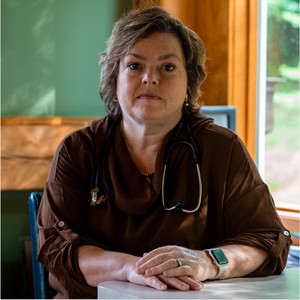
Today, I speak to a family doctor in one of those places, Western North Carolina, about what she thinks will happen to her patients.
It's Monday, July 14th.
Hi. Can you hear me?
Yep, we've got you.
Great. I'm so happy to have you here.
I want to know, should I call you Dr. Dowler, Shannon?
What do you prefer?
Shannon is fine. Okay, great.
So, Shannon, we are talking to you today because of this giant bill that President Trump just signed into law.
We know that North Carolina is going to lose a lot of federal funding for Medicaid and that a lot of people may get kicked off Medicaid.
Senator Tom Tillis from North Carolina, he's one of the few dissenting Republicans who voted against the bill, kept saying that in North Carolina, more than 600 ,000 people could lose coverage.
You are a doctor in rural North Carolina.
We know these cuts are going to affect rural places the most. Can you first start just by telling me where you live and work?
Sure. So I live in the mountains of North Carolina up in Madison County.
It's about 45 minutes or so north of Asheville in the Pisgah National Forest. And so I'm about a mile from the Tennessee state line as the crow flies, but it takes me 30 minutes to get to Tennessee.
I sit on my porch and I see the mountains in the distance.
I don't see anybody else's houses.
I see more cows than people.
And for me, it's very settling and very peaceful.
How long have you been practicing medicine?
Gosh, two years. I did residency in 99 to 2002, and I did a fellowship year.
So over 20 years since residency.
Wow. And I have practiced in a variety of settings, all focused on underserved care from local health departments to the free clinic, which is where I do most of my clinical time now, as well as with local health departments.
How close, just so I'm kind of understanding where you're at, is the nearest hospital to you?
The nearest hospital would be in Asheville, and it's about probably a 50 -minute to 60 -minute drive depending on traffic.
We did have a hospital closer in Irwin, Tennessee, but it got flooded in Hurricane Helene and so has closed down completely.
I want to just talk about your kind of trajectory practicing.
practicing. For most of the time that you were practicing until 2023, Medicaid coverage in North Carolina was pretty limited because this was one of the states that was the very last to expand Medicaid as part of the Affordable Care Act, right?
I'm wondering, what was it like to practice in North Carolina before the expansion?
Like, how did people get their health care?
What did that look like?
It was often heartbreaking.
There's something in medicine we call compassion fatigue, where at the end of the day, sometimes you're so exhausted from hearing the awful stories of people's lives and healthcare experiences that you're just exhausted.
And we took care of so many people that had lives that were ended or altered with preventable diseases or curable diseases, is, and instead they died in their 40s or 50s.
And they were working, the working poor, they were going to work every day, but couldn't afford health insurance.
We did the best we could to cobble together their health care for them.
But at the end of the day, we couldn't amputate their leg.
They would have to see a surgeon for that.
And without health insurance, that was a challenge.
As far as putting their whole health care picture together, it was often impossible.
possible. Can you tell me about a few people who really stick out to you from that time, their experiences of not having care kind of remain with you even now?
Yes, there are a few people that just weigh on me.
One was a gentleman who in his 50s had end -stage liver disease.
He had hepatitis C infection, which is a very curable infection If you have access to medications.
And he also had pretty significant bipolar disorder and alcohol abuse.
And that combination with no health insurance at all was deadly for him.
So with his hepatitis C infection, even if we could have found a GI specialist who would take him as a patient, the problem is they wouldn't treat his hepatitis if he was using any alcohol at all.
But we couldn't get him into a psychiatrist to treat his bipolar disorder, which is why he used the alcohol, was to deal with his sort of crushing depression.
So, it was just this constant sort of undulating healthcare experience.
I took care of him for well over five years.
And I was in the ICU with him an hour before he died, holding his hand and telling him this was it.
This was the last hospitalization because he wasn't going to make it through this one.
And how tragic that that was something that we could have fixed for him.
And we did it. He died from it.
And I'm wondering, like, would he have qualified for Medicaid if there had been an expansion?
pension. Absolutely.
He would have been the first person to qualify.
What I will say living sort of deep in the rural Appalachian culture is that a lot of people aren't going to show up if they don't have a way to pay for it.
Even if it's a sliding scale, they feel like somebody else needs the services more than they do, or they're just very humble and they don't want to take something they can't pay for.
At one night clinic, this story has always really stuck with me.
A woman in her 40s came in to the night clinic.
She'd never been seen in our clinic before because of a complaint that people in the choir wouldn't stand near her.
And she had started having an odor that made her unpleasant to be near, and she'd avoided health care because she couldn't afford it.
And she was a housekeeper.
She had no access to any health insurance and didn't want to bankrupt her family.
And so on exam that night, she had a breast cancer that was so advanced that had grown through her skin.
And that's where the smell was coming from.
And she ended up dying a few months later.
We could have, if she'd gotten mammograms, you know, like we could have caught this very, very early and treated her and she would have gone on to be there for her family.
But her fear of bankruptcy for seeking healthcare, or maybe it was, you know, she just didn't want to take services from someone else.
It's hard to know what keeps people from walking in the door.
So I want to talk about when Medicaid was expanded in North Carolina and your experience of that.
After 2010, when Obamacare passes, that's the Affordable Care Act.
What that law tries to do is allow states to expand their Medicaid coverage, right, to include many more people so that, you know, the vast majority of the working poor are covered.
And the idea is the federal government is going to pay for that or for most of that.
But states have to sign up.
talk me through what happened initially with North Carolina.
So I was the chief medical officer of a federally funded clinic in a rural location at the time.
And it became evident pretty quickly that it was turning into a partisan issue and that North Carolina was not going to participate.
And I felt like that could be a really dangerous time for our state.
And so I spent the next decade, like, stumping.
I talked to anybody that would would talk to me about expansion, trying to get our lawmakers to embrace expansion.
And then I made the decision to commute to Raleigh so that I could be the chief medical officer for North Carolina Medicaid.
And then, of course, was there when expansion finally happened.
Can you say more about that?
Because it took a really long time to get this expansion in North North Carolina.
You know, it just happened like a couple of years ago, more than a decade after Obamacare passed.
And you said it got really partisan, this debate over the expansion of Medicaid.
And I'm just I'm interested in drilling down here with you on on what made it so divisive.
Like, do you think that voters, lawmakers felt like this was some kind of free handout to people.
What do you think? What was driving their skepticism of the expansion?
Well, I can speak to North Carolina specifically.
And at the time when expansion started, North Carolina Medicaid had had deficits for several years in a row.
They had exceeded their budget.
And so at the same time that we were trying to expand for more coverage, the legislators legislators were saying, but wait a second, you're breaking the piggy bank because you're not managing your program well enough.
And so five years in a row, we hit budget.
And I think that probably was part of what helped the legislators feel more comfortable that maybe now's the time that we can expand because we're not as afraid of that historical budget shortfall.
It's interesting. What you're saying is initially there was some resistance just because of the basic math here.
Like, you had people saying, look, we can't afford this.
You know, even with the subsidy, we can't afford to make this program bigger.
Is that right? I think yes, and it was too much like giving in to Obama.
And there was just a piece of that that was real.
Right. The partisan politics around Obama.
Yeah. I want to take you to the moment after the expansion finally goes goes through.
What was that like, you know, to practice in a state that all of a sudden now is providing health insurance to just so many more people?
What did that look like?
You could see the spirits lift of health care, and particularly the primary care workforce.
It doesn't matter what your specialty was.
You were finally able to make referrals, get imaging studies, order colonoscopies, do those things that you knew were just good medicine.
So there's a gentleman that I was taking care of in his 30s, a farmer, and terrible leg ulceration.
He'd been hospitalized twice and he refused to go back to the hospital and he wouldn't go to wound care because he didn't have any way to pay for it.
And the reason he wouldn't go back to the hospital is there was no one to manage his farm.
And because he felt like people treated him badly, he was uninsured.
He knew he was uninsured and he felt like he was treated as less than.
Hmm. He had shame around that.
So much shame. He would come to us in the free clinic.
We would beg him to be admitted.
I even offered to go take care of his farm.
I was like, I will feed your animals.
Please go get hospitalized.
So he wouldn't. But we started doing home visits with him.
And then meanwhile, he got Medicaid coverage.
Wow. He started going to wound care.
He got into a regular primary care office.
So, I mean, he went from someone who was going to have his leg amputated—it was that bad, it was gruesome—to fully healed and back to normal functioning because he got coverage with Medicaid.
Just tell me, for a farmer, a young farmer in his 30s, what does that mean, that kind of transformation, just, you know, for the trajectory of his life?
I mean, I can't imagine how he would have been able to keep doing his work without a leg.
He would have gone on permanent disability.
You know, he would have cost our system so much more money because he would literally have not been able to work.
I mean, we live in the mountains.
This is not even ground to work on a farm.
You know, this would be, I'm not saying it's impossible.
It would be very difficult.
I mean, I'm struck by the fact that this is someone who, you know, is getting health insurance, health coverage from the government.
But that's the thing that allows him to work and continue being, you know, a productive member of this community for years and years to come, potentially.
Absolutely. He's just not unique.
There's just stories like this everywhere around how people's real lives have been turned around.
They're everywhere.
We'll be right back.
Hey, Daily Listeners, it's Matt from the New York Times Marketing Department.
My team makes some of the ads you hear on the show, and we're looking for voices to feature in an upcoming ad.
If you share your New York Times account with friends and family, but always wished you could have separate logins for everyone, we want to hear from you.
Record a voice memo on your phone and tell us what would be so helpful about sharing your account.
Maybe it's everyone getting their own crack at Wordle or getting their favorite newsletters sent to their inbox or having a place of their own to save articles.
Or maybe it's just that sharing stories or recipes brings you and yours closer.
You can send your voice memo to share at nytimes .com.
Keep it under five minutes and get it to us by July 18th.
We really want to hear from you.
So email those voice memos about how you would share your New York Times account to share at nytimes .com.
Okay, back to the show.
Earlier this month, when the bill was debated, many Republican lawmakers struggled to justify changes to Medicaid that they acknowledged would affect their constituents in rural, red parts of the country.
Dr. Daller was in D .C., talking to members of Congress.
I was up there on Capitol Hill telling some of these same stories to staffers and, you know, legislative offices.
I asked her how they responded when she shared these stories.
I mean, they're impressed by them.
And they're like, wow, that's really good.
Unfortunately, there's too much fraud, waste, and abuse.
So we sort of go back to the rhetoric of But what about the bad people?
And I will say, being a CMO at Medicaid, most of the fraud, waste and abuse I was worried about was not coming from the patients.
It was, you know, from the machine of health care and people billing for services that maybe they were not appropriately providing or misleading billing.
It wasn't coming from people, you know, faking that they had the qualifications for Medicaid.
Medicaid. So it sounds like you're saying there is some fraud, waste, and abuse in this program, right?
It's just that you disagree over where that's primarily coming from.
Absolutely. They're going to spend twice the amount of resources doing every six -month eligibility checks rather than every 12 -month eligibility checks.
And counties are going to be, in North Carolina, our counties are responsible for doing this work.
It's going to double their burden without any additional income.
It will literally cripple our county governments.
to have to do this.
That is not going to get folks where they want to go with the budget of Medicaid.
I'm wondering what you make of work requirements for Medicaid as somebody that's been working within this program for a very long time.
This idea of requiring that people demonstrate that they're working in order to qualify has been around for a while, and it finally makes it in the bill.
What are your thoughts on it?
I will say from my experience, the vast majority of the patients I take care of are working.
They're doing jobs that don't bring in enough money or don't have insurance as an option with it.
There are a handful of people who aren't working.
A lot of them have crippling mental illness that's not being addressed or managed in the way that it needs to.
And so until they have access to health care, they're not going to be able to get out from under that and become a productive contributor to the workforce.
So I think work requirements will show that people will either be exempted from them based on the parameters of exemption or that people are actually working, but it's going to burden our county government that are having to implement these changes.
And then there are going to be some people that are just going to be too overwhelmed with life to do that paperwork and get that paperwork in in a timely fashion.
Can you say more about that?
Because it sounds like what you're saying is that really the vast majority of people who are getting Medicaid, you know, post -expansion in North Carolina are working.
So if they are working, how do they lose coverage with a work requirement?
Like, how does that work?
How does this paperwork piece of the puzzle start to bear down on them?
Well, I think that it'll depend on what state you're in and how they enforce their their work requirements.
So a lot of that in North Carolina, I will say, is TBD.
I'm not sure how they're going to implement it.
I will say, though, it's hard enough to get people through the enrollment process for Medicaid.
And the nuances of people who are self -employed, like how does a farmer show that he worked that week or that month?
Nobody's signing his paychecks.
You know, no one's, he's not punching a clock anywhere.
So how will they operationalize it?
Is it going to to be a note from a neighbor that says they saw him on the tractor five times?
You know, I think there's going to be some real challenging aspects of this for people that aren't in a traditional punch -the -clock, hourly sort of job.
And then I think there are people whose health and written and digital literacy are going to challenge them, and they're not going to be able to actually functionally follow through with the requirements.
And I think that's probably going to be the most heartbreaking place that we see it play out.
What do you mean by that exactly?
Well, you know, not everyone in this country reads at a sixth grade level or has access to broadband so that they can upload the form and, you know, put in the information they need to put in.
Is it going to fall on us to say, hey, have you done your work requirement form for the month?
Or Do we use our care managers to make sure that we're doing outreach and doing home visits and taking devices to people so that they can do their digital upload of their timesheet or their pay stub?
There are plenty of people that aren't going to be able to do this on their own.
COLLEEN O 'BRIEN So, the President's big domestic policy bill passed.
It's signed on July 4th.
Where were you when that happened?
And what were you thinking?
Well, I was watching the Senate hearing and debate and then I watched the House.
And as it got closer and closer to being clear that this was going to pass, I just got increasingly nauseated and sort of despairing.
And so I will be truthful.
I made an old fashioned and I went and got in my hammock.
I couldn't take it.
Sometimes you need an old fashioned, it's true.
I just, I was, I wasn't going to fix this.
Like, I'd been to D .C.
I'd done everything I could think to do, you know, to help it not happen.
And so then it became a sort of question of what's the pivot?
How do we move forward and mitigate the impacts?
Can you give me a picture of what you think that will look like just on a practical level?
You know, you saw the pre -expansion world.
What do you see as the future in North Carolina if this happens, you know, the way that it's been forecast to happen, that a lot of people lose care?
So if our federal match was impacted, which it could be, then we could see an overnight elimination of expansion.
And people will often go to emergency rooms because hospitals can't turn them away based on ability to pay.
And so you'll go for really routine things like an ear infection or a urinary tract infection because you know the hospital literally cannot turn you away, whereas there's a fear that ambulatory clinics might turn you away.
So you may see emergency rooms start to fill up.
They'll fill up and they'll fill up with really inappropriate care, things that don't need to happen in an emergency room where it costs the system way more money to pay for.
So those safety nets stand to lose a tremendous amount of their financial stability.
And I suspect we'll see rural clinics, safety net clinics, rural hospitals will probably shut their doors because they won't be able to sustain financially.
essentially. Shannon, I'm wondering if this plays out in this way, in the way that you kind of expect and I think has been forecast by many experts, where you have people losing coverage in this way and maybe you have care deteriorating in some of these places.
Do you think that your patients, for example, will blame the lawmakers who voted for this bill?
No. Why not? There's just Just not enough of a direct correlation to people's health care needs in the moment and what happened in D .C.
12 months before, 18 months before.
So you think there is a chance that the folks who voted for the people who voted for the bill that leads to them potentially losing coverage will not be seeing that those people are really responsible?
No, I had a patient come in the day after the election and he said, it's about time.
We've got to get government out of health care.
Well, ironically, he has Medicare and he just doesn't get it.
And so this is not uncommon. This is a super complex system of health care.
I mean, I was at Medicaid for five years.
Every day I learned something new around how Medicaid worked.
It's very, very complex. I'm not surprised that patients don't understand all of this.
I'm wondering if you think they will blame anyone for the loss in care.
And if so, who would get the blame?
It's hard to know. I think people often would get mad at the hospitals because the hospitals weren't providing them some service that they felt they were due, not understanding sort of how complex the system of health care is.
is. So I just don't think, based on what I saw before, I don't think the lawmakers are the ones that are necessarily going to bear the brunt of this, especially with a timeline where they have this stuff rolling out kind of after the midterm elections.
It's interesting, though, because, you know, Senator Tillis was such a loud voice warning about the risks, not just for patients and people seeking care, but for Republicans, that passing such measures that would lead potentially to such vast cuts could be really damaging for them politically.
And I'm wondering if you see a possibility that state lawmakers in North Carolina might also be seeing a risk, even though it's not clear whether they will be blamed, and whether there will be some kind of fight write among them about how to potentially salvage some of the expansion.
Yeah, I will say they worked really hard across the aisle to get expansion through.
This was a tremendous team effort.
And a lot of people bent on their beliefs and what they'd held on to for a lot of years to get this through and to have it happen.
And so I think there will be a a fair amount of support from both sides to keep expansion alive in North Carolina.
I don't know, maybe I'm overly optimistic, but I do think that there was bipartisan support for expansion.
I got to stand on the governor's lawn where he signed it into law with, you know, the lead Republicans standing shoulder to shoulder next to him.
It feels like surely they're not going to let all all that go away.
Do you feel like you're going to have to wage that fight for expansion all over again?
Oh, I hope not. There's so many other things I want to fight about right now, but I will.
And I know a lot of people will, especially now that we've seen the benefits.
And there's so many stories that people can tell all over the state around the benefits of expansion and what it's meant for their patients.
And it's, you know, going to be a really devastating thing to watch if it falls apart.
I'm wondering what you would say to those lawmakers, not just in North Carolina, but across the country, from everything you've seen in your practice and in your career over all these years, what do you want them to know about this?
Yes. I think it's just so critical that they see that their decisions in Washington that are at this 50 ,000 foot view, they lose track of the people on the ground that are really trying to get the American dream in their lives.
And they're trying to work, they're trying to pay their bills and raise their children.
And we keep kneecapping them.
We keep making it harder for them to be be successful and then we blame them for not being as successful and needing support and how humiliating and demoralizing that must feel to people who are trying so hard and so asking you know our members go to your rural deeply rural communities and have real conversations with people about their struggles it just has to change their perspective at some point do you still talk talked to the patient that you mentioned, the man who had the really bad ulceration on his leg, who's 30 years old?
Are you still in touch with him?
I am, yeah. How is he doing, and have you talked about any of this with him?
Are you worried about him?
Well, I'm definitely worried about if he loses coverage.
He had such little confidence in the healthcare system.
He felt He felt like he had been treated so poorly as an uninsured person that I am sure if he loses coverage, he will just fall out of health care again.
He was done. He won't go back.
That deep Appalachian culture of resiliency, self -sustainability, pride.
Folks will just walk away from health care and we won't see them, you know, until it's too late.
Shannon, thank you so much for coming on the show we really appreciate your time it was my pleasure We'll be right back Here's what else you need to know today.
On Sunday, heavy rains returned to the part of central Texas that was devastated by flooding on July 4th.
Forecasters said there was a moderate risk of flash floods, and were concerned about the impact of the rainfall there, since the ground is already so saturated.
In Kerrville, city officials called for the evacuation of all search crews who were continuing to look for around 170 people still missing.
The death toll from the flooding rose to 129.
President Trump visited the area on Friday.
When asked by a reporter about family's concerns that warning alerts weren't sent soon enough, Trump dismissed the question, saying it would only be asked by a very evil person.
Homeland Security Secretary Kristi Noem said on Sunday that the Federal Emergency Management Agency, which her department oversees, had responded better to the Texas flooding than it had to any other disaster in many, many years.
She also pushed back against reporting in The Times, which found that thousands of emergency calls to FEMA went unanswered because of staffing cuts.
Noam called the reporting fake news.
And former President Joe Biden told the Times he orally granted all the pardons and commutations made at the end of his term.
He called President Trump and other Republicans liars for claiming his aides used a so -called auto pen without his authorization.
His comments come as the Trump White House reviews a series of clemency decisions made in Biden's final weeks in office.
Today's episode was produced by Anna Foley, Olivia Knatt, and Caitlin O 'Keefe, with help from Diana Nguyen.
It was edited by M .J.
Davis -Lynn, with help from Paige Cowett and Patricia Willans.
Fact -checked by Caitlin Love.
Contains original music by Alisha Baitu, and was engineered by Alyssa Moxley.
Our theme music is by Jim Brunberg and Ben Landsberg of Wonderly.
That's it for The Daily.
I'm Natalie Kitcher.
See you tomorrow.