Ladies and gentlemen, welcome back to the channel.
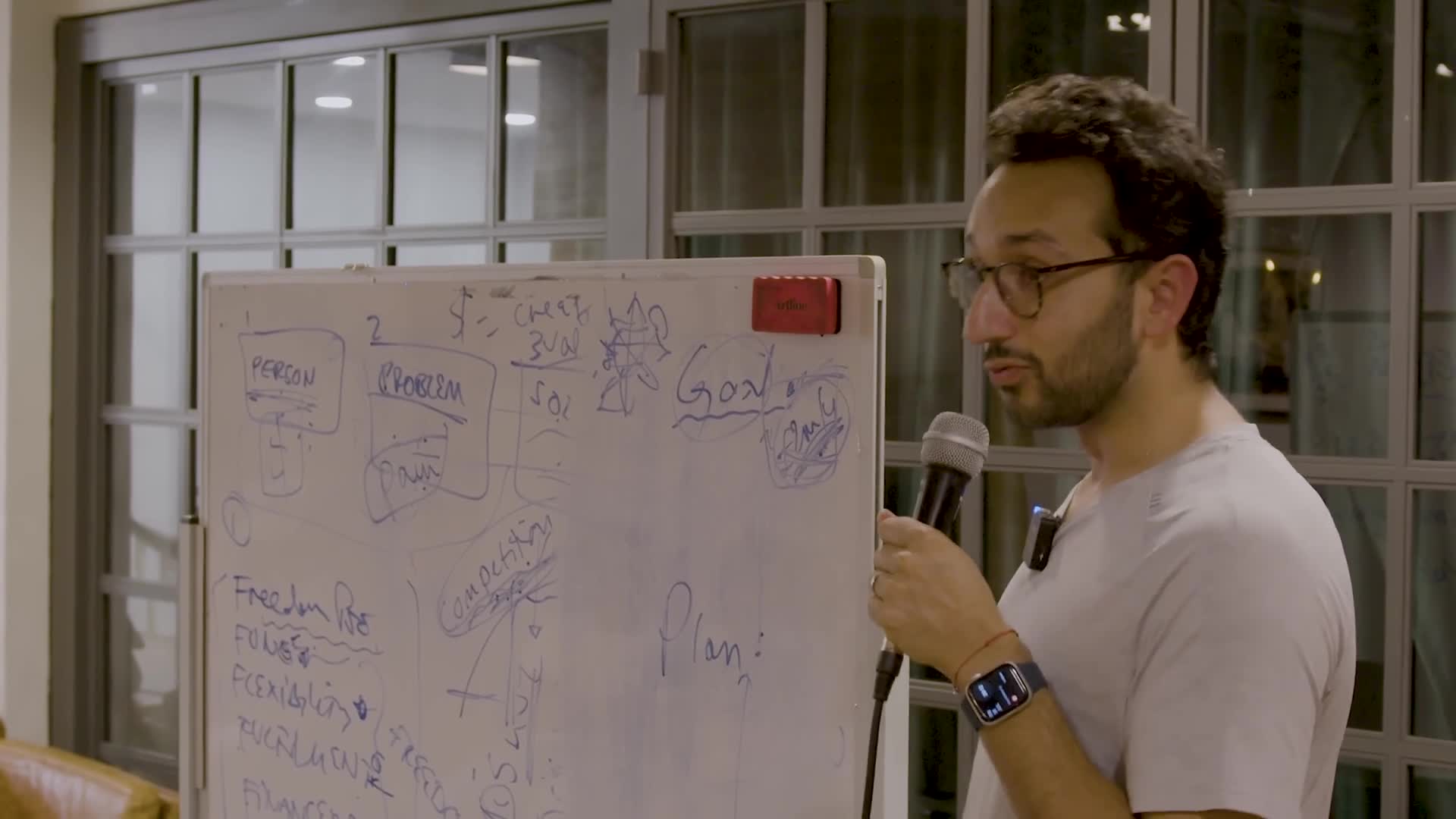
So the other day I was doing an event, about 100 people rocked up to the event.
And at the end, I did like a sort of Q&A type thing.
There was one question from a dude in the audience.
And that question was, Hey, Ali, I have just turned 20.
I'm a student at university. what is one piece of advice that you would give me?
Now, whenever anyone asks about this like one piece of advice thing, I always feel a bit weird about it, because it's kind of like they're usually looking for a soundbite.
They're looking for something motivational.
They're not really looking for nuance, because they've phrased the question as like one piece of advice, like the one thing, as if there is a magic bullet here.
If I only had one piece of advice for someone in their 20s and it had to be as broad as possible to encompass almost any possible goal, what's like the one piece of advice that I could give.
And I found myself thinking for about five seconds.
And then what I said was, you should listen to one audio book every week for the next year.
And if you do that, I guarantee your life will completely change.
And when I said this, the guy was a bit like taken aback.
He was like, oh, Yeah, OK, then great.
I'll do that kind of thing.
But and I could tell that like he wasn't expecting that.
Maybe he was expecting something like well you know, focus on finding a passion or focus on enjoying your work.
Things that are not that concrete because like, you know, how do you how do you measure them?
They're not that specific.
But I told him a very specific thing, one audio book every week for the next year.
And I think that actually for pretty much any goal you have and pretty much any problem in your life that you might be struggling with, whether it's life related or money related or work related or anything like that if you just listen to way more audio books than you're currently listening to, that will be a very positive step in the right direction.
Did a video recently about the consumption trap, where we're all at risk of consuming too much content and doing not enough action, and so this advice to listen to more audiobooks is not for you to just massively increase your consumption and still not do any creation or take any action.
It's like assuming you are taking action, because that's obviously the single most important thing like nothing in your life or your work or your business will improve unless you take action.
And assuming you're spending some of your consumption time on watching YouTube videos, listening to podcasts, scrolling social media.
I think if you just replaced all of that with listening to audiobooks, your life would be way better.
Better as in like, you can do what you want.
But you know, given that this dude asked for life advice, I'm just gonna stand on my soapbox and give some life advice.
I think audiobooks are the best thing ever.
And I think if you listen to more audiobooks, your life will completely change for the better.
Think about the amount of time you spend consuming content on social media platforms.
You can have a look at your screen time and see how much time you spent scrolling Instagram TikTok YouTube, maybe even listening to podcasts.
And now think about the amount of effort that goes into creating each piece of content that you consume.
If you consume a lot of short form content, somewhere between three minutes and a few hours would have been spent creating every piece of short form content you consume.
Let's say you consume a lot of long form YouTube videos and let's say you know they're educational rather than entertainment.
I know lots and lots of big educational YouTubers whose content you probably consume.
And I would say the amount of work that goes into an individual educational YouTube video somewhere between four hours and about 20 hours.
20 is sort of like really stretching it for most educational youtubers.
Obviously, there are educational youtubers that do a different level like, for example, the channel kurzgesagt has a team of like 50 plus animators or something like that, and they put so much effort into each of their videos.
So it's like the amount of like bang for your buck that you get for certain channels is way greater than other channels, but for the most part, the sort of educational content that you are watching based on my own youtube analytics that show me what my audience watches, I would estimate because I know a lot of the creators that create the stuff that you watch they take about four to 20 hours per video.
Cool.
So that's the amount of effort that's gone into creating a YouTube video.
Think about the amount of effort that goes into creating a podcast.
Usually, unless it's a very, very produced podcast, like the Acquired podcast or something like that, there's not that much effort that goes into it.
Usually it's a conversation.
Most podcasts that you listen to are probably conversational podcasts and it's sort of like an interview.
And yes, there's an expert on the other end of the interview.
And so there's, like you know, you've got their expertise that's gone into the podcast episode.
But usually most of the podcasts that my audience listen to are more like conversational kind of podcasts.
And so you know, there's a few hours to a few dozens of hours of work that goes into an individual podcast episode.
Now think about the amount of effort that goes into a book.
And I will use my own book as an example here.
So this is a book that I wrote, I published at the end of 2023.
It hit the New York Times and Center Times bestseller list.
So thank you for everyone who pre-ordered it, because pre-orders are the things that help you hit the bestseller list.
And it sold a few hundred thousand copies since then, which is very cool.
But this book took like three years worth of work.
It was three years of research that i was doing.
We had one full-time research assistant, one part-time research assistant.
We had a professional editor in america, another professional editor in america, another professional editor in london.
We had an agent who has read and represented loads and loads of books and she gave loads of feedback on it.
We had a book proposal guy who worked on atomic habits by james clear, so he gave loads of feedback on the book and so it was like about three years worth of work, with many, many hours each week dedicated to just producing the text of the book.
Then for the audiobook as well, i literally spent three days of my life recording the audiobook in an audiobook production studio in london.
There were two professional audio engineers and proofreaders on that audiobook as well, and so they spent many days of their time as well, like producing the audiobook.
If you think about the amount of effort you are getting that goes into an audiobook per unit of time, it's like way way, way higher than almost anything you could consume.
Way higher than short form content, long form content, way higher than podcasts.
Because usually if someone has an audio book, it's based on a book, obviously.
And the book usually has many years, sometimes even decades of research that's gone into it.
And the author, editor and the publisher has been thinking about this book for a very very, very long time.
And it's insane that you get to buy the book for like 7 on Kindle or like one credit on Audible or like 799 on Audible, or however much audiobooks are.
And if you can't afford any of that stuff, you probably know how to pirate things as well.
I'm not suggesting you do.
I'm just saying that when I was under 18 and had no money, I would, you know, find ways to acquire information that I needed on the internet.
Obviously, you shouldn't do that.
Obviously you should buy stuff full price because you know, but like, the amount of effort that goes into producing an audiobook is astronomical.
And having done the process to produce my own audiobook and narrate it and stuff, it's just like absolutely phenomenal how much effort goes into that.
And so, even if the only thing you did as a result of this video was that, like you, swapped some of your consumption time on TikTok, Instagram and YouTube and podcasts and just switched it to audio books, you'd be getting way more bang for your buck if you're trying to learn or educate yourself on pretty much anything at all.
And even in the world of entertainment, way more effort goes into producing a fiction book than goes into producing almost any other form of entertainment, except maybe a streaming TV show or like a really really, really high budget, high thingy, high production TV show.
But this video is focused on life advice, learning, all this stuff.
So I'm gonna sort of kind of ignore fiction a little bit here.
And speaking of consuming information online.
There is a flip side to this, which is the question of who is consuming information about us.
And that is where Delete Me comes in, who are very kindly paid partners of this video.
Now, something many people don't realize is how data brokers operate in the background of our digital lives.
These are companies that collect information from various different public sources, and they create profiles that can often include personal details like your contact information or where you live, and even your family connections.
And then these data brokers sell the data to businesses and to individuals.
And even if you're super careful, once you have any kind of digital footprint, you can be exposed to risks like identity theft like I have repeatedly scams and also phishing.
And that is why I'm partnering with DeleteMe.
DeleteMe is a hands-free subscription service that removes your personal information from hundreds of data broker websites.
The process is very straightforward.
You submit your information to DeleteMe and then the privacy experts find out where your data is being sold online and then they handle the removal process for you.
And then, usually within about seven days, you get your first privacy report, which shows exactly what they found and what they were able to remove.
What I like about delete me is that the approach is continuous.
They don't just remove your information once.
They continuously monitor these sites and they will issue like take down requests and removal of information requests whenever they find any of your personal information on the internet.
And they show you exactly which sites had your data and what specific information they found from your address and phone number and like email address and details about your relatives and even details about your property.
They also have a very cool dashboard where it shows you how many hours it would have taken you to do all of these opt-outs manually.
And so you can immediately see how much time they're saving you, which helps you calculate an ROI which is very very, very positive.
Currently, DeleteMe is offering 20 off of all of the consumer plans.
When you go to joindeletemecom, slash Ali20.
And if you use the promo code Ali20 at checkout, that will give you the 20% discount.
Obviously, DeleteMe won't make you completely anonymous online or remove every single trace of you from the internet.
There is no service in the world that can realistically do that, but they will significantly reduce your personal information on data broker sites, where it's most commonly bought and sold.
So thank you so much to DeleteMe for sponsoring this segment of the video, and let's get back to it.
Another thing that I really noticed at this event that I did is that lots of people came up to me afterwards asking for specific pieces of advice, for things like how to start their first business, how to grow their first business, how to grow the second business.
One guy was doing like 100K a year and wanted to grow to 500K a year.
And so we were talking about like his community-based memberships and stuff like that.
And with almost every single one of these conversations you know.
These people were asking me for advice and I found myself just recommending books.
Someone wanted to grow their business.
And I was like, okay, cool.
Have you read 100 Million Dollar Leads by Alex Wamosi?
The answer was no.
Have you read Dotcom Secrets by Russell Brunson?
The answer was no.
Have you read Copywriting Secrets by Jim Edwards?
Which is a book about like how to get people to want to buy your stuff.
The answer was no.
One guy had a team of like five people and he was really struggling to manage it.
And I was like, okay, cool.
The book I would recommend is Traction by Juno Wickman, which literally teaches you how to manage a team of five people.
By any chance, have you read Traction by Juno Wickman?
The answer was no.
And it's like I appreciate that all these people are coming to me for advice, but in a 30 second rapid Q and A type thing there's only so much value I can give.
And so I often find that the best way I can help someone is by just referring them a book, recommending them a book where the person who wrote the book is a fricking expert on the thing, has spent years to decades thinking about it, has spent so much time and effort like writing the book, publishing the book, editing the book, even recording the audio book.
You get way more bang for your buck and it massively levels you up in almost anything you're trying to do by just reading a book about the thing or just searching on Amazon for the top five bestselling books about topic X and then just read all of them or listen to the audio books.
And boom, immediately you've got way more context.
It's like you've got a firmware update in your own mind.
And obviously it's no substitute for actually doing the work, but a big part of success.
Them out a little bit.
There is a framework I like to think about, which I think I came up with because I haven't seen anyone else talk about this.
And I've been using it for years.
It's called the GPS framework, goal, plan, system.
So for anything you're trying to do, number one, you've got to ask yourself, what is the goal?
Number two, what is the plan that's going to get you to the goal?
And then number three, what is the system that's going to help you stick to the plan?
So let's say your goal is to make $3,000 a month in passive income alongside your day job.
It's like, all right, cool, fair enough.
We've got a clear goal.
Now, what is the plan to get to the goal?
What are the three to five major chess moves that, if you did them, would be very likely to get you to the goal?
At this point, some people will have a clear plan that okay, I know the plan is gonna be A B C D E, but a lot of people won't even have a plan.
They'll be like Yeah, I mean I know that that's the goal, but I don't really know how I'm gonna get there.
And it's like, all right, cool.
If you don't know how you are going to get to the goal, you have a knowledge problem in that you just don't know enough stuff.
And the solution to most knowledge problems is to acquire the knowledge.
You just need to learn more stuff.
You need more information.
And that information is often found on the internet, but for almost everything that you can try and do in life, that information is also found in books and it's way higher quality, higher value, usually when it is found in books rather than when it's found on random blog posts or random YouTube videos on the internet system component of it which is like okay, what's the system that I need to follow to make sure I stick to the plan?
Again, if you don't know what that is going to be, again, a lot of that comes out in the books.
Like the books, will tell you what the plan is to get to the specific thing that they're promising, and will often give you a system for actually sticking to the plan.
Let's say you want to make more money from your side hustle and you're like okay, the thing that's going to help me get more money is, I just need more people to buy my stuff.
You should just read 100 million leads by Alex Hormozy and he gives you a system for knowing what to do and also knowing how to do it.
And then gives you a sort of prioritization system for what to actually do kind of step by step.
And then all you have to do is do the thing, right?
Like reading the book or listening to the book won't make you do the thing, but it's a good first step, especially if you don't already know how to do the thing.
In my case, for example, a big part of why my own business was successful is because, anytime I would run into a problem, I would just find three or four audio books about the problem and just listen to them while doing other things.
I still need to actually take action obviously, because action is the foundation, but I now know enough information to have a sense of what I actually need to do.
The other major benefit of audio books is that you can listen to them while you're doing other things.
I understand why people feel like they don't have the time to read, because reading is quite a cognitively demanding thing.
You have to sit there and read a book and it's very hard to read while doing other things.
Whereas you can absolutely listen to audio books while doing other things.
At this point, some people will say that like, oh, I really struggle to focus.
I struggle to multitask.
It's like, okay, that's fine.
That is also a skill that you can develop.
I used to struggle to focus as well.
Initially, when I started listening to audio books, I would like I'd be listening at one X speed and I'd be like sort of getting lost and I'd be having to rewind and getting lost again fairly quickly.
Within a few weeks of doing this, you develop a new skill which is being able to focus on the words of the audiobook while also focus on focusing on the other thing that you are doing.
It's very hard to listen to an audiobook while doing cognitively demanding work, which is why it's more for like, mechanical things.
If, for example, it's not your first time doing the laundry, then you then you know how to do the laundry.
It's a pretty mechanical set of actions.
You can totally be listening to an audiobook as you are doing the laundry.
You start off listening to audiobooks at one time speed and then, once you're like comfortable with that, you switch it to 11 and then 12 and then 13 and then 14 and then 15.
Then you realize actually you can also train your ability to listen to stuff at multiple speeds.
Lots of people say that I talk very fast and so I'll often see comments in my videos being like lol.
This video is much more understandable at 075x speed.
But I know there are people who watch my videos at double speed or 25x speed or even 3x speed if you use the video speed controller extension.
And for someone who listens to my stuff at 075x speed, it's unfathomable that people could be watching Ali Abdaal content at double speed.
But people do, because you can train your ear and you can train the ability to listen to stuff at multiple speeds.
What this means is that now you can consume an audio book in half the time that would have taken you otherwise if you were just listening at 1x speed, if you listen at double speed,
At this point, some people will say that like, well, that's not the point of reading.
The point of reading is to actually like learn and apply the knowledge and stuff.
And yes, I would agree.
The point of reading is to learn and apply the knowledge, but there are actually two modes of reading.
This is for like informational reading.
I think of it as sort of like exploration reading and exploitation reading.
So exploration reading is where you are trying to just get an overview of the topic.
And this is where listening to five different audio books at double speed will actually just like really help you because, let's say, you are trying to Start your first business.
For example, it's a thing a lot of people come to me for.
I'm trying to start my first business.
You could just listen to five audiobooks about how to start your first business.
One of them could be Million Dollar Weekend.
One of them could be The Millionaire Fastlane.
One of them could be 100 Million Dollar Offers.
There's the word million in a lot of these.
One of them could be The Sweaty Startup by Nick Huber.
One of them could be The Entrepreneur Revolution by Daniel Priestley.
One of them could be Rich Dad Poor Dad.
If you want to listen to that, it's actually quite good.
One of them could be Main Street Millionaire by Cody Sanchez.
If your idea for your first business is maybe some kind of tech startup, then it would be a different set of books that I would probably recommend.
But either way you could listen to all those like five six, seven different audio books at double speed.
It would probably take you maybe four weeks, six weeks, to get through all of those.
If you're like commuting to work and back, or like listening to them while at the gym, or listening to them while on a walk, or listening to them like while doing the laundry, whatever.
Even if you're not paying that much attention, even if you're not like meticulously taking notes and taking action on every single action step, you have way more context about how to start a business than you had previously, where maybe you didn't consume any content about it at all.
And maybe the only videos you watched about it were like gurus telling you to start dropshipping through YouTube videos or something like that.
Like just listening to five different audio books on the subject at double speed will just massively level up the amount of knowledge you have about the topic.
You still have to obviously do the work, but in the sense of like listening for exploration, your brain is getting a firmware update.
But then at some point let's say you're like okay, I'm gonna build my first product and I need to copyright the sales page for my first product.
Now you would, for example, get the physical book of $100 million offers by Alex Formozy.
This is what I do anytime I need to make a new product and go through it page by page and like do the exercises and take notes and like got Notion page.
I've got a clawed chat GPT type window up on the thing as well.
This is reading for exploitation.
This is a different sort of reading.
This is not what I'm talking about.
The first time I read $100 million offers, I listened to it as an audio book at double speed.
And then I realized, holy shit, this has already given me a massive firmware update.
Then I bought the Kindle book.
I bought the physical book.
And now I refer to it every single time I need to actually build a new product in our business.
You can do the same for most audiobooks that you find.
You can start off by sort of blitz, listening to them for exploration, and then you could exploit them if you decide that it's something that's worth exploiting.
Whenever there's a new thing in your life, a thing that you are struggling with or you want to learn more about, you could do a lot worse than just by reading a bunch of books and listening to a bunch of audiobooks about the thing and then getting a cursory overview of the space and then deciding okay, which of these do i actually want to specifically dive into?
In my case, i have just had a baby, and so i am listening actively listening to lots of audiobooks about how to raise a baby.
There's Fair Play, which is a book about like, how to redistribute the workload in a marriage.
There's The Book You Wish Your Parents Had Read and Your Children Will Be Glad That You Did.
There's The Montessori Baby.
There's Precious Little Sleep.
Similarly, let's say you suck at focusing and you'd like to improve your focus.
This is a question that people ask me when I do these events, and my follow-up is usually mm-hmm nice.
Have you tried reading Deep Work by Cal Newport, which is literally the Bible on how to focus?
Usually the answer is, oh no, I haven't.
And I'm like, great.
Read that.
And if you struggle to focus reading a book, you can just listen to the audio book.
What I would like to end with in this video is I'm gonna do a little screen recording and I'm gonna show you the however many books I have in my Audible library.
This video is not being sponsored by Audible or anything.
There are, of course, other audio book platforms, but Audible is the one that I've been using since 2017.
If you don't care about this bit of the video, obviously feel free to.
I mean, I don't need to tell you this, but you can just turn the video off if you like.
Really don't care.
But the reason i'm including this is because this is what i would have wanted to see, like it's sort of the what's on your ipod thing that people used to ask back in the day.
I was like what's on your spotify, like playlist library.
I love looking at other people's like audible and kindle accounts to see like what books are they reading, and i'm just going to sort of blitz through and show you how many do we have here?
333 titles.
So i started listening to audiobooks back in like 2017.
I started with the graveyard book and stardust by neil gaiman.
I think this was actually on tim ferris's recommendations.
I tried listening to american gods.
I didn't particularly like it.
Um, listen to some of the mistborn books the wise man's fear by patrick rothfuss.
Crushing it by gary vee very good book, thank you.
Economy very good edged answer.
Brandon sanderson.
Fiction, sort of fiction, fiction.
And then, like i got through the whole wheel of time series, how to think about sex.
I got through the Wheel of Time series on my commutes to work.
And it was really when, I think, when I listened to The Elephant in the Brain many years ago, that I appreciated the power of non-fiction books.
It's basically a book about, like the hidden motives in everyday life, like what's really driving our behavior and stuff.
And it's like interesting, but it wasn't very relevant to anything that I was doing at the time.
So I wouldn't have taken the time to sit there for like 10 hours to read the book.
But given that I could listen to the audio book in a few hours, it was like oh, this was very interesting.
The Righteous Mind by Jonathan Haidt, very good book.
Talking to Strangers, Malcolm Gladwell, that was great.
War Doctor, that was great.
Rebel Ideas, that was pretty good.
More Wheel of Time, More Wheel of Time.
Waking Up by Sam Harris, Educated by Tara Westover.
And then when we get to Psychology of Money and Work Less Make More, this was when I really started to realize that oh, I can listen to audiobooks to help grow my business.
And then we've got just a combination of fiction and nonfiction.
Co-active coaching how emotions are made.
Dare to Lead by Brené Brown, good book.
The One Thing by Gary Ketter, a very good book.
Happy Sexy Millionaire by Stephen Bartlett, very good.
Effortless by Greg McKeown, very good.
Traction by Gina Whitman, book that completely changed my business.
Can't Hurt Me by David Goggins.
Very motivational and actually very good as an audiobook because he's got some extra bits in the audiobook.
Think Big by Grace Lorden.
Very good.
The Great CEO Within.
This was absolutely fantastic for helping me grow the business.
4,000 Weeks by Oliver Berkman.
Of course, fantastic productivity book.
Good to Great by Jim Collins.
The Four Obsessions of an Extraordinary Executive.
Amazing book.
Nine Lies About Work.
Also absolutely fantastic.
Really helped me when I first started sort of hiring team members and I had a team that I'd I never knew anything about like how to manage people.
But through listening to a bunch of these books on Audible and then buying some of them on Kindle and on paperback or whatever and actually exploiting them, that really helped me level up in my own abilities as like a business leader and as a manager.
Drive by Daniel Pink, amazing book in terms of like intrinsic motivation.
No rules, rules. which is all about the culture behind Netflix.
Also some helpful stuff that I took away from my own business.
The Five Dysfunctions of a Team by Pat Lencioni, amazing book for business.
The Hard Thing About Hard Things by Ben Horowitz, another very good business book.
We've got The Sales Acceleration Formula, The 22 Immutable Laws of Marketing, The Five Temptations of a CEO, Amazing How to Be a Great Boss by Gina Wickman amazing book.
Amp It Up, amazing book.
When my wife and I started dating, I was like cool, I'm gonna learn Mandarin to try and impress her.
And so I sort of downloaded this audio course and I actually got like a reasonable way through it, but then decided to abandon it.
Storyworthy by Matthew Dix, amazing book, Some Days Today, fantastic book.
$100 million offers, of course.
The Five Commitments of Conscious Leadership.
Then we've got some spirituality books The Surrender Experiment and The Untethered Soul by Michael Singer.
Zen Mind, Beginner's Mind.
High Performance Habits fantastic productivity book-ish productivity personal growth book by Brendan Burchard.
The CEO Next Door, very good book.
The Bomb by Fred Kaplan, which is random, but it's about the history of like the nuclear bomb and like and the dangers it poses and stuff.
Rhythm of War by Brandon Sanderson, oh, incredible book.
Seven Husbands of Evelyn Hugo, TikTok book, very, very good.
Company of One by Paul Jarvis had a big impact on my own business.
The Relationship Handbook had a big impact on my relationship.
Dotcom Secrets Expert Secrets by Russell Brunson.
Massive impact on the business probably added at least a million dollars to our bottom line.
Traffic secrets by russell brunson.
Similar lee spare, prince harry was actually actually quite good.
I tried listening to a promised land by barack obama but it was too boring, so maybe at some point i'll like that.
Buy back your time by dan martell amazing book that i listened to audible initially.
Oh, the way of the superior man.
Fantastic book how to get rich by felix dennis is really, really good.
It doesn't have to be crazy at work.
Fantastic book.
The greatness mindset very good.
Oh, i'll evolve.
Feel good productivity.
You should listen to that audible.
The go-giver, the goals and vision master course.
This is like some random old audio programs from like the 19, something from the 20th century, which were all very good.
Steve Jobs, Walter Isaacson, really, really inspiring.
The Millionaire Fastlane by MJ DeMarco, beautiful book.
Tony Robbins, Unleash the Power Within was actually very good as well.
The Advantage by Pat Lencioni.
Basically anything written by Patrick Lencioni has been amazing for our business.
Death by Meeting, fantastic book.
Raising Girls by Steve Biddulphs is something that I've had lots of people recommend to me, but I haven't actually listened to yet.
Get a Grip by Gina Wickman, amazing book that helped us grow the business.
Ready, Fire, Aim, fantastic book.
Never Enough by Andrew Wilkinson, amazing book.
Fourth Wing, Romanticy.
It was okay.
What's Your Dream?
Simon Squibb was really good.
Hunt, Gather, Parent.
That was really good.
Wind and Truth, Brandon Sanderson.
Oh my God, fantastic book.
$100 Million Leads by Alex Hormozy.
And I haven't yet started listening to the James Dyson biography.
Invention.
Second Mountain by David Brooks was amazing.
Sunrise on the Reaping.
Fiction was amazing.
Radical Candor was amazing.
Multipliers is amazing.
Everyone in our team has read Multipliers.
It's fantastic.
The One Minute Manager.
Think Like a Monk sort of a biography of Roger Federer that I'm listening to at the moment.
Road Less Stupid by Keith Cunningham, very good book as well.
And currently the fiction book I'm listening to is Dark Age, which is book four of the Red Rising series by Pierce Brown.
So this is a quick blitz through the 333 titles in my Audible library.
I've not listened to all of them, but I would say I've listened to probably like 75 of them like yeah, three quarters ish, maybe two thirds, something like that.
But the key point I wanna mention is that whatever you're struggling with in life, someone's probably written a book about it.
And there's probably some pretty good books about it.
And you probably haven't read those books because it takes time to read.
But if you just got them on Audible or any other audio book listening app or acquired the audio format of the book in any other way you wanted, you could just blitz listen them.
Even if it's at one time speed, And you could do it while doing other things, which means it doesn't really eat into your time and you don't have to really focus on it.
You can actually just have it on in the background while listening to other things.
And it will probably help you in a way that YouTube videos podcasts, episodes and short form content certainly will not compared to the amount of time and effort that goes into creating a book.
So that was my little hot take.
And if you enjoyed this video and you want to learn more about this GPS goal setting framework and stuff and sort of actual evidence-based tips on how to actually achieve the goals that you set for yourself, you might like to check out this video over here.
Thank you very much for watching and I will see you in the next video.
Bye.