
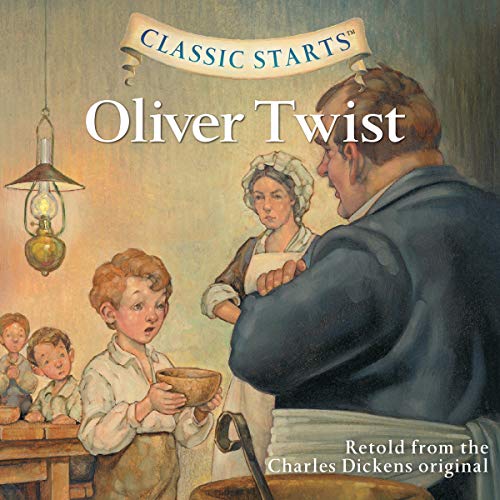
[The Audacity of Hunger: Oliver Twist’s Defiance in the Workhouse]-[Oliver Twist - Part 03]
📋 Summary
The Struggle for Survival in the Workhouse
At ten years old, Oliver Twist finds himself trapped in the harsh reality of the workhouse. Despite facing numerous obstacles, he manages to survive, though his existence is defined by "too much work and far too little food." The institutional neglect is epitomized by Mrs. Bumble, a woman more concerned with her "personal income" than the welfare of the children. By keeping the majority of the town council's allowance for herself, she leaves the children to suffer from chronic malnutrition, resorting to watering down their "thin porridge" to stretch the meager supplies.
The Bond of Misery: Oliver and Dick
Within this bleak environment, Oliver forms a poignant friendship with Dick, a boy described as "very weak and often sick." Oliver’s inherent kindness shines through his own suffering as he attempts to share his "last bits of gruel" with his friend. Dick’s refusal—stating, "You have too little to spare"—highlights the desperate, life-threatening scarcity that governs their daily lives. The workhouse is a place where even a few "tiny drops of gruel" are considered a luxury no one can afford to relinquish.
The Ritual of Deprivation
Life in the workhouse is governed by rigid, dehumanizing rituals. The dining experience is a sterile, militaristic affair in a "long stone hall." Boys stand in a "single file line" to receive a single "ladleful of gruel" from a copper pot. The atmosphere is one of intense surveillance, where even "sneaking a bite" results in immediate punishment. The boys are so starved that they "polished" their wooden bowls with their spoons until they shone, leaving nothing behind—a testament to their perpetual state of hunger.
The Catalyst for Rebellion
The turning point arrives with the arrival of a new boy, the son of a butcher, who is unaccustomed to such extreme deprivation. Recognizing that "the council had no wish to change," he organizes a desperate gamble. Using a draw of straws to determine who will voice their collective plight, Oliver is chosen. While his friends offer encouragement, Dick remains "worried," sensing the danger inherent in challenging the authorities.
The Act of Defiance: "Please, sir, I want some more"
Oliver’s walk toward Mr. Bumble is marked by "shaking with fear," yet he approaches the copper pot with a request that would alter his life forever. When he utters the iconic words, "Please, sir, I want some more," the entire hall falls into a shocked silence. Mr. Bumble’s reaction is one of visceral disbelief; he and the workhouse board view themselves as "very generous people" and perceive Oliver’s request as an act of intolerable "nerve and greed."
The Consequences of Demanding Humanity
Mr. Bumble’s fury is explosive. He interprets Oliver’s basic human need for sustenance as an act of an "ungrateful boy." The institutional response is swift and brutal: Oliver is labeled greedy and defiant, leading to him being grabbed by staff and locked in a "tiny room." This moment marks the end of Oliver’s quiet endurance and the beginning of his journey outside the oppressive walls of the workhouse, as the authorities refuse to acknowledge the humanity of those they are tasked to care for.
Deep Learning with ListenLeap


