
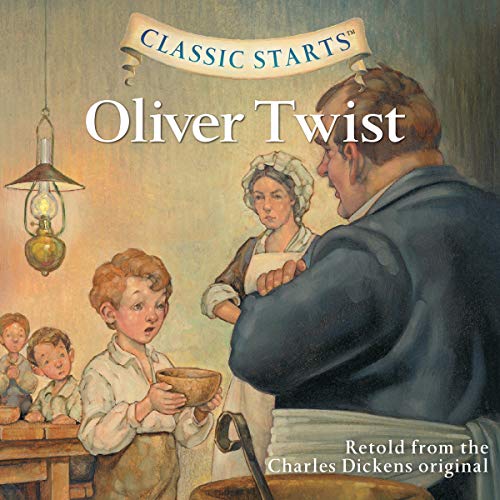
[An Overview of the Classic Starts Adaptation of Oliver Twist]-[Oliver Twist - Part 01]
📋 Summary
Summary of the Classic Starts Adaptation: Oliver Twist
Introduction to the Audio Production
The podcast episode presented by Oasis Audio offers a streamlined, accessible version of the timeless literary masterpiece Oliver Twist. This specific production is part of the "Classic Starts" series, which aims to introduce younger or contemporary audiences to canonical literature. The adaptation is credited to Kathleen Olmsted, who has "retold" the original narrative crafted by the legendary Charles Dickens, with the narration performed by Rebecca A. Reynolds.
The Essence of the "Classic Starts" Approach
The primary objective of this production is to bridge the gap between Dickens’s dense 19th-century prose and the modern listener. By opting for a "retold" format, Olmsted maintains the core emotional arc of the protagonist, Oliver, while refining the pacing to ensure that the quintessential elements of the story remain impactful. The choice of Rebecca A. Reynolds as the reader is instrumental in this, as her vocal performance serves as the primary conduit for the listener to engage with the gritty and often heart-wrenching atmosphere of the Victorian underworld depicted in the original text.
Narrative Preservation and Accessibility
Although the summary provided focuses on the introductory credits of the audio production, it underscores the importance of preserving the "Charles Dickens original" intent while modifying the delivery. The adaptation ensures that the central themes—such as the plight of the orphan, the corruption of societal institutions, and the quest for identity—are not lost in the transition to an abridged audio format. Kathleen Olmsted’s role as the reteller is critical here, as she acts as a curator of Dickens's vision, selecting the most poignant sequences to guide the audience through Oliver’s journey from the workhouse to the streets of London.
The Role of Narration
Rebecca A. Reynolds’s narration brings a professional polish to the "Oasis Audio" presentation. In audiobooks of this nature, the narrator’s ability to characterize the diverse cast of Dickensian figures—from the innocent Oliver to the malevolent Fagin and the ominous Bill Sikes—is essential. By focusing on the "Classic Starts" branding, the production emphasizes that this is not merely a reading, but an interpretive experience designed to capture the essence of the Victorian era for a new generation of listeners.
Conclusion
This presentation of Oliver Twist functions as a vital entry point into classic literature. By simplifying the structural complexity of the Dickensian novel without sacrificing the integrity of the narrative, the collaboration between Olmsted and Reynolds creates an immersive experience. It serves as a testament to the enduring power of the story, proving that even when "retold," the struggles of Oliver remain as relevant and emotionally resonant today as they were when first penned by Charles Dickens.
Deep Learning with ListenLeap


