
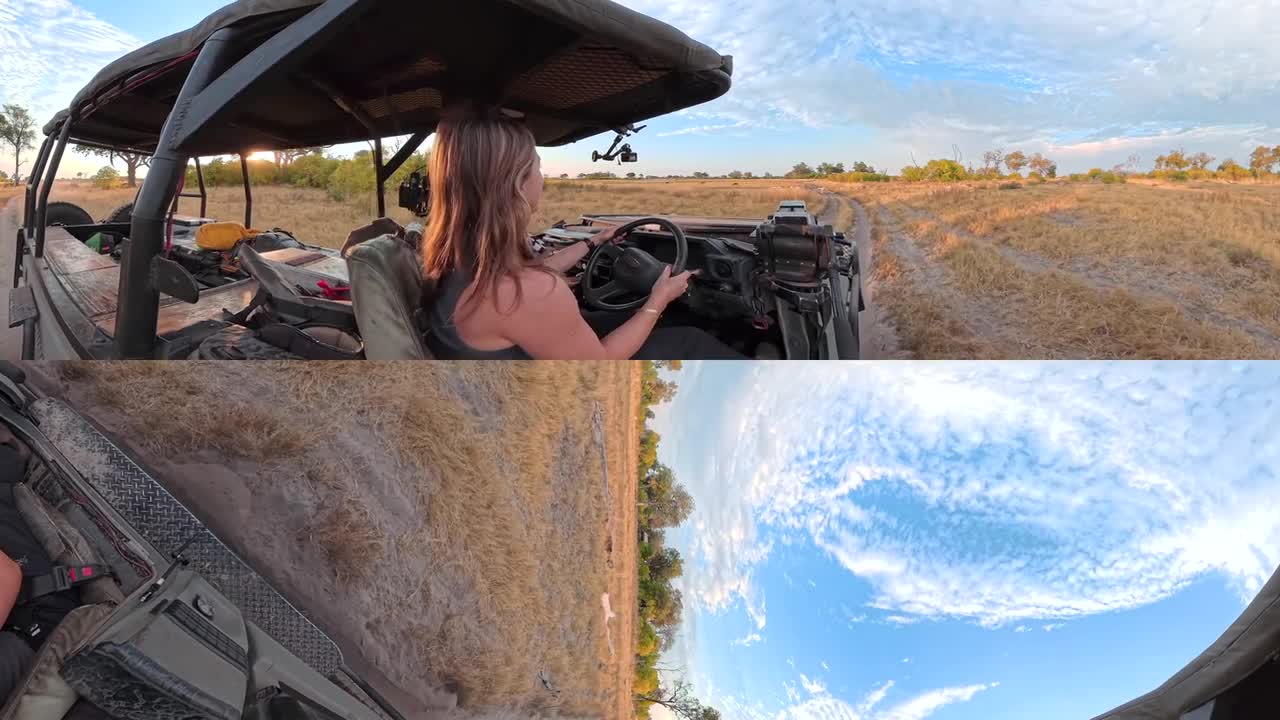
[The Art of Invisible Observation: Navigating Wildlife Encounters with Predator Cubs]-[An Unfiltered Immersive Journey Through the Okavango Delta | 360º 4K Video | BBC Earth]
📋 Summary
The Philosophy of Non-Intrusive Observation
In the realm of wildlife cinematography and conservation research, the ultimate goal when interacting with predators—specifically those with young offspring—is to achieve a state of being "oblivious" to the human presence. As the speakers emphasize, the primary objective is to ensure the animals remain "comfortable" with their surroundings, undisturbed by the artificial intrusion of observers. This concept of invisibility is not merely about concealment; it is a fundamental ethical approach to minimizing human impact on natural behaviors. When observers successfully blend into the environment, they allow the animals to exist in their most authentic state, free from the stress or curiosity that human interaction inevitably provokes.
Managing Environmental Dynamics
Environmental variables play a critical role in how predators react to external stimuli. The transcript highlights how seemingly minor environmental shifts, such as when "everybody just seems to sprinkle ice" to lower the ambient temperature, can trigger a physiological and behavioral change in the animals. This cooling effect serves as a catalyst, causing the animals—and "certainly the cubs"—to become "a bit active." Understanding these environmental triggers is essential for observers to predict the energy levels and potential engagement of the predators. By monitoring these fluctuations, researchers can better gauge when to maintain distance and when the environment itself is influencing the behavior of the subjects.
The Challenge of Playful Cubs
One of the most precarious aspects of observing predators is dealing with cubs, which are naturally inclined to "push the boundaries." At a developmental stage where curiosity outweighs caution, cubs are inherently prone to exploration and play. The transcript warns that the greatest danger in this scenario is allowing the observer to become a "plaything" for the young cats. When humans allow themselves to be perceived as interactive toys, they risk compromising the natural development of the predators, potentially leading to dangerous habituation.
Implementing Strategic Caution
To mitigate these risks, the speakers advocate for a protocol defined by "necessary" caution. This caution is not merely about physical safety but about maintaining the structural integrity of the human-animal relationship. By introducing boundaries, observers ensure that the interaction does not devolve into a scenario where the cats lose their fear or respect for the human presence. The overarching strategy is clear: maintain invisibility, respect the developmental nature of the cubs, and recognize that the best possible outcome is one where the animals continue their lives completely unaware of the watchful eyes upon them. Through this meticulous balance, observers can study these apex predators without disrupting the delicate equilibrium of their natural ecosystem.

Deep Learning with ListenLeap


