This is planet money from NPR.
So I want you to rank the following in terms of your emotional attachment to them, chocolate, sunsets, puppies, the study of regulation.
Let's see, puppies, chocolate, sunset, the study of regulations.
It comes in last place.
I was sure it was gonna be number one.
Well, you know, I'm approaching retirement, so I'm trying to get my head in a different place.
That is Susan Dudley.
Susan worked on regulation in the Reagan administration and for both Bush administrations.
She's built her entire career around trying to help government agencies write better rules.
Where I spent most of my energy and my focus and my time, it would definitely start with the study of regulations.
And then maybe puppies second.
And then maybe puppies.
These days she teaches public policy at George Washington University, where she also founded the Regulatory Studies Center.
You know when I tell people that I study regulation often their eyes will glaze over and they'll try to find someone else to talk to but increasingly people are realizing that's where the action is.
That's where public policy gets made.
It's where the rubber hits the road.
Because yes Congress writes the laws that govern the country, but laws only go so far.
Take car safety. In 1966, Congress passed the National Traffic and Motor Vehicle Safety Act.
But the law didn't specify all the rules for how cars were supposed to be made safer.
Instead, the finer points of writing those rules were left to a federal agency, the Department of Transportation.
People are very familiar with how a bill becomes a law from the Schoolhouse Rock video.
Umm, they're less familiar with how regulations are made and it's the regulatory agencies, through administrative law, that actually make that law that we feel in our day -to -day lives.
Yeah, the requirements that your dashboard be padded and that your seatbelts attach the way they do, those came from DOT regulations, not from Congress.
The nutritional content of baby formula, that's from FDA regulations.
How much silica dust counts as dangerous for workers?
That one is OSHA, the Occupational Safety and Health Administration.
How energy efficient your new water heater has to be.
Department of Energy regulations.
I can keep going. Nope.
I think people got it.
I think people got it.
The point is, the federal government is enormous.
Hundreds of agencies, more than two million civilian employees, and over time, you end up with this problem where Congress has delegated rule -making power to one agency that overlaps with power they already gave to another agency.
For example, the Department of Homeland Security might have a regulation to ensure that cargo being shipped to the United States hasn't been tampered with by terrorists and doesn't present a threat to Homeland Security.
But Homeland Security might not totally understand the effect that new regulation could have on things besides Homeland Security.
If you delay these shipments overseas that causes real problems elsewhere.
So, the State Department might be very interested in that.
The small business administration might be concerned about the impact on small businesses.
The Commerce Department might be concerned.
To solve this coordination nightmare, the government added a little office within the Office of Management and Budget.
An office to oversee all those government agencies.
One office to rule them all it's called OIRA, the Office of Information and Regulatory Affairs.
And it's in part to make sure it's I think probably a couple things.
One is to make sure that one part of the government knows what the other part is doing, to try to minimize the conflict and and duplication.
But another is that the the elected president who's accountable to the people has some control over the bureaucracy of the government.
Yeah, all of these federal agencies, they are part of the executive branch. The regulations coming out of the Commerce Department or the EPA, they are supposed to align with the President's agenda.
OIRA gives the President a way to make sure that's happening.
And for 45 years, OIRA has served this purpose.
But President Donald Trump has decided that it's It's time for a big, big change.
Hello and welcome to Planet Money.
I'm Erika Barrous. And I'm Keith Rober.
If you are like us, the last three months have felt like this relentless, high -speed civics course.
All of these different parts of the federal government that maybe we knew something about suddenly getting thrust into the spotlight because the Trump administration is shutting them down or the person in charge of them is being fired or they are being given an entirely new purpose.
Well, we've got another one for you.
Trump recently signed Executive Order 14215, ensuring accountability for all agencies.
It goes into effect this week.
This new order will massively expand the power of OIRA and the present.
Today on the show, those new powers coming to OIRA And what they could mean for the future of American democracy.
This message comes from NPR sponsor Acura.
The all -new Acura ADX is a compact SUV built for versatility.
Available all -wheel drive for weekend escapes, Google built -in for seamless connectivity, as well as a Bang & Olufsen premium sound system for high -quality audio.
The all -new Acura ADX is crafted to match your energy.
Visit akura .com slash adx to learn more Google is a trademark of Google LLC.
OIRA, the Office of Information and Regulatory Affairs is not a particularly large part of the federal government.
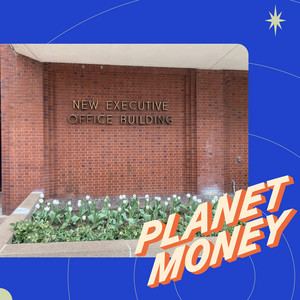
It's got like 50 career staff who take up half a floor in this boring brick building around the corner from the White House.
But for Susan Dudley, it was a kind of professional home.
Susan did two stints at OIRA.
She started as a staff economist during the Reagan administration.
Then a couple decades later, she was asked to come back to run the place for George W.
Bush. Oh, it was my dream job.
It was very exciting, and I loved doing it.
Because even though most Americans have never heard of OIRA, Susan understood just how central it was to the way the federal government works.
If you Google obscure but powerful government agency, OIRA probably will show up on the first page.
That's an amazing thing to Google.
That's going to be my first Google after this call.
Erica, you want to do the honors?
Okay. How do you spell it?
Government, agency and, yep, OIRA.
One obscure but powerful government agency is OIRA.
Checks out. So, a little history of this obscure but powerful agency, OWIRA was created at the tail end of Jimmy Carter's presidency in 1980, as essentially an information -clearing house for the executive branch. Then, Ronald Reagan shows up in the White House, and he supercharges it.
President Carter had an executive order that required agencies to analyze their regulations before issuing them.
And Reagan took it another step and said, and we're going to check your work.
As part of Reagan's attempt to rein in government regulation, he signs an executive order that said any new rules from federal agencies now have to be reviewed by OIRA before they go into effect.
So if the EPA or the Department of Transportation wants to put out a new regulation, they first have to send it to OIRA.
And then all the policy analysts and scientists and lawyers and economists there will weigh in on whether the regulation is a good one.
but if OIRA doesn't like it, it's gonna be pretty hard for that regulation to happen.
I joke that OIRA has to kind of wear the black hat and be the one to say, well, let's look at how this works.
But it does mean that you're nobody's favorite person.
Now, presidents from both parties have maintained and even expanded OIRA's powers over the years.
And it makes sense.
If you're the president, OIRA review gives you an opportunity to wrangle the many regulations coming out of the giant, messy federal government.
Yeah, all these agencies theoretically answer to the president already, but there are just so many of them.
OIRA is a tool for the president to make sure no new regulations slip through without the White House having a chance to weigh in first. Another thing OIRA does is to get all of those agencies on the same page with each other, which, Susan says, sometimes put her in the middle of some tricky meetings.
I felt like Judge Judy sitting at a table with different agencies, with very different views, and trying to mediate and moderate between those different agencies.
Did you have the same kind of Judge Judy and patient vibe?
I'm a much more mellow person, so no, I didn't quite emulate Judge Judy.
But remember, the administrator of OIRA is not just Judge Judy with a black hat out there doing whatever she wants.
She works for the President.
Susan says it's pretty rare for the president to get directly involved with OIRA's review of regulations.
But it does happen.
When she was running OIRA, the EPA wanted to put out a new rule about how much pollution was going to be allowed in the air.
And this is a little bit in the weeds.
We love to be in the weeds at by and by.
Actually, not just metaphorically, because in this particular case, EPA wanted to set a separate form of the standard to protect a certain crop.
So, that's why I say it's kind of in the weeds.
Crofts, weeds. Anyway, EPA's new regulation came into OIRA.
Susan's staff did their normal review, pulled in folks from the Department of Agriculture and other agencies to get their takes.
Eventually, the rule went all the way up the chain to Susan's ultimate boss, President George W Bush.
And Bush was not on board with this regulation, because it set one air quality standard for people and another air quality standard for crops.
Ultimately, he was like, no, EPA, you need to go with a different version of this rule.
And the EPA did what it was told, though kind of under protest. And so EPA in its final rule stated, we are doing this at the behest of the president.
We are setting the standard this way at the behest of the president.
But as much as presidents from both parties have wanted to centralize control over the federal bureaucracy, there's always been one giant exception that they've respected.
Yeah, over the years Congress created this whole set of agencies that are kind of in the executive branch, but kind of outside it at the same time.
The independent regulatory agencies.
A lot of these deal with financial type things.
You've got the Federal Trade Commission.
FTC. That's right. The Federal Communications Commission.
FCC. The Securities and Exchange Commission.
SEC. And, of course, the Federal Reserve.
The Fed. The Fed. Corey Freire used to work at one of these agencies, the SEC.
He was a senior advisor to Gary Gensler, the chair of the agency during the Biden administration.
Corey says independence from the White House is kind of central to how these places work.
Sort of the highest level, being an independent agency means that although the leadership of the agency is appointed by the President and confirmed by the Senate, they are expected to act at an arm's length from the administration that appointed them.
And they have the freedom to go against the President's agenda if they think they need to.
The hope is that would mean that these independent agencies would make fair, unbiased decisions, would not be subject to political influence, and use their technical expertise to come up with the best policies that they can.
Corey says the independence creates a really important firewall between the White House and the markets that agencies like the SEC and FTC and FCC regulate.
And these markets are massive, like trillions of dollars.
You don't want a president to just be putting their finger on the scale all the time and picking winners and losers in a marketplace.
You want somebody there who is going to make good rules that apply broadly and equally and fairly, and to avoid the perception, even, that those decisions are made with the idea of benefiting a particular friend or contributor to the president.
There are all these ways that these agencies have traditionally been insulated from the influence of the White House.
For one, the SEC, FTC, FCC, they are all run by commissions made up of members from both parties.
Also, unlike the Secretary of Commerce or the Treasury, who serve at the pleasure of the president, most commissioners from the independent agencies can only be fired for cause.
Like if they're incompetent, or break the something.
And presidents have historically not had direct oversight over the regulations those independent agencies put out.
When the SEC comes up with a new rule about what information hedge funds have to disclose or what money market funds can and can't do, the SEC does not have to go through OIRA Review.
They don't have to send their regulation to OIRA's lawyers and policy analysts and economists to get their sign off.
Corrie says presidents can't still influence policy at these agencies.
But there's a limit to that influence.
The point of the independence of these agencies is not that a president isn't allowed to have an opinion, and not that a president isn't allowed to express that opinion.
It is that they don't have a way to enforce that opinion.
At least until now, because of President Trump's Executive Order 14215 – Ensuring Accountability for all agencies.
This new Executive Order takes the independence of the independent agencies, and kind of just tears it up.
By the end of the week, the SEC, FTC, FCC, they are all going to have to go through the OIRA process too.
Which means OIRA and potentially also the president will get to weigh in on any big, new regulation they want to implement.
What do you think about this Executive Order requiring the SEC to go through a wire of you.
This is a terrible idea when you outright state that your intention is to interfere in an agency's independent rulemaking process.
That is that is the kind of action that doesn't just undermine faith in the financial marketplace it undermines the basic institutions of democracy.
It's worth pointing out that not everyone feels the Cory does.
Former OIRA administrator Susan Dudley thinks there are a lot of reasons to like the change.
She thinks it will be good to have OIRA look over regulations from the independent agencies.
As you know I'm a big OIRA fangirl and I think OIRA provides a valuable function in coordinating across agencies, ensuring that agencies are doing quality analysis.
Now she gets why someone who worked at the SEC or any other independent agency might not want OIRA all up in their business.
Every agency would like to be exempt from OIRA review because, you know, it does add, it adds time, it adds a layer and they think they've done their homework just fine and we don't need anybody grading us on this homework or reviewing our homework.
But Susan thinks this change will just make government regulations better by holding the rules put out by the independent agencies to a higher standard. In fact, back in 2018, she co -wrote an op -ed with an OIRA administrator from the Clinton years, calling for a similar reform to the one the Trump administration is putting in place.
I think it's fair to say that former OIRA administrators from both sides of the aisle support having independent agencies be covered under the executive order.
But can President Trump legally make this change?
Turns out, it's complicated.
That's after the break.
Support for this podcast and the following message come from Indeed.
You just realized your business needed to hire someone yesterday.
Indeed's sponsored jobs helps you stand out.
According to Indeed data, sponsored jobs posted directly on Indeed have 45 percent more applications than non -sponsored jobs.
Speed up your hiring right now with Indeed and get a $75 sponsored job credit to get your jobs more visibility at Indeed .com.
Terms and conditions apply.
Hiring, Indeed, is all you need.
OK. So far, we've just been talking about this new executive order expanding OIRA's powers.
But the Trump administration has actually been making moves on a lot of fronts to exert control over the independent agencies.
One example, the commissioners of a lot of these agencies are only supposed to be fired for cause.
But President Trump recently removed Democrat appointees from both the National Labor Relations Board and the FTC.
Corey Frayer, the former SEC staffer.
He gave us a second example.
In my particular world, there were a lot of career staff who because they had worked on crypto issues with me and with Gary Gensler, They were essentially moved to Siberia once the new leadership took over.
That's unprecedented.
I worked with a great litigator at the SEC on lots of our crypto issues.
He was well understood to be one of the top litigators at the SEC.
Once we left, he was reassigned to the IT department.
SEC cases that were already in court have just been abandoned, which Corey says never used to happen just because the White House changed hands.
It is very easy to just not enforce laws.
That's a form of deregulation that requires no work at all.
And he says he sees a similar thing happening with new investigations of problems in financial markets.
It used to be that career staffers could launch new formal investigations themselves — get subpoenas, hold depositions.
But now, according to reporting by Reuters, before any new investigation can start, it first has to go all the way up to the top of the agency.
It has to be approved by the politically appointed commissioners.
Slowing down the process itself is a political decision about whether or not you want these independent agencies aggressively enforcing the law.
This is the kind of deregulation by non enforcement idea.
Exactly. Now, this impulse to consolidate power in the executive branch, it did not start with Donald Trump.
In fact, there's been this idea gaining traction in conservative circles for decades.
It's called the Unitary Executive Theory.
The Unitary Executive Theory is the constitutional theory that all executive power is vested in the president, and the president, therefore, has complete control of the executive branch from top to bottom.
This is Yale law professor Cristina Rodriguez, who, we should say, is not a big believer in this particular interpretation of the Constitution.
Both the history and the theory on which the unitary executive theory are based are unconvincing.
Fundamentally, the theory says, look, in a democracy, people choose who they want to run the executive branch. So, that person should be in charge of all those civil servants and agencies that make up the executive branch. I feel like folks at the White House would say, none of those civil servants were elected.
The president was elected.
Therefore, the president should have the power, like that's what the voters decided on.
That is their line that the president needs to be able to control at least who the officers of the United States are, because the president is accountable.
I think that there are a number of ways to answer that critique, first and foremost, Just is that accountability is about more than just having someone who was elected make choices.
Accountability also has to be to the law.
Law. That was written by Congress.
Yes, Christina points out that it was Congress who established these independent agencies as independent in the first place.
It's right there in the statutes that set them up.
Congress makes the decision that some domains of regulation require insulation from politics.
So you might want the judgment about whether to prosecute someone for a violation of the securities law to come from independent decision -making, not political decision -making.
So you want the decision -making to be unbiased.
I did reach out to the White House for this show.
They connected me with someone who didn't want to be recorded and who spoke on condition of anonymity.
They were only willing to be identified as a senior administration official, but they They confirmed that the executive order was based on the Unitary Executive Theory.
They told me, quote, no agency is independent.
It goes back to the Constitution.
The president of the United States is the head of the executive branch. And it's worth saying, Christina thinks that the executive order expanding OIRA's power is probably just president Trump breaking a norm around the independence of the independent agencies, not a law.
But a lot of the unitary executive actions, they are already being challenged on legal grounds.
For example, an appeals court just ruled that the firing of the Democrat appointee on the national labor relations board was illegal.
But then the Supreme Court put that on temporary hold.
Christina says ultimately all these questions of how far the unitary executive theory can go, they're going to end up in the Supreme Court with its conservative majority.
So, I do expect the court to continue what it has already started, which is to eliminate certain forms of independence from the executive branch. So your sense is that a fair bit of this goalpost moving by the Trump administration is going to get the thumbs up from the Supreme Court, ultimately.
I think that's right.
A little Planet Money flavored side note.
In the executive order that gives all this new power to OIRA, an exemption was given to one independent agency.
At least in part. The Federal Reserve.
According to the order, monetary policy at the Fed, setting interest rates among other things, that will still be independent.
I don't know based on any kind of inside or external information whether they want to go after the Federal Reserve and challenge the independence of the Federal Reserve.
That would be the the five alarm fire that everyone who is interested in a stable what the whole global economy would rally against. So unitary executive except for the Fed, for now at least. Christina, she was perfectly happy to explain all this stuff to us wearing her law Professor hat, how the statutes that set up independent agencies, work legally, how the Supreme Court has ruled on this stuff before.
But every now and then in our conversation, this other part of her would break through this part that has watched the last three months of the Trump administration with real worry.
I think the number one on the list of things that keep me up at night about what this administration is doing is the creation of DOJ and the so -called Department of Government Efficiency and the efforts to fire tens of thousands of civil servants.
That is enormously concerning.
I think the firing of independent officials might be number two.
If you have a system where from top to bottom, from the officers of the United States to the independent commissioners who are independent no more to the civil servants made up of people who are hired because of their loyalty to the president, you have corrupt and malfunctioning government.
I feel obliged to ask this question because it's sort of around all of these conversations, which is are we in a constitutional crisis?
I tend not to use the word constitutional crisis because I don't think it's sufficiently descriptive.
I do think that we are approaching autocracy, we are approaching a world in which the government, especially the executive branch and the president, are unaccountable, either to the people or to the law.
So that, that sounds like a constitutional crisis, but I'd like to be specific about what we're at risk of losing.
And here is what is so strange about this political moment that we are all living through.
The range of ways to make sense of what is happening is just so wide.
Christina's reading of this executive order expanding the power of OIRA is that it's one more step down the path to autocracy.
But folks like former OIRA administrator Susan Dudley, they interpret it differently.
Well, this probably sounds Pollyannish, but I think it means that the independent regulatory agencies will do a more thorough analysis and their regulations will be better.
And we will increase social welfare, which is what OIRA's, you know, mission is.
Susan does have one worry about how this all could go, that people will see this change that she's been pushing for for years and just see it as a power grab by President Trump.
I really care about durability and putting in practices that will last. So I probably would have been happier if President Biden had issued this executive order instead because I worry that anything that this president does by executive order, the next president can undo by executive order.
And the instinct may be let's just get rid of everything that he did.
But for now at least, unless the courts or Congress or maybe the next administration pushback executive order 14215 will be the law of the land by the end of this week.
Today's episode of Planet Money was produced by James Sneed and Will Rubin.
It was edited by Jess Jang fact check by Sierra Juarez and engineered by Jimmy Keely.
Alex Goldmark is Planet Money's executive producer.
A huge special thanks today to Carolyn Moraskin from DC Design Tours and Kerry Colonesi.
I'm Keith Romer. And I'm Erika Barris, this is NPR.
Thanks for listening.
This message comes from Capital One.
Banking with Capital One helps you keep more money in your wallet with no fees or minimums on checking accounts.
What's in your wallet?
Terms apply. See capitalone .com slash bank for details.
Capital One N .A. member FDIC.