Before we get to today's guest, if you're interested in attending NVIDIA's GPU Technology Conference, GTC, this March in San Jose, California, and exploring the cutting-edge technologies shaping our future, we have a special offer.
Use the discount code AI Podcast. all one word, when you register for the conference at nvidia.com slash GTC to receive 20% off your registration.
That code again, Hello, and welcome to the NVIDIA AI Podcast.
I'm your host, Noah Kravitz. Supercomputers are awesome, but not everyone has access to a supercomputer when they want it.
At least not just yet. That's why organizations like the Ohio Supercomputer Center are so vital to our collective digital futures.
The Center's open on-demand program empowers Ohio higher education institutions and private industry by providing accessible, reliable and secure computational services, including access to GPUs and AI-related applications.
But there's so much more to it than just that.
Here to tell us all about the program, including how art students at Ohio University can use iPads to access supercomputers for design work and I think maybe even a story about how NASCAR is shifting their workflows is Alan Chalker.
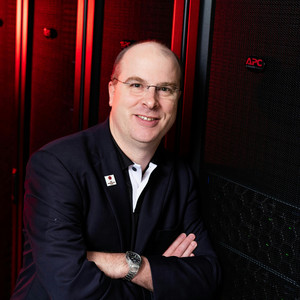
Alan is the director of strategic programs at the Ohio Supercomputer Center, and he's also the principal investigator for the Open On Demand program.
Alan, welcome, and thanks so much for joining the NVIDIA AI Podcast.
It's a pleasure to be here, Noah. Thank you.
You know, we try to ram everything into a little succinct intro without spoiling the podcast, give users a taste and listeners a taste, I should say.
And in this case, I know for every word I was saying, I was like, I don't even know half the stories behind these words.
So... I just wanted to get through it. I'm so excited about this and turn it over to you.
Tell us about OSC and open on demand and you know, Start wherever you want to go, because I'm sure this can be a great conversation.
Sure, happy to. And I think I'll start back at the beginning of the history.
And the history goes back to the mid-'80s.
And these things called supercomputers were starting to become just... part of the general tool set for researchers and scientists and engineers, the National Science Foundation realized that they needed to support those researchers.
And so they put out a call to create some national supercomputer centers There were a group of Ohio faculty members that responded to that call, and Ohio did not win.
The national centers are places like the NCSA in Illinois and Pittsburgh Superfood Center in Pittsburgh, places like that. those Ohio faculty members said, just because the federal government isn't going to fund us doesn't mean that's the end of the story.
And so they went back to The state of Ohio and the governor and the General Assembly said, well, how about you funding this?
And the state said, yeah, it's a great idea.
And so we were created... as an act of the General Assembly signed by the governor back in 1987 to be a resource.
For all high ones. And as you said in the intro, it's not just an academic thing.
It's also private industry on there. Right.
This is an aside trivia question kind of thing, but does that, are you the first state funded supercomputer?
Yeah, that's a great question. Yeah. Yeah.
We were one of the very few state funded ones as well.
Normally, state and pure senators are either federal funded by NSF or Department of Energy, Department of Defense, or they're. funded at the campus level.
So yeah, we definitely are the state one.
We're in this little bit of an interesting niche there as a result of that.
Now, before I get into the open-on demand, I want to just talk about what are supercomputers?
Because that's something that a lot of people...
And I like to give a really good analogy here in that the first supercomputer that we bought, like I said, we were created in 1987.
We took delivery of our first supercomputer in 1989.
It was a $20 million Cray supercomputer system.
Right, right. that had eight processors, 128 megawords of memory.
The important thing is you can measure the speed of computers and capabilities of computers different ways, but it was capable of doing about 2 billion operations per second is what it could do.
Right. The cell phone right on my desk right here, $1,000 cell phone, has eight processors, way more, I mean, gigabytes and gigabytes of memory, 500 gigabytes of memory.
But more importantly, it's probably tens of trillions of operations per second that it can do.
Right. A supercomputer is just something that's kind of, at any given moment of time, amongst the most powerful computers in the world...
And that is constantly changing as a result of new and emerging technology from amazing companies like Nvidia. you know, will they bring to our community?
So our job at the Ohio Supercomputer Center is just to provide the latest and greatest top of the line technology as a kind of a shared service to the people of the state and the people of Ohio that work outside of the state.
So collaborators, folks like that. That sets the stage a little bit.
What a supercomputer is, it's nothing magical.
If you walked into our data center, just racks of Happens to be Dell computer, Dell notes right now.
It's nothing special on there. Now, to get to the story of the open-on-demand and where we're going with some of these – uh, things is that super pure, scary word, scary thing happening.
You go back to the mid aughts and, uh, I already mentioned cell phones and iPhone comes out and consumers and general public became familiar with just using handheld devices and using their laptops and doing online banking and online shopping, all that stuff.
And they started coming to the supercomputer centers around the country and around the world and saying, Well, hey, if I can do online banking, why can't I do it for the super computers?
I need to use the super computers. I've got to use terminals and it's scary.
There's like the hackers in the movies with green text scrolling by, right?
So we just, we took that to heart and we kind of happened to be in the right place at the right time where we started to develop a web-based interface to the resources that we support and maintain.
And because we are engineers and computer scientists and, and not very creative.
We called that OSC on demand. That was the name of it.
Yeah. It works. Yeah, it works. It was a very rudimentary, just you could log into a web page and move files around, upload, download.
Things that we take for granted right now that we do all the time.
So what happened then? No good deed goes unpunished.
We started showing this to our peers and colleagues at other centers around the country at the various conferences and events we go to. and they were like, this is amazing.
We need this too. Can we get a copy of that code?
Well, we didn't think about that. This was put together with bailing wire and chewing gum, the equivalent of that from a code standpoint behind the scenes.
So we went to the National Science Foundation and have been privileged to now receive four a series of four different funding awards from National Science Foundation to take take what we had originally developed.
And because we weren't creative, we said, well, it was called OSC On Demand.
What are we going to call it? Well, let's call it Open On Demand.
There you go. And so we... It was sort of presciently trendy, right?
Yes. And open is open. Open's a good thing.
Yeah. Just last summer, we celebrated our 10th anniversary of the platform.
Open on-demand is a fully open source. You can go to GitHub, you can download the entire source code. a platform that basically provides a computer resource or a computer center, a web-based access to their resources.
Last count, last summer, it's in use about 700 computing centers, 62 countries.
Every continent except Antarctica. I'm really hoping to get into Antarctica.
If anybody's listening, if you can help me.
I know there's data centers in Antarctica, so we'll get there someday.
But it's just kind of become that standard interface that facilitates access.
We like to say... Yeah, we like to say the motto we have is that open on demand to any device anywhere.
And it's true. You can, as a result of this, because it's standard web technologies, you can access these high-performance computers, supercomputer resources from any device anywhere.
Now, I have seen pictures of of graduate students here in Ohio sitting in a pub with a pint of beer in one hand, and their cell phone logged into OSC's version of on-demand in the other hand.
Now, at least here in Ohio, it's not illegal to drink and compute, but we don't necessarily condone it.
Yeah, no, we're just telling stories. Yeah, so I think that hopefully gives a pretty good context of, What our mission at the Ohio Supercomputer Center is and what the purpose and what we're trying to do with the Open On Demand platform.
Absolutely. And as eager as I am to have you jump into what's going on now in the current, let alone talking about what may be coming. in the future for supercomputing in general and OSC, of course.
I'm curious. It's been about 40 years, 35 years, maybe, that the center has been around.
And you talked about in the aughts going... you know, the web interface and people saying, you know, we've been coming here, but you have supercomputers and now that I can online bank.
What were people doing with supercomputers in the mid-'80s versus the mid-'90s versus the aughts?
Even versus 10 years ago, how have the uses changed over time?
That's a great question. So the very early... It was, I would say... just a handful of what we'll call the traditional core sciences.
Things like astronomy, obviously, they're modeling all kinds of things with black holes, things like that.
Computational chemistry has always been a pretty big one, trying to figure out.
So things are really big, really small. You can't really do an experiment on a galaxy.
It's kind of hard to do. some of the experiments you want to do on molecules and atoms.
So you do that. So those are the types of things that have always been the bread and butter.
Yeah. of supercomputer kind of the prior things.
Now what's happened, in recent years, the past 10 years, is because we've lowered that barrier to entry by having easy to use web access, It's just blossomed across the board in terms of the scientific disciplines that use it.
Last year, I think here at the Ohio Supercomputer Center, we counted 42 different fields of science that our clients were from.
We had about 7,000 individuals that logged into our resources over the course of the year from several hundred different organizations.
It would be amazing. The types of fields they're using us now, I wouldn't even imagine before.
Yeah, of course. Horticulture and crop scientists are using us.
Yep. And it makes me think of the, you know, six years or so now I've been hosting the podcast and just that, yep, we had somebody, you know, back when with a, an agricultural robot using computer vision to detect, is it a weed or not a weed and astronomers.
And yeah, yeah. It's just, it's wonderful.
It absolutely is. Absolutely is. So tell us about Open on Demand now.
And I mentioned at the top, the involvement with the Ohio University Art Design Program.
There's a NASCAR story. You've got your hands in.
And as you said, it's important to note, it's not just higher ed.
It's industry. It's all kinds of uses. Exactly.
Exactly. Yeah. So let me give the Ohio University story, and I'll spoil the lead a little bit here, but then we'll get into detail here.
There's a stream of words that are going to come out of my mouth here that are going to make perfect sense to us and many of the people that are listening. that just a few years ago would not have made any sense at all.
I want to point that out here. So So right now, as one of them is because I don't know.
No, no. But right now, right now, as we're talking.
There are art design students in Athens, Ohio, at Ohio University taking an art design class from Professor Basil Masrozada. who he's having them with their iPads connect to OSC's on-demand instance,
They are tapping a few buttons and they are launching Stable Diffusion, which is a generative AI application out there, They type in some prompts, say, I want to, you know, design, I don't know, an image of an astronaut riding a unicorn on Mars.
Who knows? Something like that. They hit go and And behind the scenes, that fires off onto our supercomputers a Kubernetes partition where we have some third generation old, these are Volta NVIDIA processors.
So it's three generation old processor or GPU cards that they are time slicing sharing.
A few seconds later, they get back a generative AI image of a astronaut riding a unicorn or whatever they prompt.
Now, they have no idea the amazingness of what just happened behind the scenes, and it was Facilitate, and they don't need to, but they're benefiting from this amazing technology and this whole workflow and stream of stuff on there.
It's really quite impressive. And again, that stream of words would have made any sense just a few years ago.
No, so much has changed so fast and is still changing.
So since we're talking about educational use, does the center offer you know, programs, educational programs, training programs, that kind of thing, or is it kind of strictly, um, I don't mean strictly in a negative way, but is it kind of strictly, um, a compute on demand resource, if you will.
That's a great question. And we absolutely have education and training as part of our mission because one of the things that we realized we need to do is again, our mission is to provide support to, for Ohioans, and in particular, right now, we've been called the Silicon Heartland.
I'm not sure if you've maybe heard that, but that's a phrase There's a certain other company that made a large investment recently in terms of a big fab in Ohio.
And so we're the Silicon Heartland, and we –
Part of our mission at the Ohio Supercenter is to help ensure Ohioans stay at the forefront of being that kind of tech-savvy person and benefit from technology as a society across all aspects, be it education, business, you name it on there.
So a good example of a training program that some colleagues of mine did just over the past year or so is, again, another NSF-funded thing, but But we did a whole bunch of AI workshops where we were bringing in people to teach them generally about AI.
AI is moving so fast, obviously, and just the stuff they covered even A year and a half ago, some of it has been supplanted, but we're trying to constantly teach them that.
This is a great example. Let me go back to our design students here.
Now, we don't have necessarily a lot of in-house experience with... stable diffusion.
It's evolving and working. But as we're talking to them, um, And as we're going through with them, we're realizing we need to have more experience.
We recently just hired a dedicated machine learning engineer My colleague, Evan Jaffe, who has experience in this, and he needs to kind of provide the expertise.
How big is your staff? Oh, great question.
About 30 people, about 30 employees in the core staff.
Now, I work at The Ohio State University, so we rely upon the broader institution for things like HR and business and stuff like that.
That's really just the core technical stuff there.
As you were alluding to with your new colleague, I was imagining that over the years, kind of the shape and sort of disciplinary focus of a staff like yours must kind of I don't know, kind of ebb and flow like an amoeba or something.
Yes. Adapt to the times, right? Absolutely, yeah.
So, you know, we have an awful lot of cybersecurity experts and engineers now that we did not have 15 years ago.
That was not even a concern there. I want to real quick go back to the Stable Diffusion app for the Ohio University students because I want to give you a bit of a peek of where we're going and what's happening there.
So, we stood up this application and the students were using it and it's great.
Now, one of the things that's happening with stable diffusion and lots of the generated AIs is they're constantly evolving.
They're constantly new versions coming out.
And so we're having to now go and deploy new iterations of the model, the stable diffusion model, for the students to use.
Mm-hmm. Well, that means that the students over time are going to be getting perhaps a very different results from the same prompt depending upon which version.
They hadn't thought about that before. One of the things that we're incorporating into the application is the ability to select which version of the model They actually are running against, and it's educating them about the fact that, hey, these models change over time.
Yeah, of course. So it's kind of this cyclic nature of, okay, what do we need to do to provide better resources to you so you can accomplish what you're trying to get done in your educational goals.
But also, oh, we're exposing new things that you hadn't thought about and had to consider No, it's fascinating to think, and it reminds me of the bubbles we all live and work in and such, and that I'm thinking...
Oh, right. Well, I keep hearing 2023 was the year of the LLM.
2024 is going to be about kind of... pitting LLMs and other models against each other to get them kind of, not quite GANs, but getting them like, working against each other to hone in on the most accurate or the most, you know, kind of the best response to your prompt kind of thing.
And then I kind of go back a few steps and I'm like, Right.
If I wasn't hosting the AI podcast and I was an artist, I wouldn't – that wouldn't – Right.
I'm making my art. And so that whole idea of just the tools, not just becoming digitized, but as you said, kind of Back in the aughts, I did a lot of work with cell phones and we talked about it being kind of the age of beta because products would get released, but then they were built to be updated.
Now it's alpha? What's before alpha? Yeah, something like that.
Now, if you don't mind, there's another aspect of this that I want to speak to in terms of the future.
Currently, right now, centers like ours have many more traditional CPU resources than we have GPUs.
Right. I was wondering, you say it's just a data center, but I was curious what's going on in there.
Yeah, so we have about 55,000 cores across our various systems that we provide and about 400 GPUs.
Okay. to give you the order of magnitude of that.
Now, these Ohio University students, there's like 100, 150 of them that are in class and hammering on those GPUs and we only have 400 or something, right?
Right. So that was part of the motivation for us going to Kubernetes with the time slicing where they – are sharing a GPU because they're not doing something that's that intensive on there.
But you better believe it, it's coming. More and more of these classes are going to be asking for things like this, and the they're gonna, once they get beyond their undergrad into their graduate, they're gonna start saying, wait a minute, I wanna do much more intensive stuff.
Yeah. We're having to look now, how are we going to invest in more of the GPU technology?
We've got some of that coming down the pipeline.
But then how do we also make it accessible via scheduling limits and restrictions?
Because it is a resource that has to be shared.
Right, right. No, it's interesting because I was thinking about When you talked about the Silicon Heartland and way back in the day, I lived in Ohio as a kid and I've been out on the West Coast for a long time, but I was thinking about things like broadband access and rural communities and wondering if someone...
Maybe not in a pub on campus, but somebody a little further afield on a cell phone accessing the center is the bottleneck.
With the internet access as the bottleneck, with everybody wanting GPU access, where do these things come from?
How do you plan for the future? So it's interesting, a lot of moving parts.
Yeah. Just to answer, really the network connectivity is not the bottom line.
It's not an issue. It's not at all, no. I mean, it's amazing the – be it cell phone, be it Wi-Fi, be it whatever, it doesn't require a ton of bandwidth because it just...
It's just a text and an image. Yeah, exactly.
Pushing some images across there. There's some wonderful technology for VNC and things like that.
Right, of course, of course. My guest today is Alan Chalker.
Alan is the Director of Strategic Programs at the Ohio Supercomputer Center, where he's also the PI on a program called Open on Demand, which is giving Ohioans in higher education and private industry access to supercomputing resources remotely through a web interface that, as Alan was talking about, was developed Going on 15, 20 years ago now almost.
We talked before we started recording, and I think I mentioned it earlier about some of your other clients.
One of them's a household name, I believe.
You guys have been working with NASCAR. Yeah, yeah.
It's a great story. So NASCAR, the company... not necessarily a particular team, that sort of company, has been a long-term client of OSC.
And then they actually are a client of RC through a small Columbus-based company consulting company called Total Sim, who their focus is in what's called computational fluid dynamics.
And so that's just modeling airflow over things.
Now, what TotalSum has developed over time are apps within the open on-demand platform that that allow the NASCAR engineers to do whole simulations of race cars.
The reason NASCAR does that is because NASCAR, they really have two kind of competing goals in general.
They are an entertainment business. They want fans to be entertained, which means they want to ensure that fans the races are exciting, they're competitive, they're neck to neck, you know, all kinds of those types.
But at the same time, they want to ensure that there's safety. and that they know exactly what's gonna happen and the performance start.
So they are constantly tweaking the rules.
All the time, they're tweaking the rules because there's new developments, new changes, things like that.
In the before times, I'll say they would tweak a rule And they would have to make a modification to a vehicle and go take a test driver out on the track and run it around and see You know, what happens?
And remember, sometimes these tweaks are so minor that it's only going to show up after a few hundred miles of racing.
So what do they do now? Well, what they do is they do this all virtually first.
They make a design tweak, something that might be a structural design to a car chassis.
They create a model, a virtual model of it. and logging into OnDemand, they put it onto our systems, and see what the result is in terms of they can look at very minute details in computational fluid dynamics.
Now, here's the cool part of the story and what's happening.
They've been doing this for years. And let's just say that they, roughly a typical stock car model, I don't know, tens if not 100 million little elements.
It's breaking it down into a mesh of elements.
And to do a traditional simulation using traditional CPUs a thousand cores it might take for half an hour to run that.
There's lots of dials and you can turn, but let's just give you an idea of that.
And so 1,000 cores, half an hour, what you're talking about there from just a pure – hardware investment standpoint is quarter of a million dollars potentially of hardware that they're using for half an hour.
And they're starting to do some testing to, exact same procedures but benefiting from just some of the amazing optimizations that NVIDIA has been working with some of the software manufacturers, to get some of these CFD software to run on the GPUs.
And they can do exactly what I just described, same timeframe, three NVIDIA A100 cards instead of a thousand quarters.
Yep. So, you know, instead of a quarter of a million dollars, you're talking something like 30, $40,000 worth of hardware there.
That's. an amazing story. And that's also showing now that, again, our investment, where our investments need to go, because that means those thousand cores aren't constantly being tied up And other clients can use them for other things.
So they're looking at that transition and starting to move towards that.
It's a great story. The efficiencies, the cost savings, the additional resources.
It's yep. It's great. It's great. Alan, you mentioned one of the things that you're, I don't know what your timeframe is, but thinking about you know, bringing some more GPUs into the pipeline and that kind of thing to meet growing demand.
But kind of bigger picture, what's on tap for open on demand this year or even kind of looking ahead you know, sort of longer term.
I mean, if you want to pontificate about the future of supercomputing, I'm all ears and I know the audience would be too.
Yeah, let me talk first about the Open On Demand, then I'll talk about a little bit broader field here.
So I mentioned that we've had a series of National Science Foundation awards.
And the most recent one, thank you, the most recent one actually just started in September.
And it's a very interesting award because it is not... a technical award.
It is a business award. What the National Science Foundation has realized is that over the years, they have funded a variety of cyber infrastructure programs like Open On Demand that are getting really large communities and being really successful And they want to make sure that these don't kind of wither and die on the vine if there isn't future NSF funding for them.
The program that I got is part of what's called their Pathways to Open Source Ecosystem program, POSE.
And the idea is they want to facilitate the transition of something like open on demand into Think of any of the really successful open-source ecosystem out there, be it Linux, Python, you know, Android even.
So what we're doing... for the next two years under this award is really more of a governance business model thing to Make it so that open-on-demand, there's a good community.
We have contributors from around the world there, but how do we make that ecosystem?
How do we make it so that There's various people contributing to the roadmap and the pathways of features that we're developing, all of that.
That sounds great. Yeah, so very excited about that.
Now, there's all kinds of technical features I could talk to that we're going through, but really, you know, that's...
That's the best way. We're going to continue to meet the needs of the community and make sure that we're addressing that.
Now, when it comes to the kind of supercomputing in general, I want to hark back to what I said at the start of supercomputing is just at any given moment in time, the most powerful computers in the world.
It's constantly evolving. And so I've lived through actually a couple different interesting transitions in terms of our first supercomputer was a Cray computer.
It looked like just, it was a box. Around 2000, there was this transition to what's now called clusters, and our computers are called clusters now because they are – literally commodity equipment, the same stuff that you have in any enterprise data center, just top of the line and organized a little bit differently.
We're going through another transition right now, and that's the accelerator transition.
And so we're... It's pretty obvious that accelerators are here to stay and are going to have really big impact.
So accelerators mainly in the form of things like GPUs and stuff like that.
That transition is well underway. By the way, I missed a transition in the middle there about 10 years ago, there was a big data one.
I've heard the term big data. Of course.
Data explosion, all of that. This accelerated transition is continuing to happen, going to continue to be pervasive in there in that we're gonna have to, you know, AI and all of the various things that you hear, be it, you said, you know, Lama, ChatGPT, you know, Microsoft's you know, being whatever it is out there, those are all going to have to continue to be trained and evolve into more and more just amazing tools, including specialized tools out there, on there.
And so that's a lot of what we're setting up and providing people and trying to see.
People are probably wondering, he didn't say anything about quantum computing.
Sure. We're going to get quantum compute.
Yes. Eventually, quantum is going to get there.
We're going to have the quantum compute.
The hardware is always going to evolve and change.
But what I really see more is this whole idea of the – as a result of the AI – the community that makes use of our resources is going to get broader and broader and broader and broader.
And we're already seeing that. Alan, thank you so much for making the time to stop by the podcast.
This has been great. We talk a lot about the democratization of tools.
It all starts with access to compute, to data, to the infrastructure, to the things you need to get into being able to use the tools that are easier to access and easier to leverage and all that good stuff.
Congratulations and thank you on all the good work you've been doing for decades now. more to come.
For folks who would like to find out more and in the spirit of maybe reaching somebody with ties to a data center in Antarctica or anywhere else, Where can they go online to learn more about Open On Demand?
It's pretty simple. Openondemand.org is our website and everything links from there.
Excellent. And I think before we go, not to steal a riff from the late Steve Jobs, but there's one more thing. there is one more thing.
So for those who are kind of interested in some of what I've been talking about, learn a little bit more about supercomputers.
We do a regular presentation called What's So Super About Supercomputing?
It's targeted for kids. And last year we produced a coloring activity book.
Oh, no way. It's about superconferencing, yes.
So there's a PDF of it available on our website at osc.edu slash activity book.
That's all one word. You also, if you go to the osc.edu website, you can actually request and we can send you some of them as well.
Right on. That's excellent. As soon as we're done, I'm going to check it out.
And I've never been good at coloring in the lines, but I hear it's soothing.
So I'm going to give it a shot. Alan, this has been great.
Again, congratulations for all the good work for the new grant.
Super exciting. We're always happy to see... open source ecosystems and just, you know, collaborative work across digital lines of communication flourish.
That's what it's all about. So all the best to you and your team in the coming year and beyond.
Thank you so much. Thank you for the opportunity to speak today.
Thank you.