Discussion keeps the world turning.
This is Roundtable. Bioengineering Technician, Dental Hygienist, Cybersecurity Evaluator and Smart Vehicle Tester, China's Ministry of Human Resources and Social Security has released a list of 19 new occupations.
This newly recognized jobs not only sound refreshing but also point to the way in which China's economy is evolving.
Hello I'm Limeing and this is Roundtable.
Today with new holding and Lee Yi, let's unravel the message behind the lengthy official document.
We begin with some clarification.
These so-called new occupations we are talking about today, they are not bona fide new jobs.
Many people have been learning a living at these jobs for quite some time right?
Yes. I think when we are looking at these new professions, we need to have this background formation is that the Ministry of Human Resources and Social Security, they have been doing this, I mean, recognize new professions in the past a few years and this time on July 31st, the Ministry of Human Resources and Social Security announced the latest batch of new professions,
adding 19 new professions and also 28 new job categories with the major closely related to cutting edge technologies and modern manufacturing.
And these some new professions include, as you said, Limeing, Bioengineering Technician, Dental Hygienist, Network Security, Level Protection Evaluator, Cloud Network Intelligence Operations and Maintenance Specialist.
So these professions also reflect how I think modern industry is evolved here in China.
And according to relevant personnel from this authority, not all profession can be, I mean, as qualified as being called as new professions because we need to also consider not only the trend of every industry here in China, but also the scale of these professions relevantly existent in Chinese society as well.
So there has to be enough people already working in the industry and they're creating a social impact, meaning people are pretty much aware of what they do and when vacancies are open or recruitment platforms, people know what they are and in casual chit chats.
Essentially. Yeah, essentially it is that.
But if we put things into relatively more professional terms, we're talking about the professions that have a certain scale of practitioners already in the course of social economic development and have relatively independent and mature professional and skill requirements but are not included in the China's occupation classification dictionary.
In order to justify a, let's say, profession as it can be involved into this dictionary, it has to have expert review and evaluation, it will select opinions and public announcement and also there will be a final approval and publication that is the one that we're talking about currently that is the publication of this 19 new professions.
So like I mean, and we have already said, these professions are not that novel.
They're not the kind of profession that you hear their name, you have no idea what they are.
They are quite familiar to you already.
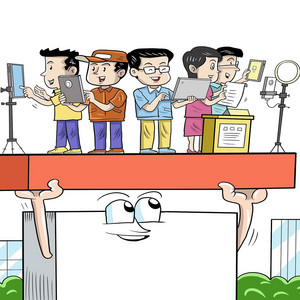
For example, live streamers, we are quite familiar with live streamers yet it is to this time that this has been officially recognized as a new profession in this professional profession dictionary.
Right. So this China occupation classification dictionary, I mean, this is really fancy and New Holy mentioned evaluation and soliciting a public opinion.
This all, a whole lot, sounds like a bureaucratic process.
What does this official recognition stand for?
I know that since the year 2019, the Ministry of Human Resources and Social Security really started to improve the nation's profession classification and recognition work and they were hoping to develop new growth points for the job market and so far it recognized 74 new professions from the years 2019 to 2022, including healthcare, practitioner and agriculture
manager. But essentially, what does it mean being officially recognized?
Your job is being officially recognized.
What does it stand for? What message does it send to the society?
So now the Ministry of Human Resources has officially recognized my job.
So I'm working a legitimate job.
Does it help me, for instance, apply for loan from the bank?
It helps you a lot to start with.
If your family and your parents would finally stop saying that you are merely a cheer warmer, you're not doing a real job sitting in front of a camera selling stuff.
That's not a job. Now you can say it is a job and being able to say that wipes out a certain stigma from, let's say, relatively traditional way of looking at this job.
And after that, when the job is being listed in this professional dictionary, I still find it, yes, a little bit funny to say.
But yeah, but it is quite important because it sends a message that this is a profession that we're paying attention and this is not only about the job, but also about the industry, meaning that relevant subsidies or relevant training would be in place.
It also means that in the future, or maybe even already, certain skills and trainings are included in, for example, university majors.
So with the recognition of your job, let's say, being recognized as a job would provide a lot of more support from the society, from schools, and from local governments.
Practitioners, yeah. Exactly.
And also beyond, I think, to really acknowledge that this profession really exists here in China, I think, to have this new category also help people understand what exactly this new profession do in daily life.
For example, for last trimmer, I'm pretty sure that for most audience who are watching live streaming, maybe we just imagine that there are just the people sitting in front of the camera and just introducing every detail and trying to sell those products.
But I mean that, in fact, they can do what is beyond that because according to this new category or whatever document we call it, they're also not, they're also issuing, I mean, the responsibilities of different new professions.
I mean, what exactly tax they are involved on a daily basis?
What are they supposed to, what qualifications are they supposed to have and what kind of standard they're supposed to meet once they obtain these jobs?
This also makes, yeah, the employer happy because previously when they listed the things that their, let's say, live streamer wanted is supposed to do.
They do not really have something to follow.
They can only imagine, huh?
I want you to be able to talk in front of a camera.
I want you to be able to design your own look and do your own makeup or sell a million products.
That's, yes, everybody wants that reasonable, but it's, yeah.
But now they can say, ah, I need you to be able to design an audio visual content of the things that you're about to shoot.
I need you to be able to write and prepare scripts for online performances and audio visual content or live broadcast.
I need you to be able to design your own on camera appearance.
I need you to organize and implement online interactive activities.
I also need you to participate in data statistics.
And this is not even a, I need you.
It's the job requires you.
So with certain basis and with these content acting at least as a guideline, we are more clear about what are these new jobs in tail.
And the notice, notice issued by the Ministry of Human Resources and Social Security indicates that practitioners of new professions can enjoy relevant policy benefits such as national vocational skills training subsidies and vocational skills assessment subsidies as well as policies related to the career development of highly skilled and professional
technical talent. And if anything, it also enhances practitioner's sense of identity, belonging and accomplishment.
So in that case, when your child's school demands that the parent comes to the school to introduce what they do, they will know, well, this is officially recognized.
Definitely. And it's not only about the current practitioners, we also are talking about the young kids at school trying to look out for a kind of job that they want to do or those who are between jobs, looking to see what are some other things that I can try with my current skills and these can certainly provide a better direction and better guideline.
Right. I think it's always interesting to look at this new professions, I mean, jumping out of this list on a yearly basis because when you're looking at those professions, it's quite interesting because they can also reflect how I mean, the needs coming from the consumers and also coming from the business side are looking for in terms of professionals.
And my observation is that one new profession that really stands out for me is ski patrol and rescue worker this year.
This relates to what you do.
Relates to my hobby, which is skiing.
And I think it's really interesting because when you look at this profession, actually, it's not that niche here in China because I mean, winter sport and ice sport, they have been booming in recent years, especially since the 2022 Winter Olympics in Beijing.
Every year, when you go and report the development in the industry, there's always the talk of the shortage of staff, the shortage of talent in the industry.
That's a huge thing. I mean, that's a very serious thing.
So that's why this year, the ski patrol and rescue worker is being included, being recognized as a new profession.
It's really important because it also gives, I mean, what task the ski patrol and rescue worker is involved.
I mean, they are not only responsible for conducting safety inspections at ski resorts and also monitoring skiers, conditions and provide safety reminders and protection.
They also need to assess the injuries of the injured skiers and also provide an essential emergency assistance before hospital treatment and also, of course, transferring and transporting to injured people.
That's important because when you look at the whole ski industry, I mean, it's booming here in China.
That's true. I mean, I think it's still need to be emphasized that skiing is still quite a risky sport event.
And when you look at the infrastructure here in China, I mean, we have a large number of ski resorts being established here in China.
I mean, during the 2019, 2020 winter season, there were 70, 70, 70 operating ski resorts here in China.
And yet, when you look at real data and estimated 4.5 per 1000 skiers are injured on a daily basis, that's according to data from Chinese District from 2017 to 2019.
And the meantime, a real fact is that when you look at the ski patrol and rescue industry, we are sure of this professional talents because when you look at those ski resorts, usually those are ski trainers or skiing inspectors who are doing the job of patrolling and rescuing.
And also, even though they are equipped with ski patrollers, they are not so professional in terms of rescuing.
So that's why we need this profession to make people understand that the importance of this profession to really make the industry booming.
This is actually very interesting because if you take a look at these different professions, they are not that different to me.
I feel like a ski trainer is also supposed to be able to help people if they're injured because you encounter injury quite a lot on the snow.
And a safeguard that is even more closer to a ski patrol.
Yeah, they are actually different and they are asked to have different skills.
Yes, I think that's very interesting.
It's very important because when you look at the definition of different professions, I mean from the maybe skiers side, they are not already so familiar with the clear responsibilities of different job roles happening at a ski resort.
And in the meantime, when you look at the supply side of talents, we also need a very clear definition of what does a ski rescue and a patrol worker needs to do.
So that's what in college, I mean they can get relevant specific training to people because after, I mean when you look at the talent side, there are some certain specific training courses being given in the Northeast and Normal University here in China.
They are teaching ski patrol and rescue theory and practice courses to people to cultivate relevant talents which I think really helpful in terms of building this industry as a whole.
Specifically in the area of skiing, I'm sure trainers have different responsibilities from ski patrol and rescue workers.
I think one works with the potential customers or enthusiasts who wish to learn skiing and that they need to make sure that those who go on snow know what they are doing, know the necessary safety precautions.
Whereas ski patrol and rescue workers, I think they mainly work.
I'm sure to some extent they work with the clients and customers at the ski results, but most likely they are employed by the ski results and their responsibilities to make sure that the premise is safe.
And I think they have different responsibilities in the sense that ski patrol and rescue workers will need to make sure that the place is safe.
So I think this, well the distinction really speaks to the high level of division of labor in this regard and that also it goes to show the extent to which the industry pertaining to skiing is developing in this country.
I think likewise, similar jobs that are being officially recognized in this one go, also might indicate some general trends that their respective industries are going into.
Definitely, as an individual working my job, I do not really know exactly what the society is looking for and I don't really have to yet as a, for example, someone working in the industry or a employer or someone trying to figure out how to promote the development of the industry.
This person should know what the industry is looking for and where this China's occupation and classification dictionary, this person might have a better idea because one of the basic criteria is that the profession is not part of the existing national occupational classification or is highly similar to an existing profession.
It's something quite new, quite distinctive and provides its own, its own, let's say, effect for this industry.
And I personally find one industry very interesting.
That is the cultural and creative product plenty and operation specialist.
At the very beginning, I thought this is something that a designer would do.
You'll learn to paint, you learn to design a certain graph and you find a cultural element that are interested in and you find a way to incorporate that into a pen or a pen or a tape, something like that or calendar.
Or calendar. That's basically what you do.
No, no, no, no, no, no, no, no, no, no, no, no, no, it's really not as easy as that.
If you take a look at this specific job, actually it requires the designer, the specialist, to the cultural and creative product planning and operation specialist, to be able to extract and refine cultural materials and resources based on the design tasks.
It has to analyze and determine the positioning and style of the cultural and creative products.
It has to also define the concept and material, craftsmanship, content of this product.
It has to also be able to organize and implement various forms of product launches, promotional activities and marketing events.
It also has to have the ability to apply for and register intellectual property rights of the specific cultural and creative products.
The person also needs to collect and analyze market feedback and even has to manage the archives and contents of cultural and creative product projects, ensuring the traceability of the product material.
So this is a whole package if you're hired as the specialist, for example, by the forbidden city.
You are going to be able to, first of all, learn about all the relics, all the handicrafts, all the exhibits in the place and find out the element you want to incorporate to your design and being able to figure out a way to actually make it into product that the market would enjoy and find a way to protect your product with a proper artificial intelligent property register
process. So this is a whole package.
Not only are you supposed to be familiar with art design and not only are you supposed to be familiar with the necessary tools that are commonly used in design, but also I think in this particular case, you're supposed to know the cultural background of the client that you're working for in this case, the forbidden city, whether it be the long history and the cultural
endowment embedded in the forbidden city and in fact, he's called the Palace Museum.
It's a museum, he's a cultural institution.
So the kind of qualities that's demanded of someone that is called cultural and creative product planning and operations, especially as it's so high that it deserves a single title or an individual title in an office own in China Occupational Classification Dictionary.
I think it's really entails the trends of the also deriving of the tourism related to culture thing.
That's also why cultural creative products are being so popular.
I mean, in dire demand here in China.
I think that's why when you look at this new profession, it also reflects how the whole society needs from the consumer side, from the individuals are transforming.
That's why I think it's really important to look into this new profession.
Meanwhile, I know there are also some other professions, maybe also telling a little bit the story of how economic side is transformed here in China.
We've so far tossed upon things that a regular person might be familiar with.
It could be a live stream and who doesn't have had the experience going on shopping platforms and watching a live stream and trying to place an order.
But there are also less familiar aspects and less familiar jobs that are being officially recognized.
I can think of, for instance, smart cars examination.
Yes. What are they supposed to looking to?
Well they have a very interesting job.
It can be an arduous one because think about what we do when we drive from work to home or home to work.
We try to find the best traffic condition and we try to go, let's say, finish the trip as fast as we can.
Of course, when it's safe and it is with regard, well, in line with the regulations on the road.
And these people, they figure out different ways to test the car in certain occasions, in not so ideal occasions.
And since they are testing or trying to figure out whether or not the intelligent connected vehicles are up to standard, they also need to understand how to test the auto autonomous driving maps involving vehicle sensor signals.
They need to understand the knowledge behind GPS positioning signals, camera data, vehicle control units, communication modules and other modules.
It requires a continuous learning and mastery of these areas.
And they go to very extremely, relatively extreme situations.
Well, to make things easier to understand in the very beginning, at least you should make sure that the cars would be able to be functioning in all possible environmental scenarios.
For example, in different highways, mountain roads, curves, elevated bridges, different weather conditions, it can be sunny day, rainy day, snowy day, cloudy day, dusty day, depending on, well, if you have to cover all those days, you have to at least drive on all those days, tests on all those days.
And in the meantime, they would also try to choose the, well, when we are choosing the shortest navigation path for work, they would deliberately choose the most congested ones, finding or challenging routes, such as, I don't know, a Friday afternoon or Friday 6 to 7 pm here in Beijing.
Yes, the road. Yes. Is that a key, east Beijing to center-breaking?
Yes, and they want to figure out whether or not the cars are up to these kind of challenges.
And we also get to see that actually, according to the 2023 automotive industry talent development report, it indicates that from January to July last year.
The demand for testing engineers increased by 20% and average salaries for positioners related to intelligent positions related to intelligent connected vehicles are leading in the industry.
So, yes, with this new occupation dictionary, you also get to see the huge demand from the industry and also some relatively high tech positions there that are looking for more talents.
Fair enough. This point before we move on, that is, the Ministry of Human Resources and Social Security has essentially sent out a strong signal as to whether what the job market might need in the future going forward.
But still, there is much debate over whether academic institutions in this country should adapt to the need of the job market.
But vocational schools should be able to react more quickly and have, have we seen any examples of these changes being noted and acted upon at the vocational level?
I could totally see, for instance, a school in Northeast China, a vocational school in Northeast China, doubling down on the training of ski patrol and rescue workers.
Yes, as we said, I think this north-east normal university, the sport and also the ice in snow, college, they are just launching this relevant courses.
But of course, not necessarily based on this new profession classification, but also really observing the trend from the industry.
I think as we said, vocational schools, they are somehow more relevant to the job market, I mean, the shift of the job market.
So that's why they can just be more responsive in terms of offering this relevant talent to the graduating programs and courses.